Switzerland
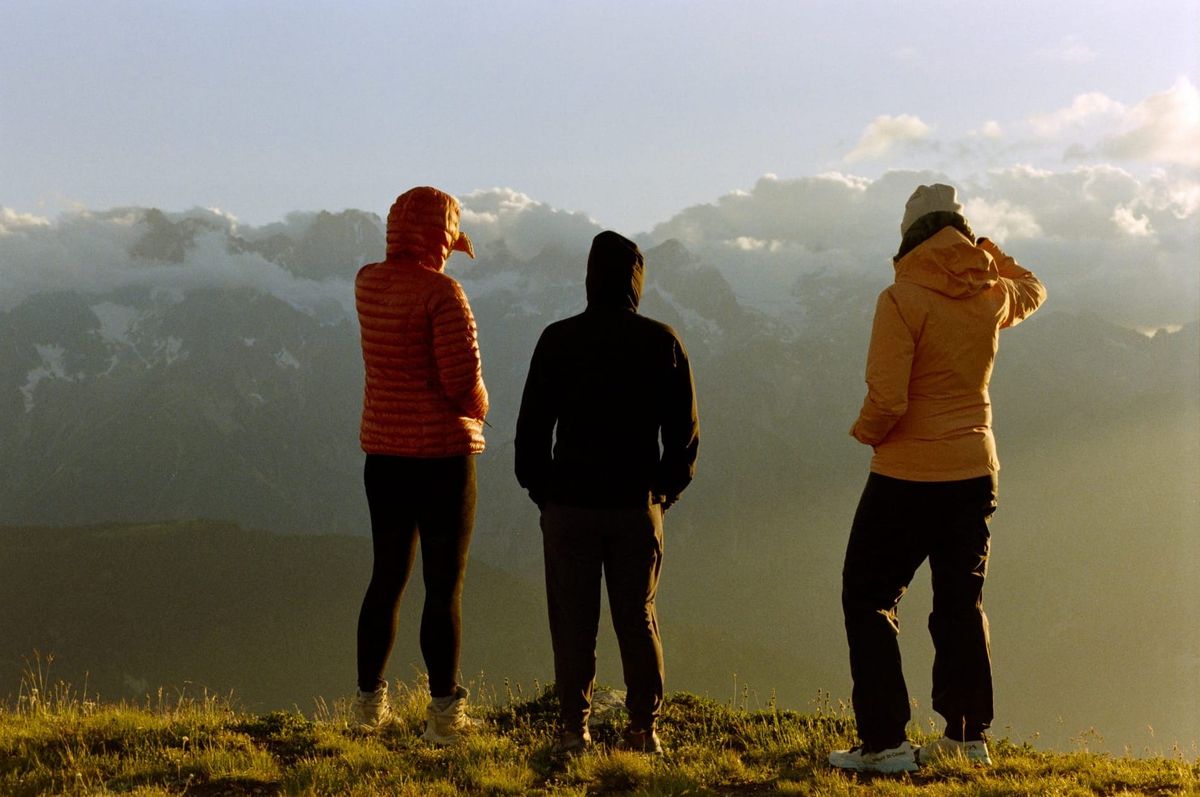
Switzerland was in the original Radical Sabbatical itinerary because it was a bucket-list trekking place for us. We had started looking into Switzerland because of the Tour du Mont Blanc (TMB) which is the most popular backpacking circuit here. In our research and planning phase though, it became clear that the TMB was out of our price range. We happened upon another multiday hut-to-hut trek called the Tour du Grand Combin (TDC) which circled the massif that is about 30 km NE of Mont Blanc.
We were very excited to have friends join us for this hike! They also get a lot of credit as this was their second time joining us on the trip- Alyssa Carey came to Argentina and Chile for the O-trek and Carey Colbert came to Utah to ski over Christmas. (They will henceforth be referred to as “The Careys”).
The Grand Combin is the 9th highest peak in the Alps and is in a remote and glaciated region in Switzerland. To start our journey, we flew into Geneva where we spent two hot days. We were suffering through another heat wave in Europe (the second of our trip) so we were craving the cool mountain air. Geneva is a really pretty city situated around massive Lake Geneva. Everything was nice here. The streets were clean, the people dressed well, the public bathrooms were spotless. BUT you really had to pay to play. The sticker shock here was incomparable. We first got to Geneva late and no grocery stores were open so we made a desperation move to 5 Guys Burgers but could not bring ourselves to shell out $32 USD for a small burger… People must make a tremendous amount of money here because all of the restaurants were packed and the stores were all filled with enthusiastic spenders.
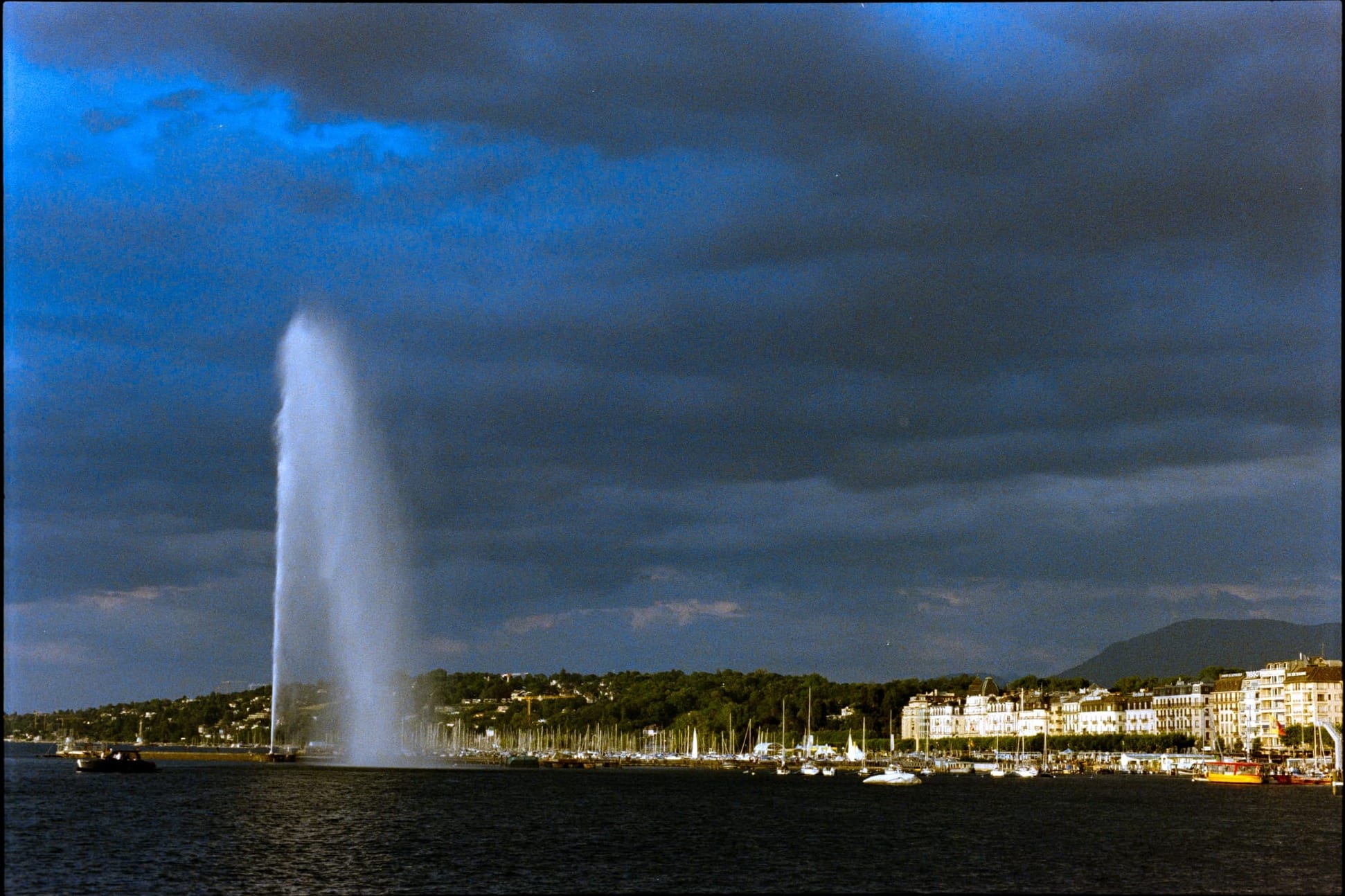
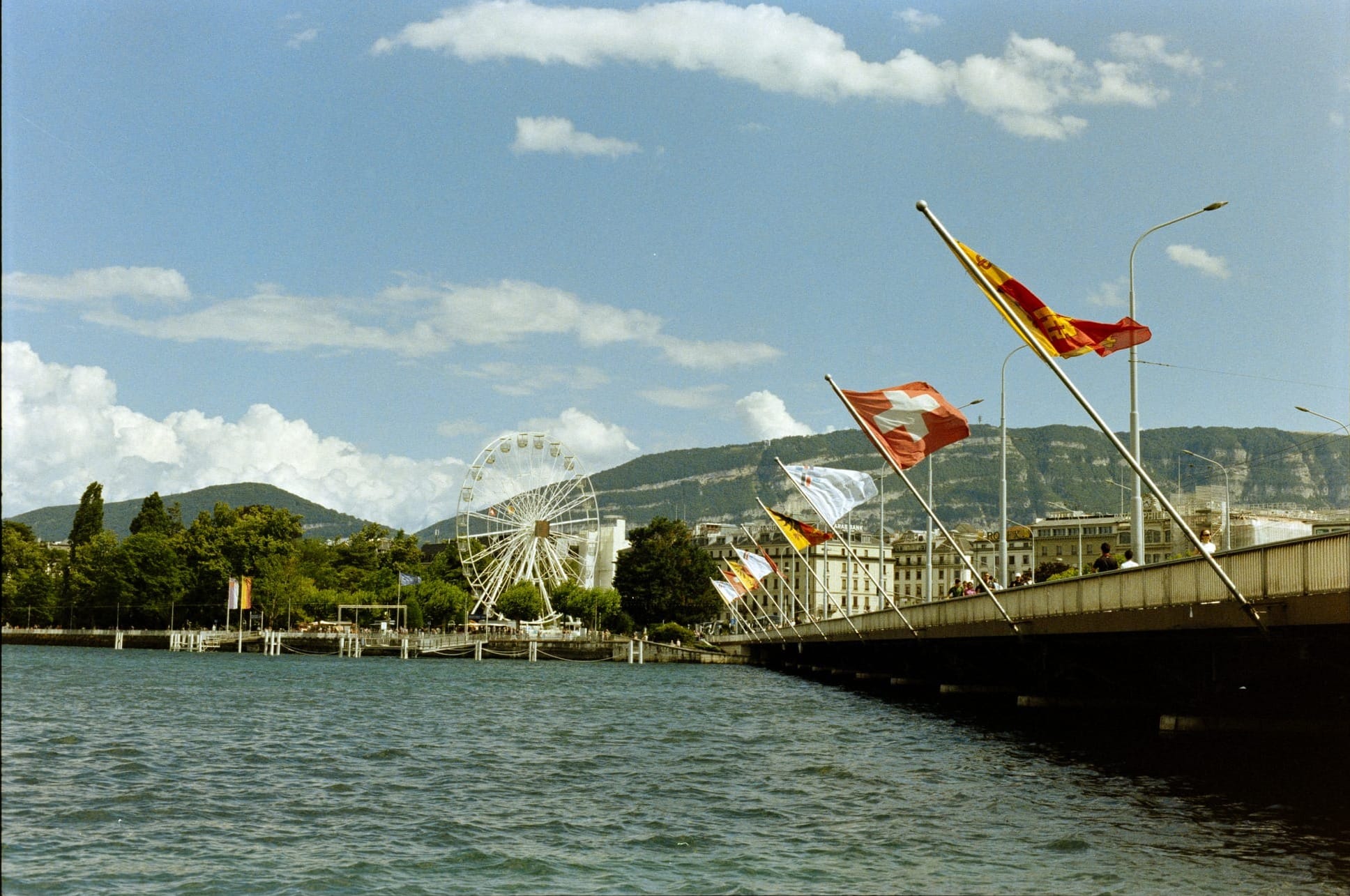
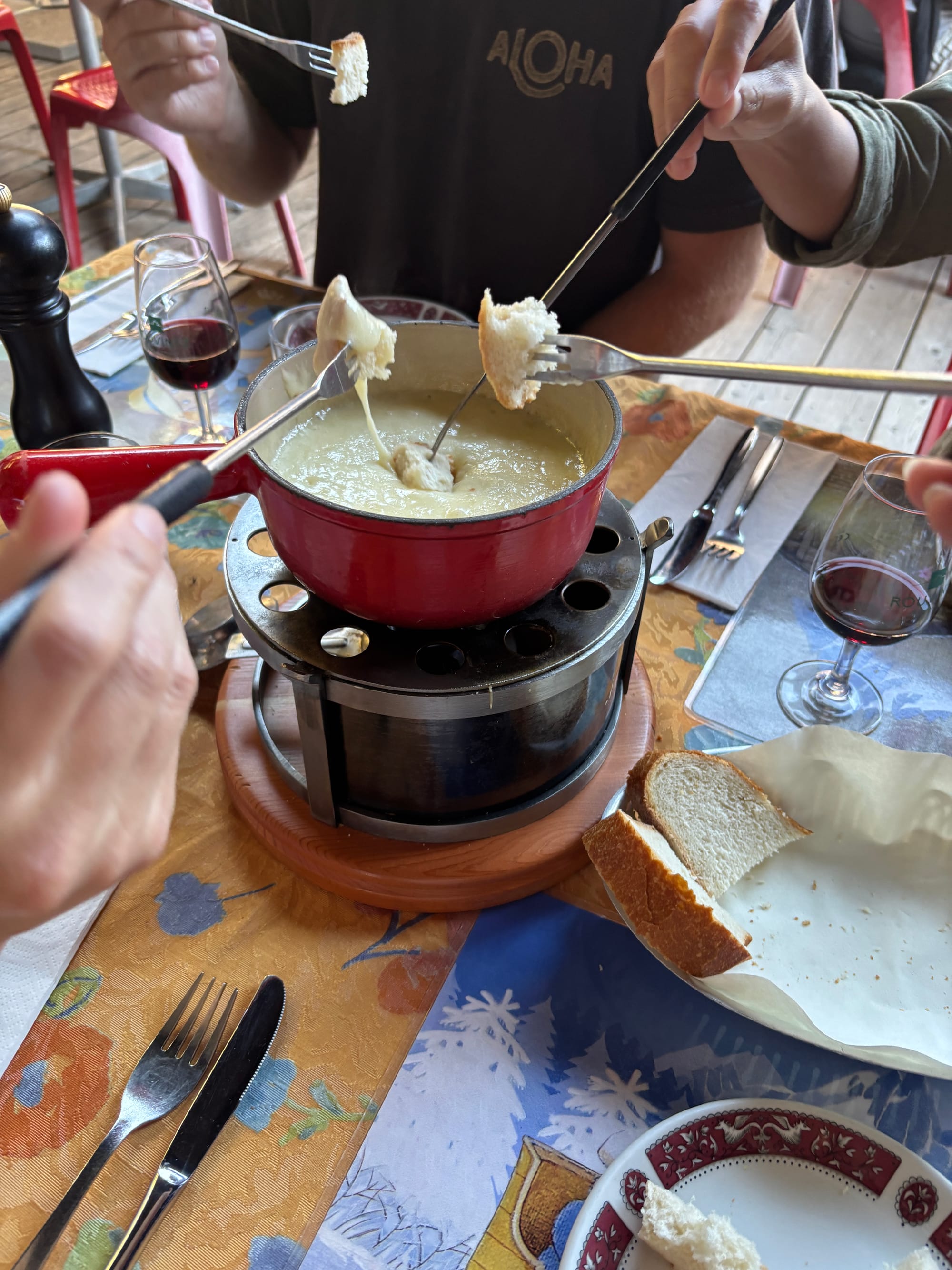
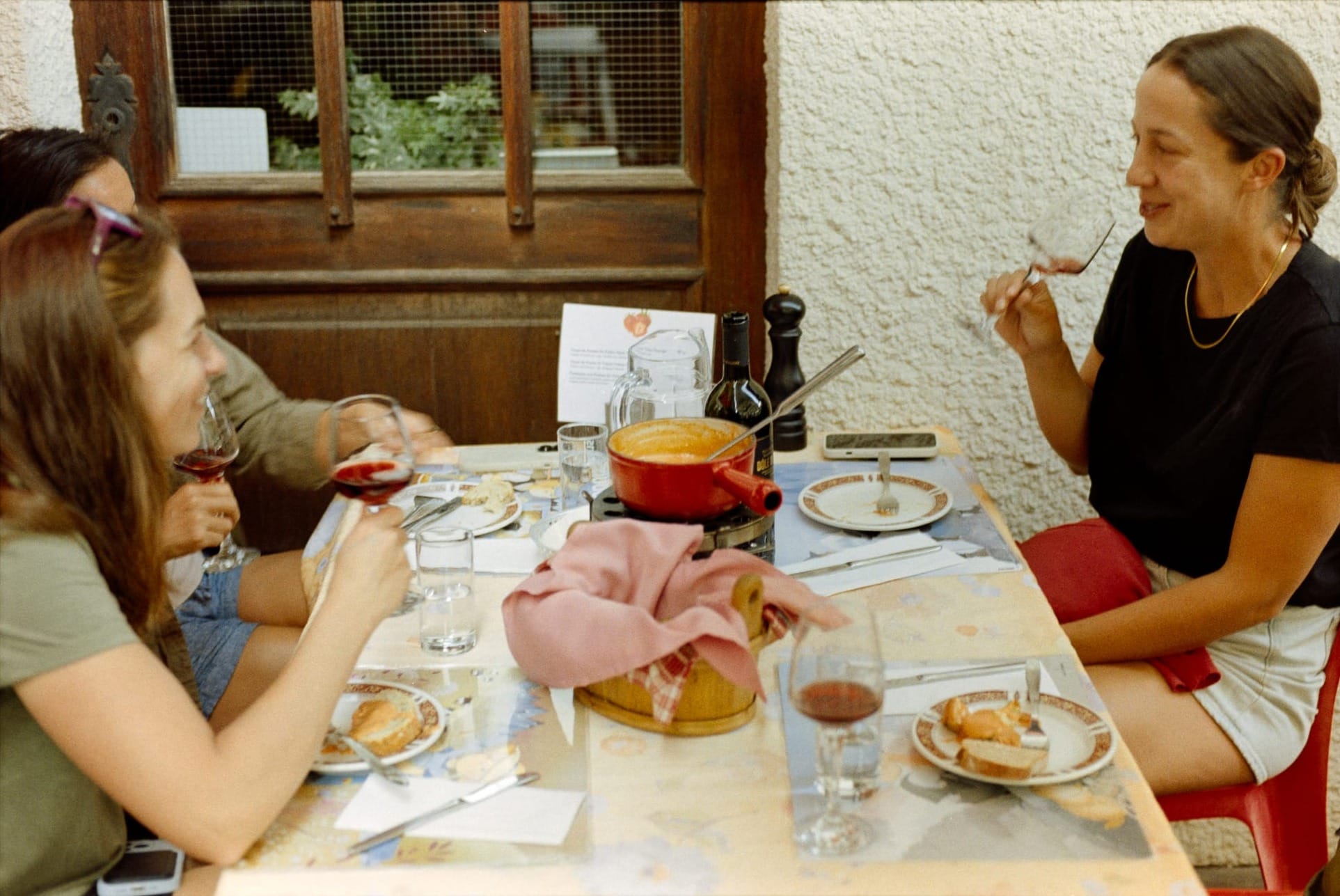
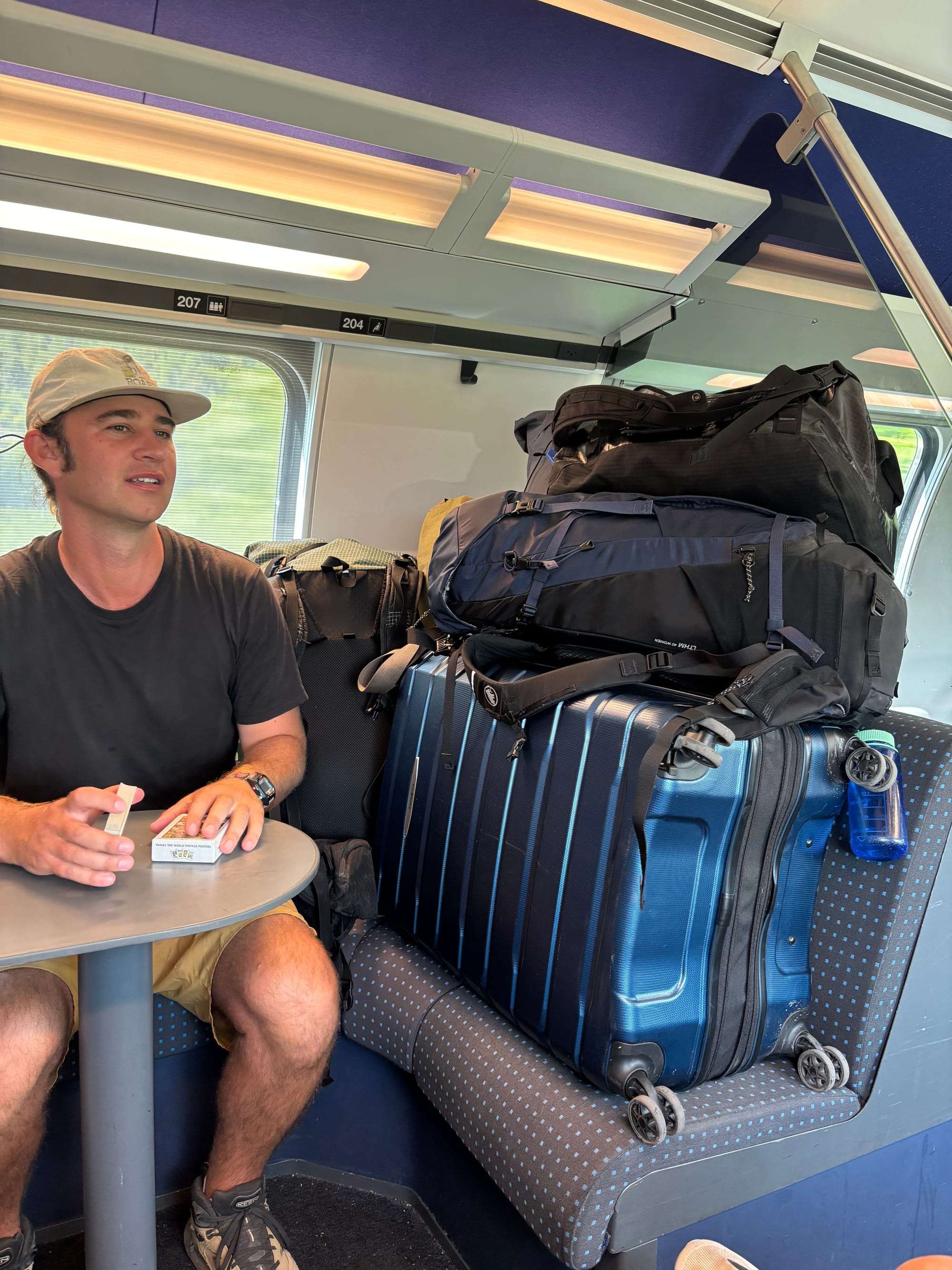
The Careys met us in Geneva and the next day we started our pilgrimage to the start of the TDC. It is a remote area and not yet accustomed to much tourism so it took 2 buses and 3 trains to get to our start at Bourg-St.-Pierre. We were immediately taken with the Swiss countryside and the small town of Bourg-St.-Pierre. Even from the bus stop we could spot Brown Swiss cows with their huge ornate bells plodding around their green fields. We celebrated the start of the trail with a pot of fondue! People really drag the 1970s American cooking scene, but one thing they really got right was that fondue is delicious and should be the centerpiece of every family meal.
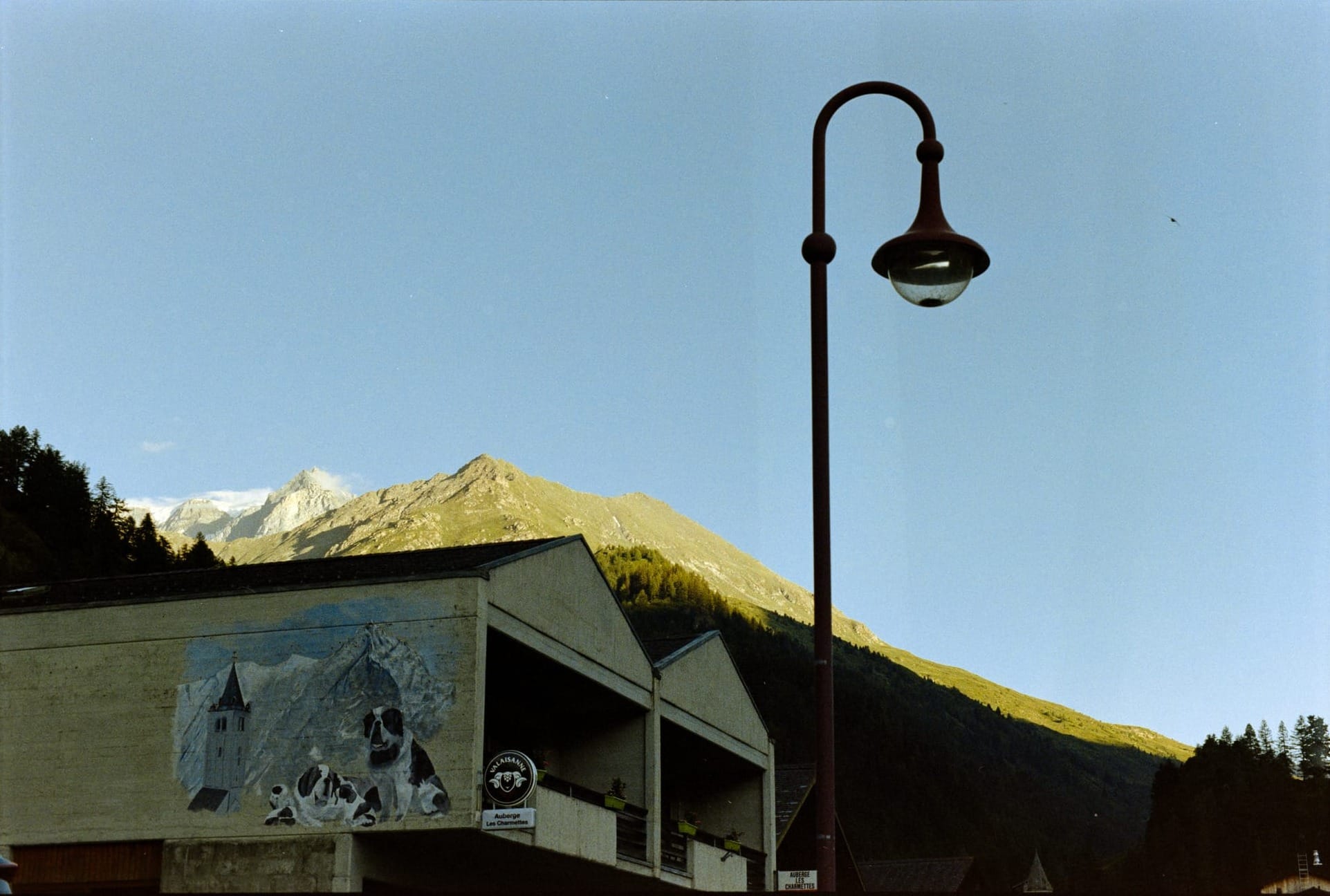
Our backpacks for the TDC were heavier than we’d hoped but lighter than we’d feared since we didn’t need to haul our camping gear with us. Camping on the TDC and in a lot of the Swiss wilderness is illegal. We had heard about how nice the Swiss alpine hut system was and we were excited to experience it first hand and the fact that camping wasn’t allowed relieved us of any guilt!
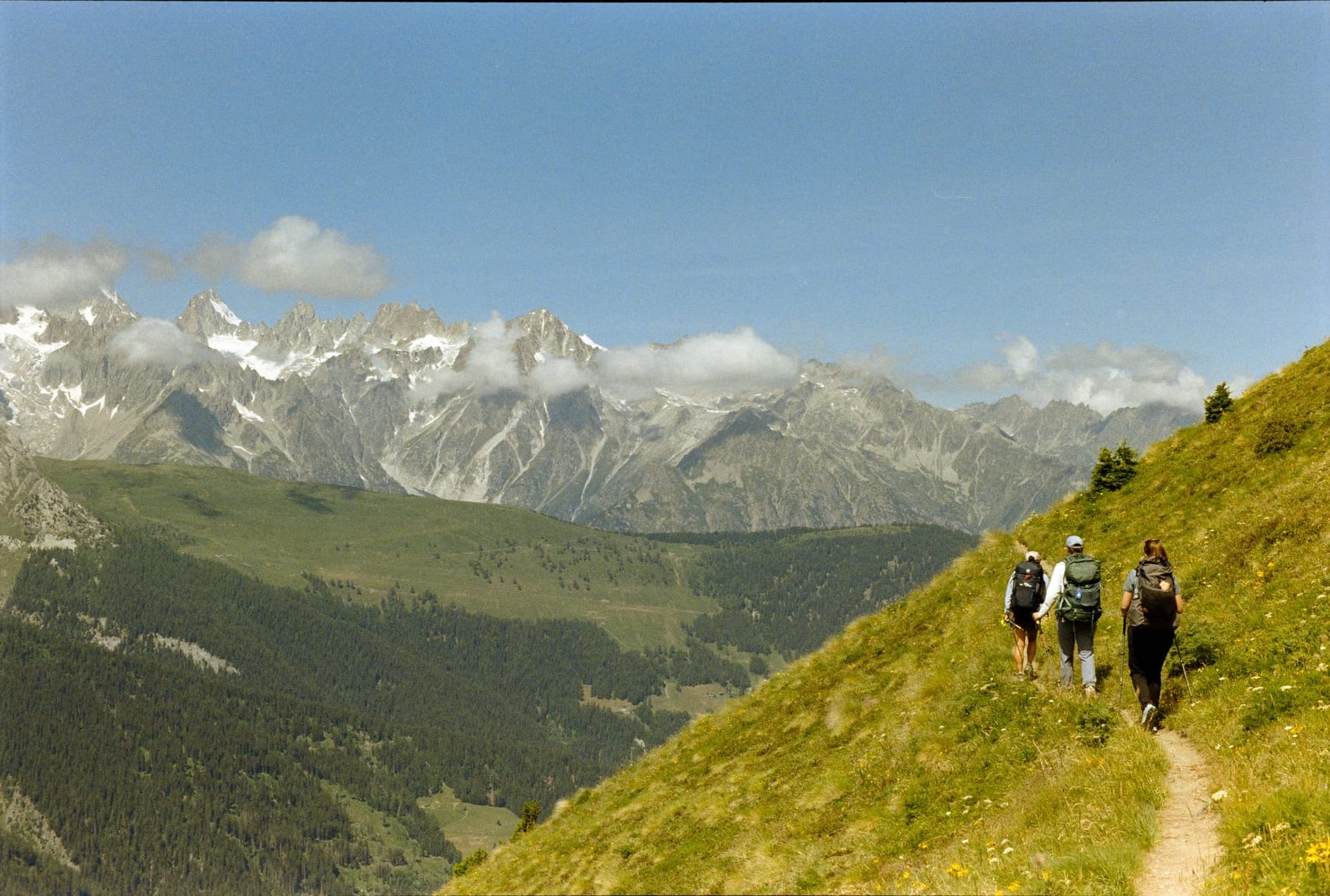
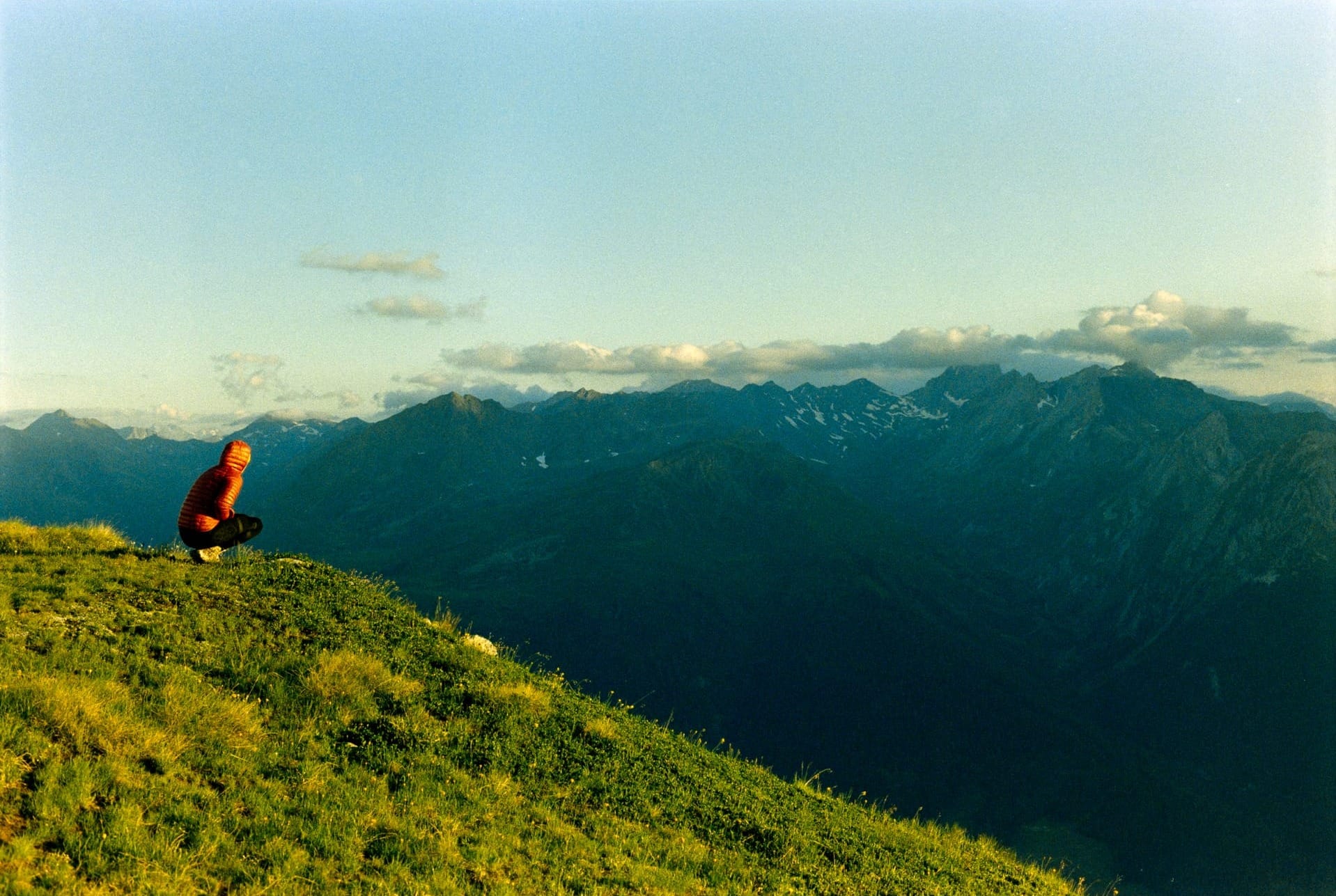
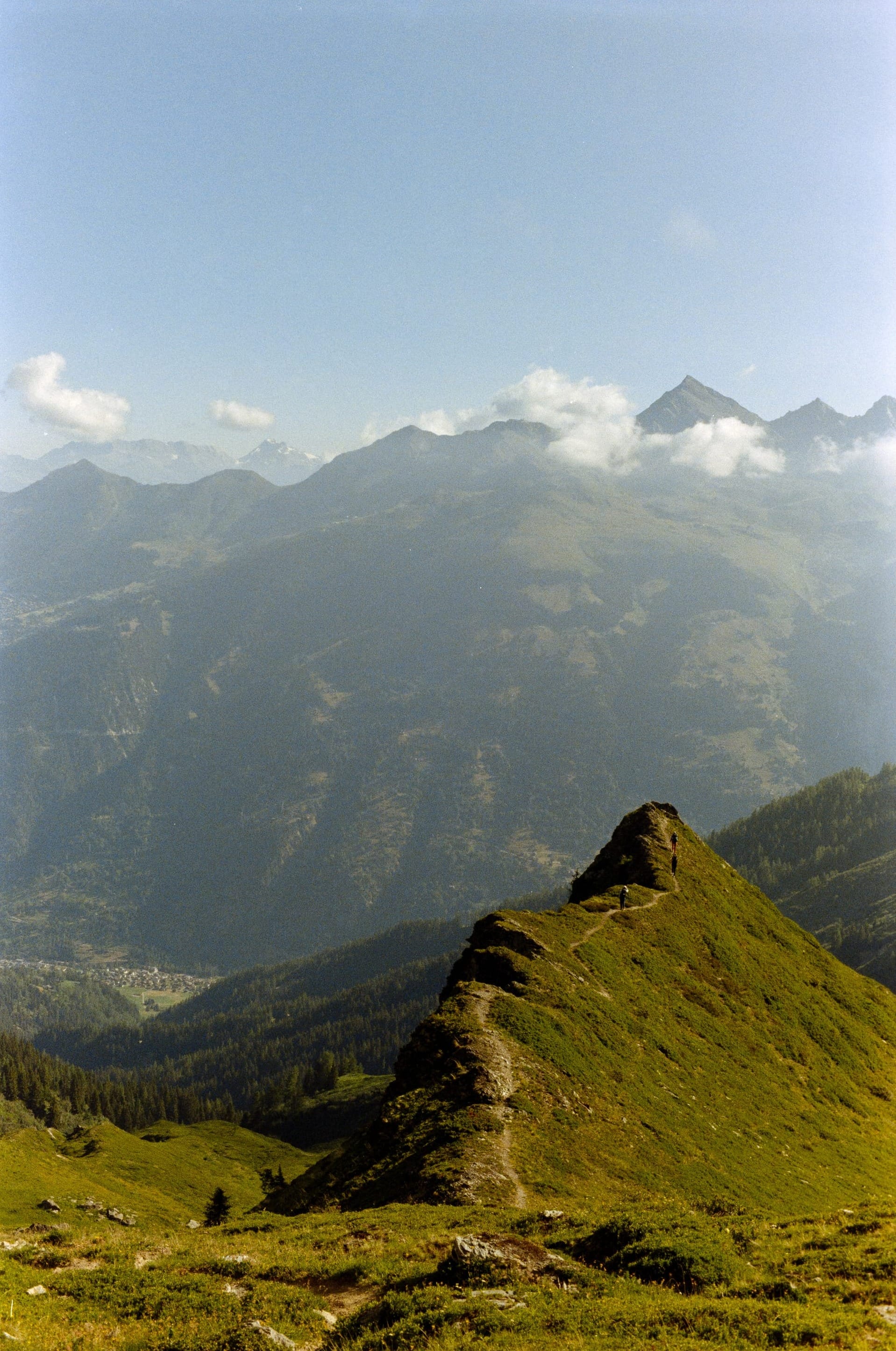
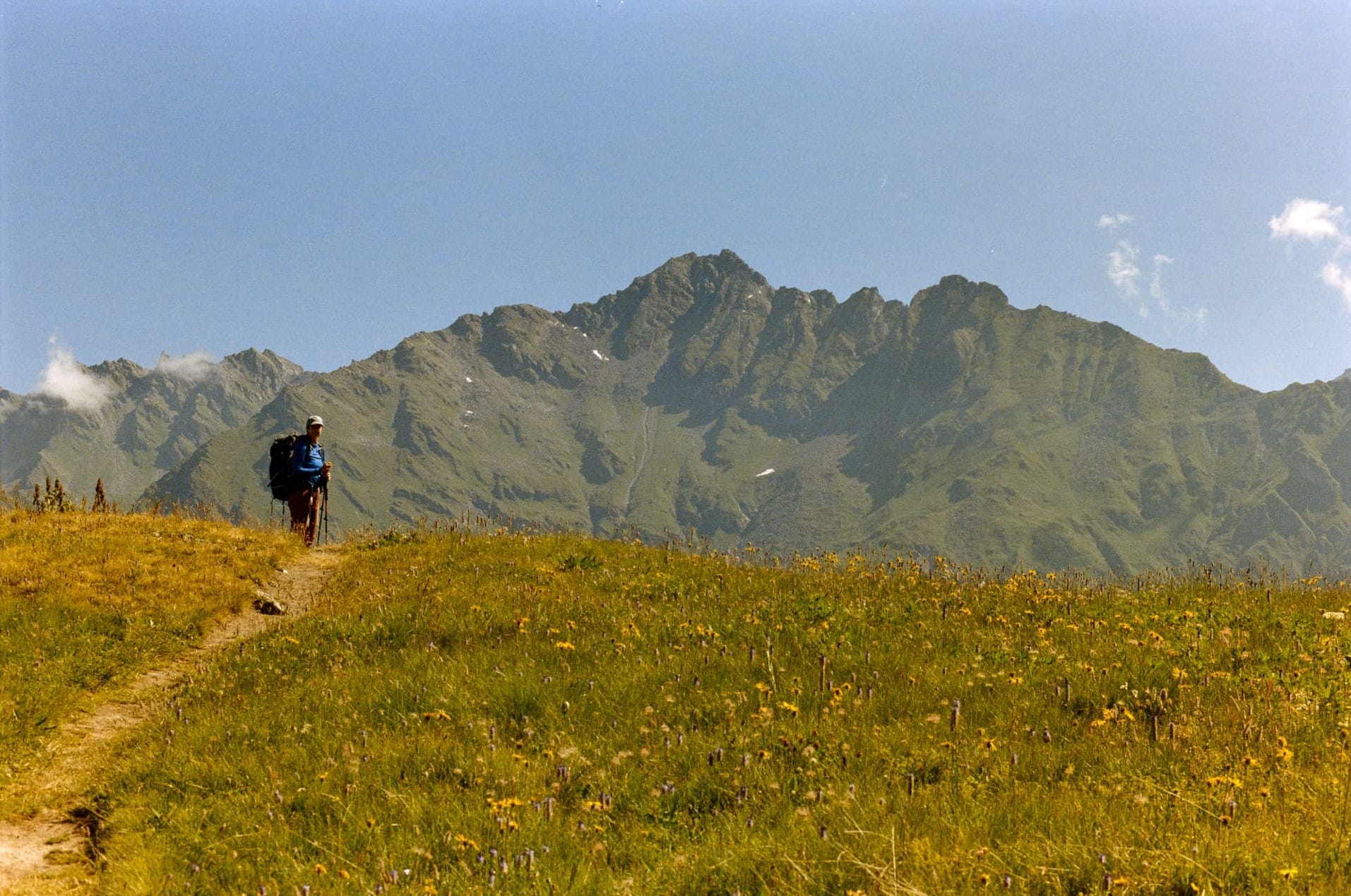
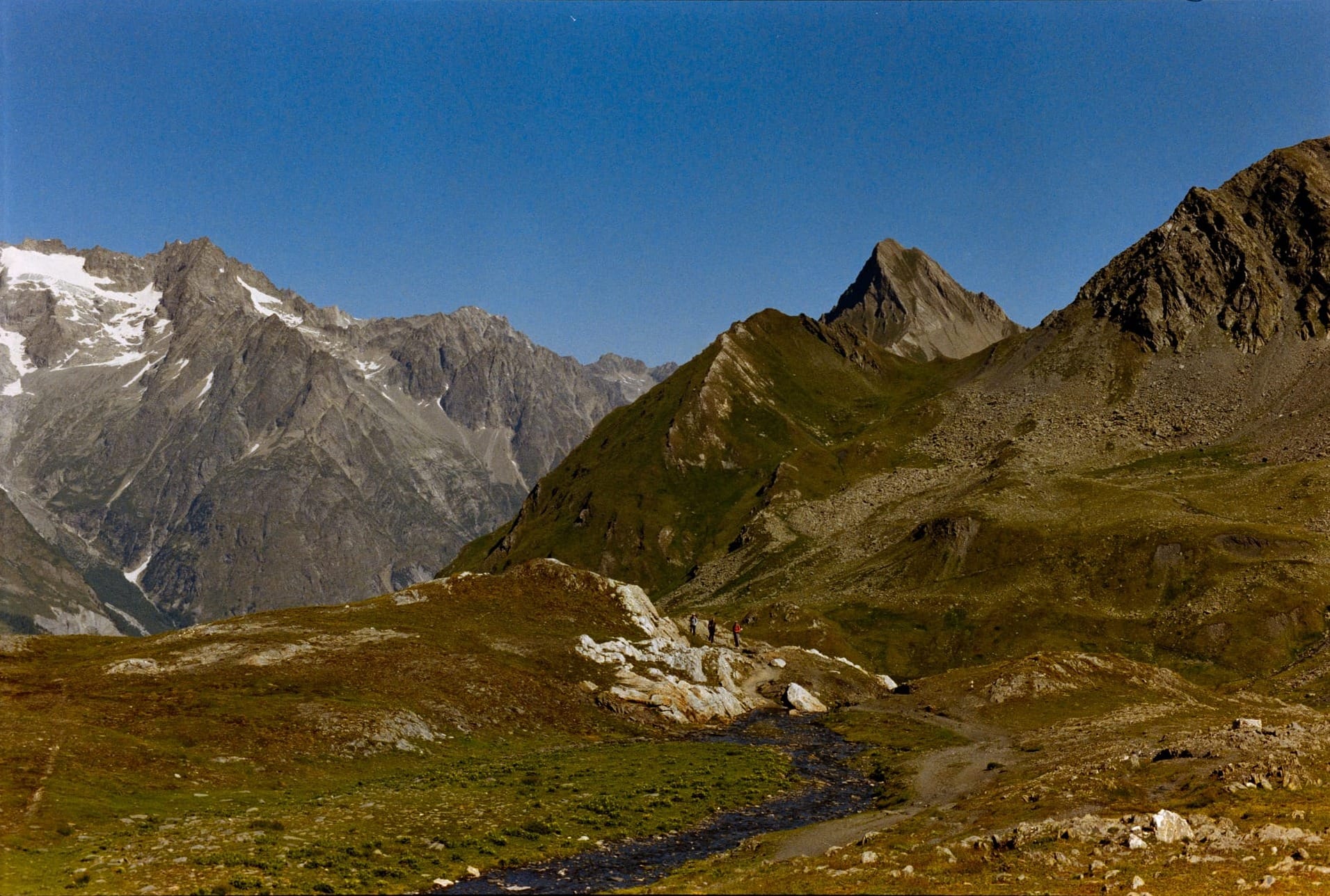
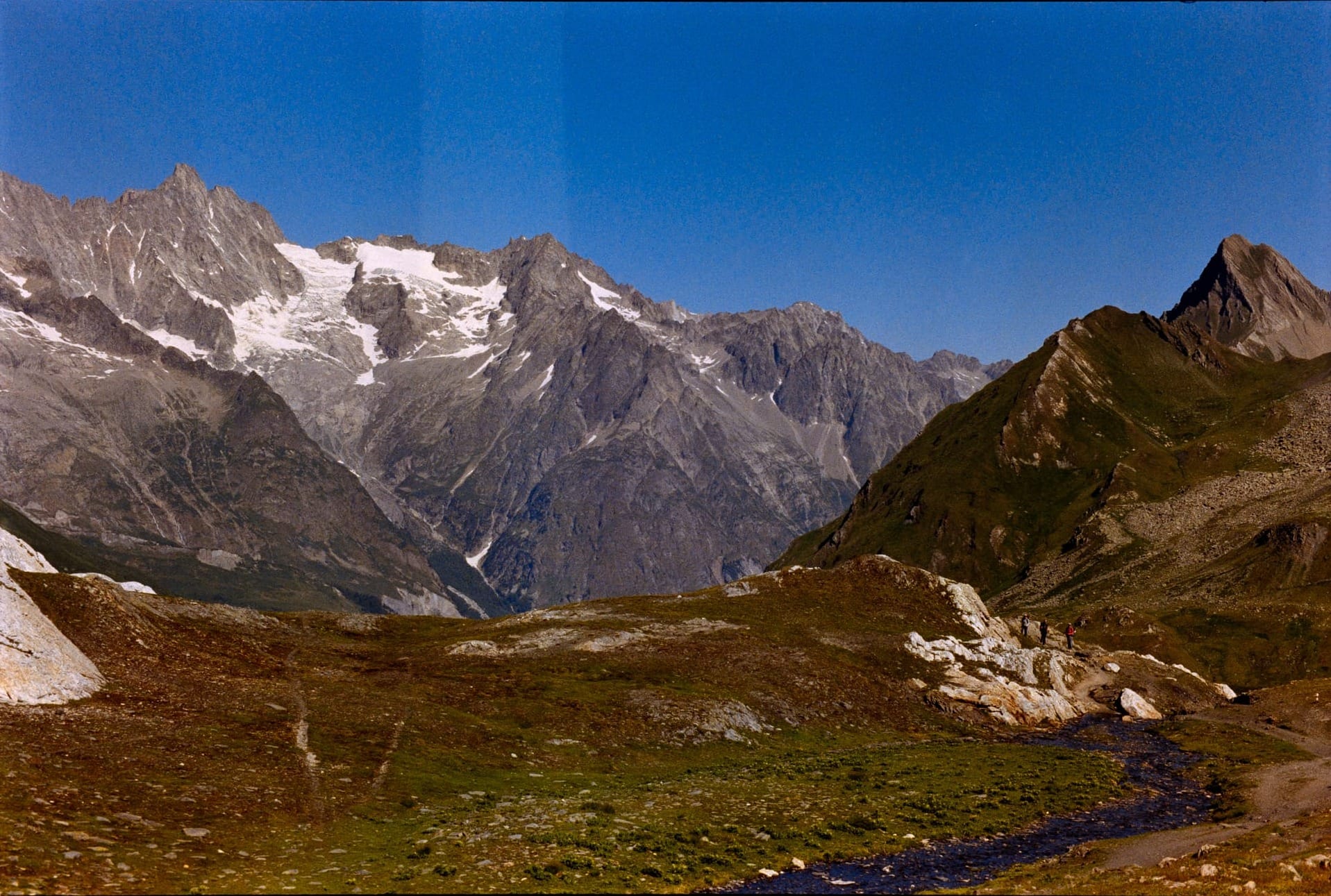
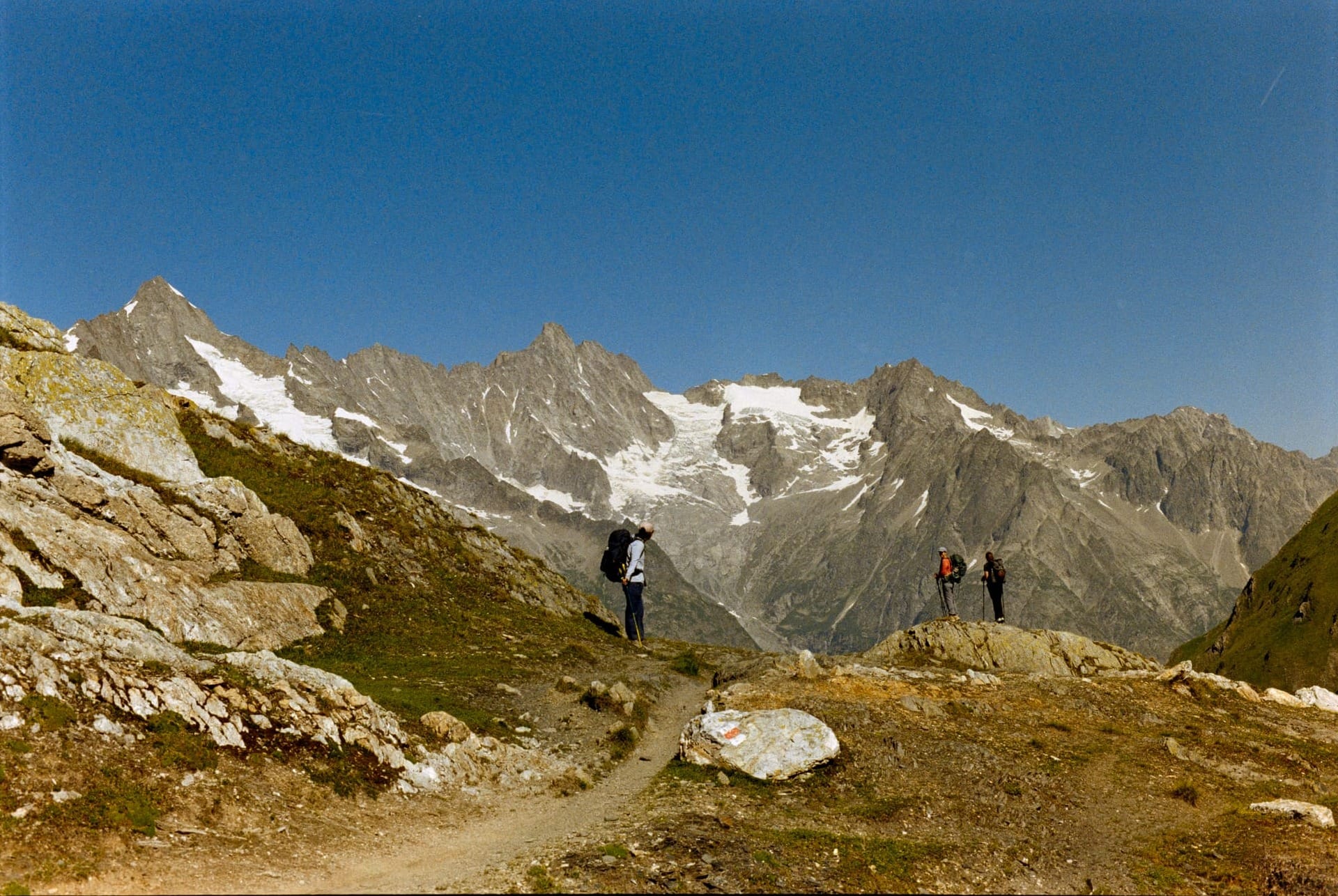
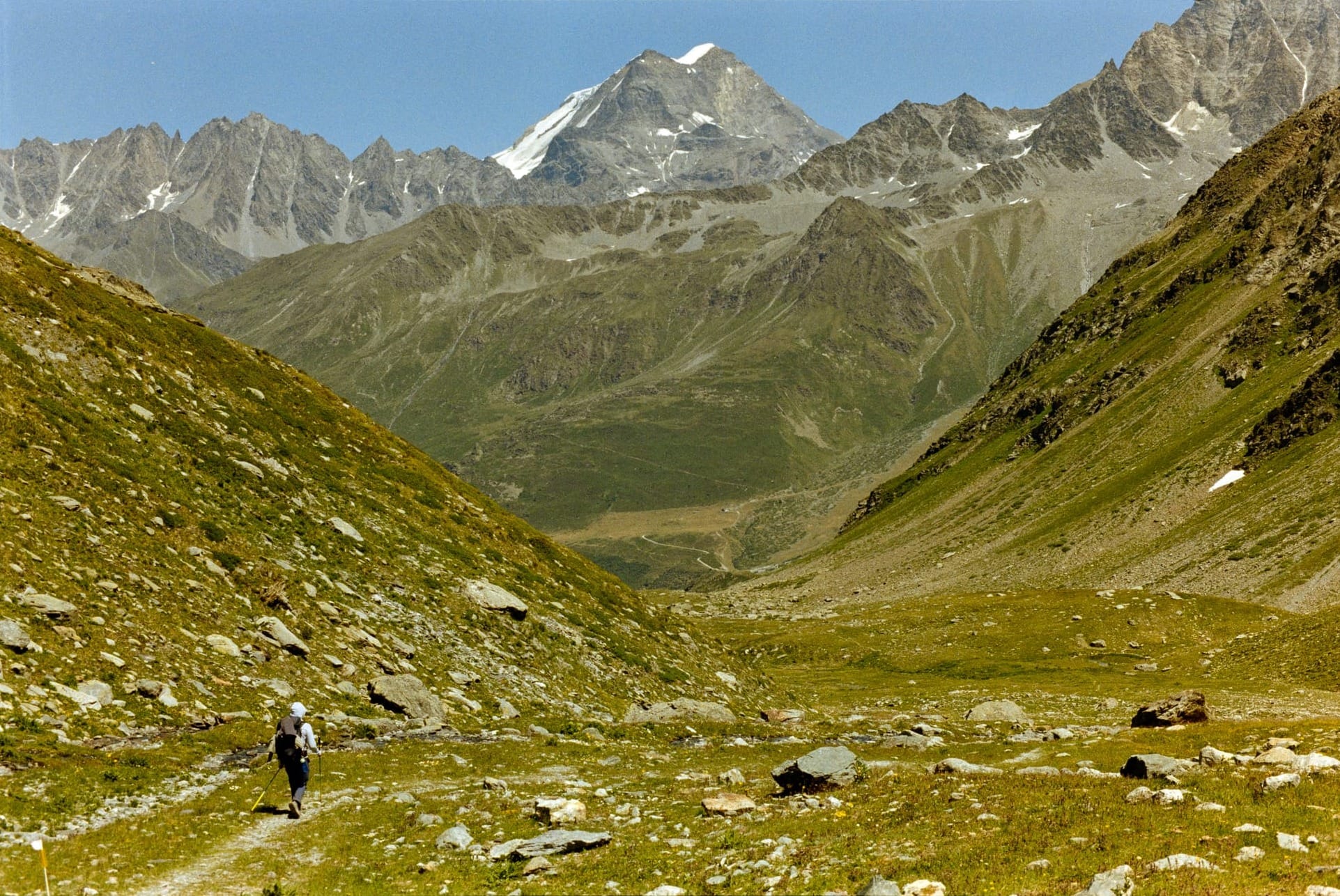
Although the mileage for Day 1 was not daunting - only 8 miles - the elevation gain was quite brutal at 3,600 feet. The trail was shockingly beautiful and the fact that we did not see anyone for the first 4 hours seemed impossible. We started the trail the first week of July which was peak bloom for the alpine wildflowers. Our ascent was less painful with the constant avalanches of color that spilled across the trail. There were dashes of purple from the wild crocus, rampion, and bellflower, bright yellow bursts of arnica, buttercup, and vetch, and breaths of soft white from Queen Anne’s Lace and white yarrow.
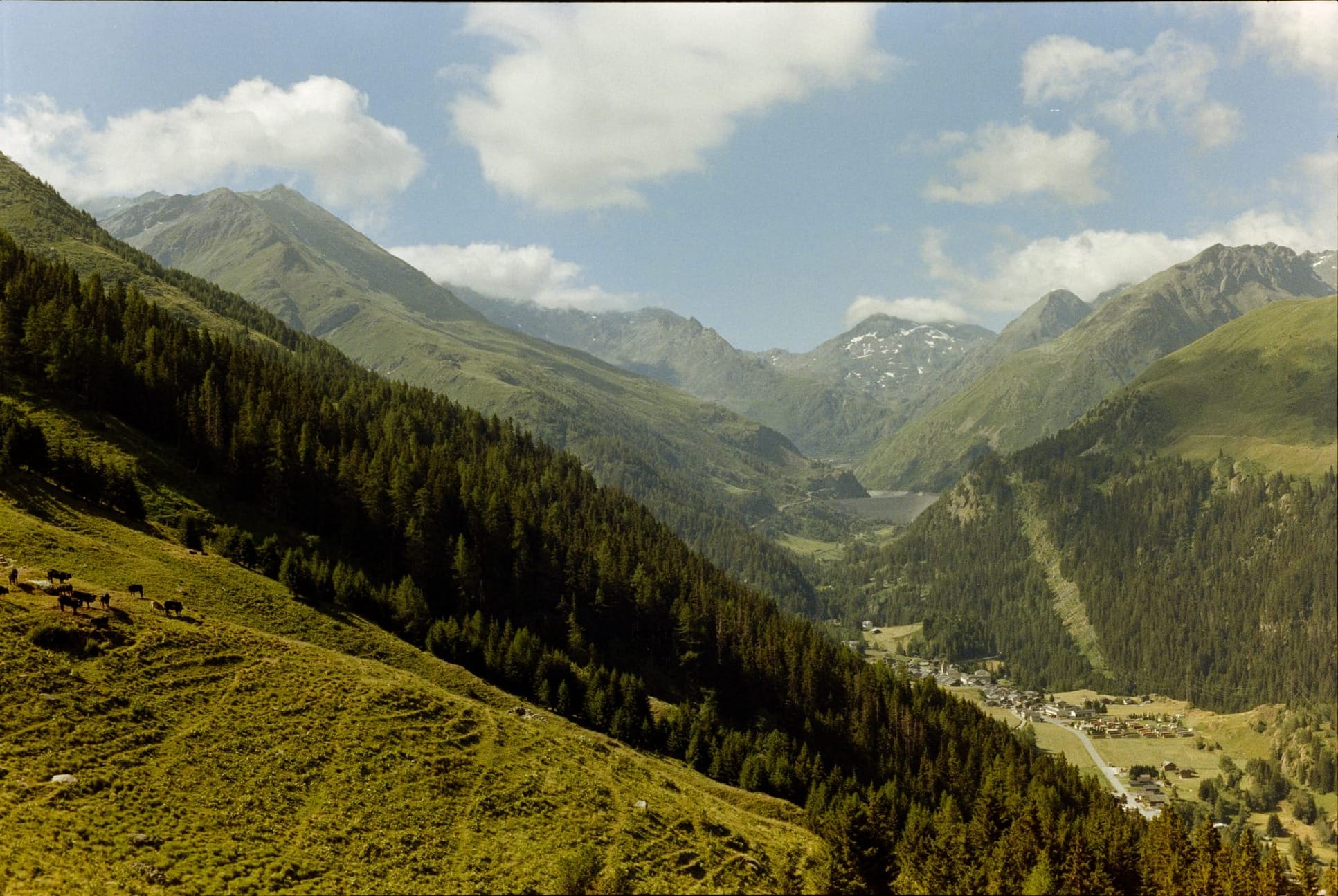
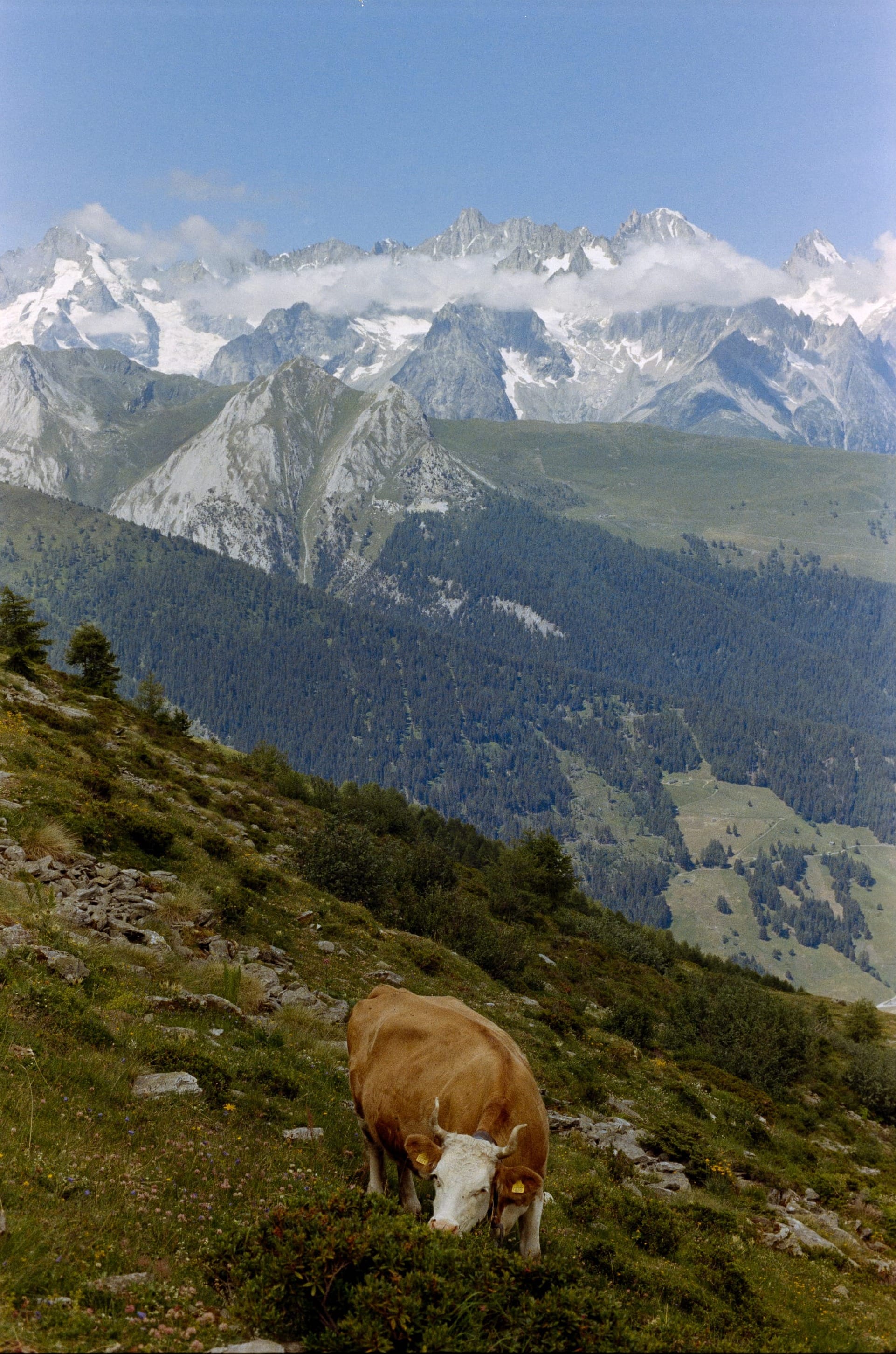
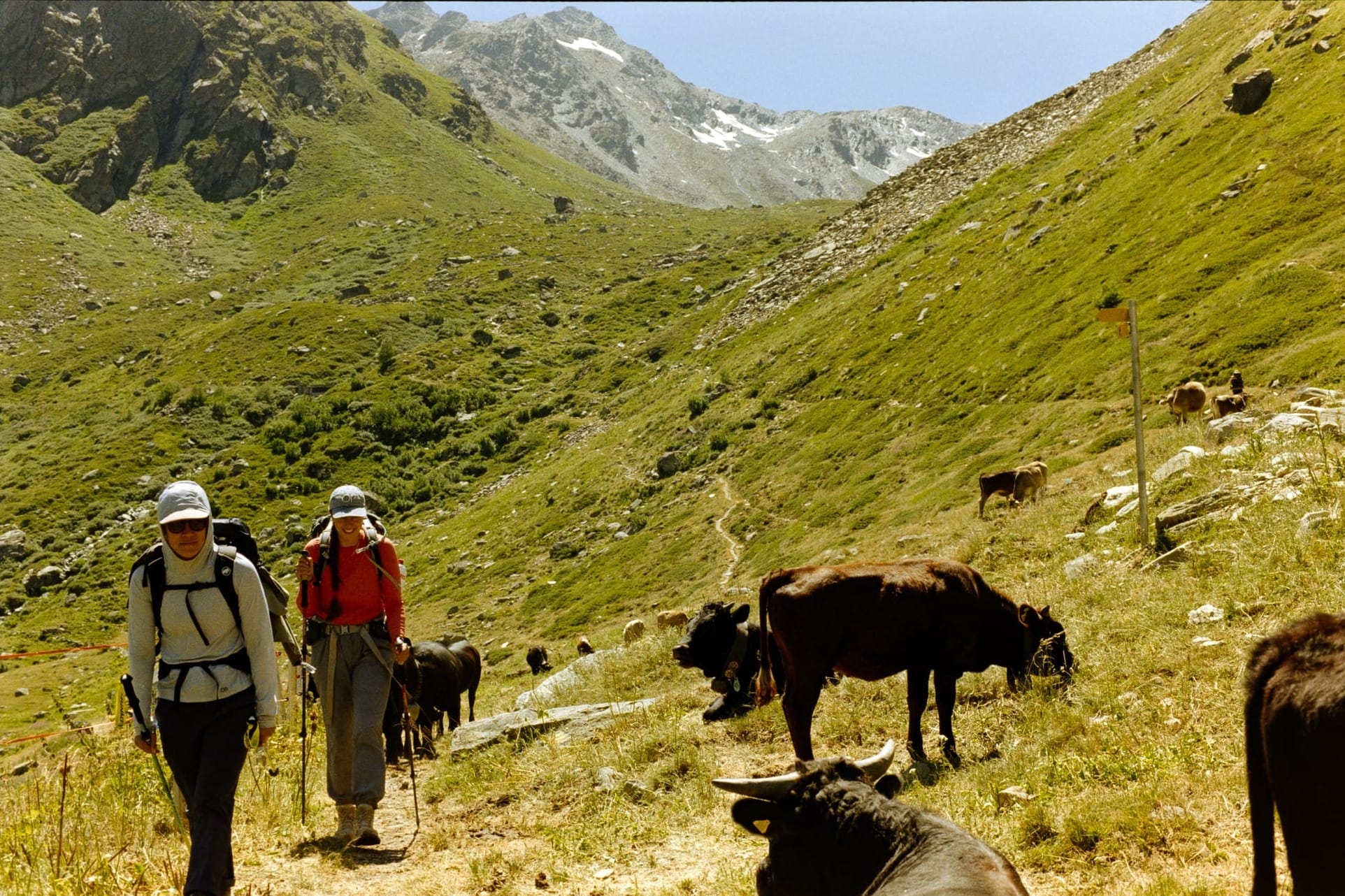
We could always hear the herds of cattle before we saw them- like a baritone wind chime in the wilderness. We did some research on these cowbells and apparently they have both practical and more whimsical purposes. They will let the ranchers find their cattle in the thick fog and also soothe the herd with the rhythmic chimes which can then alert to danger if a cow suddenly stops its usual grazing. But the really ornate bells, the ones with thick leather straps and carved ornaments in the bronze, are used for their favorite cattle to protect them in more of a spiritual sense of the word. The fancier bells cost about $1000 USD! We ate our first lunch amongst a heard of Simmental cows adorned with their beautiful bells.
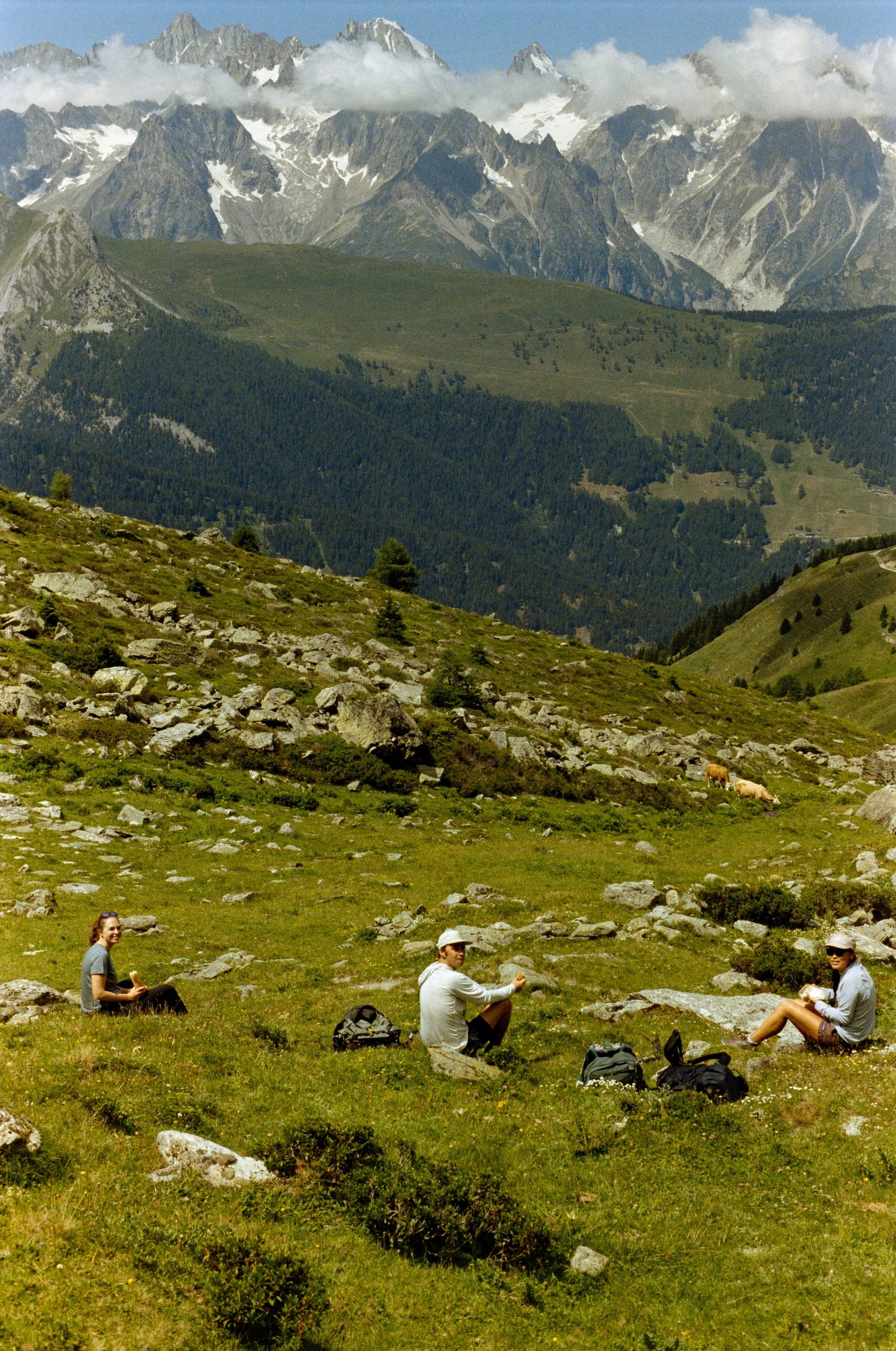
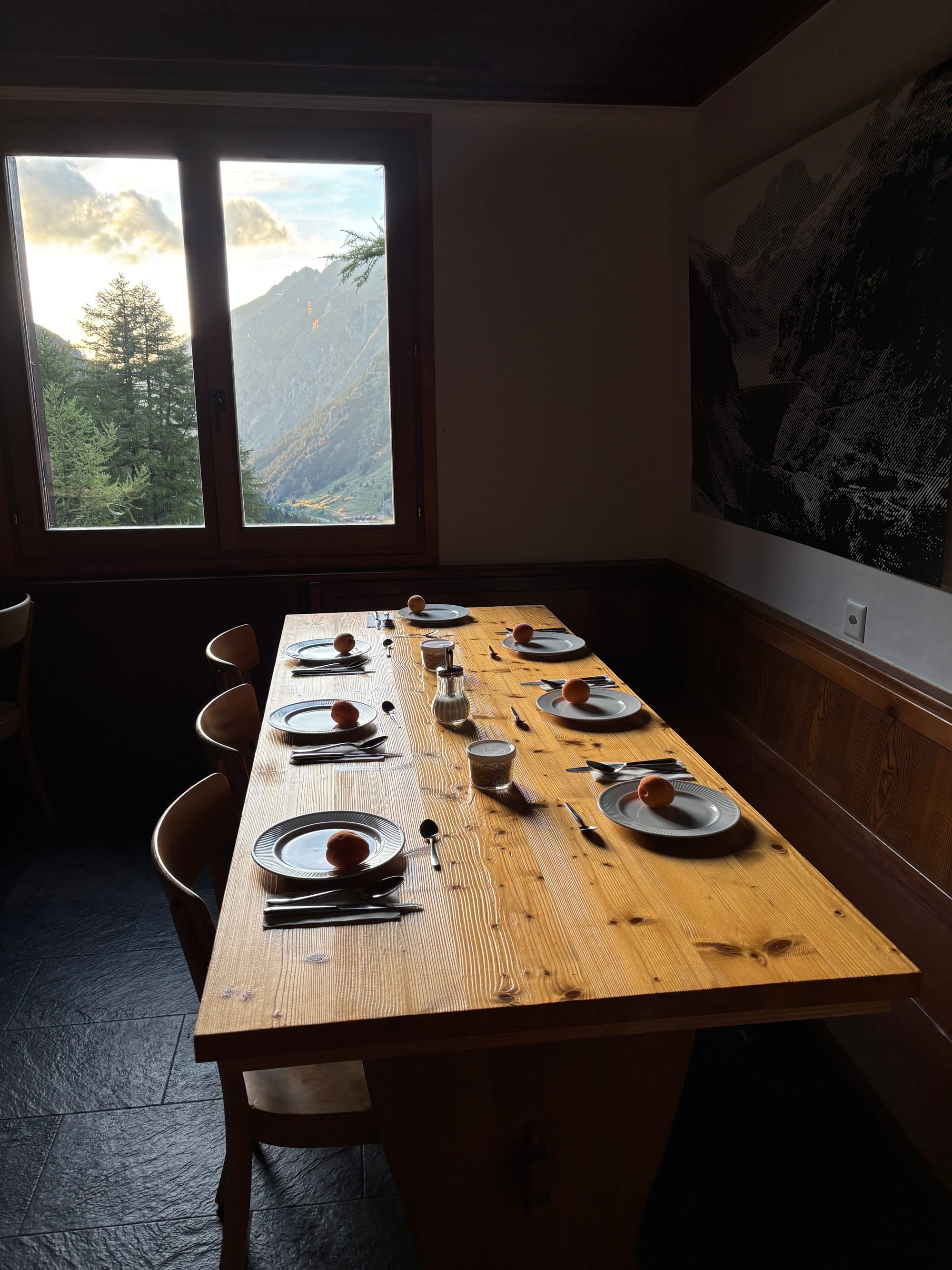
We arrived at Cabane de Mille in the afternoon and could not believe that such a comfortable hut could be built in the wilderness. It had hot showers, comfortable bunk beds, cold beers, and even a fresh lemon tart! We played cards, ate a 3-course dinner, and waited for the 9:30 pm golden hour and a relentless sunset in this ridiculous alpine dreamscape.
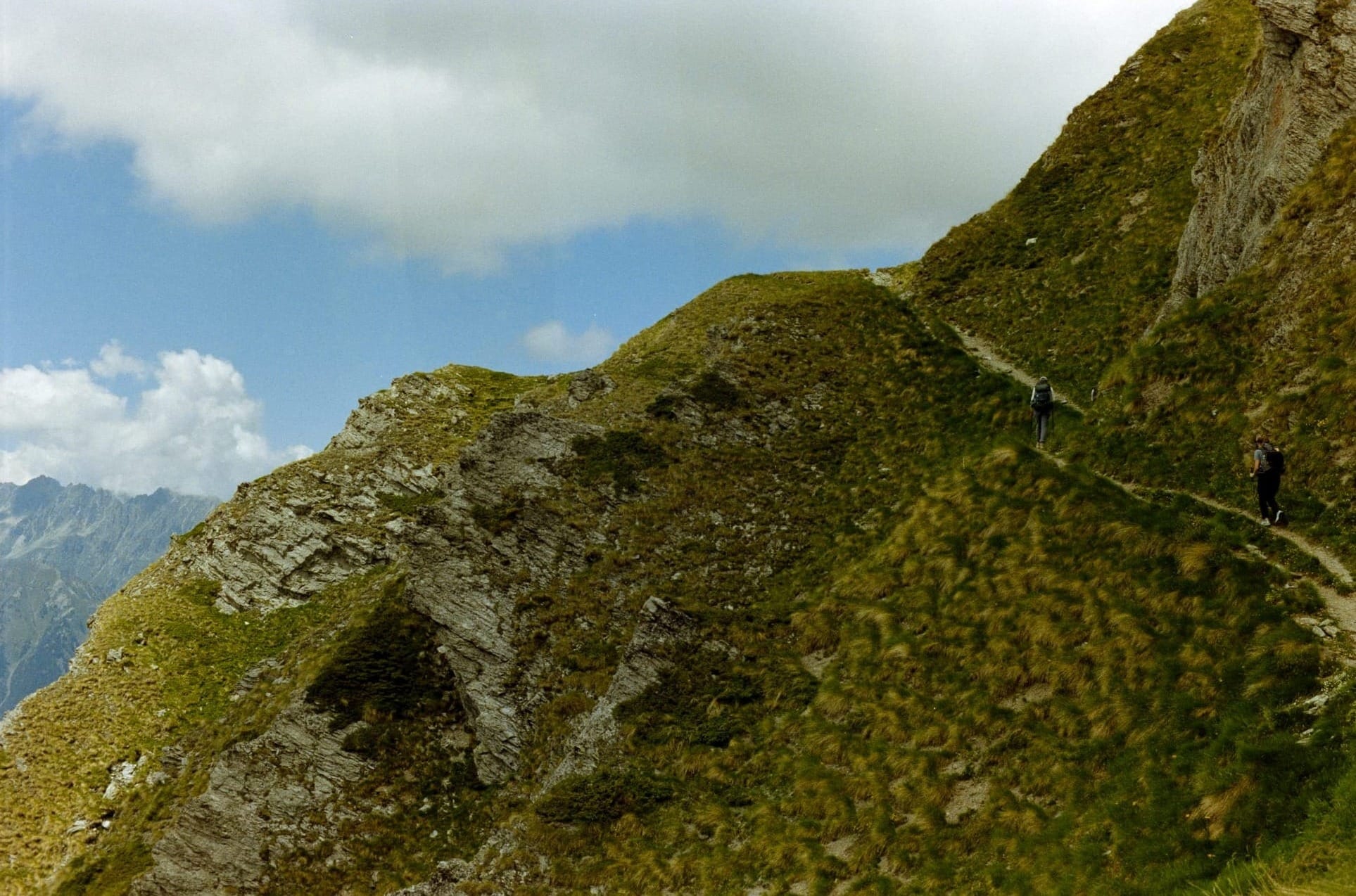
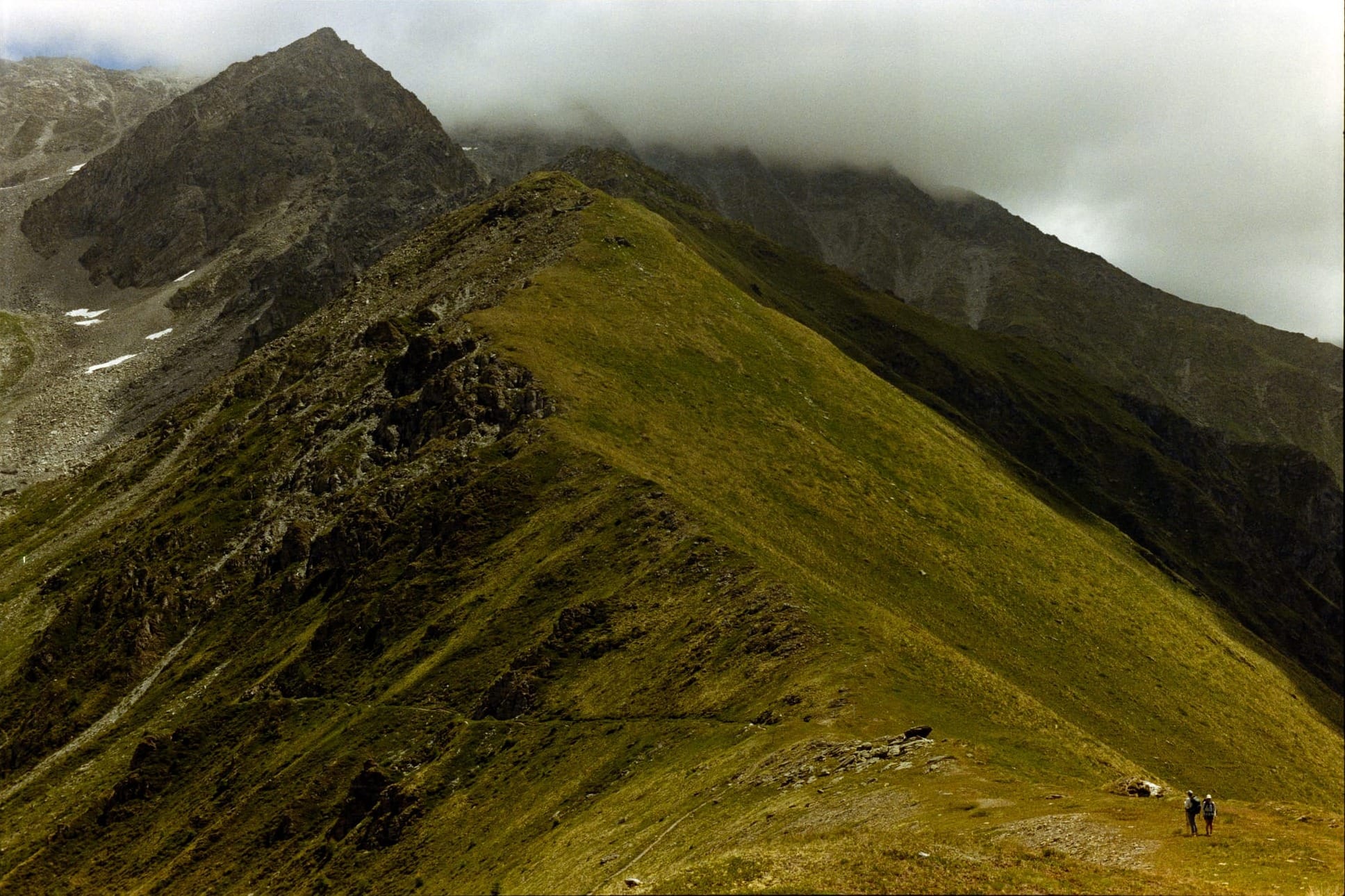
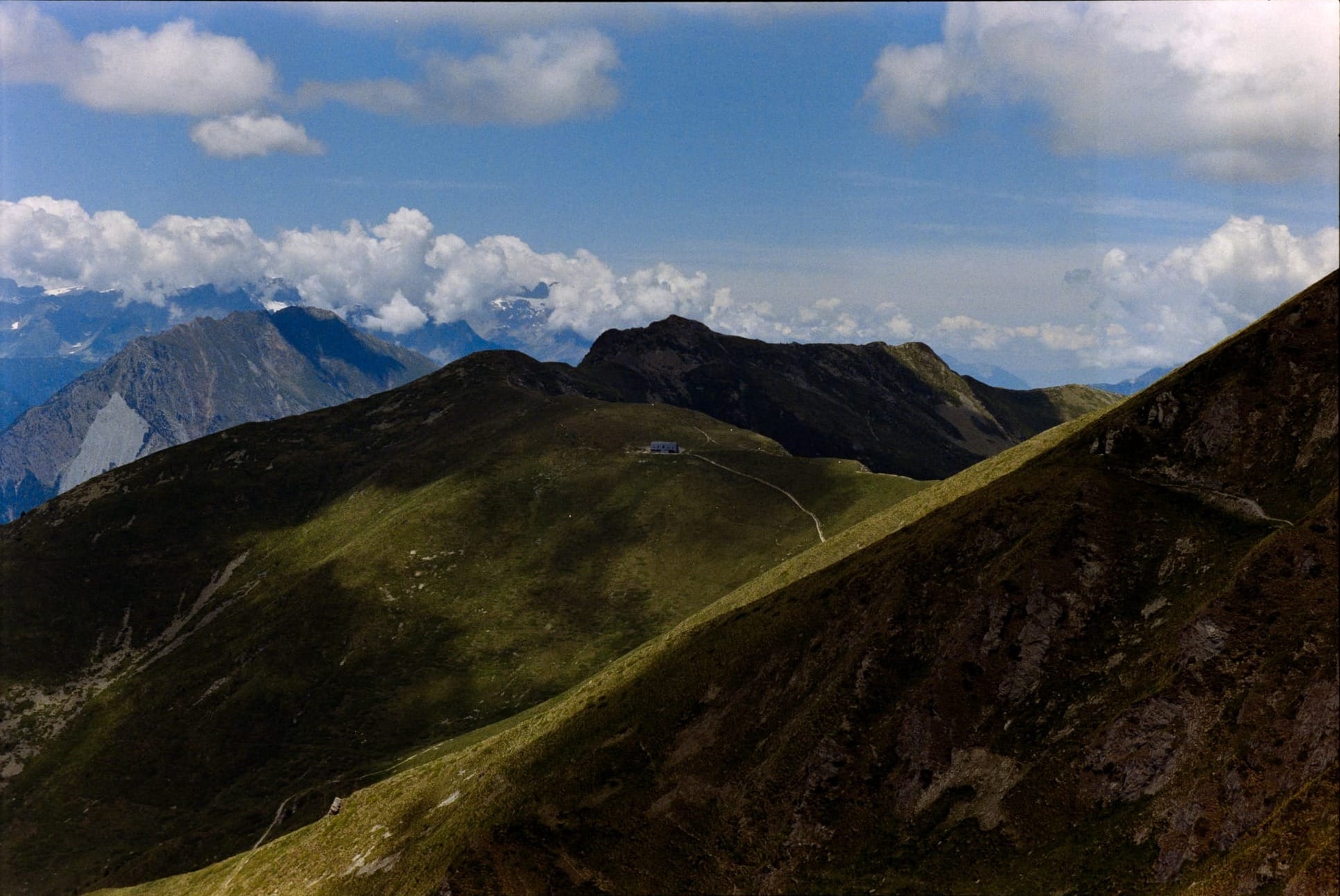
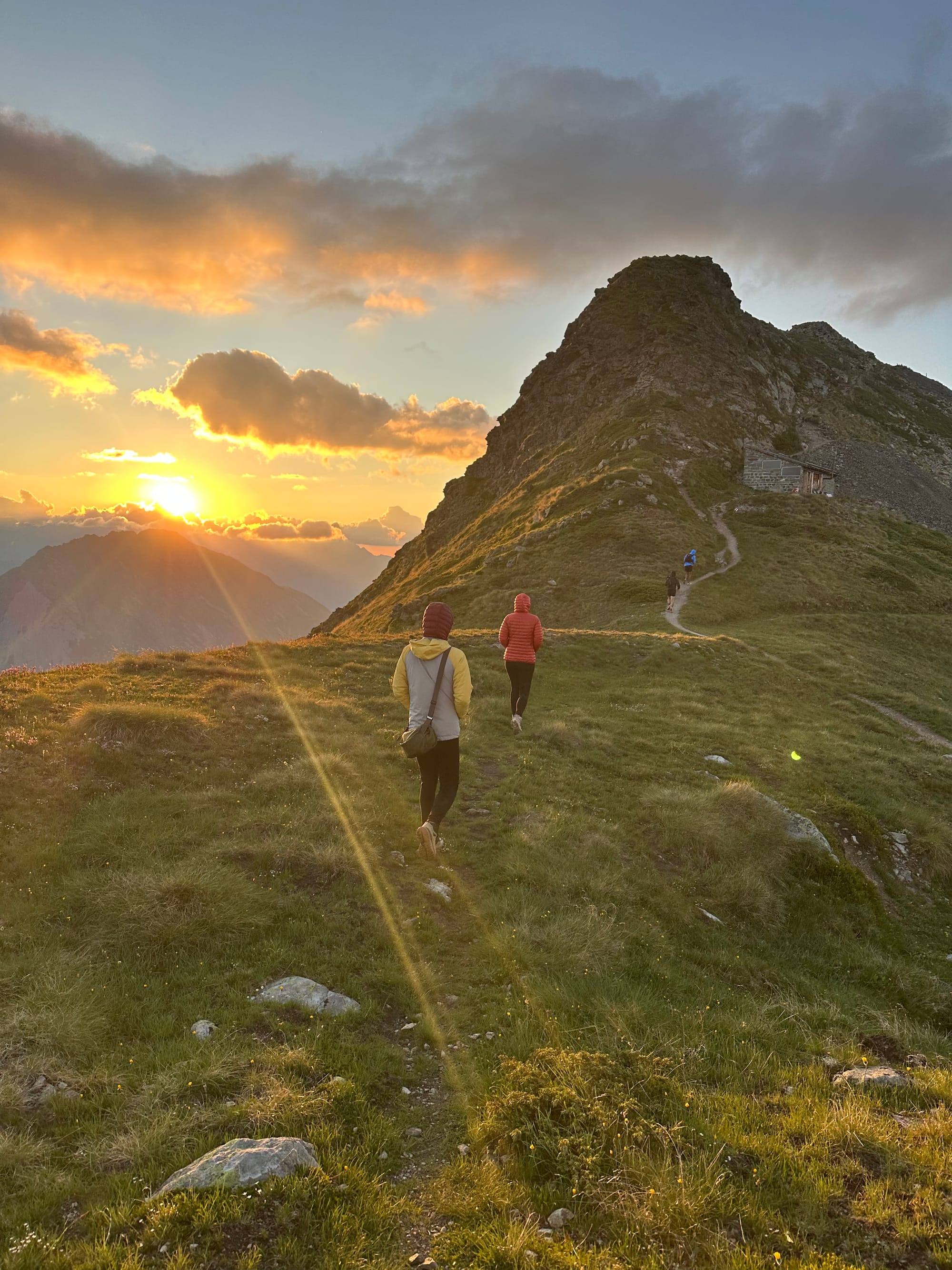
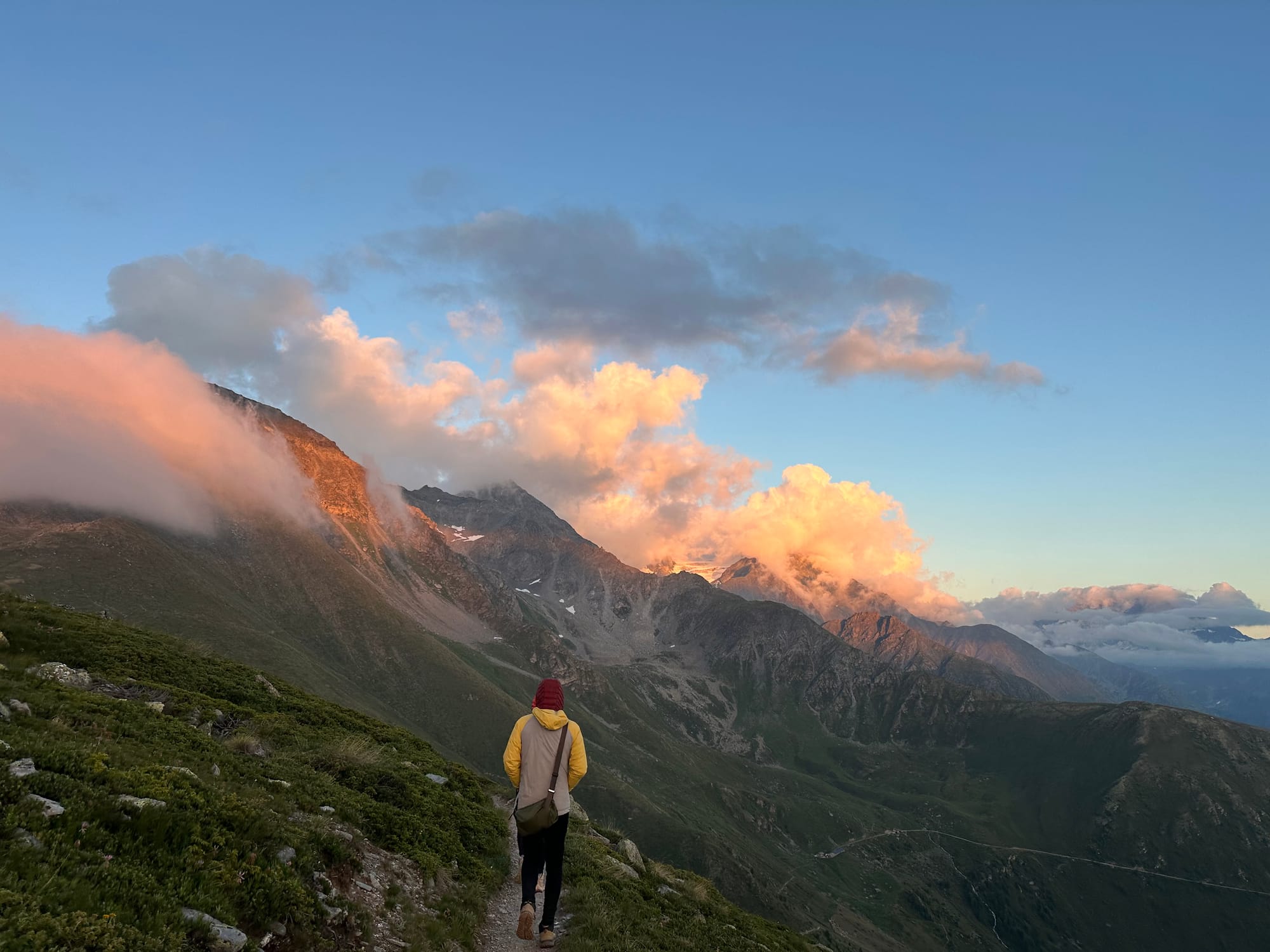
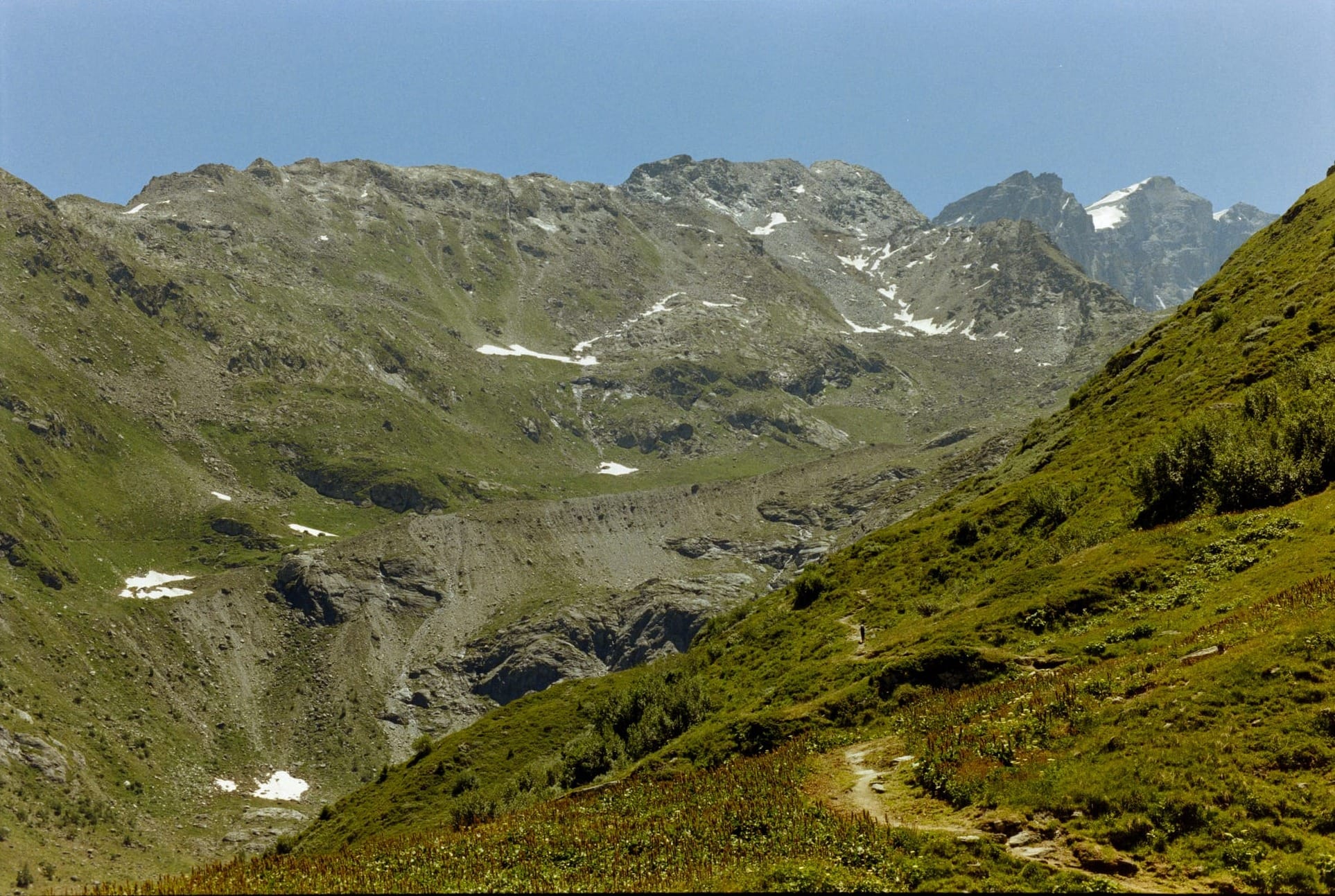
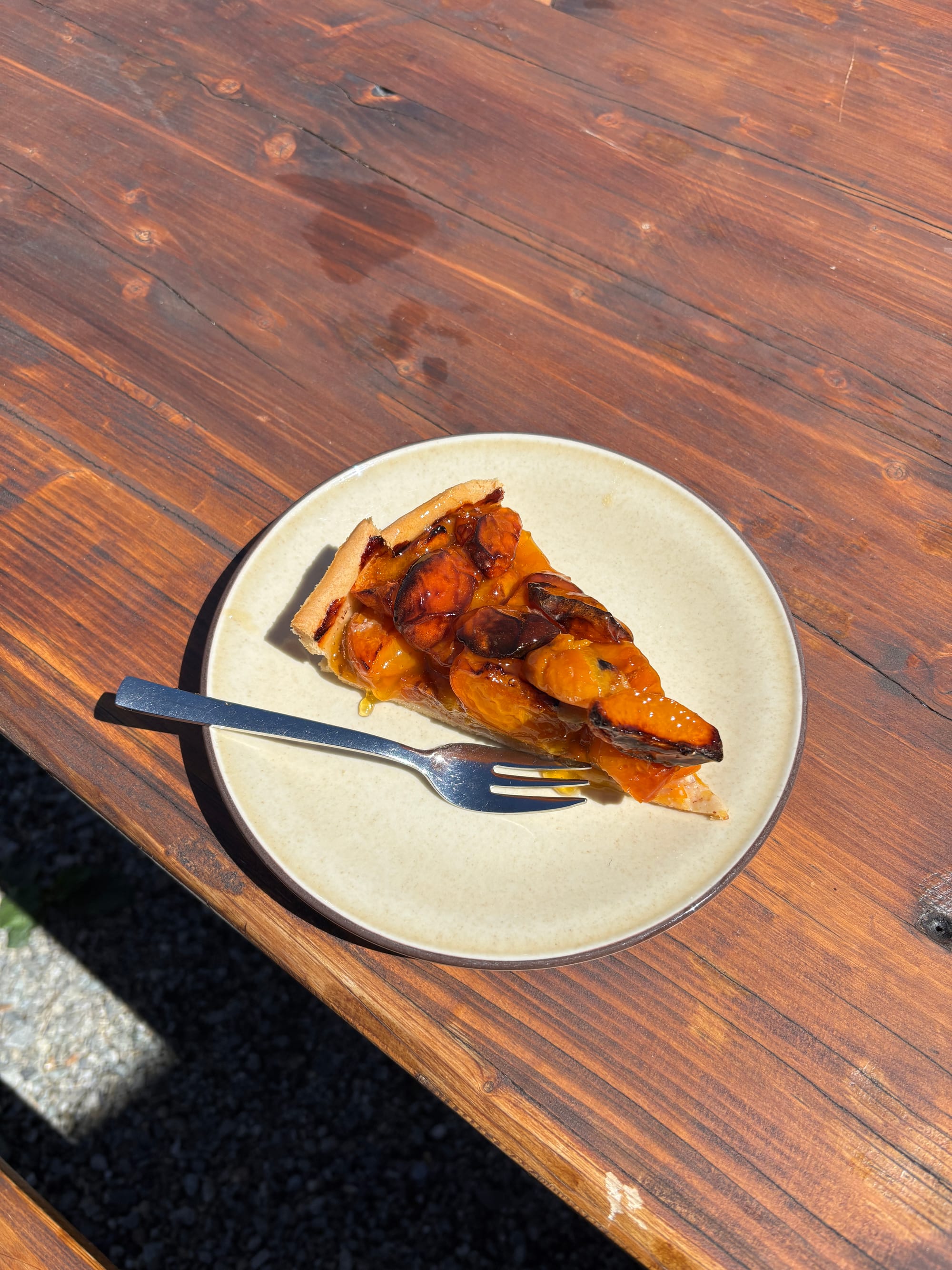
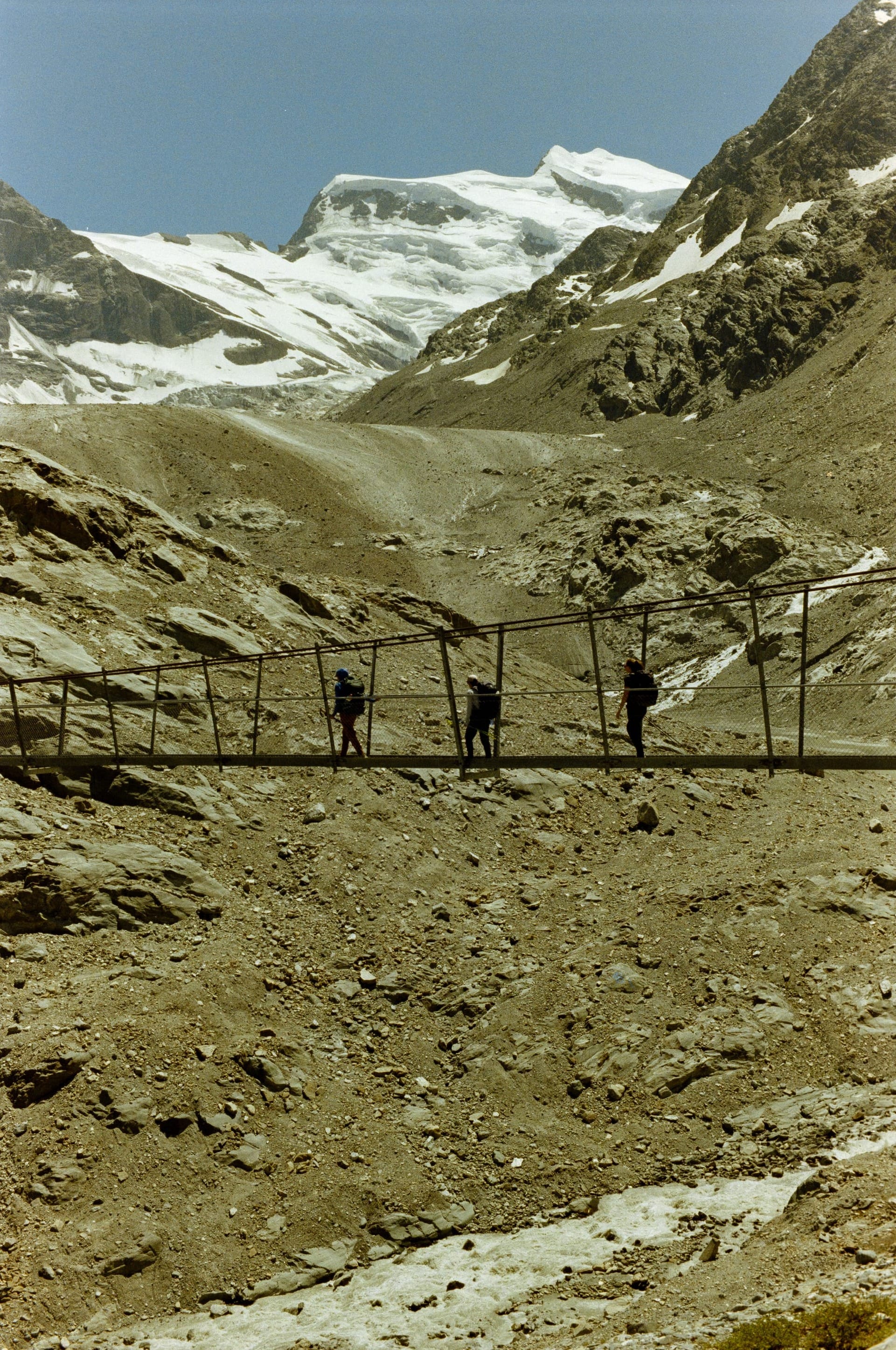
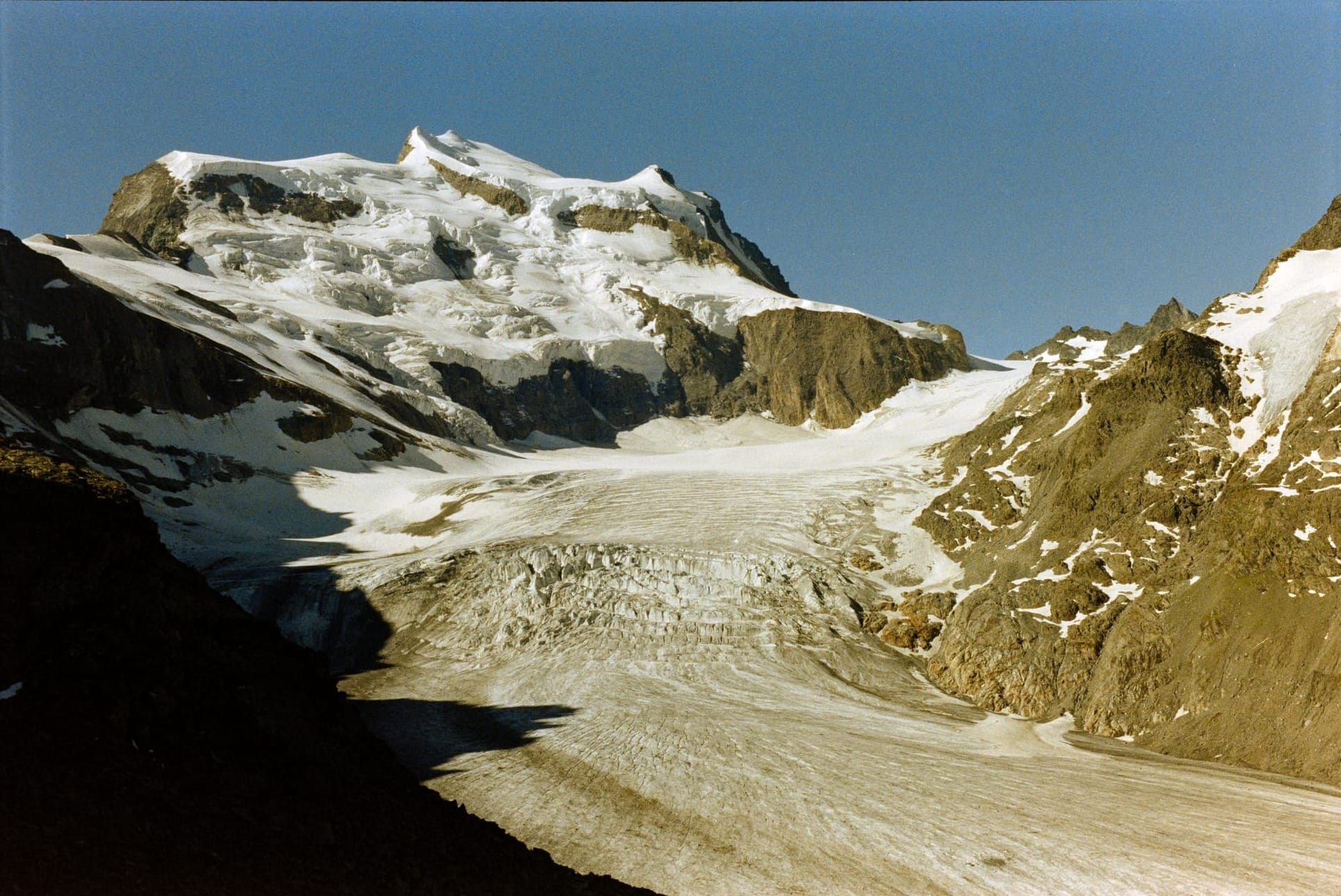
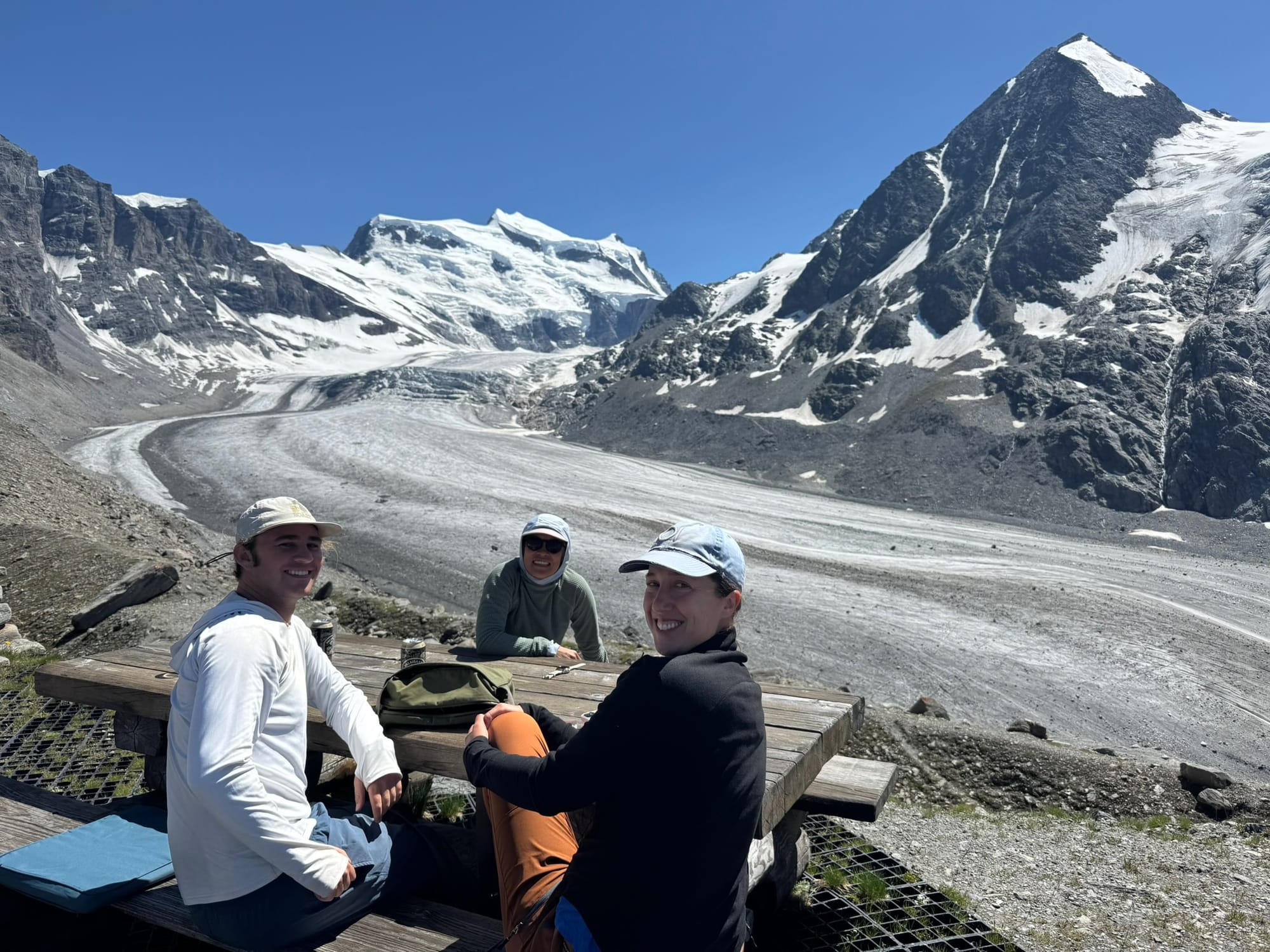
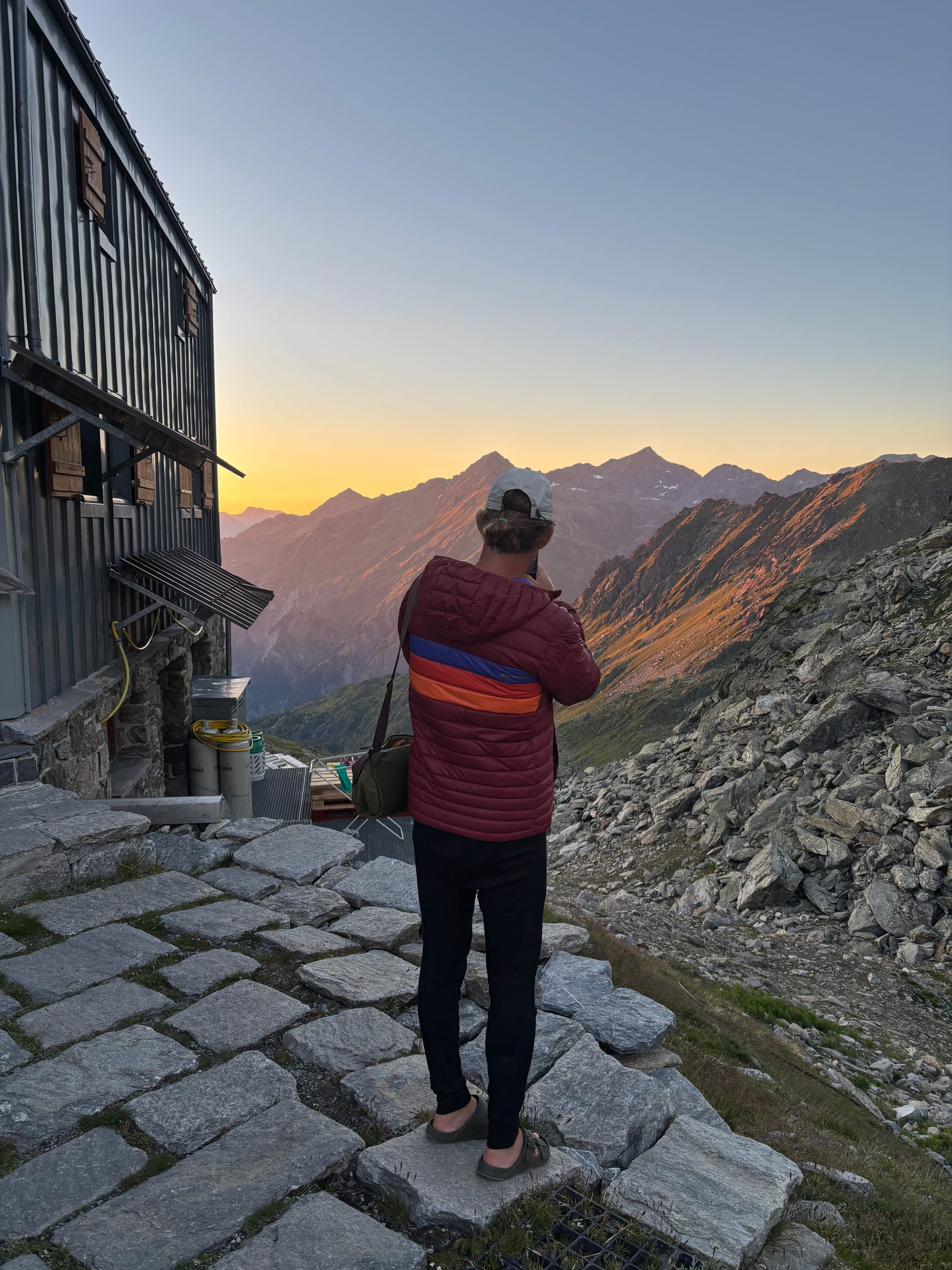
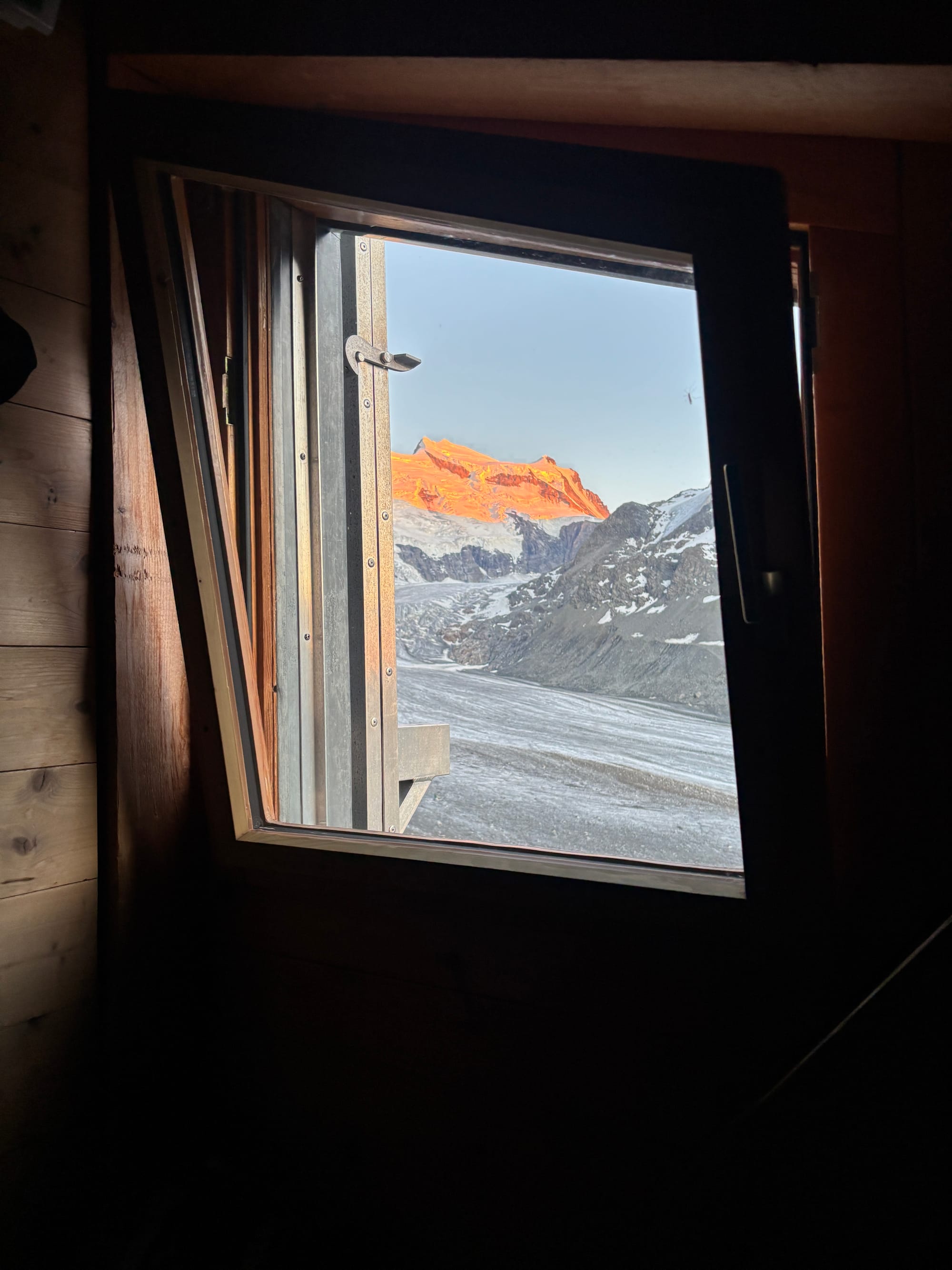
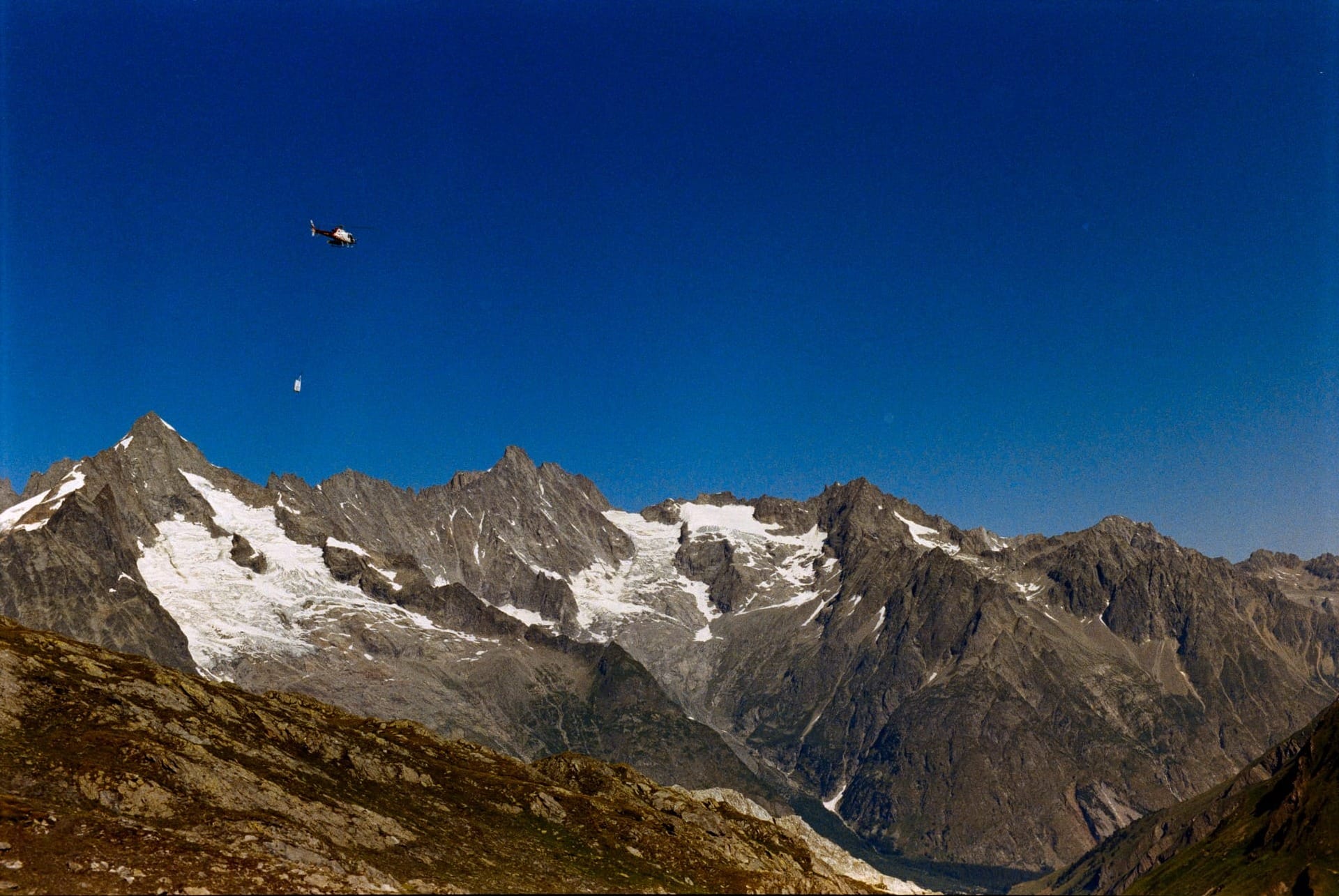
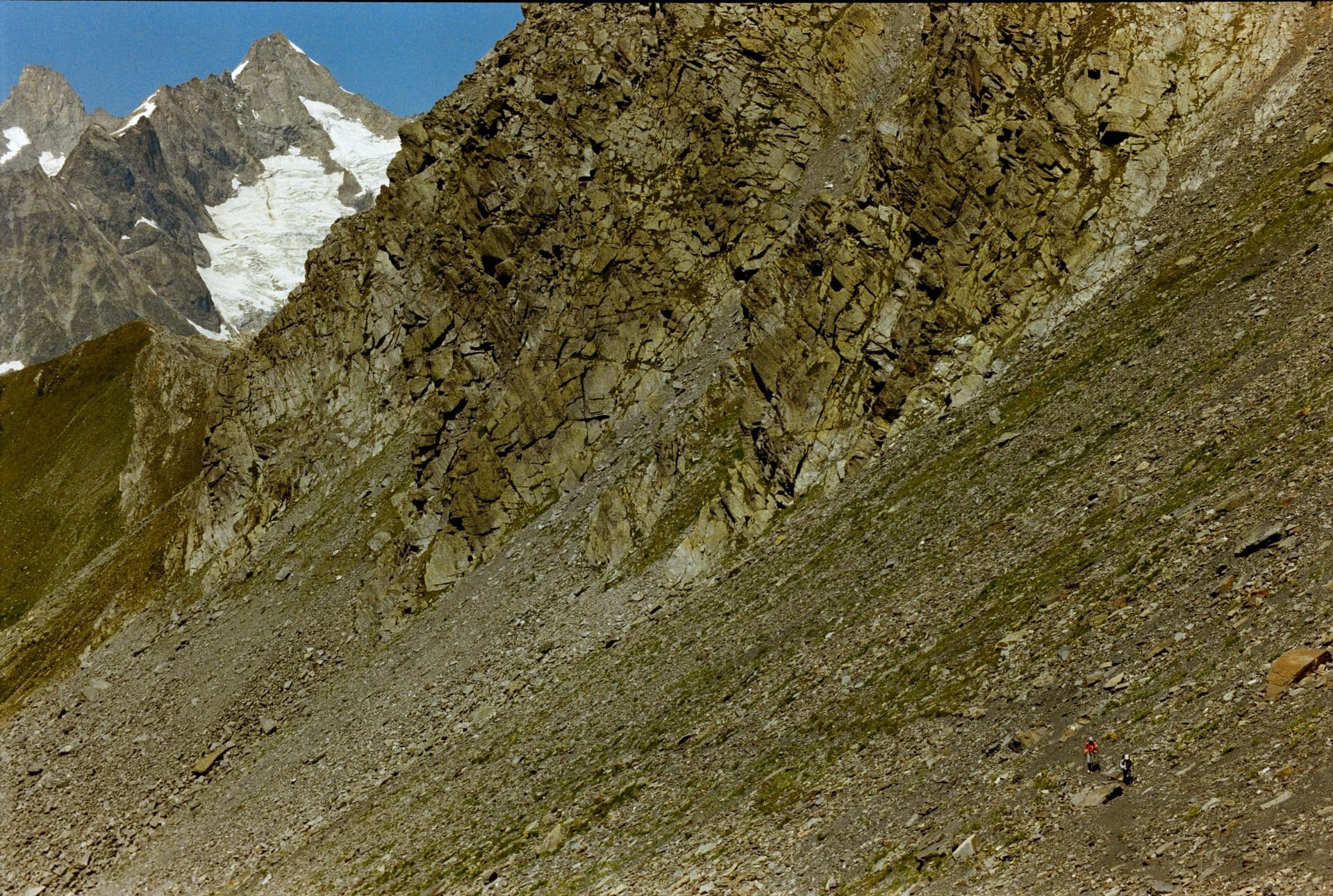
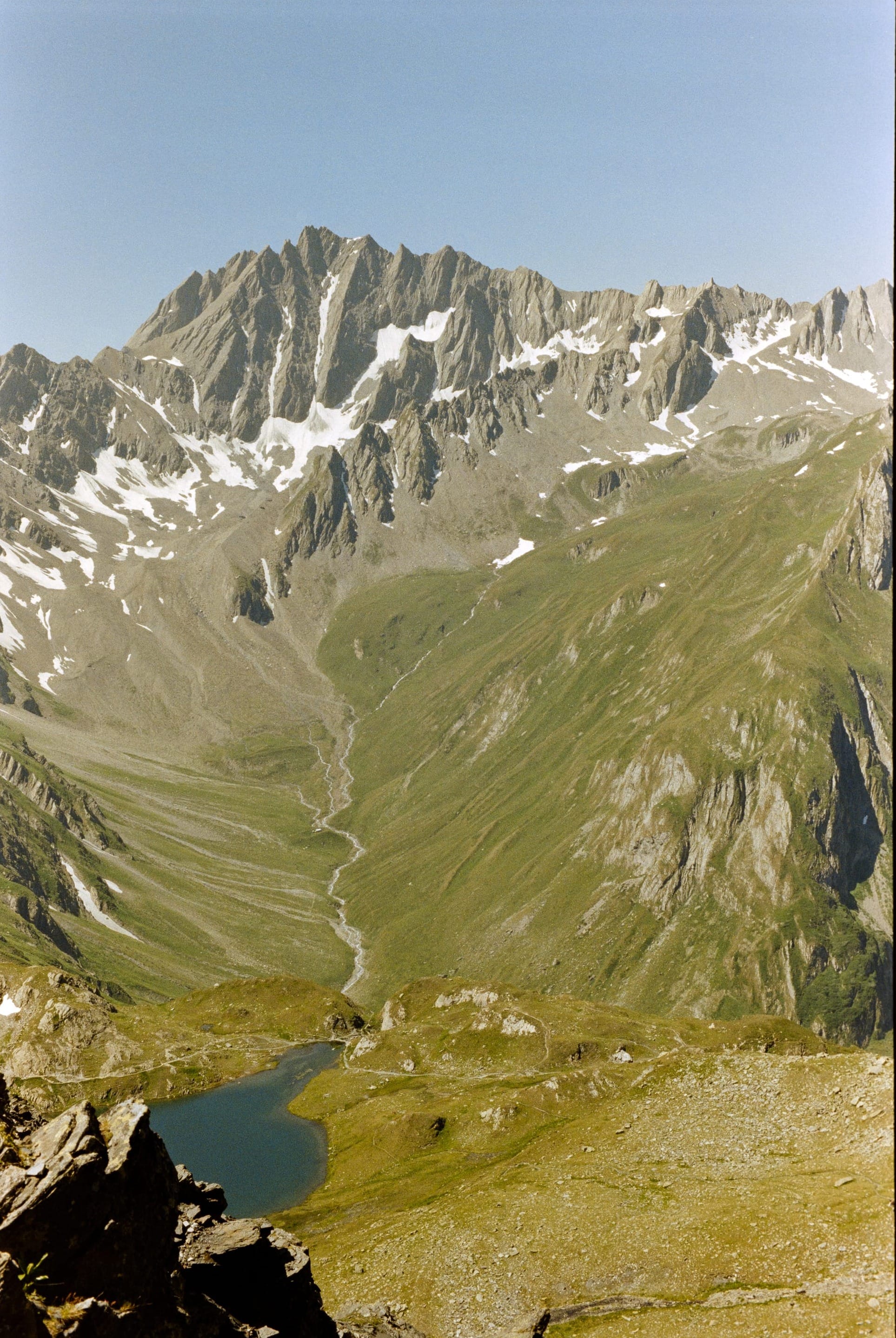
Our second day was about 9.5 miles and with a similar 3,600 feet of elevation gain. The huts are all situated at high altitude so each morning will begin with a steep descent, 1-2 passes back at about 8-10,000 feet, and usually another steep ascent to the overnight hut. We started with a descent into fields of wild rhubarb and after a few hours of hiking through the valley we stopped for a picnic lunch at Cabane Brunet and shared a slice of some incredible apricot tart. Memories of the apricot tart made the 3,500 foot climb up to our next hut, FXB Panossiere, more tolerable. The hut had a sweeping view of the Glacier de Corbassière and Grand Combin massif and the rocky moraine that stretches into the valley below. The glacier was profound in size as we gazed at it from the hut. The FXB hut was built in 1996, but previous huts have existed in this same area since the 1880s. There are photos of the glacier on the wall of the hut from the 1960s and it was shocking and devastating to see how much mass the glacier has lost even though it still looked enormous to us. It is only half the size as it was 100 years ago, and has lost 25% of its mass in the last 20 years and has been melting at its fastest pace since 2018. We cherished the alpenglow during another great sunset.
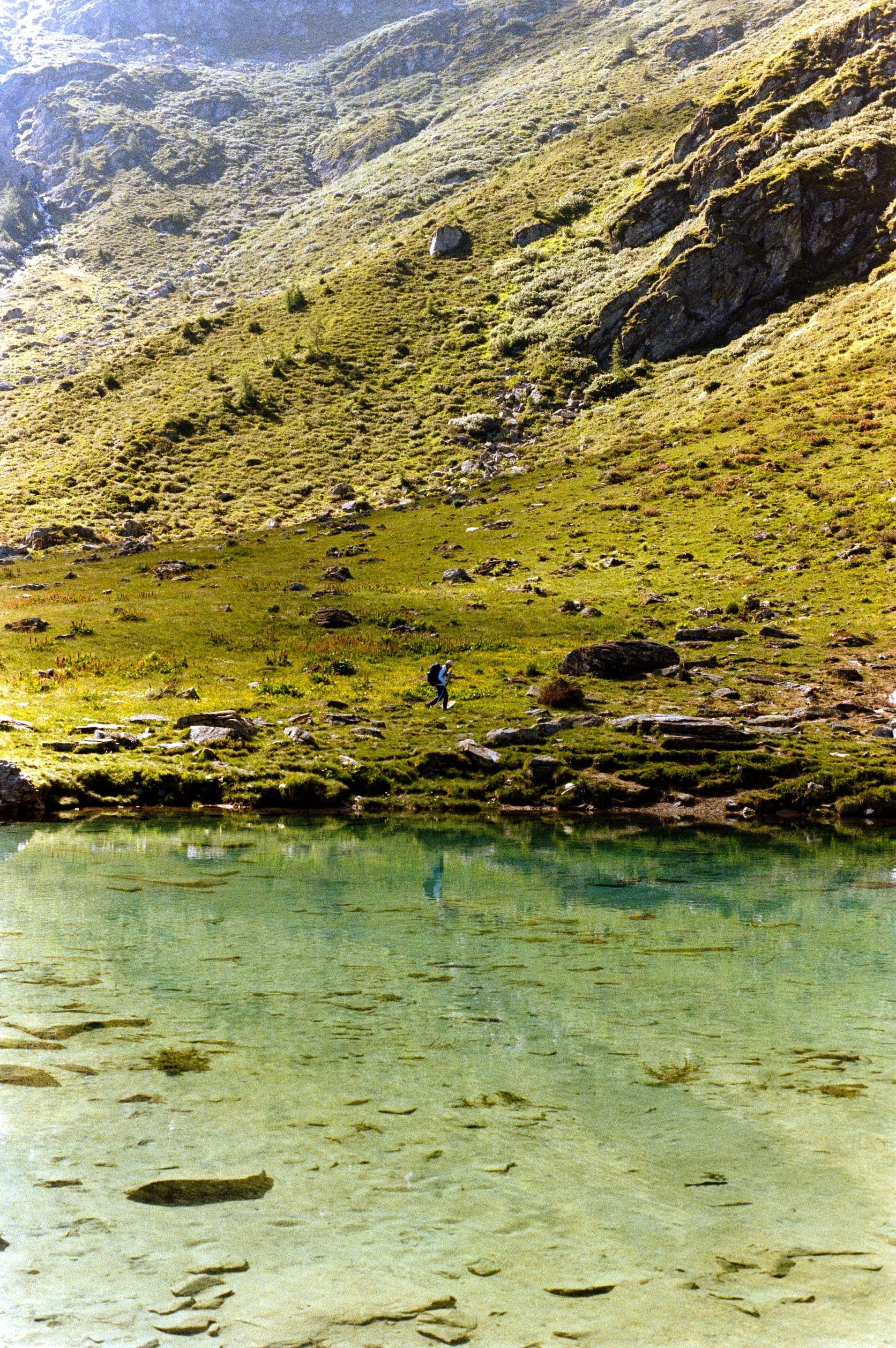
We had a mellow Day 3 with only about 6 miles to Hotel Mauvoisin which is built under the ominous Mauvoisin Dam. The TDC is routed so that it would be nearly impossible to not take a short day on one of the 7 days of hiking due to the location of the huts. We were happy with our choice! It was a devastating 3,600 foot descent over the first 3 miles so we were happy to give our feet a shorter day. Just next to Hotel Mauvoisin was an art installation from Michael Heizer. We visited his pieces before in D.C. at the Glenstone Museum. How odd and coincidental to see his “Tangential Circular Negative Line” in the middle of the Swiss wilderness.
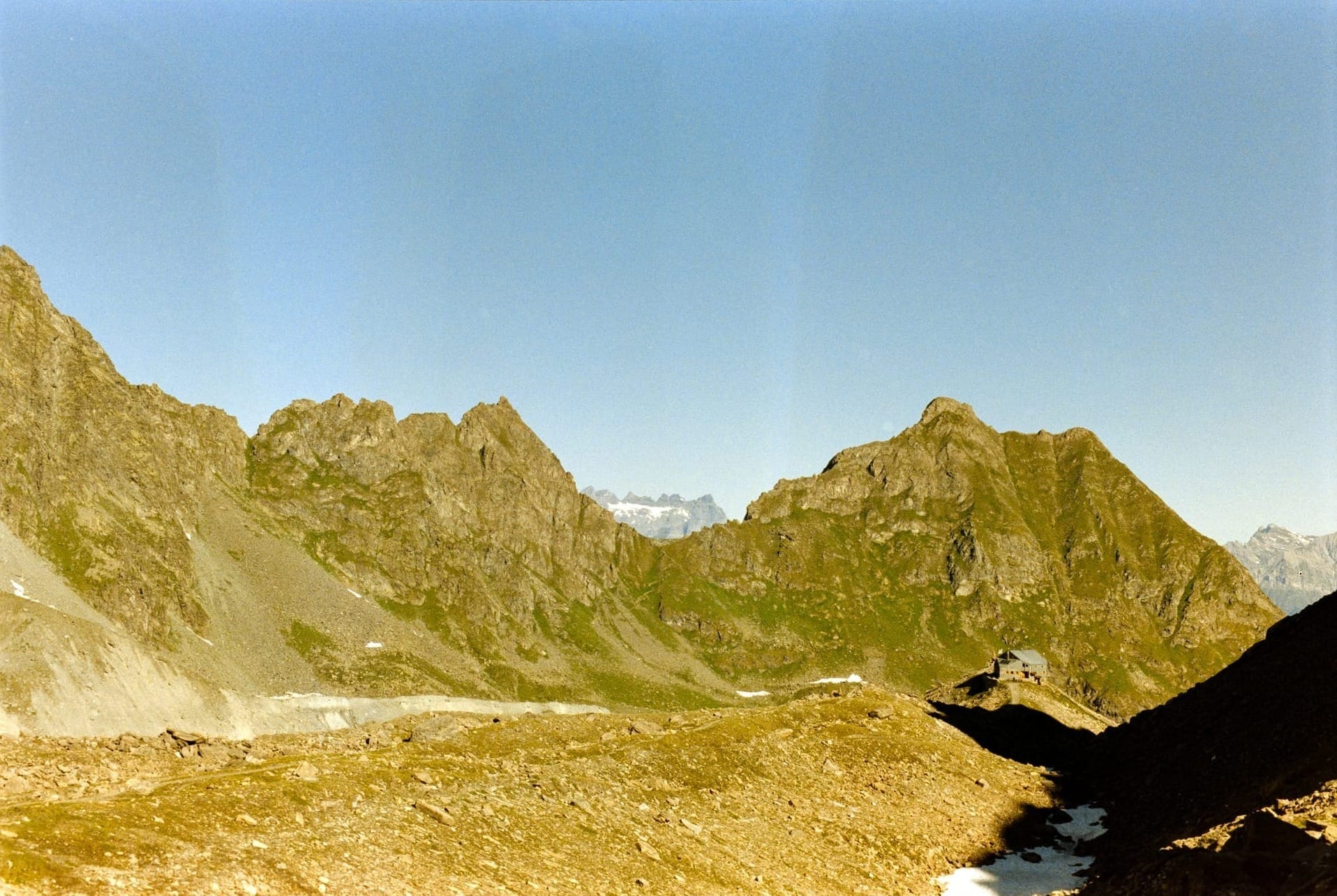
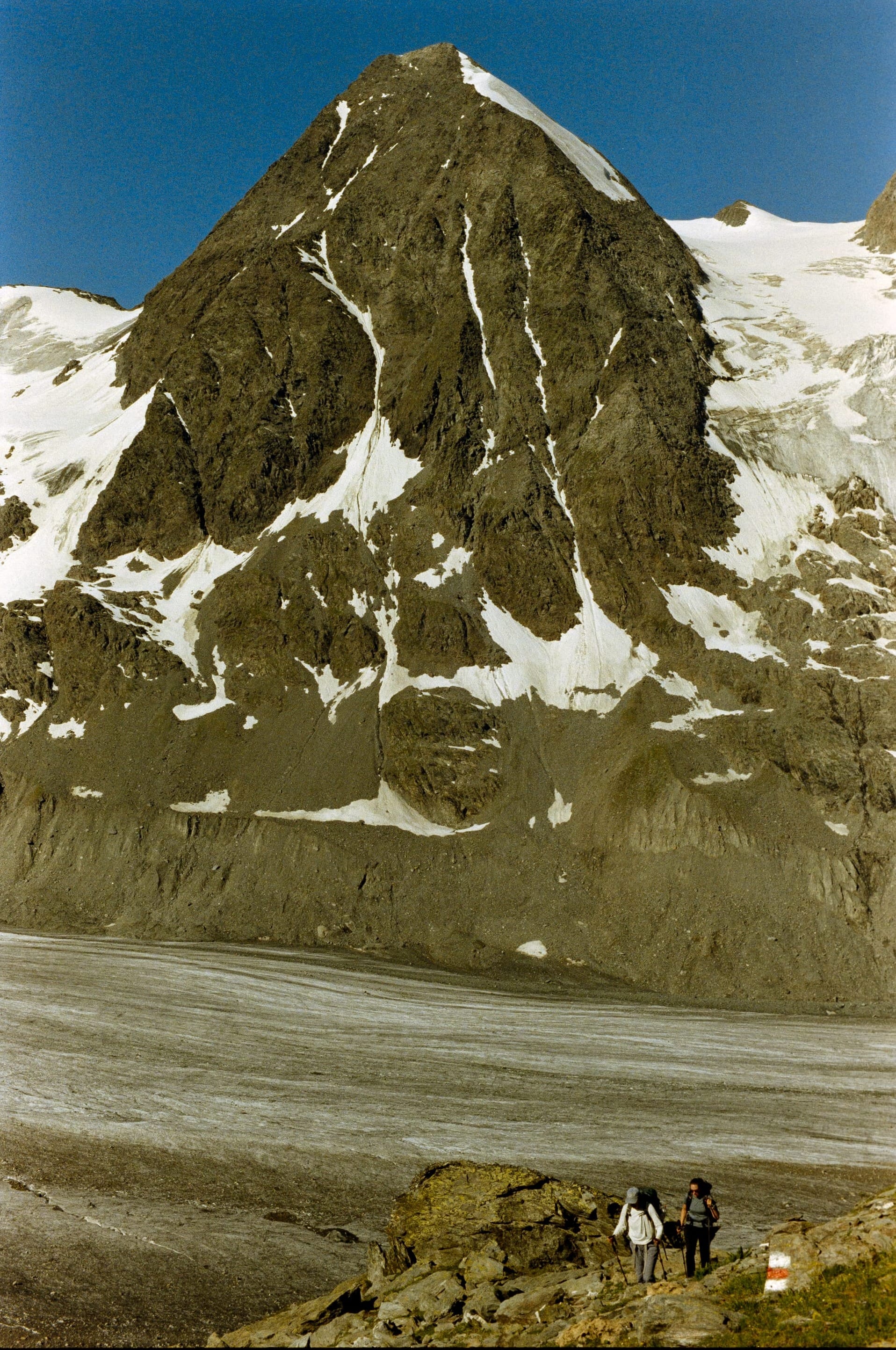
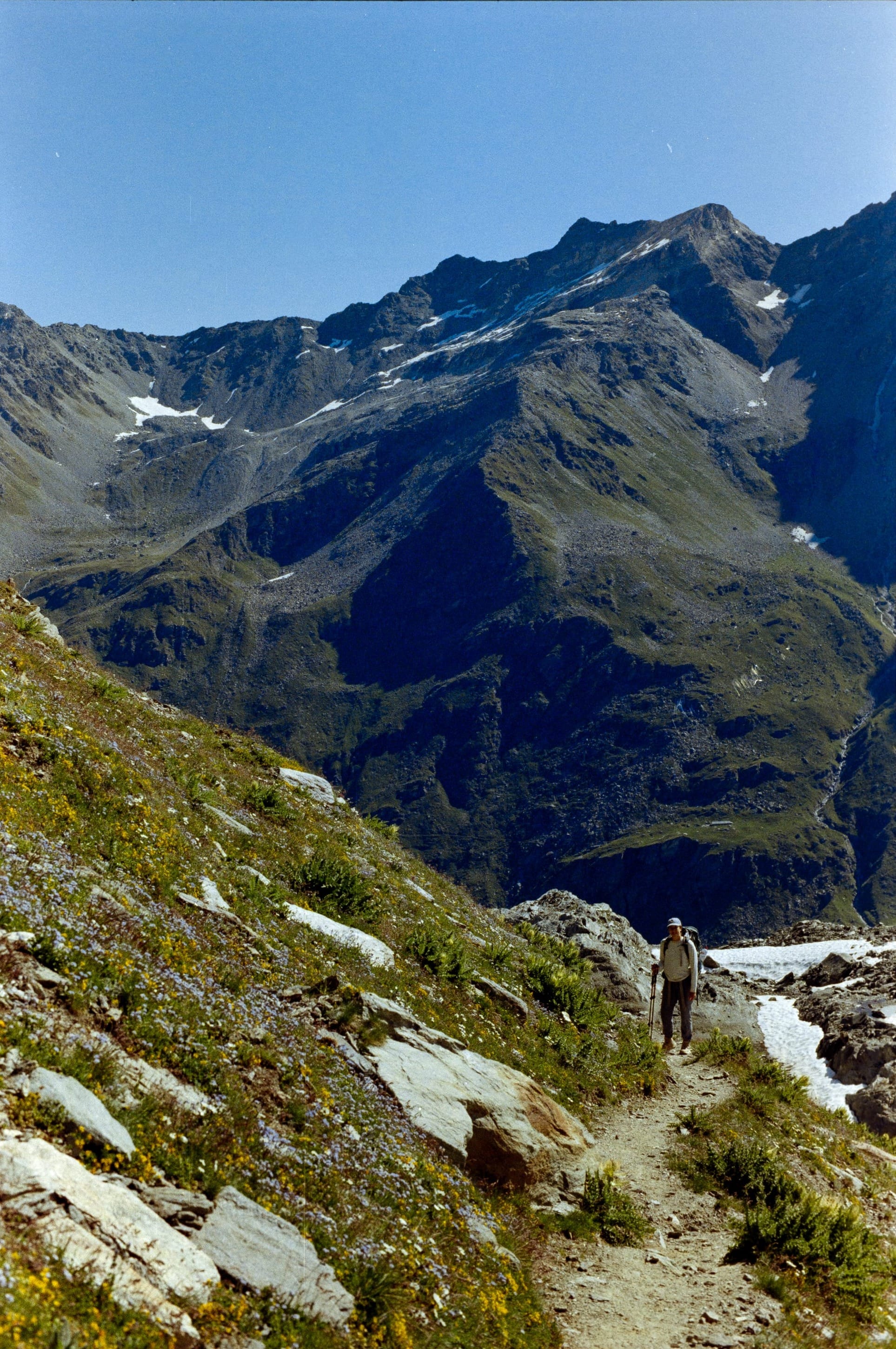
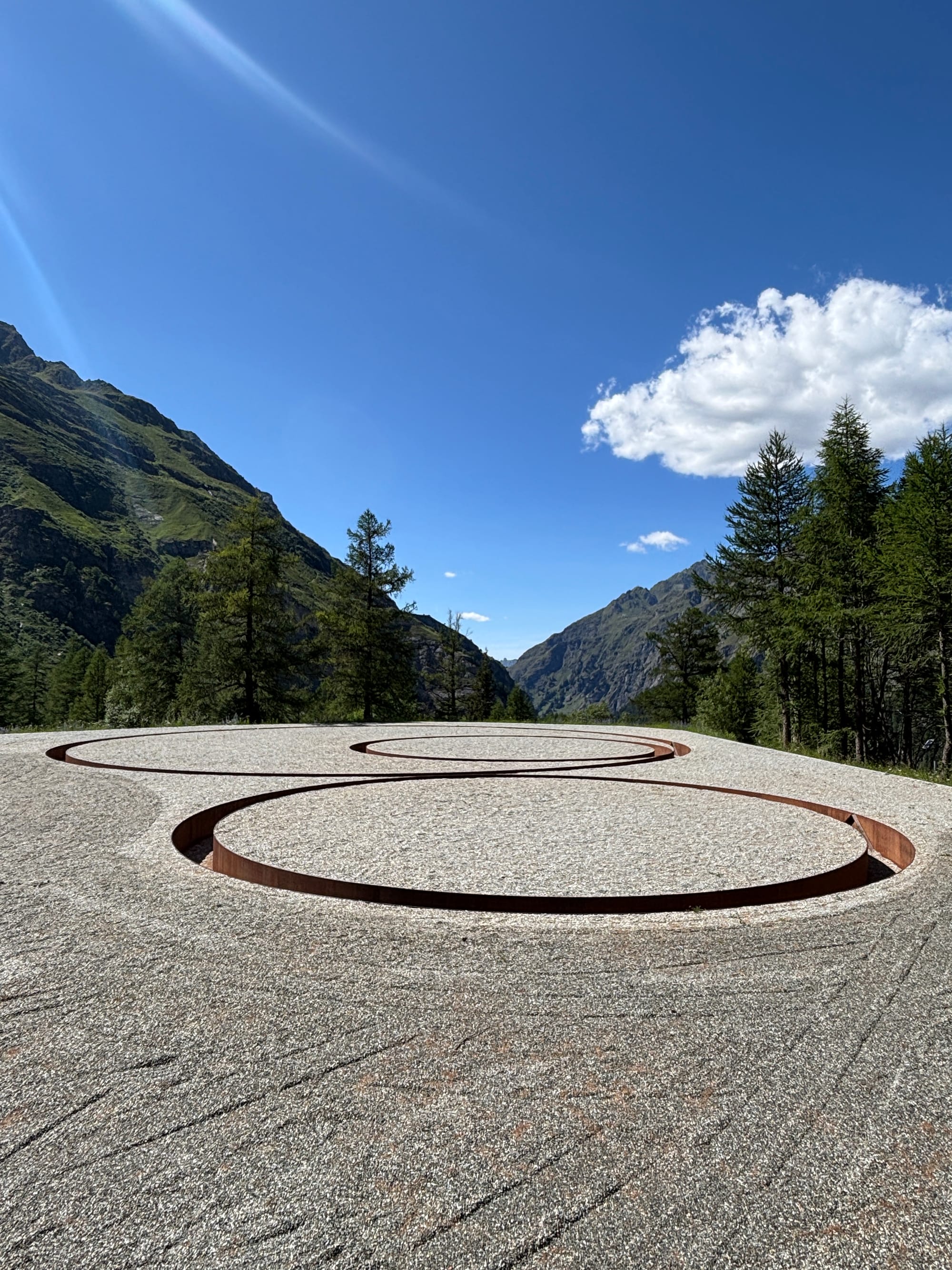
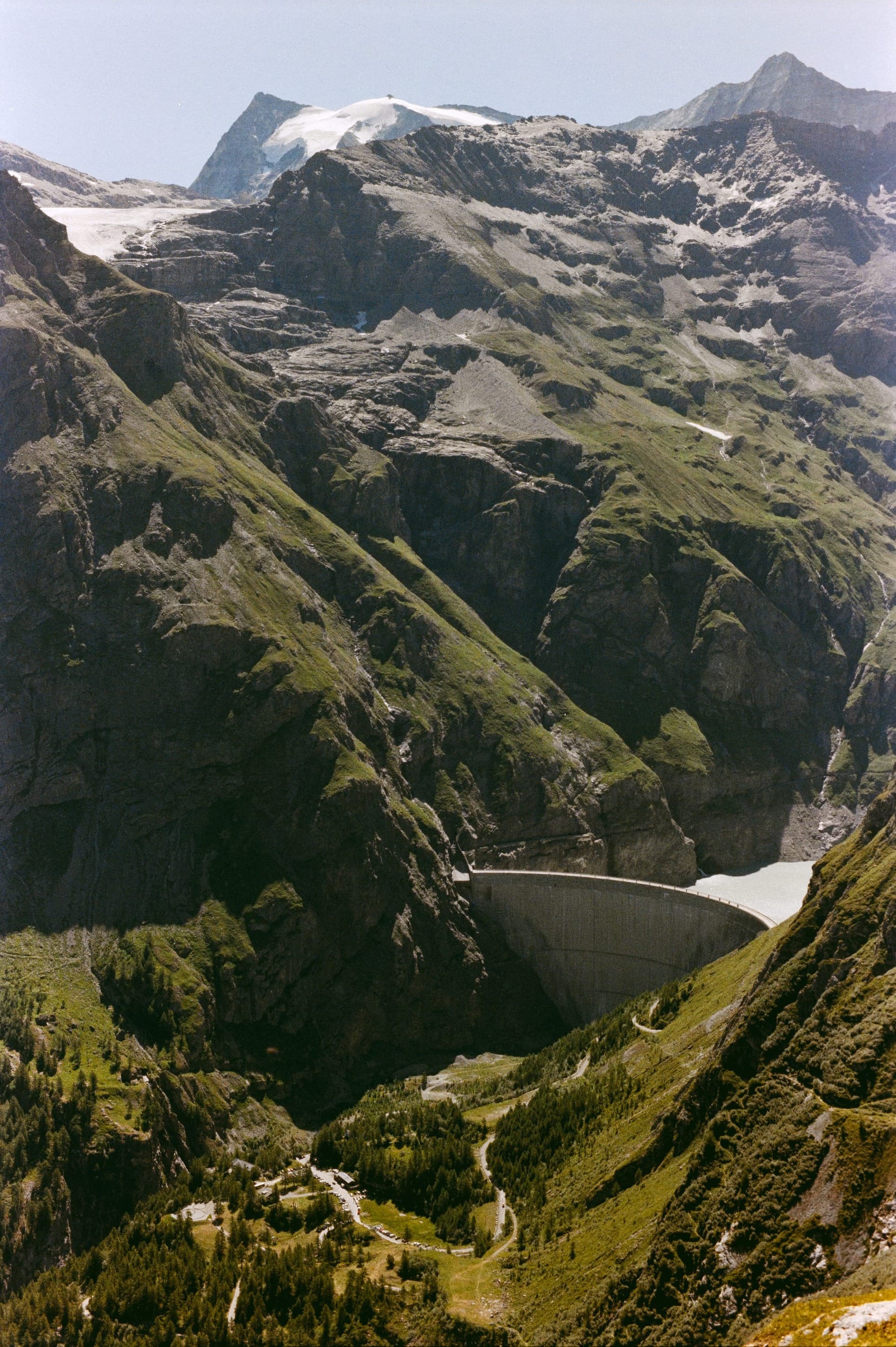
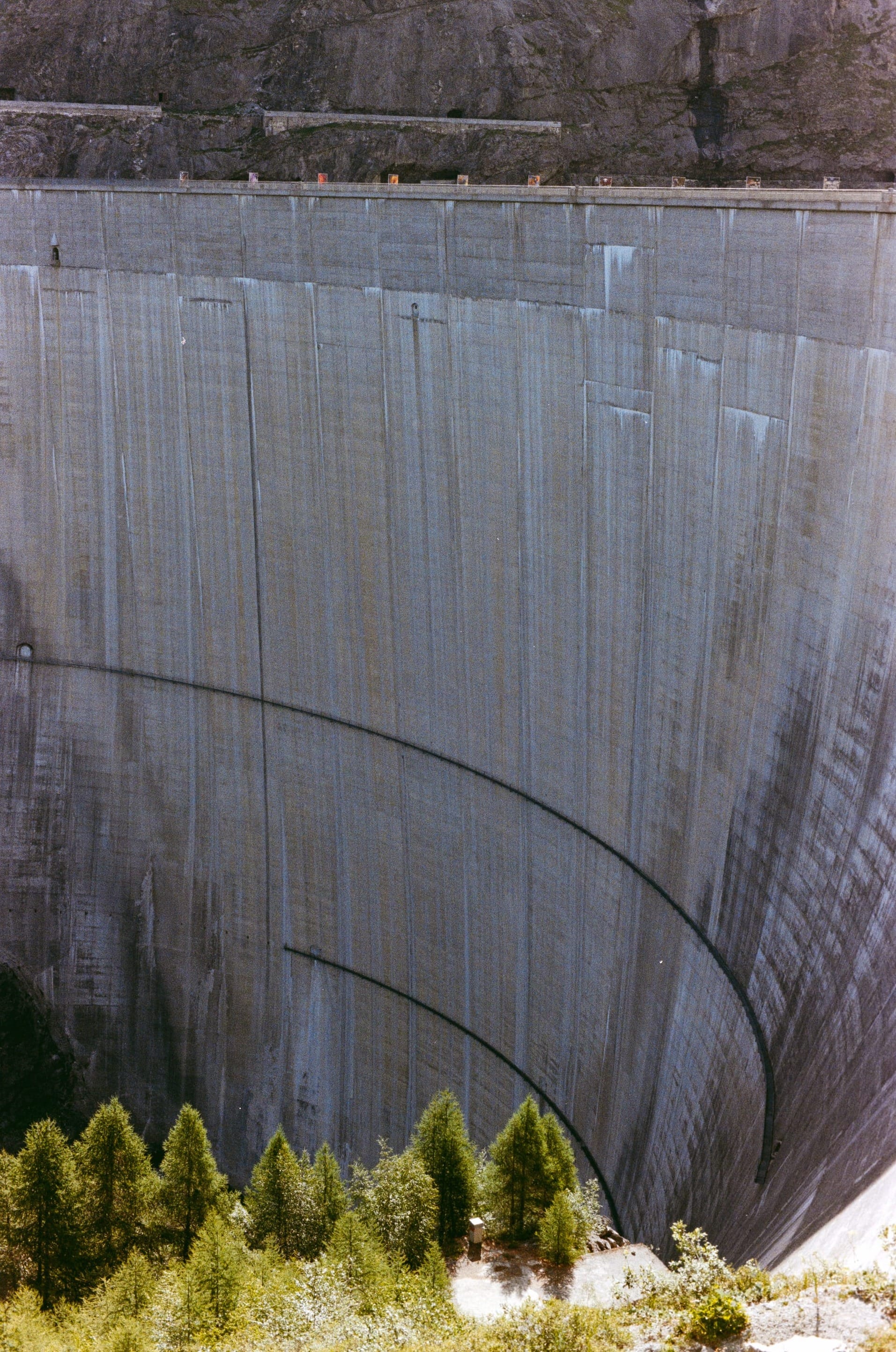
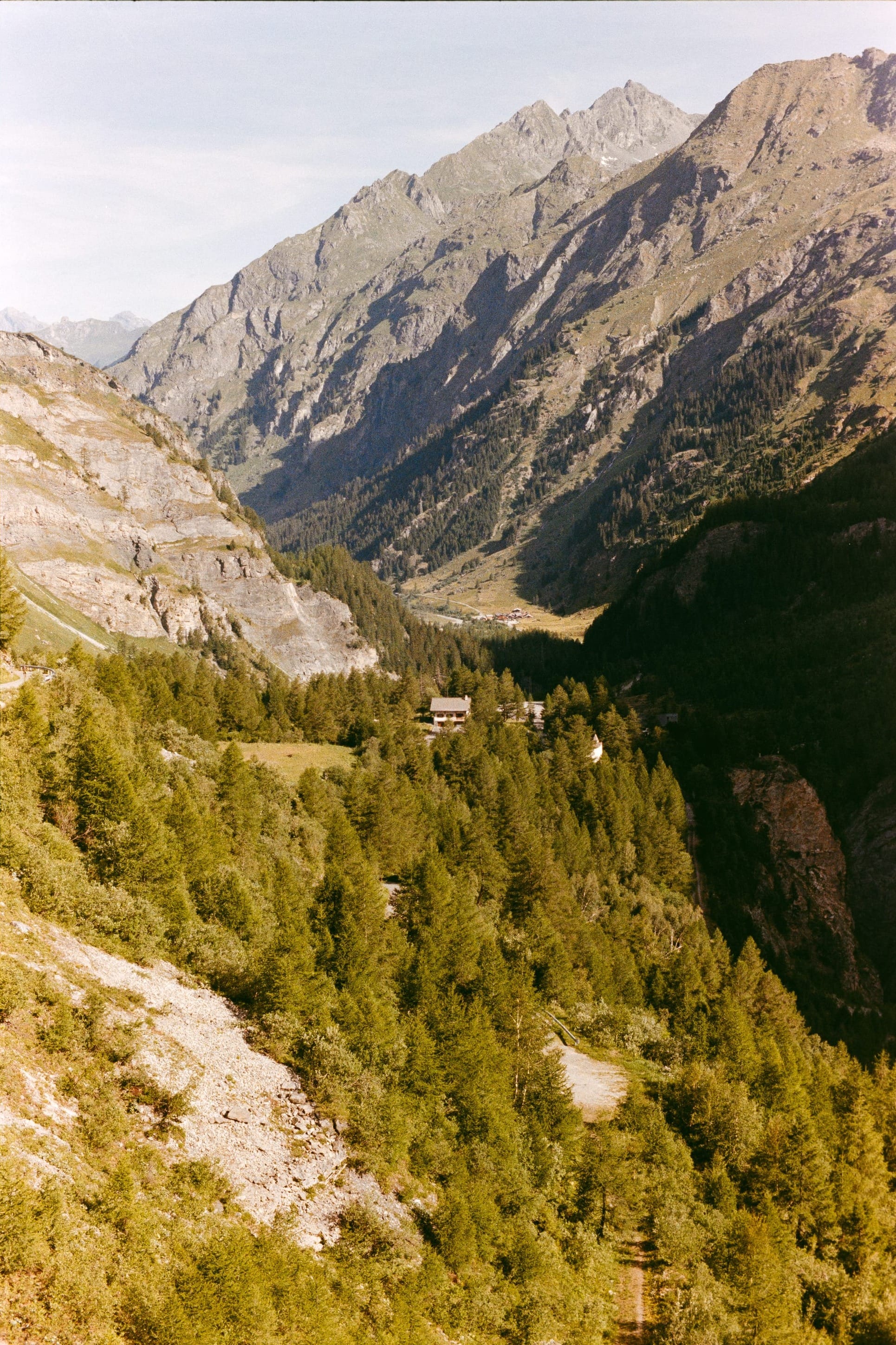
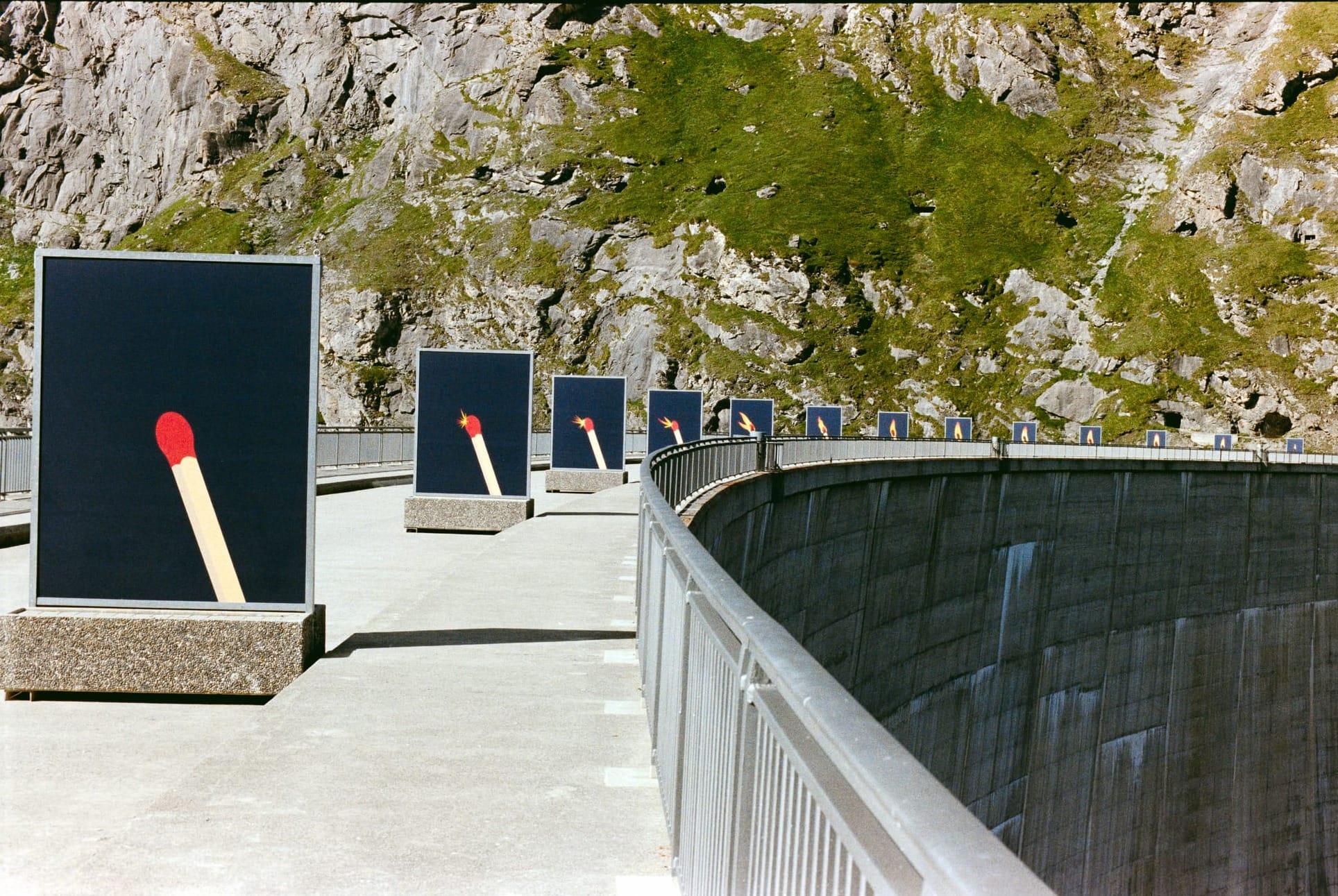
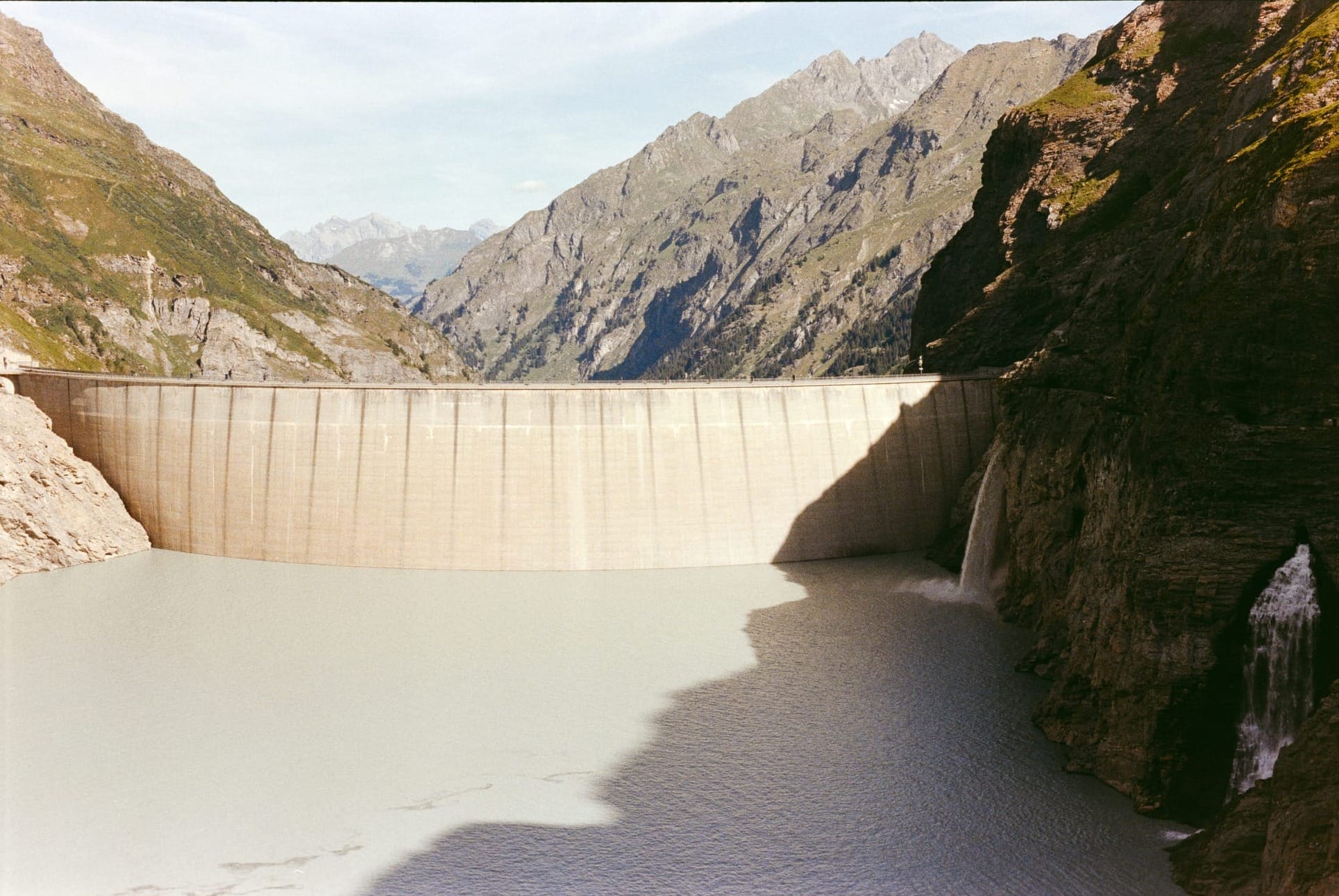
Mauvoisin Dam is a spectacular edifice. It was built in the 1950s for hydroelectric power but also for disaster prevention from the Gietro Glacier. The melting glacier previously wreaked havoc on the downstream valley, most noteably in 1818 when an outburst destroyed everything downstream and killed dozens of people. The dam is 250 meters tall and is the largest arched dam in Europe and the 8th highest dam in the world. After our night in Mauvoisin the trail to ascend back into the high altitude began in a series of caves that led steeply to the crest of the dam and we walked along the top admiring the vertigo-inducing drops into Lac de Mauvoisin. We did our typical roller-coaster ascents and descents until after about 11 miles we ended at 8,000 feet at Chanrion hut. We had grown accustomed to the hut tart and enjoyed a slice of wild rhubarb as our welcome snack!
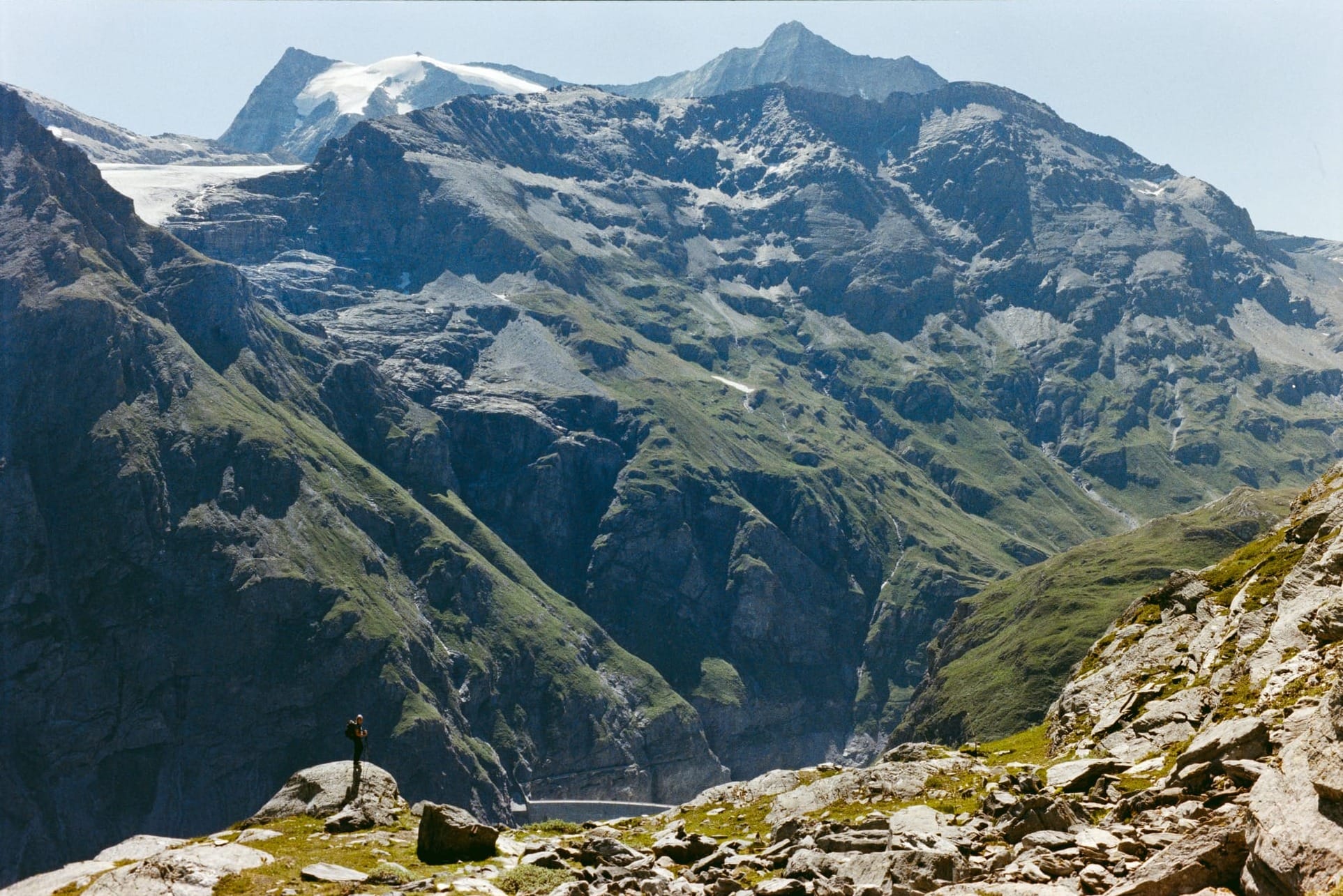
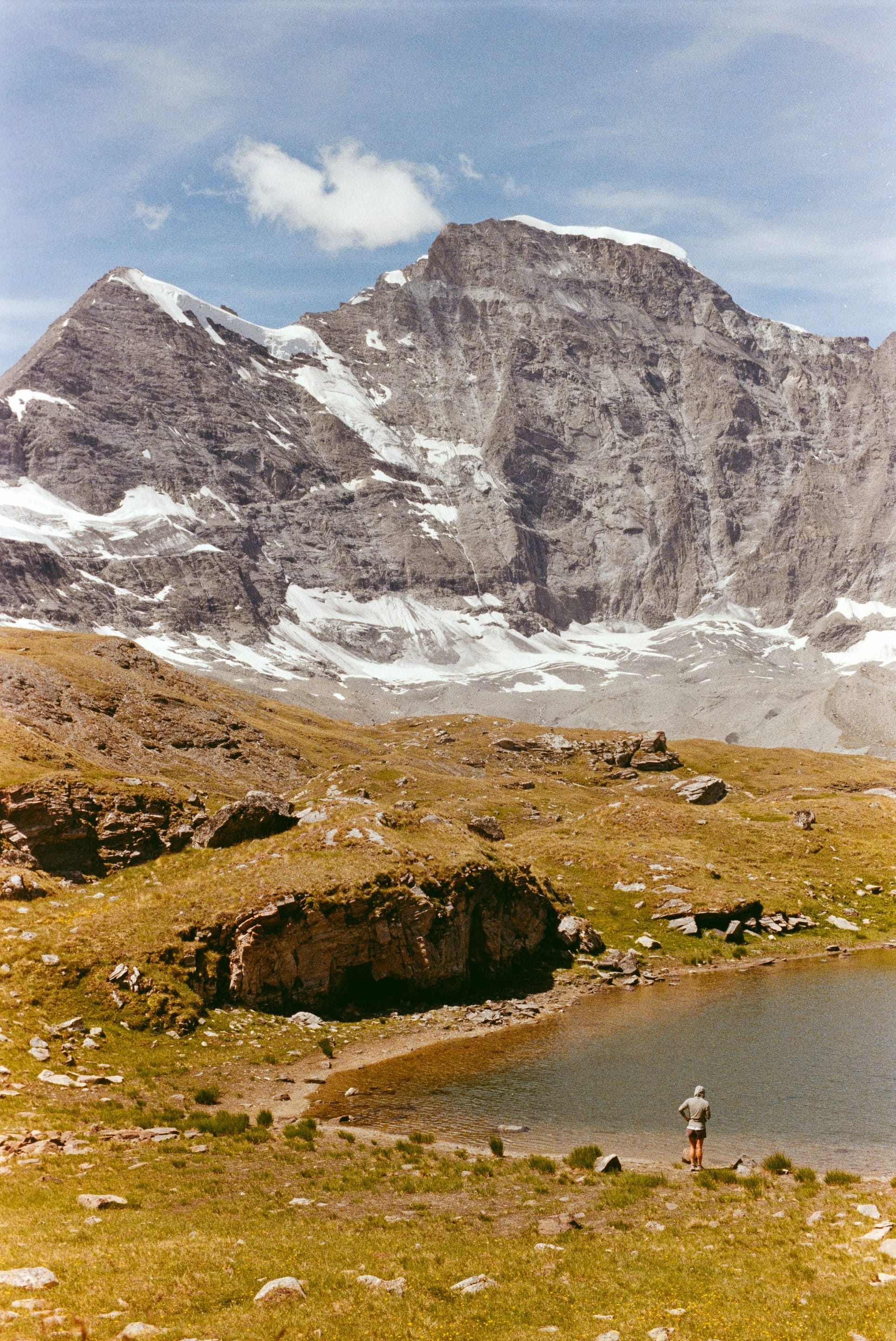
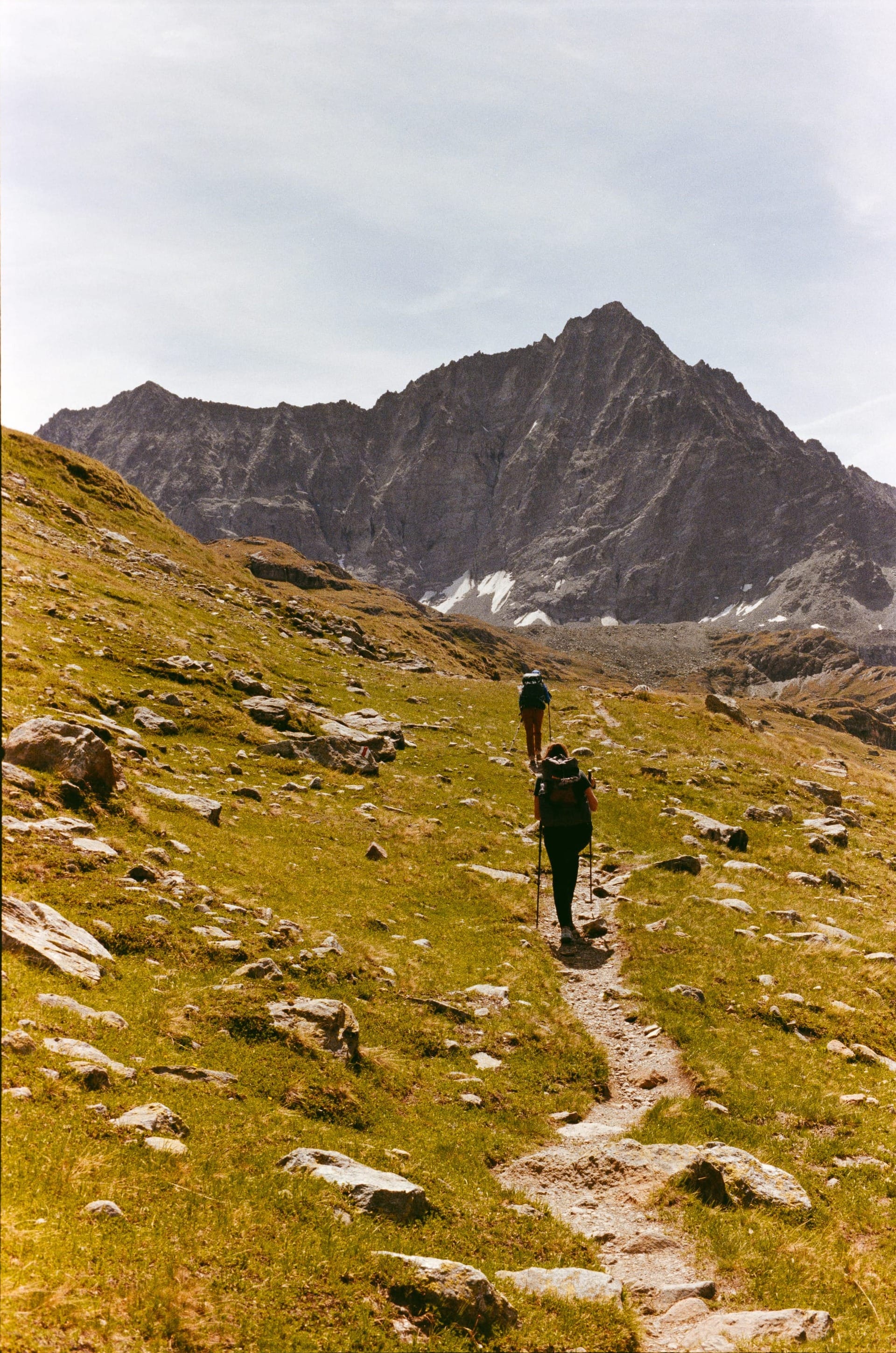
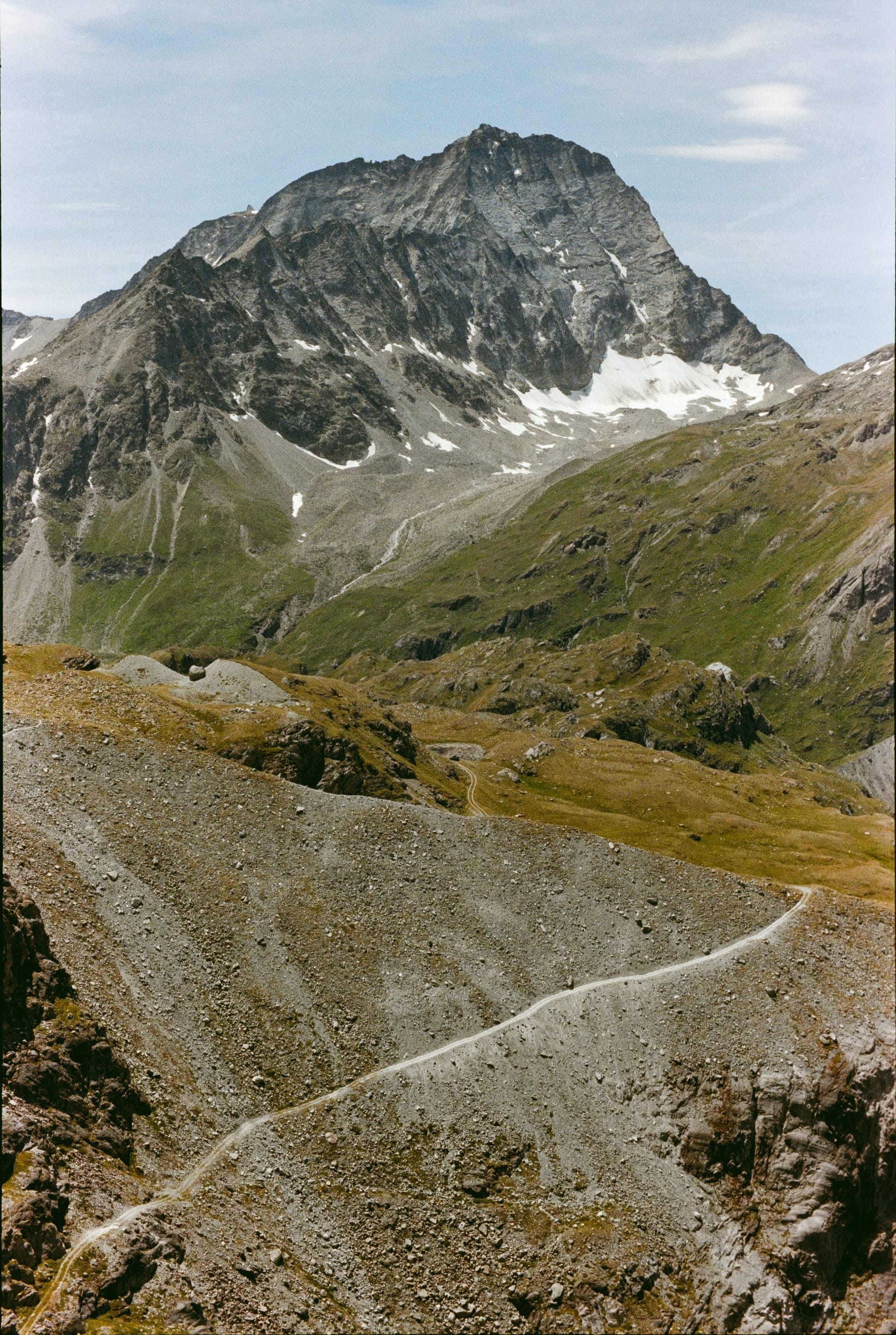
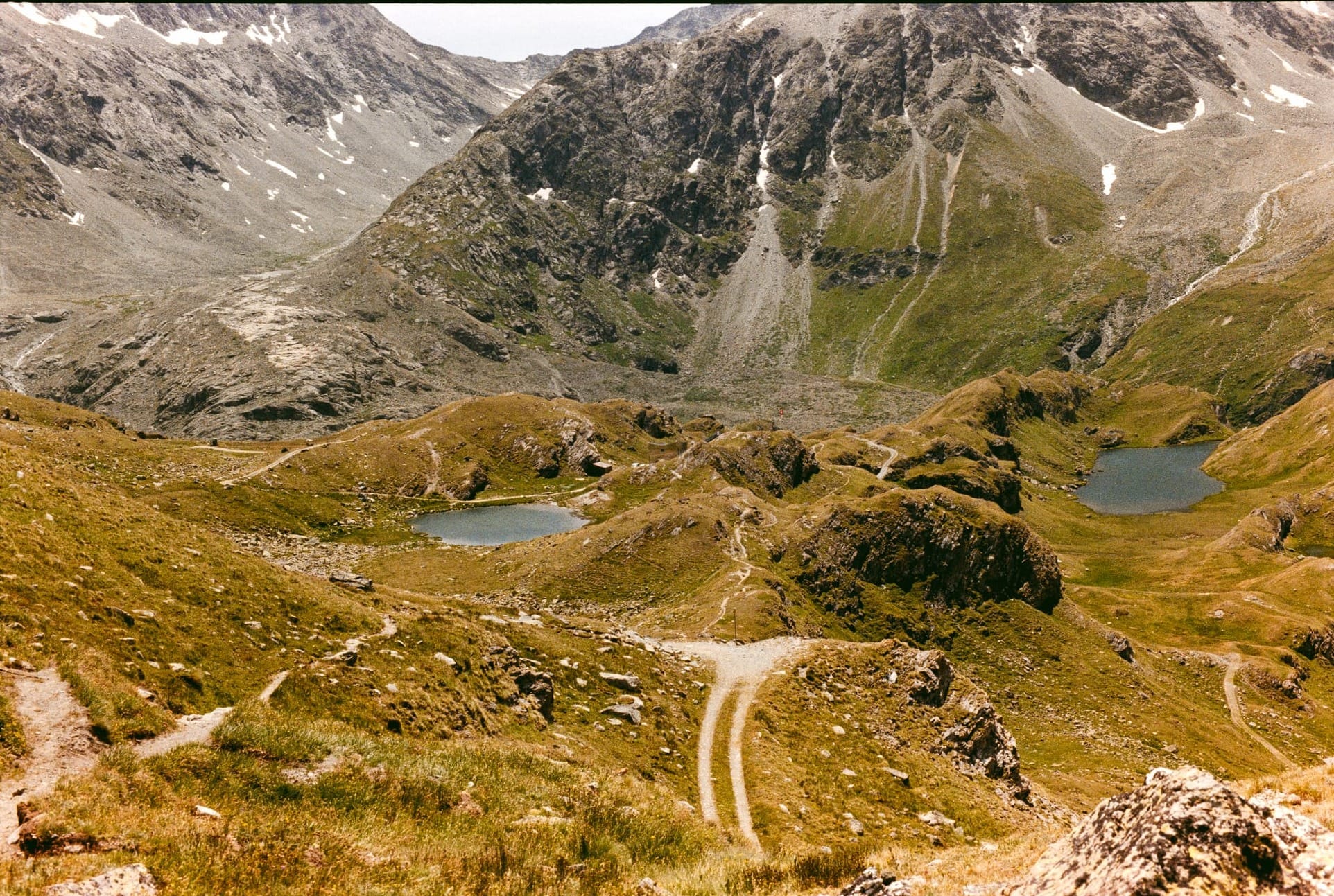
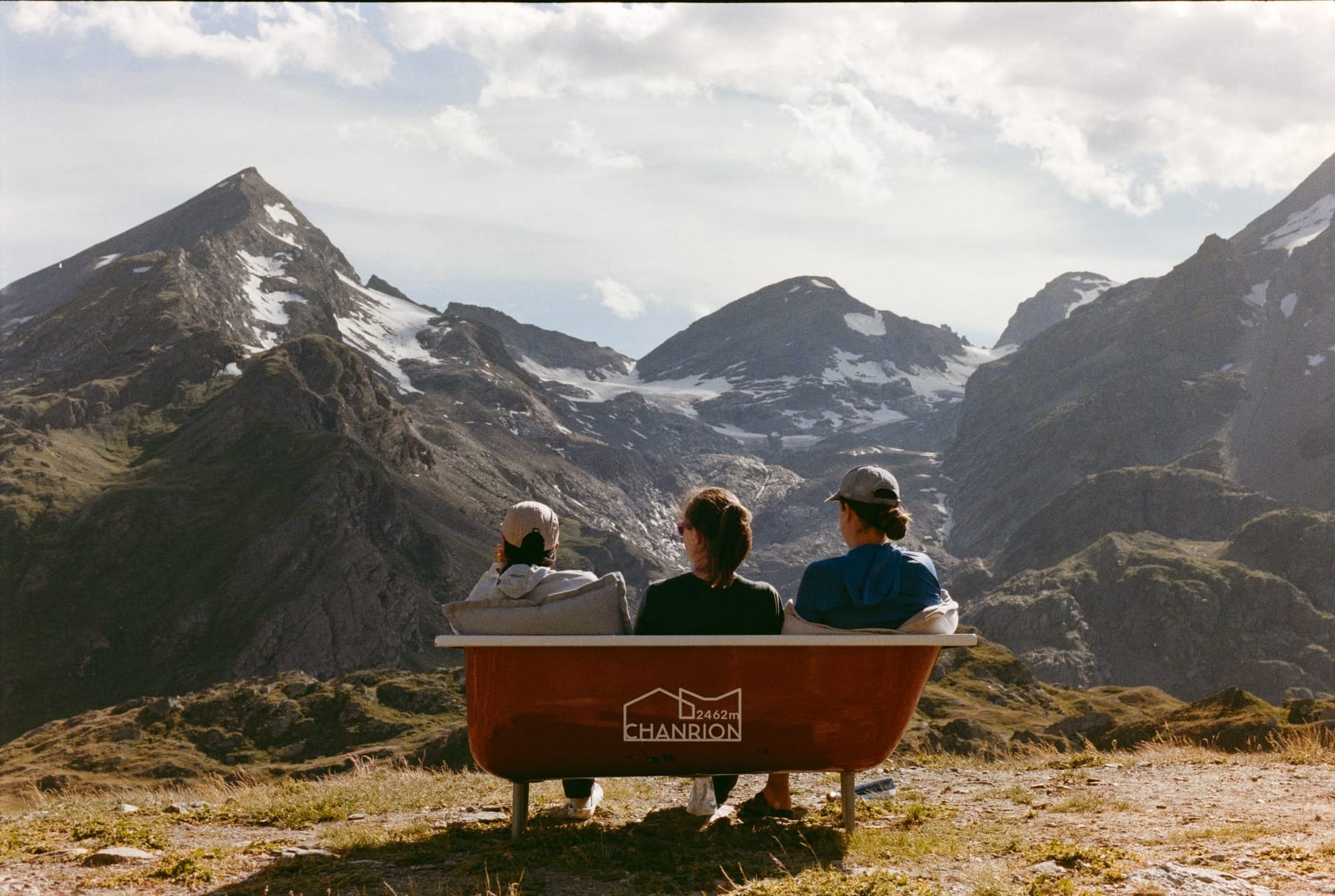
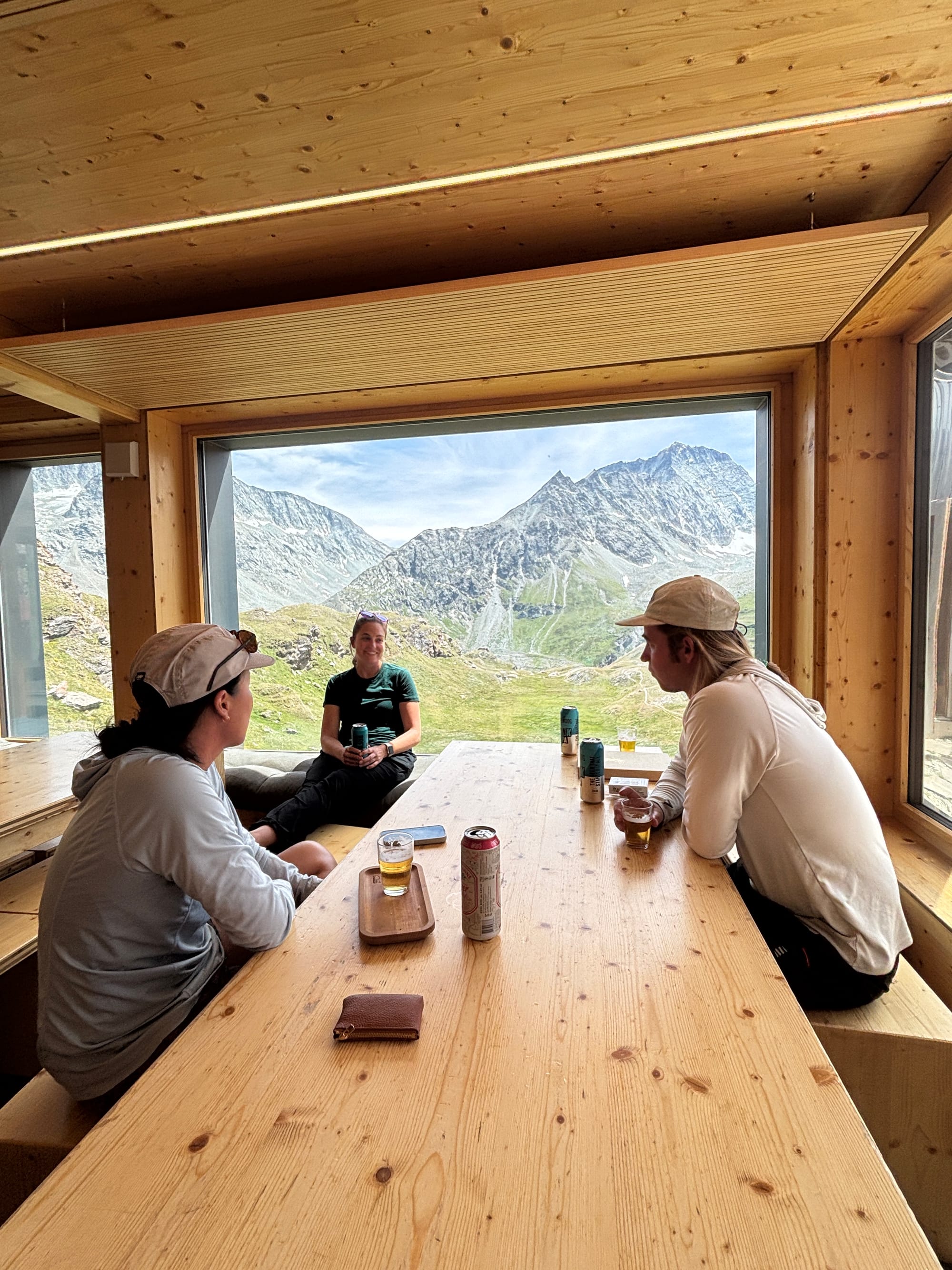
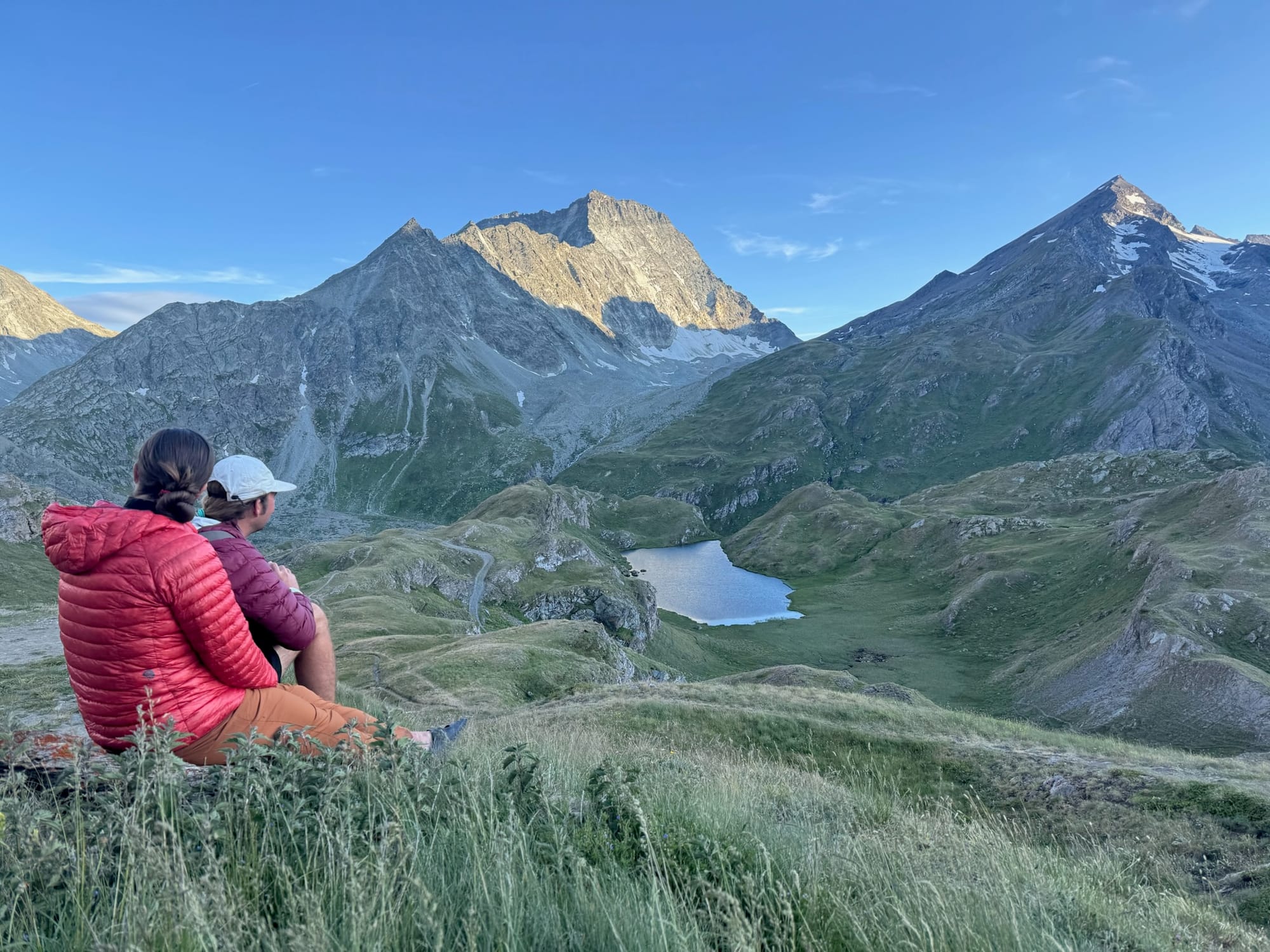
The next two days promised to be brutal. We had a 14-mile day with 4,000 feet of elevation gain ahead of us. We started in Switzerland this morning and would cross into Italy before we reached the next hut. From Chanrion hut we followed the trail down and down and down past alpine lakes and Italian farmhouses with their less festive bell-less cows. We didn’t start to feel the long day until about mile 10 when we hit a detour for a landslide that sent us spiraling down into the valley we just climbed up from. We ended the 14-mile day with a supremely steep grade up to Champillon hut, our first and only Italian hut of the trek. It felt like we were back in Italy, particularly their slogan of the hut- “If you’re in a hurry, don’t stop here.” The dinner here was definitely the best of the trek. We had risotto, pot roast with polenta, and a cup of custard for dessert. They really tried to prevent a calorie deficit from the long day. One of the workers from the hut at Champillon was a cellist and treated the dining room to Bach’s Cello Suite No. 1 which was pretty incredible.
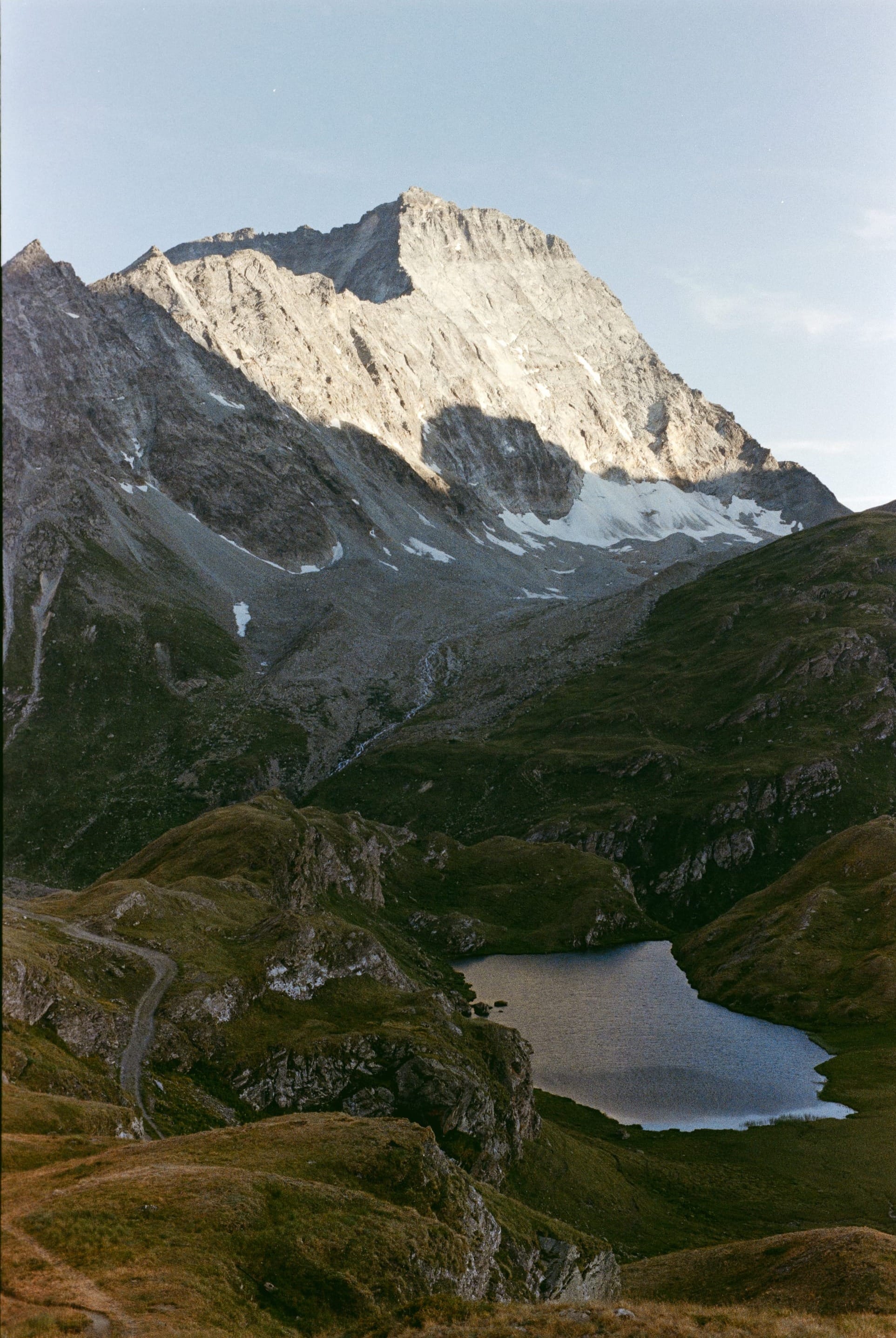
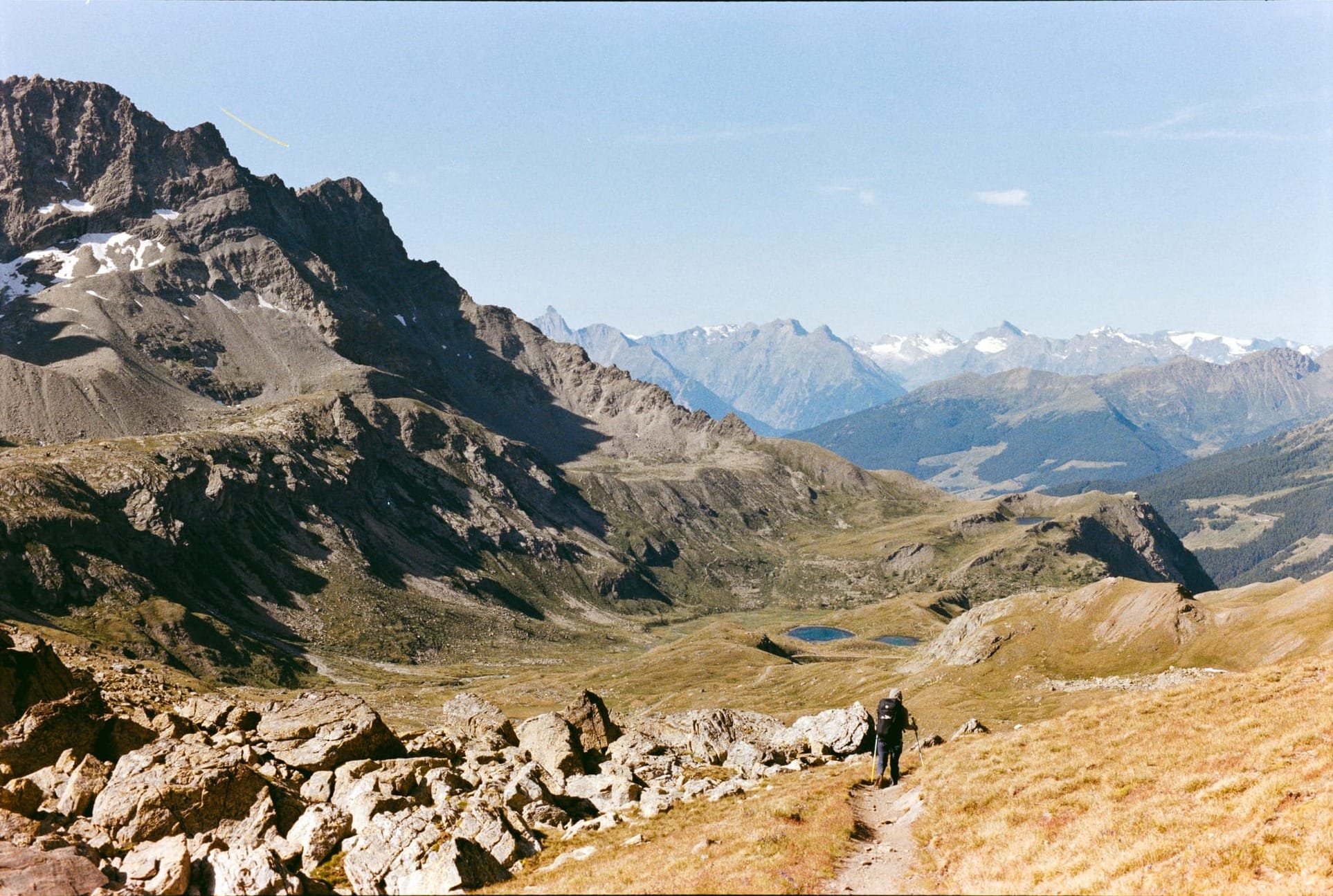
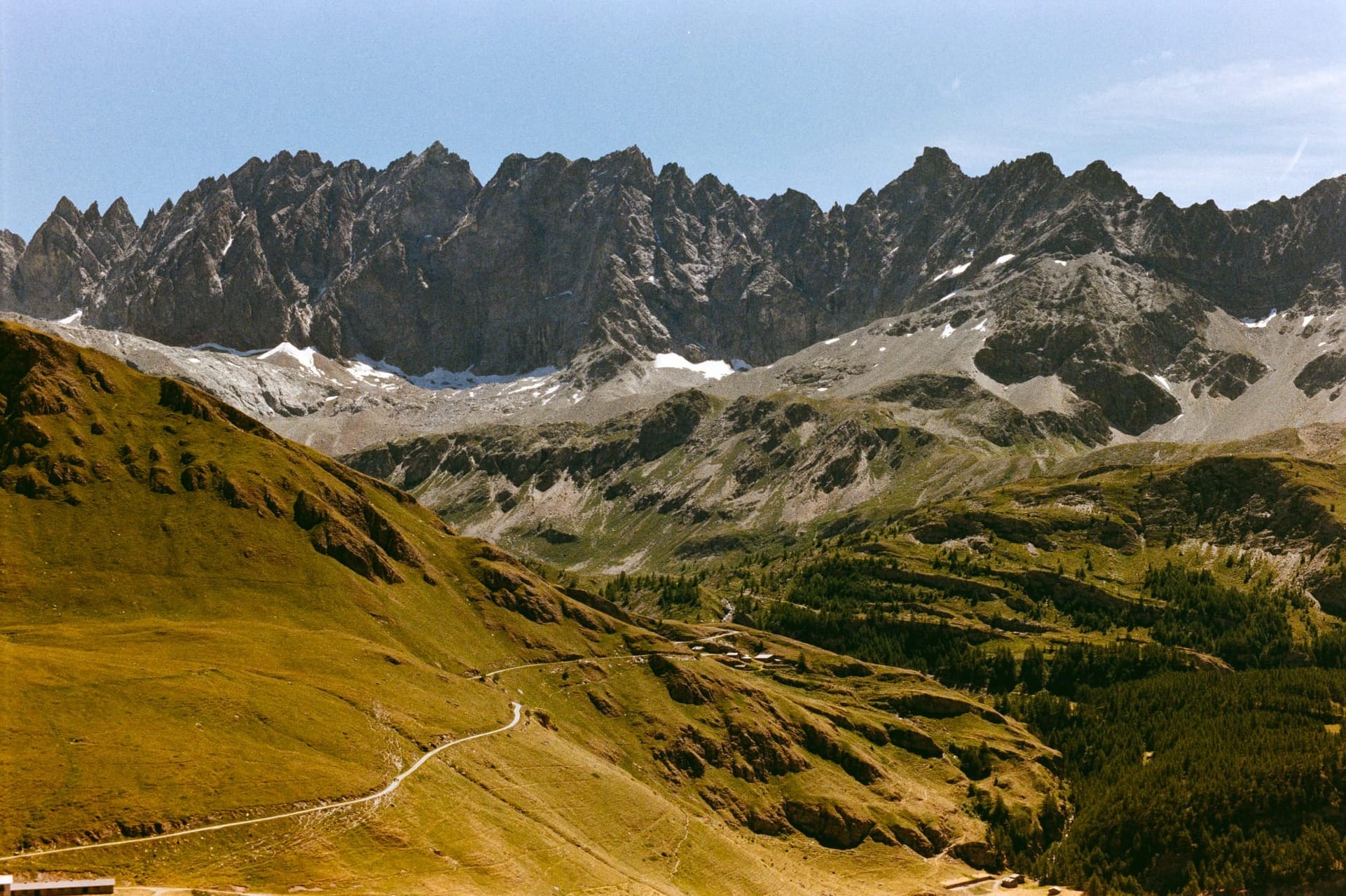
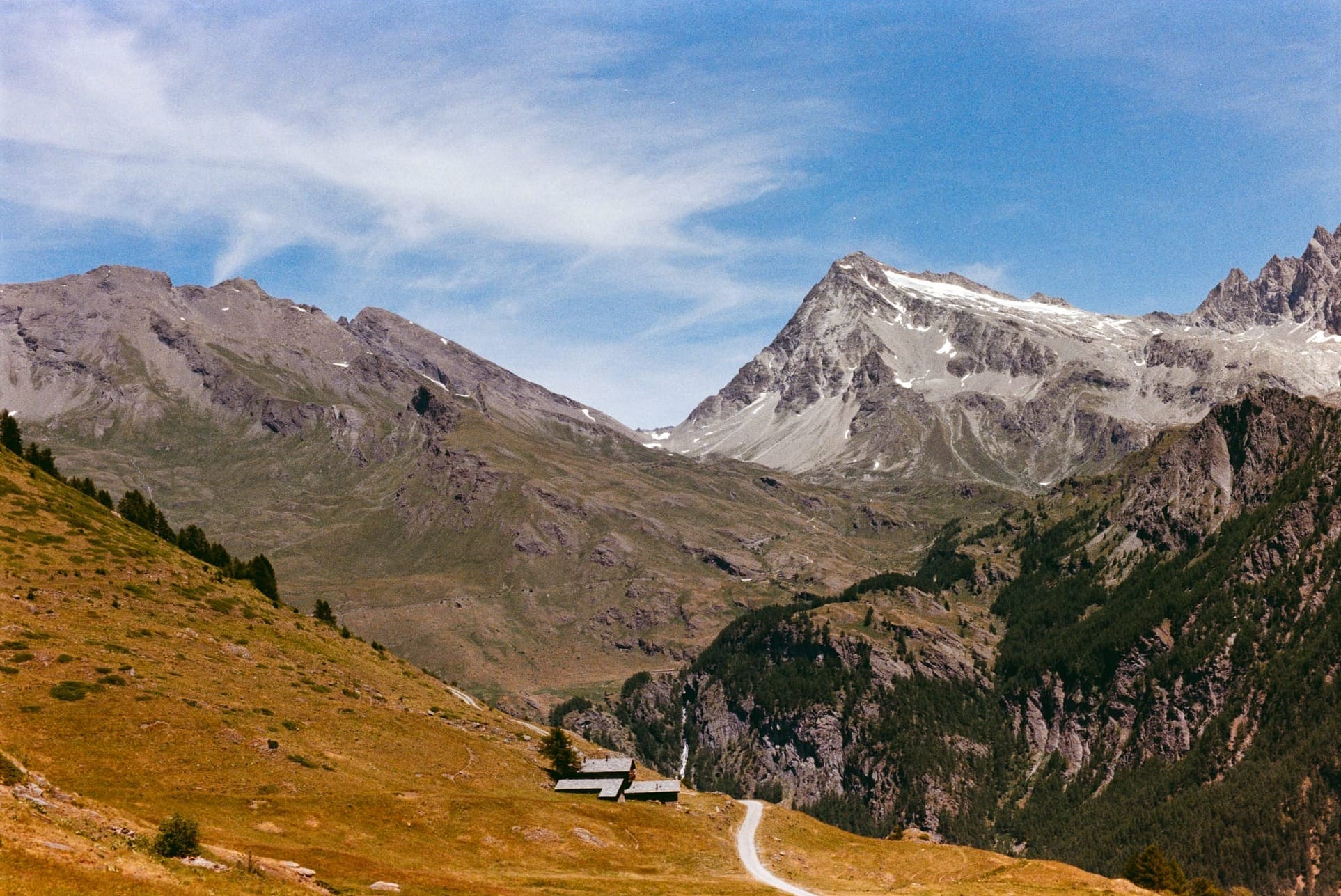
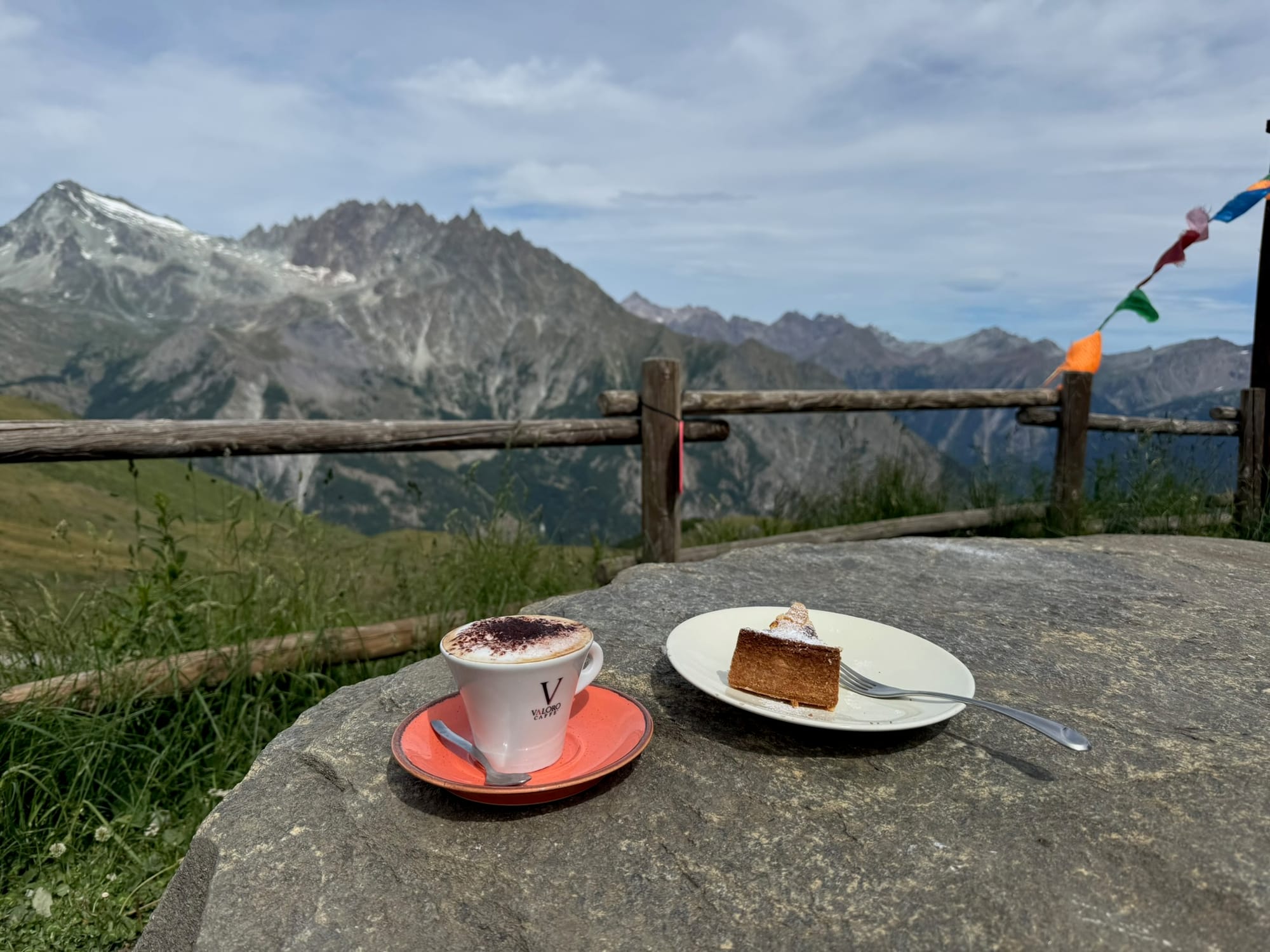
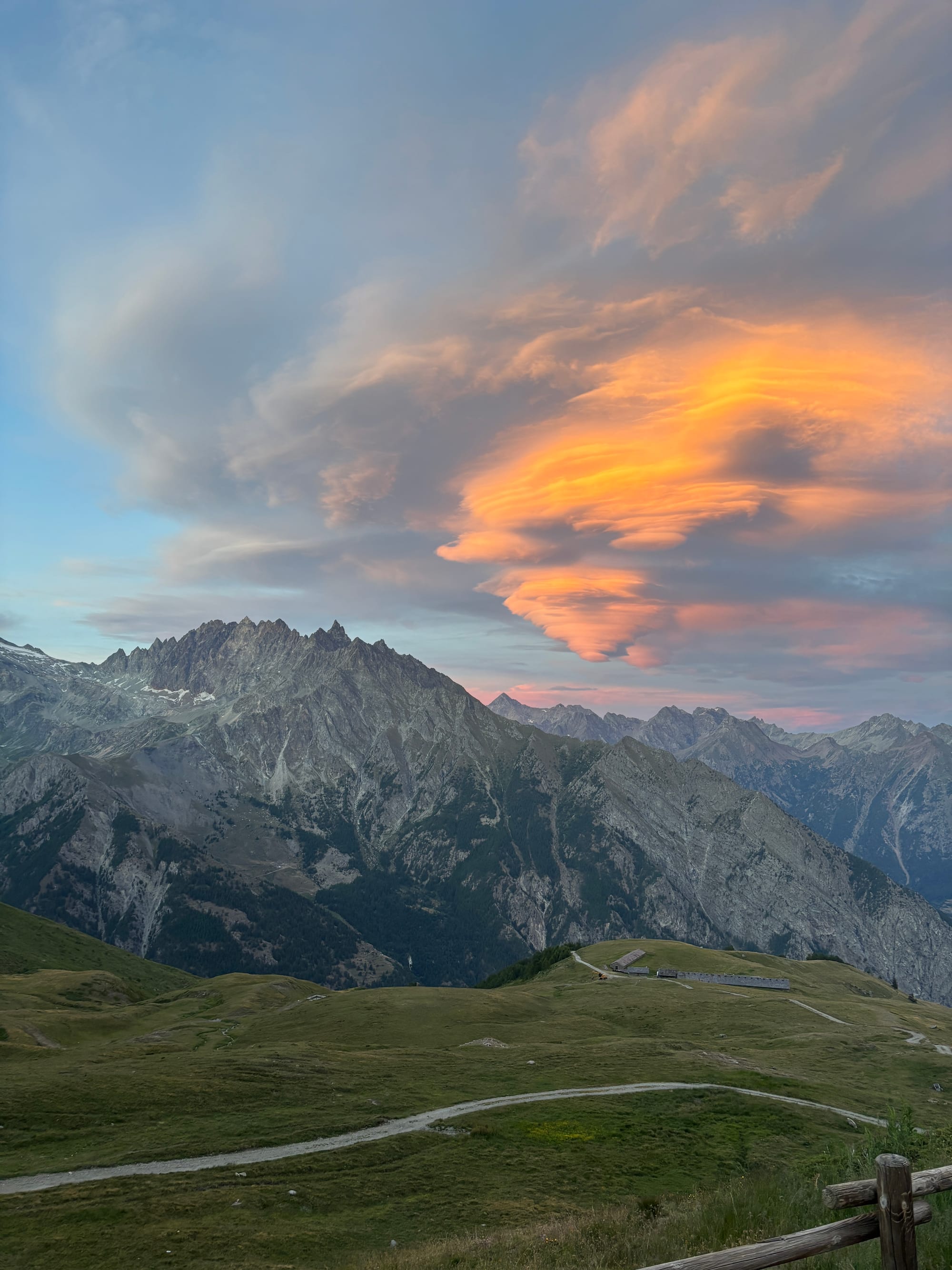
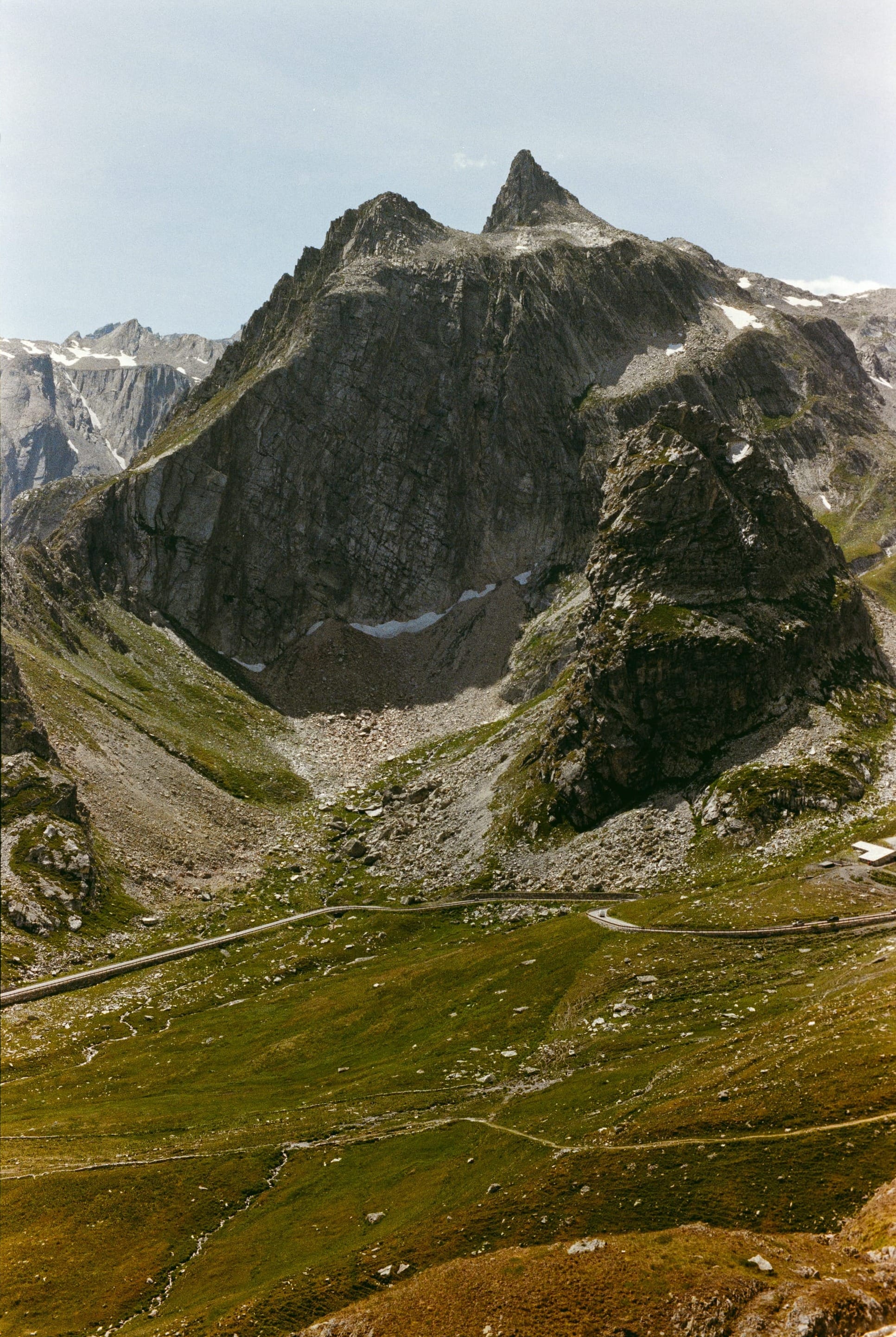
After a warmed croissant for breakfast and feeling well-nourished, we shook our legs out for another long 14-mile hike on day 6. It was a neat day. We made a long descent to a logging road laden with wildflowers that led us into a larch forest and we walked along the river in the valley to the small town of St. Rhemy at mile 10. The Careys got a coffee recharge in town and then we started the nearly 4 mile ascent up to Grand St. Bernard Hospice. This final ascent was quite brutal and as we entered mile 13 and looked up to Grand St. Bernard Pass, we couldn’t seem to fathom that the crest of the pass could be only a mile away. We inched our way up and finally crossed back into Switzerland whose border intersects the Grand Saint-Bernard lake. This is the home of the Saint Bernard dog! They first started breeding the Saint Bernard here as a search and rescue dog. Their “flagship” dog, Barry, saved more than 40 people during his lifetime. Now, there is a Saint Bernard Museum at the pass and the Barry Foundation has taken over the responsibility of breeding Saint Bernards here. However, they are no longer rescue dogs- they are very well trained therapy dogs for the surrounding communities. We visited the museum and saw the huge dogs get their food and medicine and even got cheek-checked to make sure they weren’t pocketing their pills!
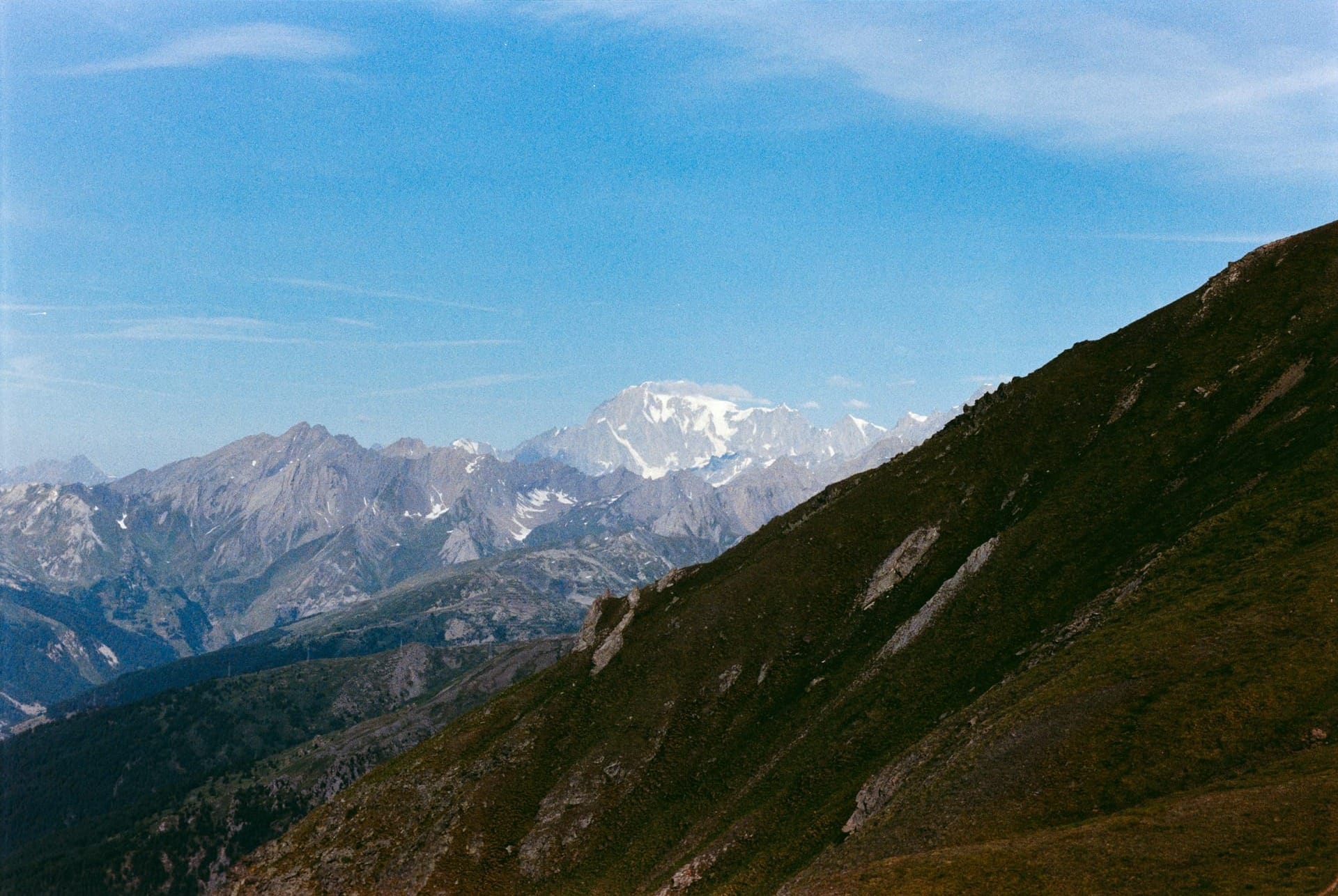
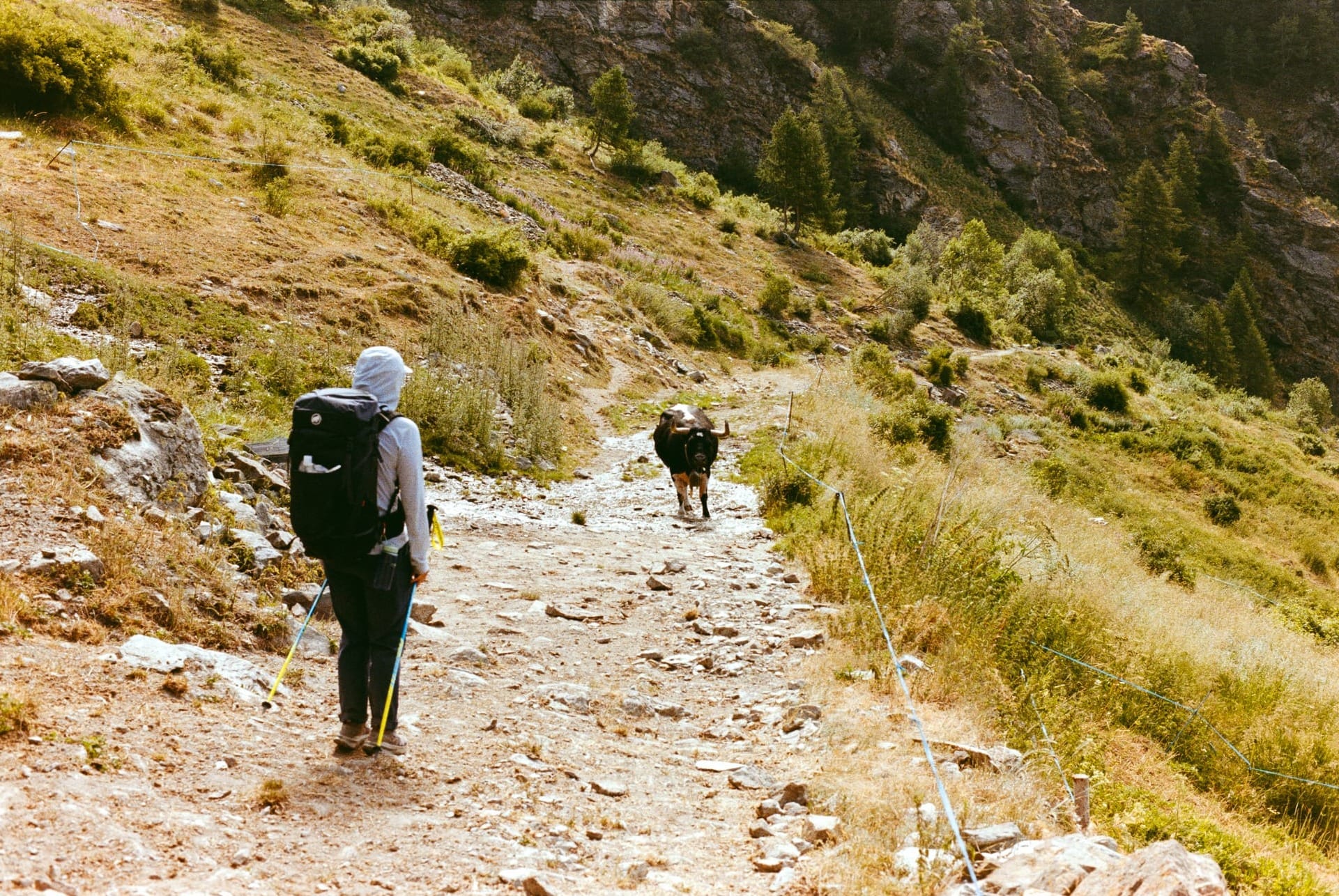
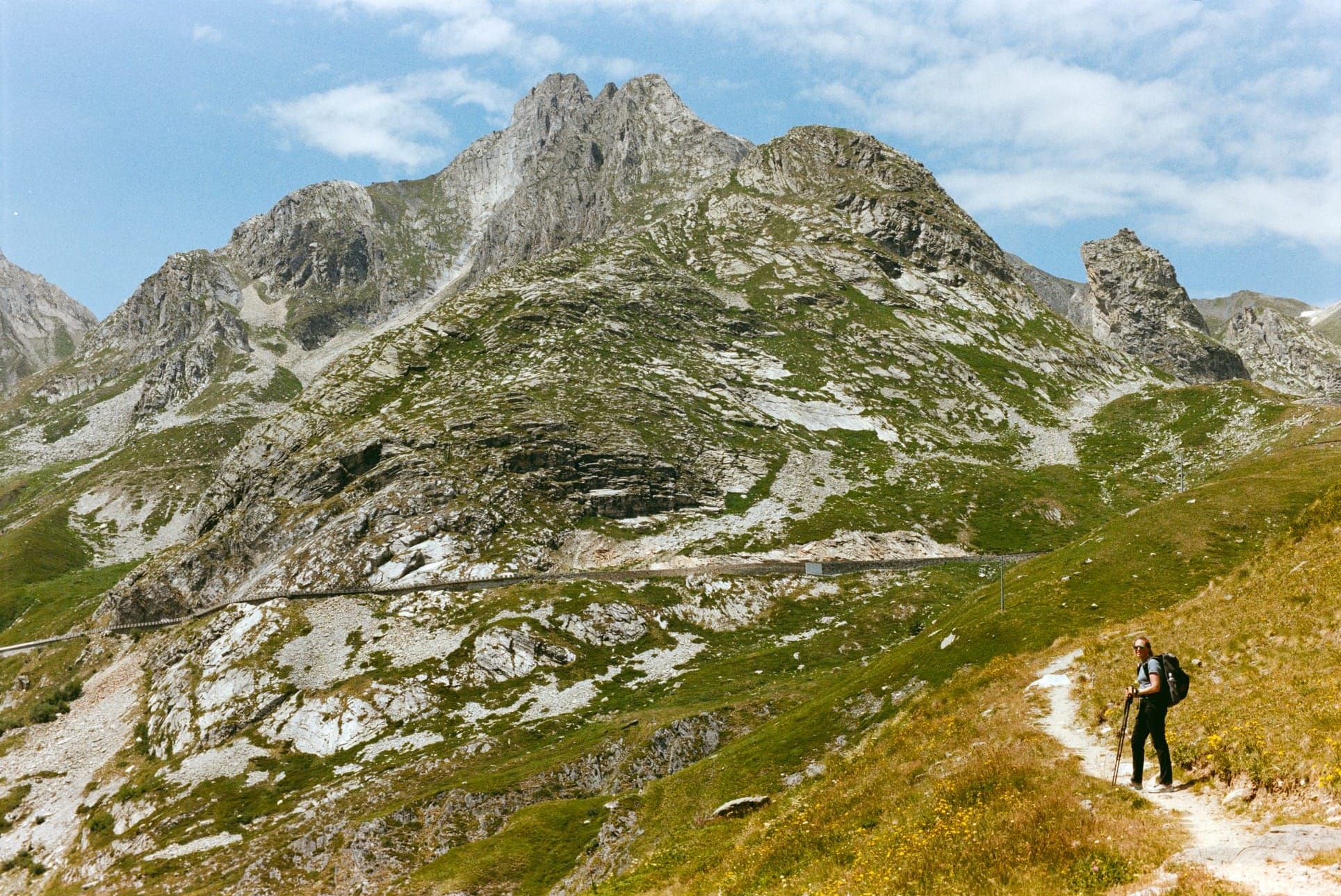
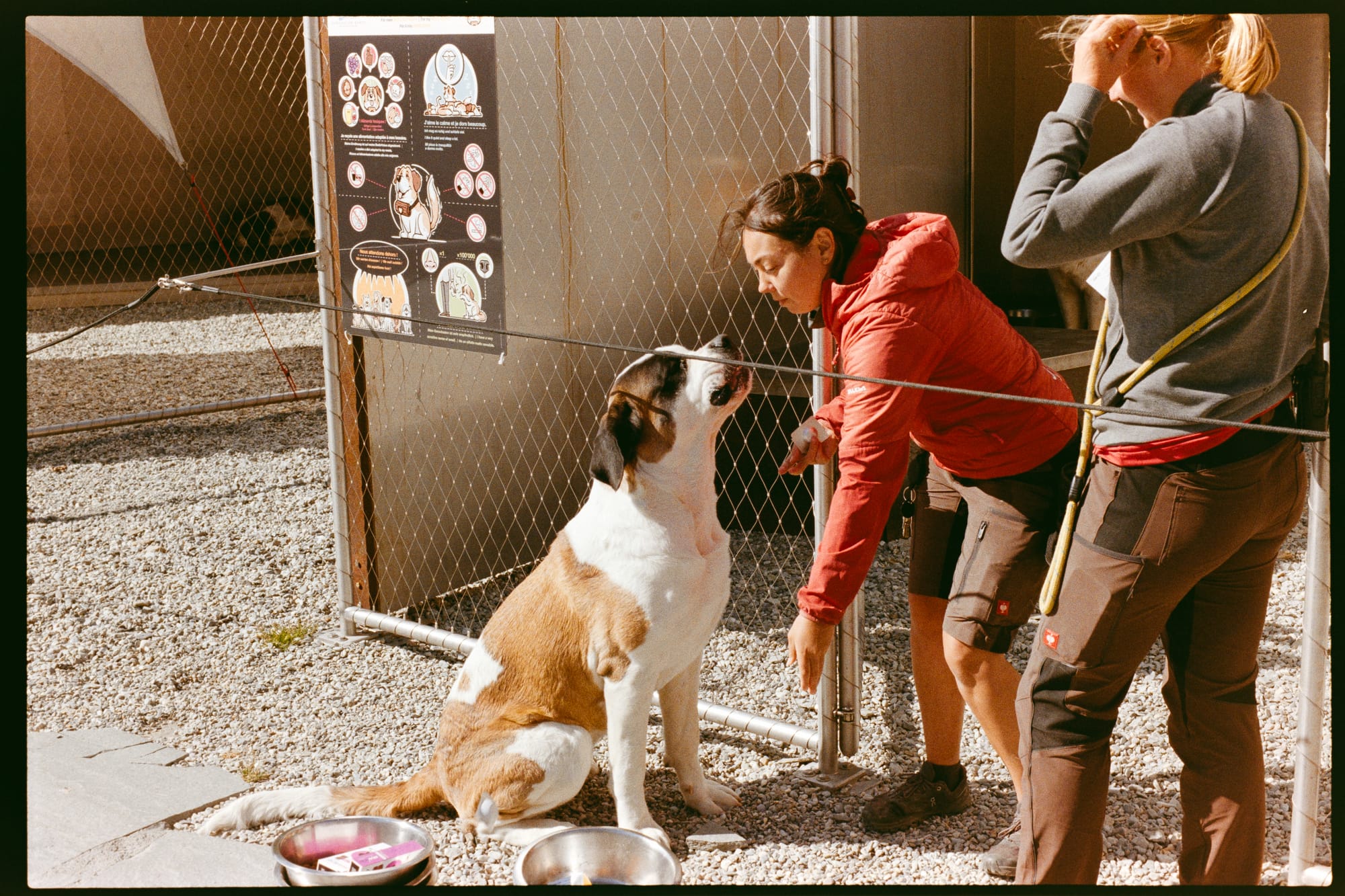
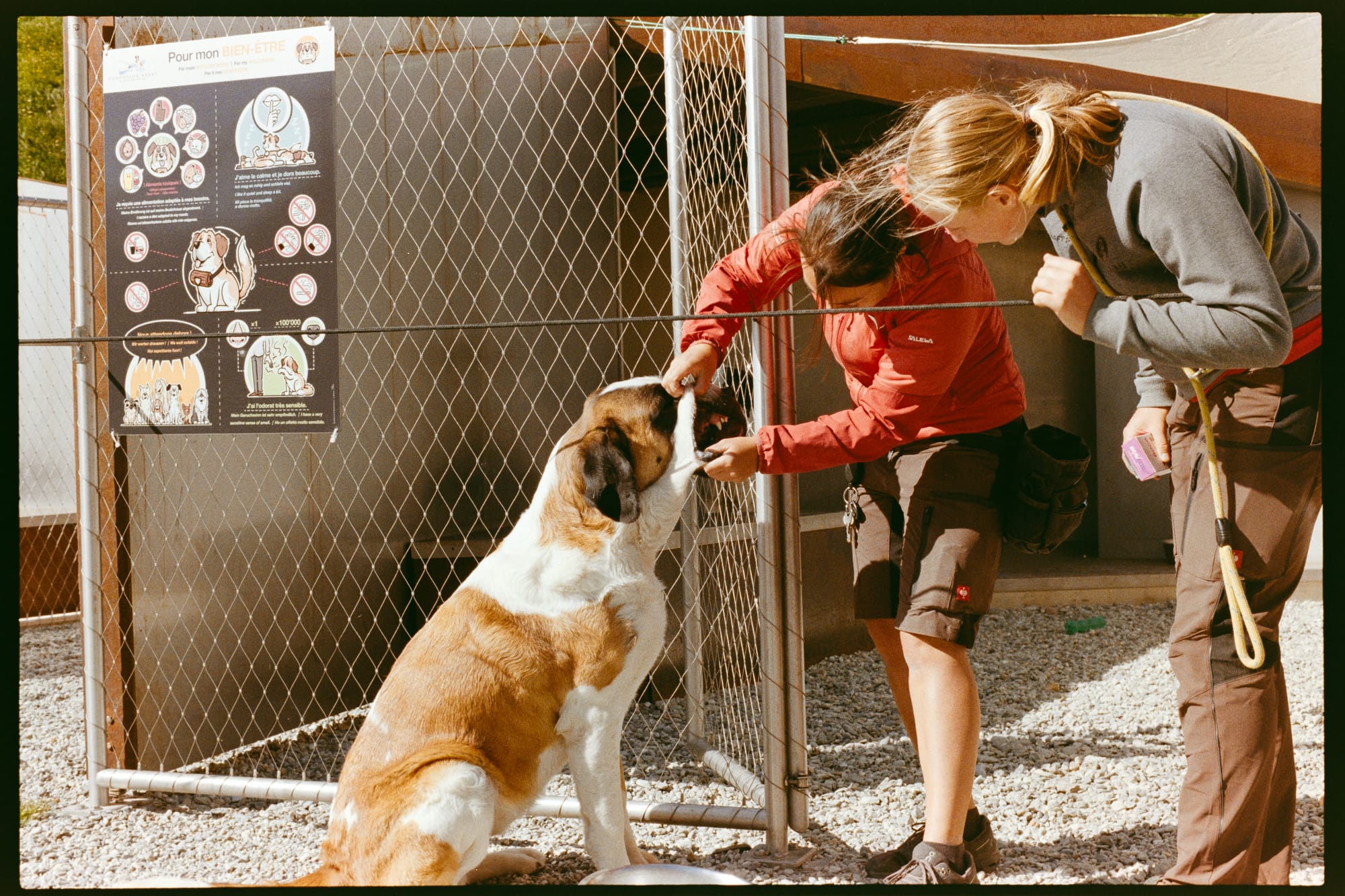
St. Bernards at the museum taking their pills and getting cheek-checked
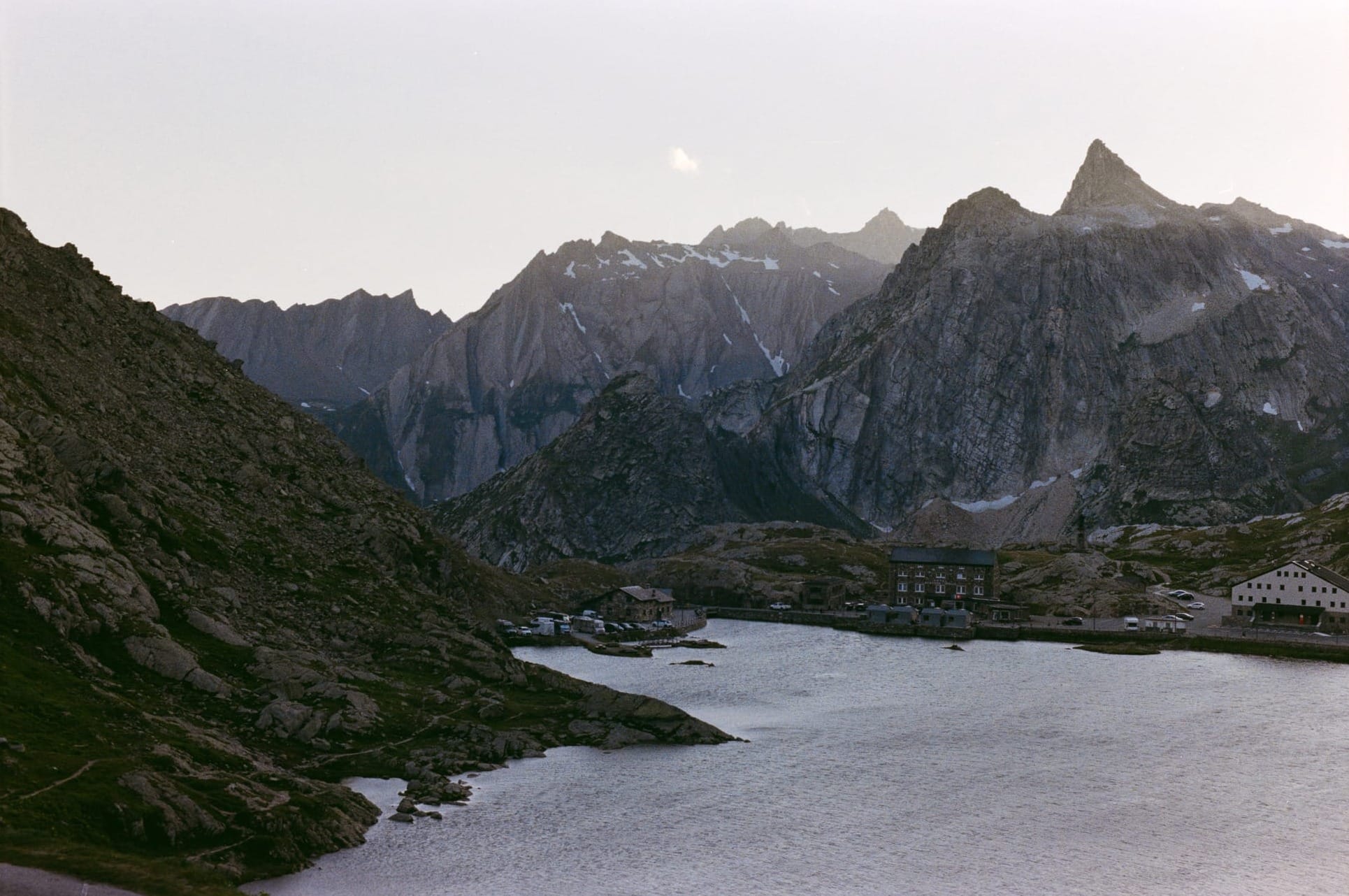
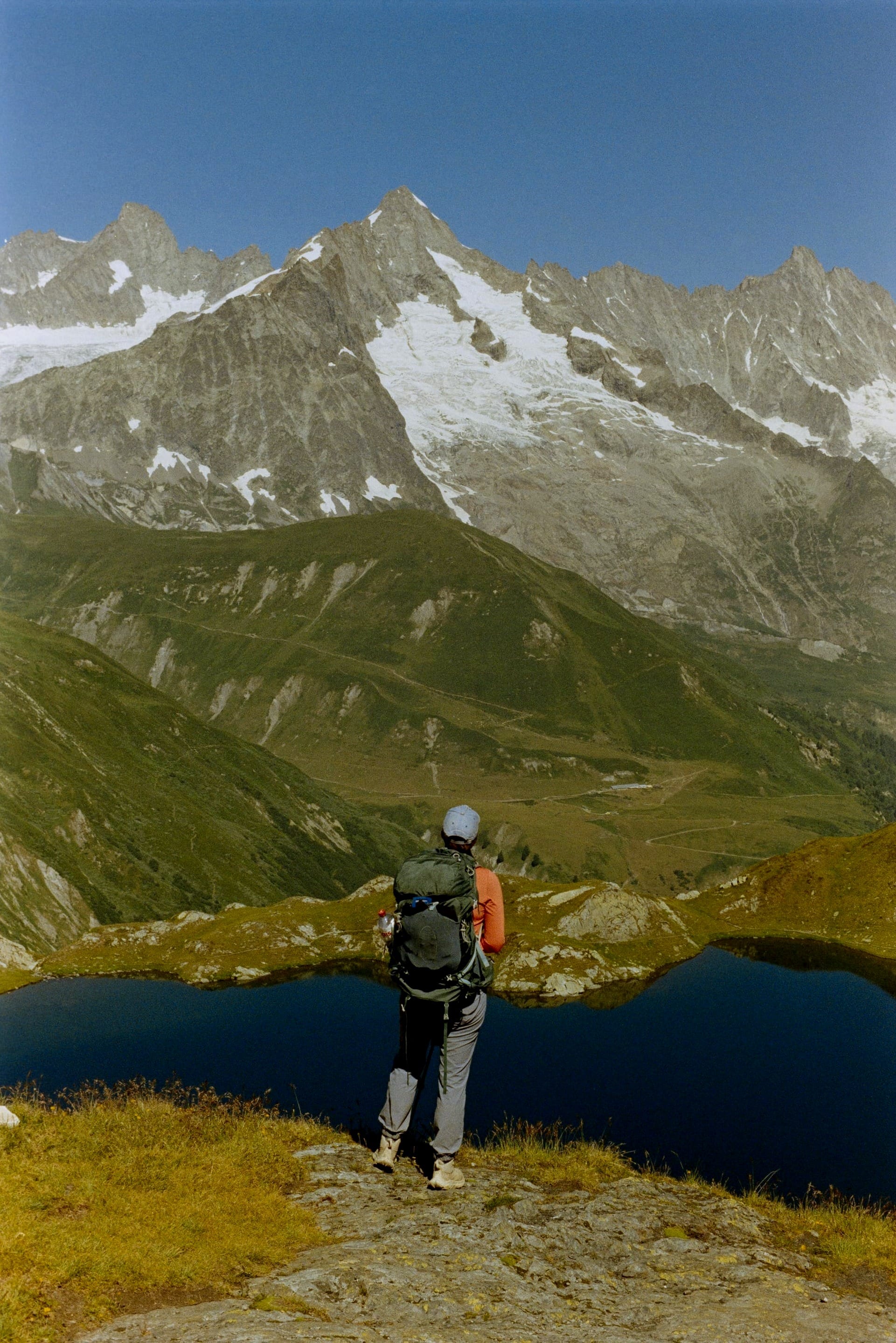
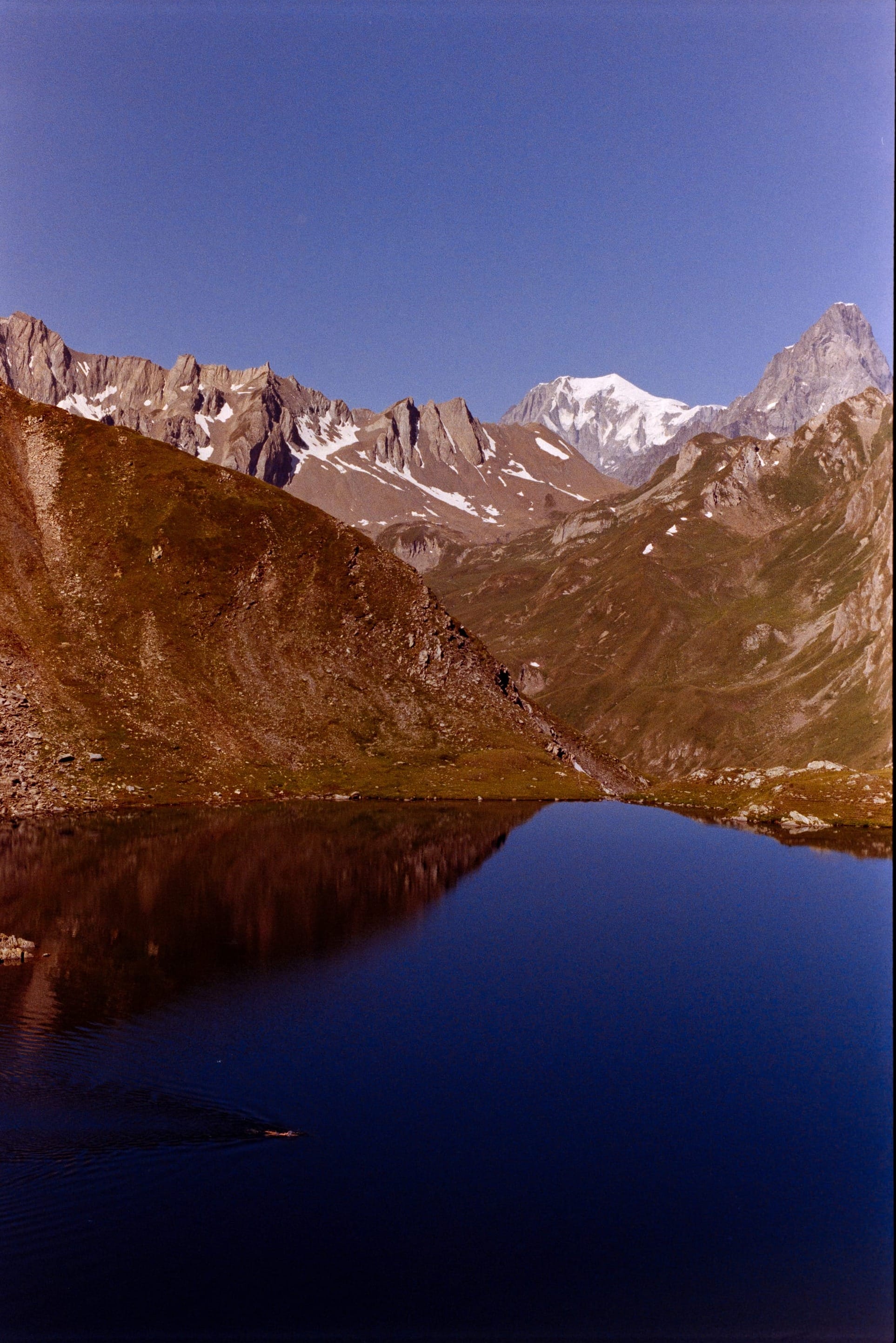
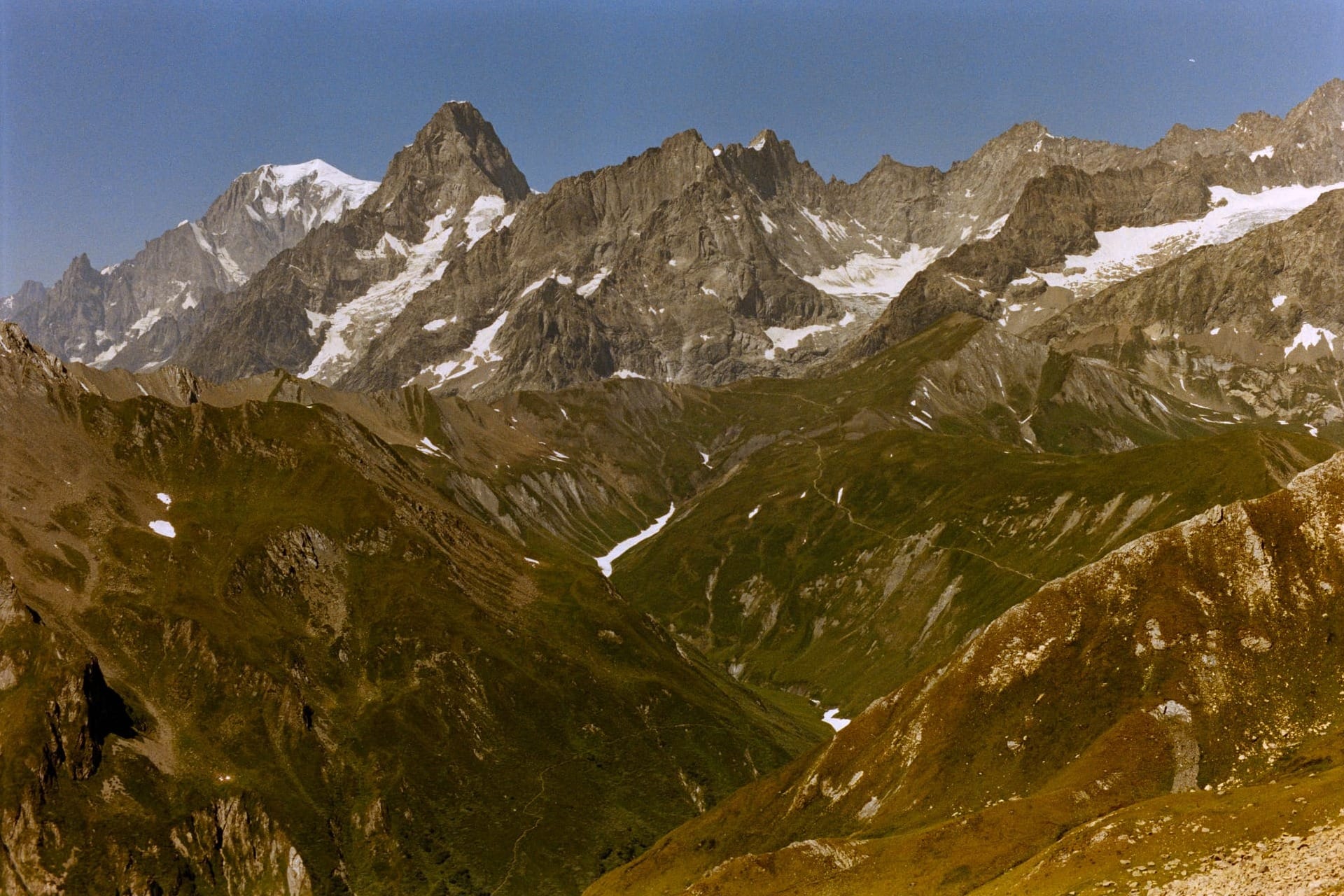
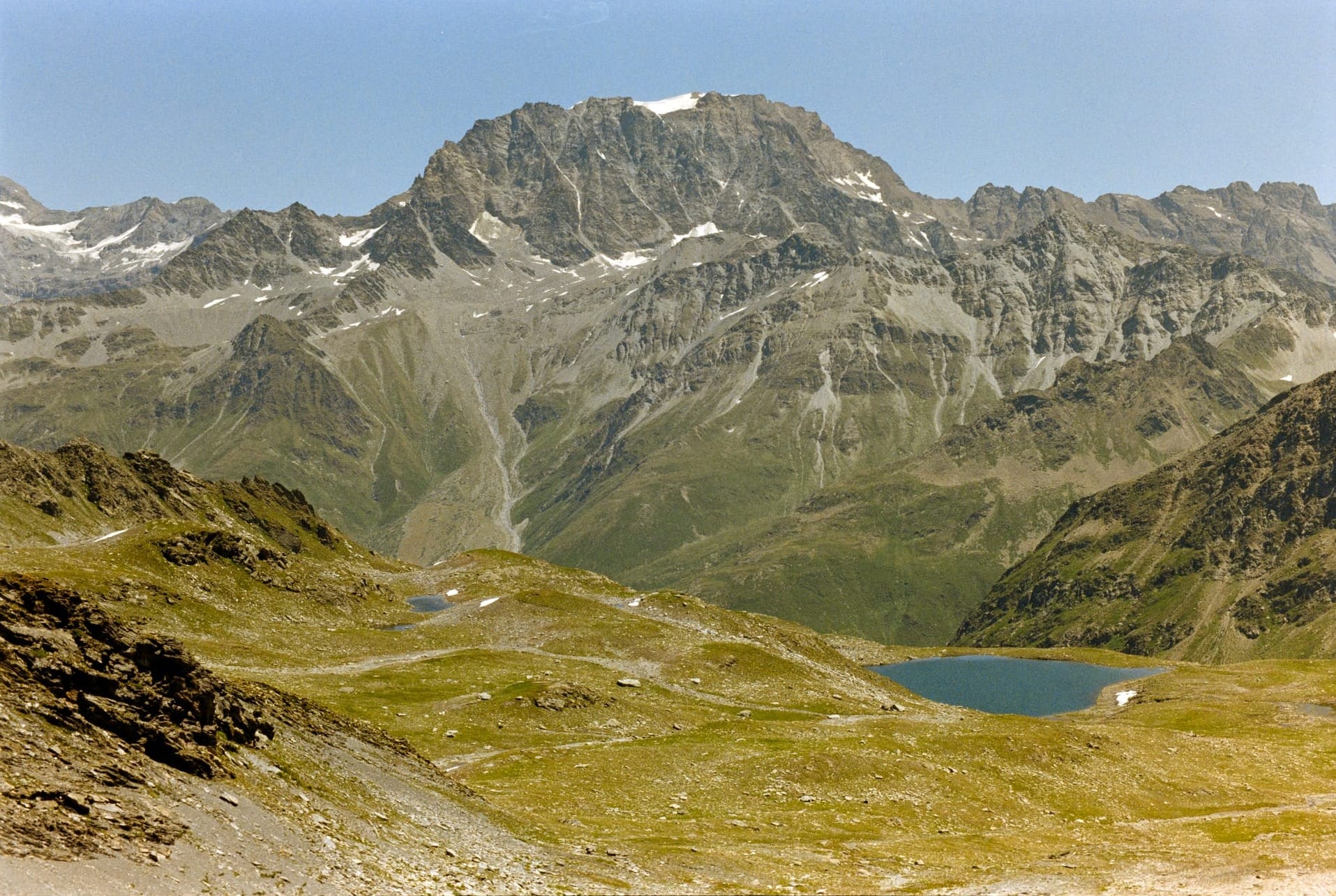
We decided to take a detour on our last day on the TDC to see the Col du Bastillon Pass which overlooks the Fenetre Lakes. From the Fenetre Lakes, there are great views of the Mont Blanc range to the west and as we crossed over Col du Bastillon there was a view of Grand Combin to the east. From the pass, it was a gentle downhill for the last 5 miles back to Bourge -St.-Pierre where our adventure began. What better way to celebrate a successful trek than another pot of fondue?!
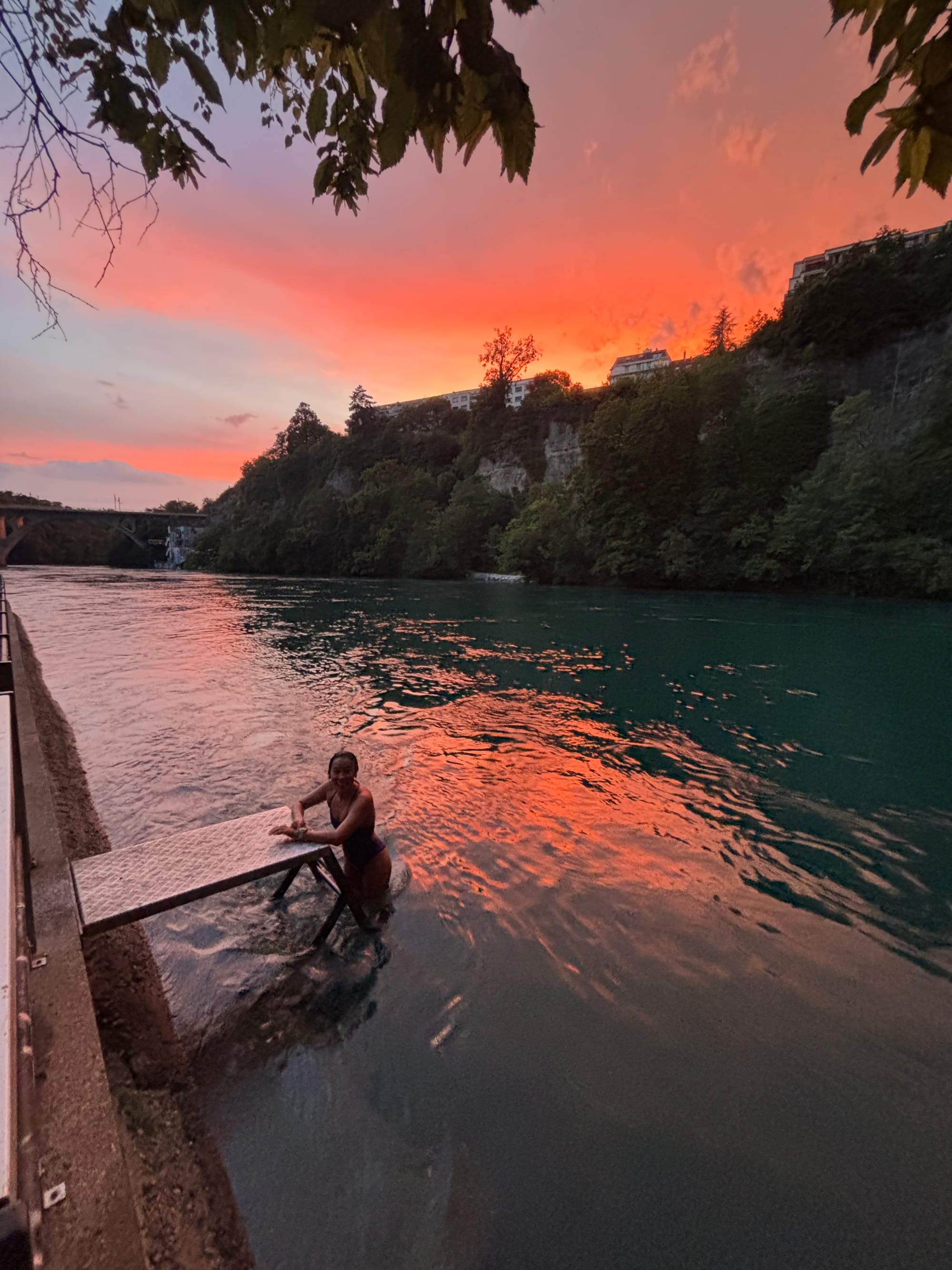
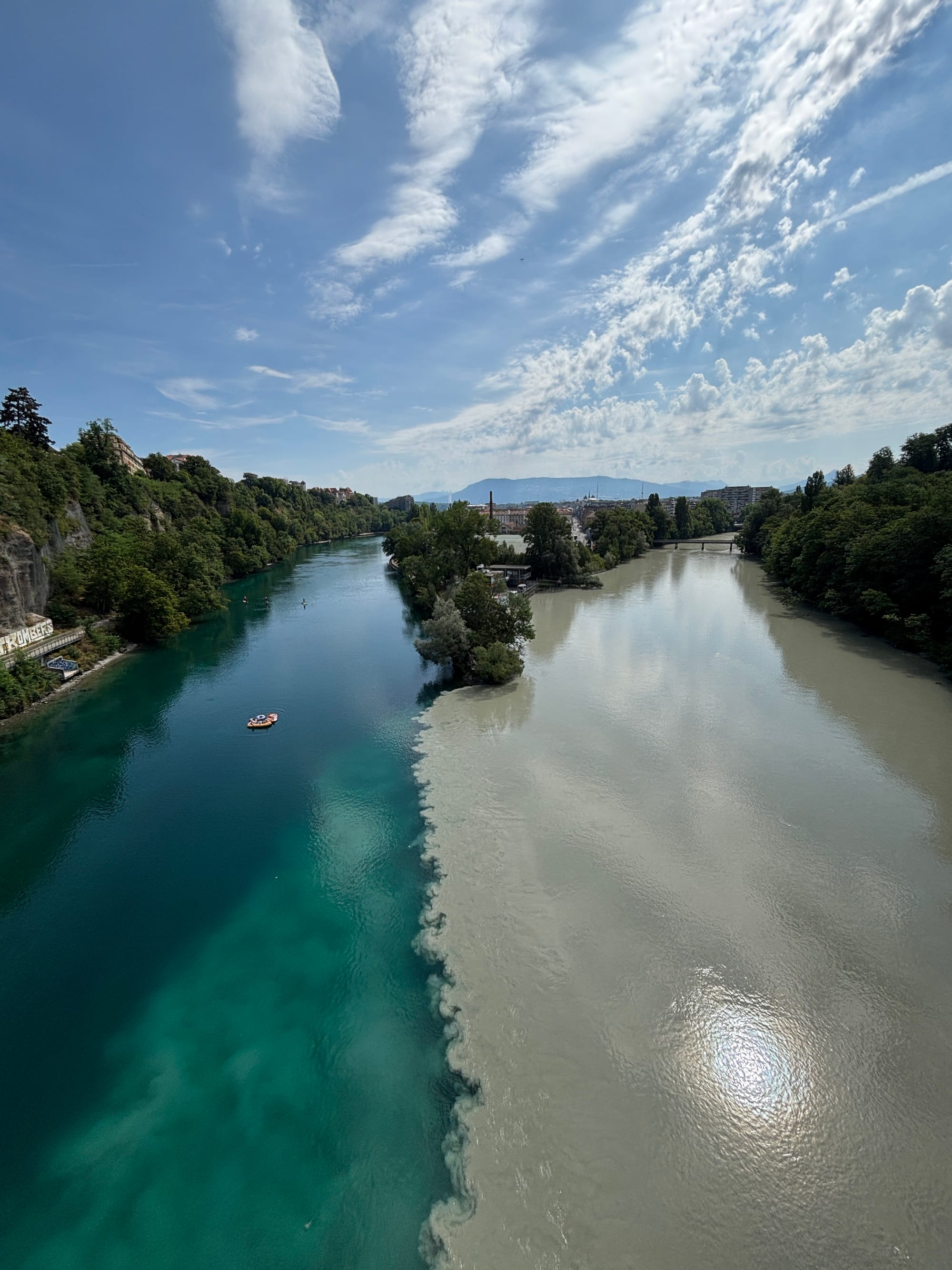
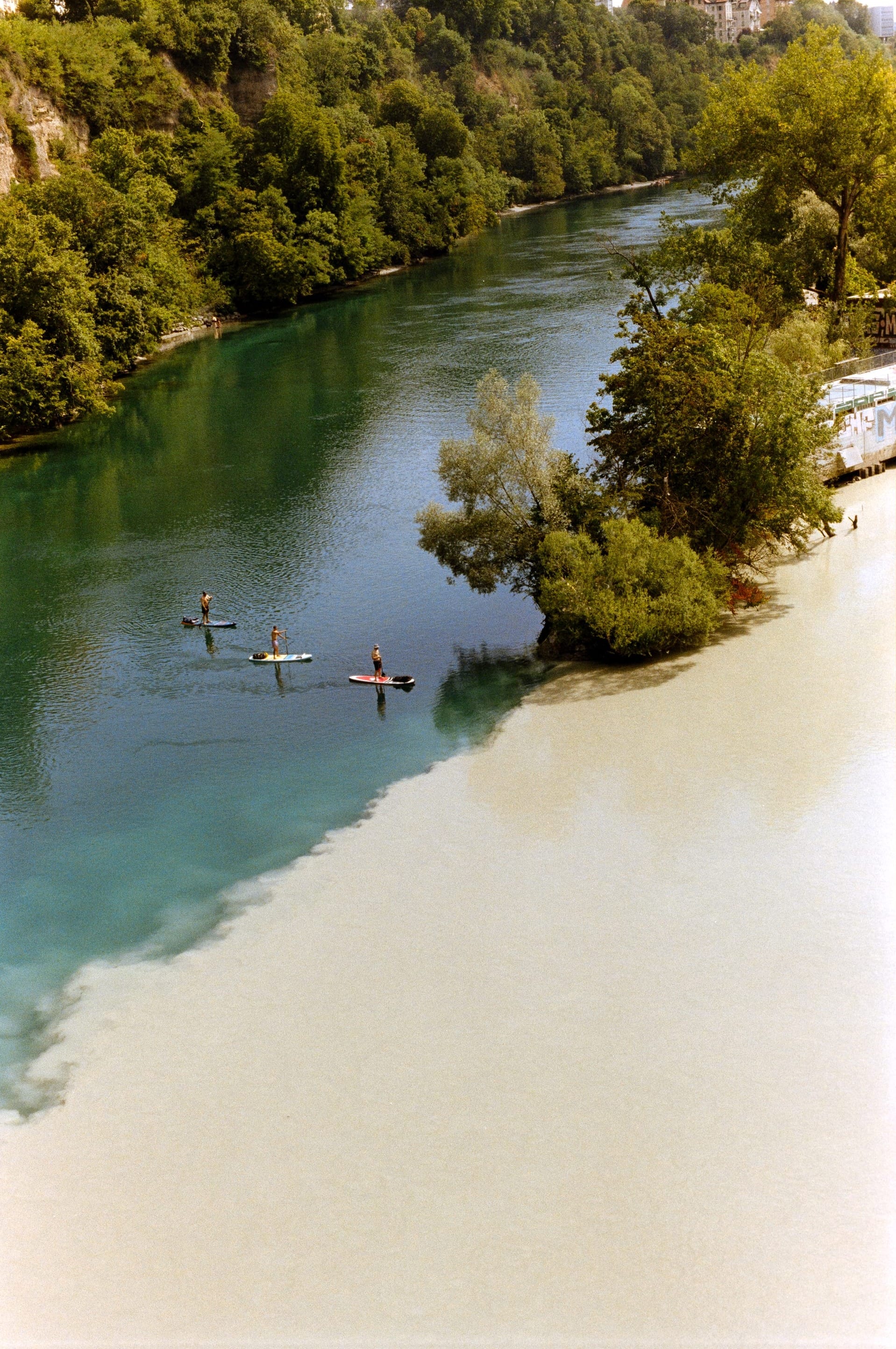
We made the trip back to Geneva for a night before flying to Norway. It was still ridiculously hot in Geneva so we took the opportunity to swim in Lake Geneva and took a sunset walk along the Rhône. The next morning, we bid sad farewell to The Careys and took one last walk to see the confluence of the Rhône and the Arve rivers. The Rhône flows from Lake Geneva and is very clear while the Arve comes from the Alps and is cloudy with sediment and minerals. Where the two rivers meet, the cloudy and almost glowing Arve seems to flow beside the Rhône like two different strokes of paint until slowly and begrudgingly they join into one.
Our experience here in Switzerland felt very fleeting and because of that also very precious. We are nearing the end of our travels with only Norway left before returning to the U.S. As our time winds down, each travel day feels more valuable. We also realize how rare it is to have friends who are willing and able to travel for extended periods of time. The Careys were able to take a 2 week Euro trip from Hawaii and Minnesota and that is no small task while being full-time employees and we expect this will only become more complicated as time goes on.
We also saw the Swiss alps at a delicate time. The wildflowers were in full bloom at the start of the trek but even after 7 days we saw time and heat wear on them. We started the hike during a record breaking European heat wave and we could see the stark evidence of relatively swift glacier recession. We feel lucky to have had such an intimate experience among the glaciers while they are here and still extraordinary.
And there is no doubt that the TDC will become more and more popular and harder to complete with red tape and reservations and permits (like the Tour du Mont Blanc or the O-trek in Patagonia). We will surely look back at this time as the “golden era” of the Grand Combin massif and we are very grateful to have had such a formative time here in the Swiss Alps.
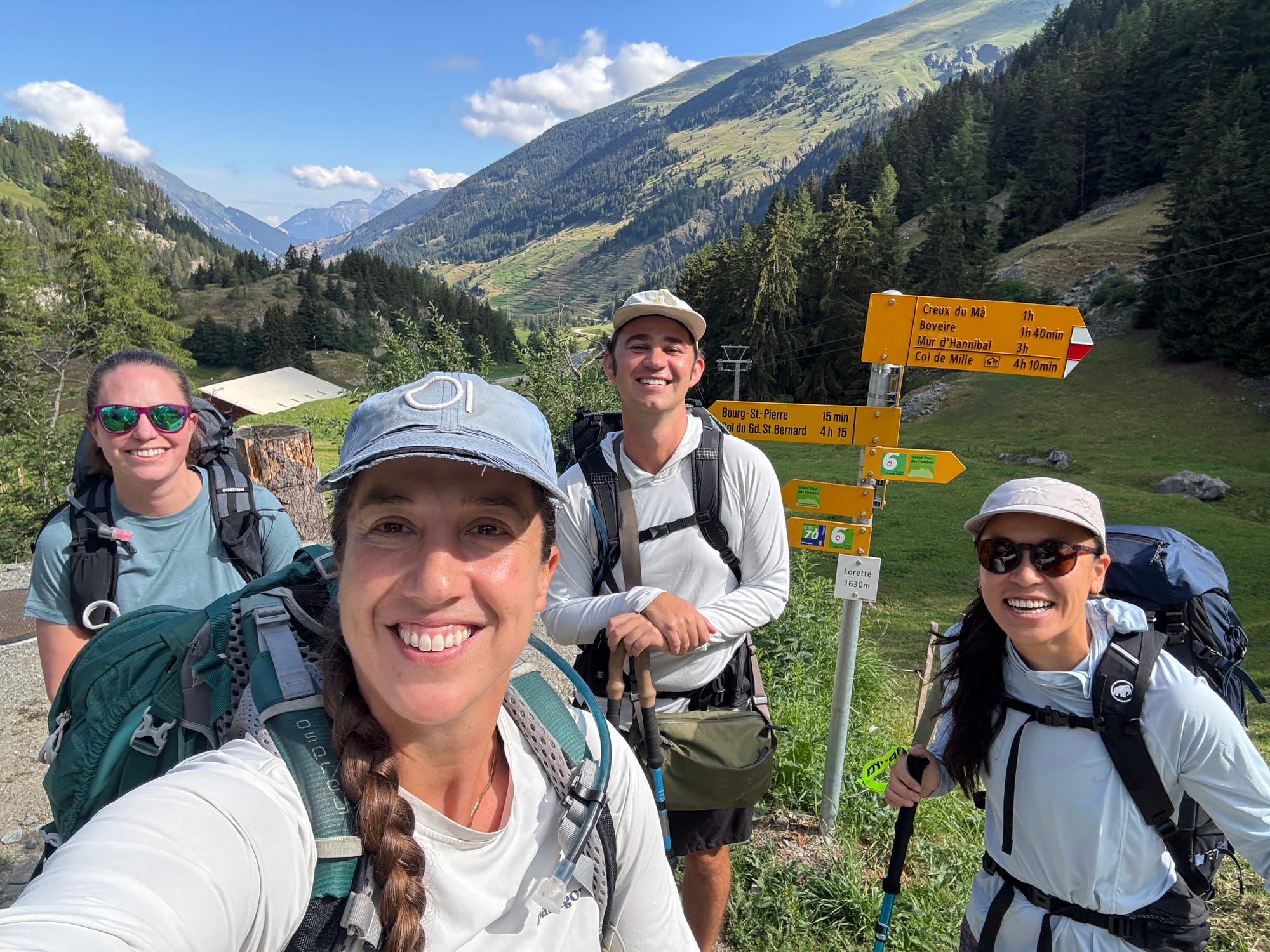
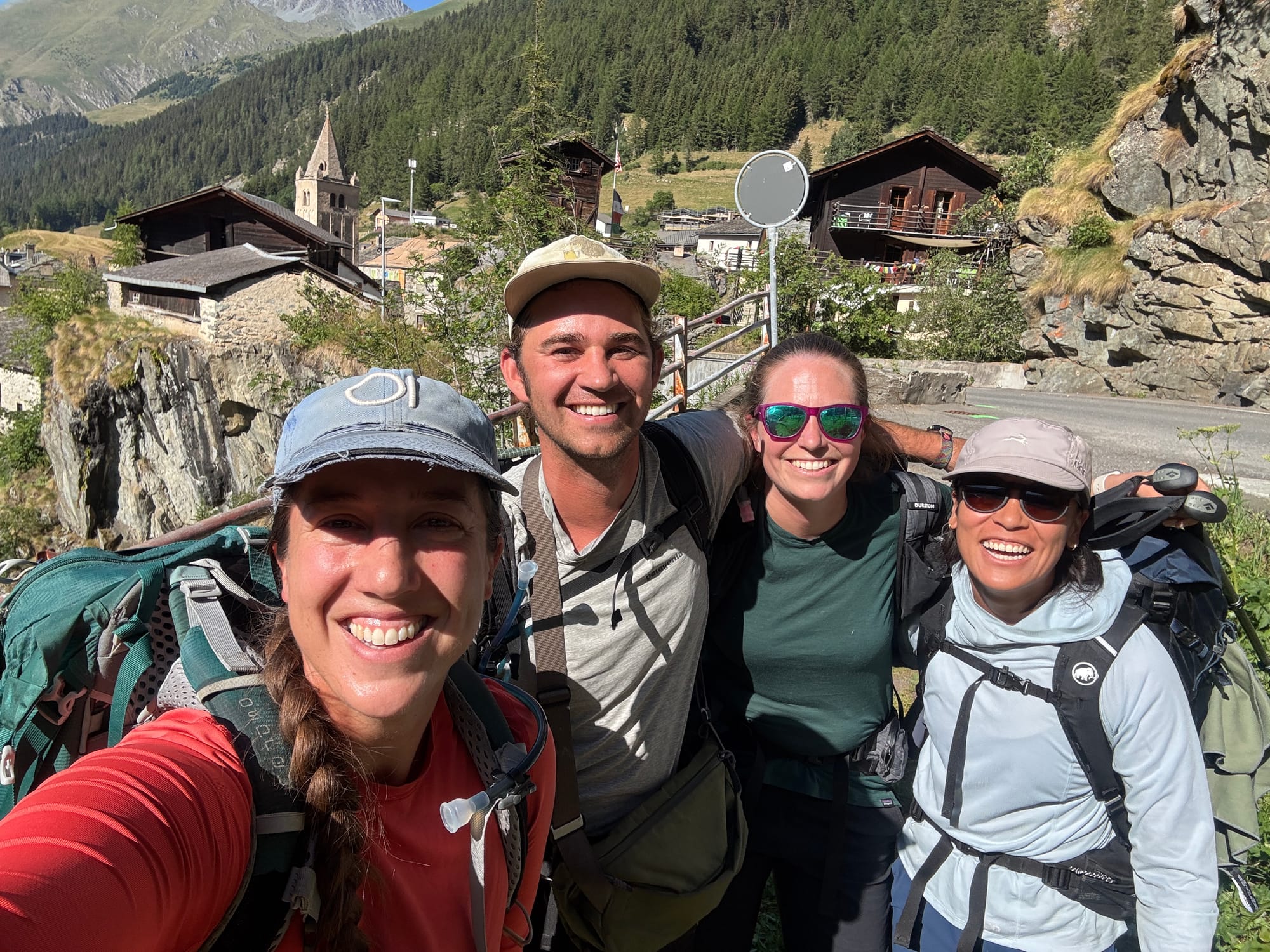
Before and After with the whole crew on the Tour du Grand Combin