Guatemala
The night before we left for Guatemala City, we were poolside in Mazunte, Mexico sipping mezcal when we got an email alert from the U.S. embassy in Guatemala City issuing a shelter-in-place order because gangs had taken over three prisons and were killing police in the streets. The two main gangs in Guatemala City, MS-13 and Barrio 18, apparently had coordinated these prison uprisings and taken nearly 50 guards hostage partly so that one of their gang leaders could have better living conditions in prison. The demands were reasonable: a king bed, air conditioning, and a Door Dash pass for his favorite restaurants. Needless to say, the Guatemalan president did not want to bargain with terrorists so he instead proclaimed a 30-day state of siege, suspended habeas corpus, and deployed the military into the streets. I say that to say this- we were a bit nervous to fly into this precarious situation. Also, the DoorDash preferences of the gang leader were never published and we had no idea which restaurants to patronize.
But we stuck to our plans, landed in Guatemala City, and took a cab straight to our Airbnb in Zona 10. We decided to stay close to our place that first night but did manage to find a great Indian restaurant which was a very welcome surprise.
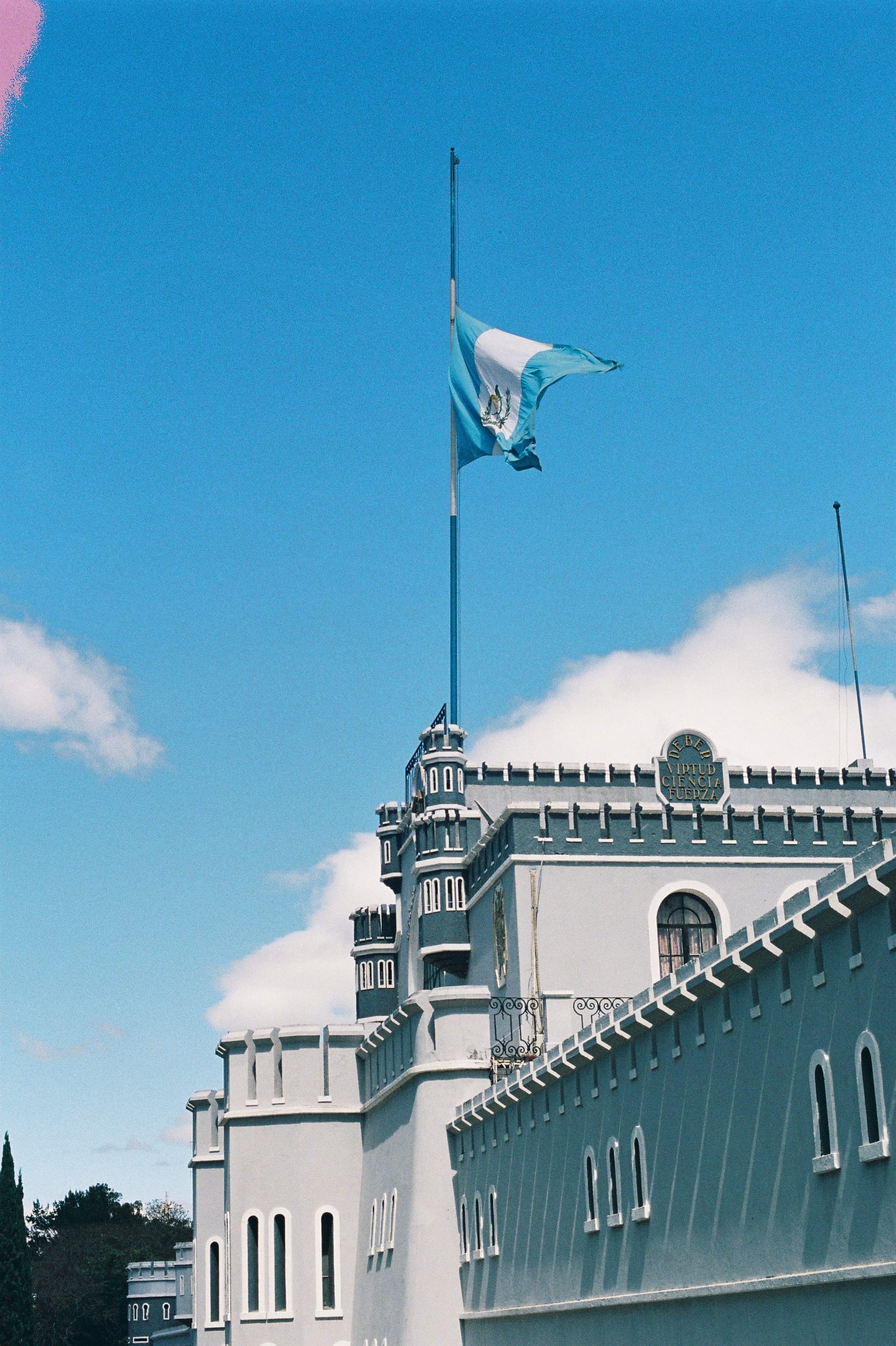
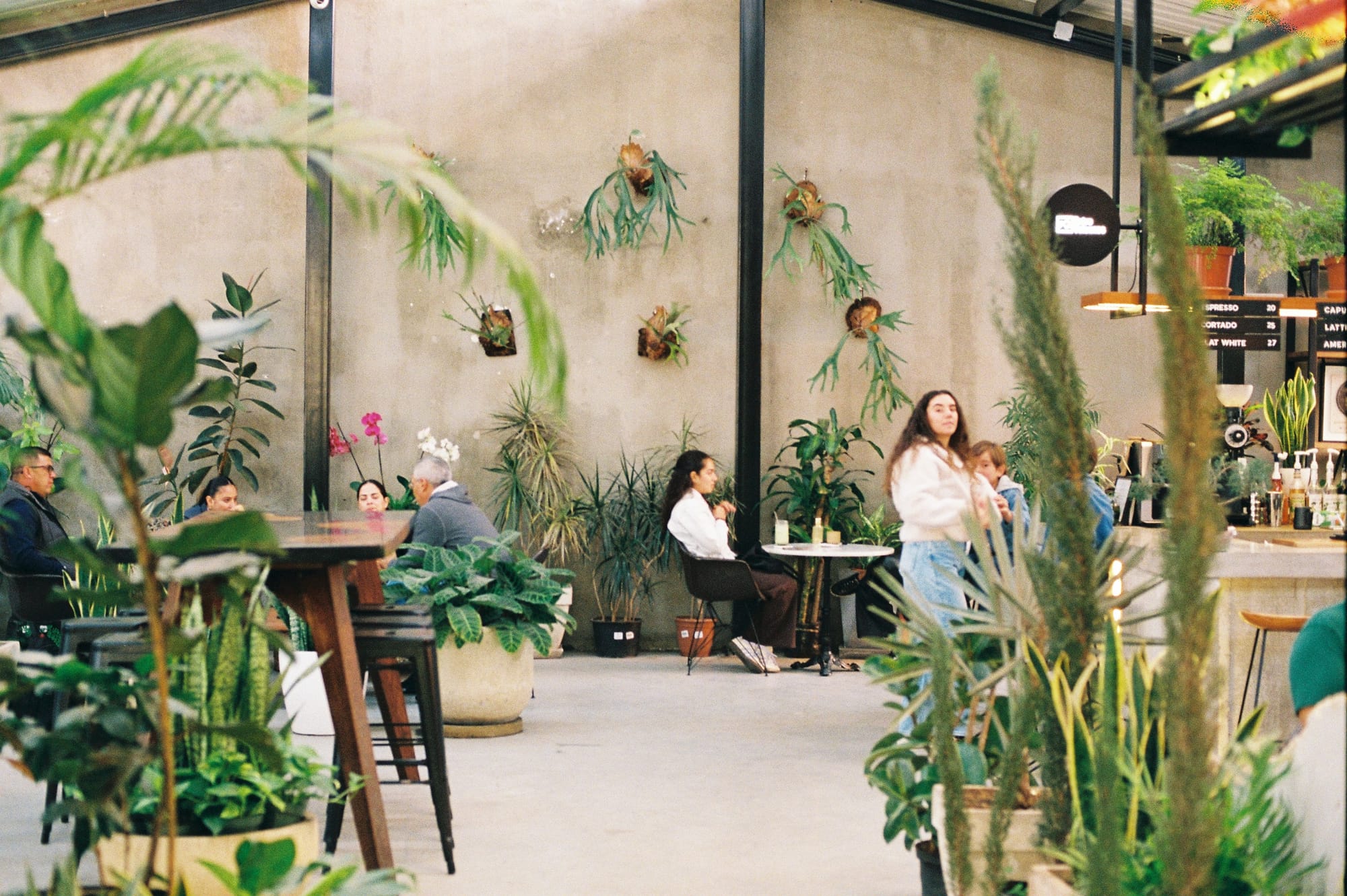
The Ministry of Defense and a coffee shop in Guatemala City
We only had one full day in Guatemala City and figured we had to give it a fair shake so we started our walk to a coffee shop and not but one block in did we see our first gentleman with a sawed-off shotgun. He would be the first of many that morning with shotguns; we would guess at least one standard deviation above the normal amount of guns on a coffee walk. But, the shops we did go to were really hip and delicious and although we got a lot of stares here (more so than anywhere else on our trip so far) everyone was very smiley and kind and just curious about our choice of visiting the capital. We did walk to the Capital Botanic Garden only to find out it was closed for the state of siege. Seems reasonable.
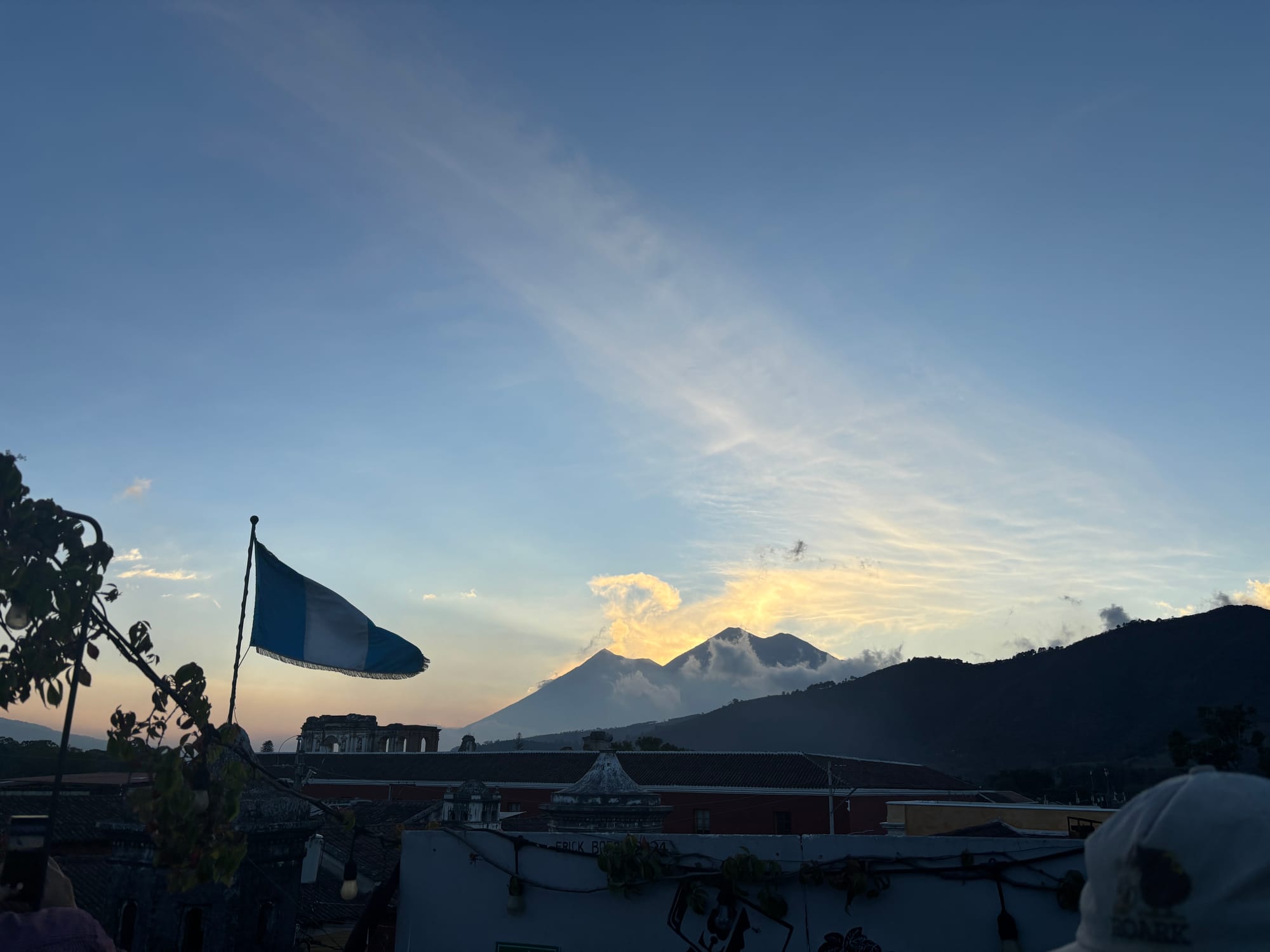
Our next stop was Antigua, which was an easy 1 hour Uber ride from Guatemala City. We were pretty stunned by the beauty of the city as soon as we arrived. You can see three volcanoes immediately looming over the brightly painted buildings, with Volcan Agua being most prominent to the South and framed by the famous Arco de Santa Catalina archway. Volcan Fuego and Volcan Acatenango sit just to the Southeast and Volcan Fuego is nearly constantly active with frequent belches of gas and smoke visible from the city all day, and at night it offers an incredible display of erupting glowing orange lava.
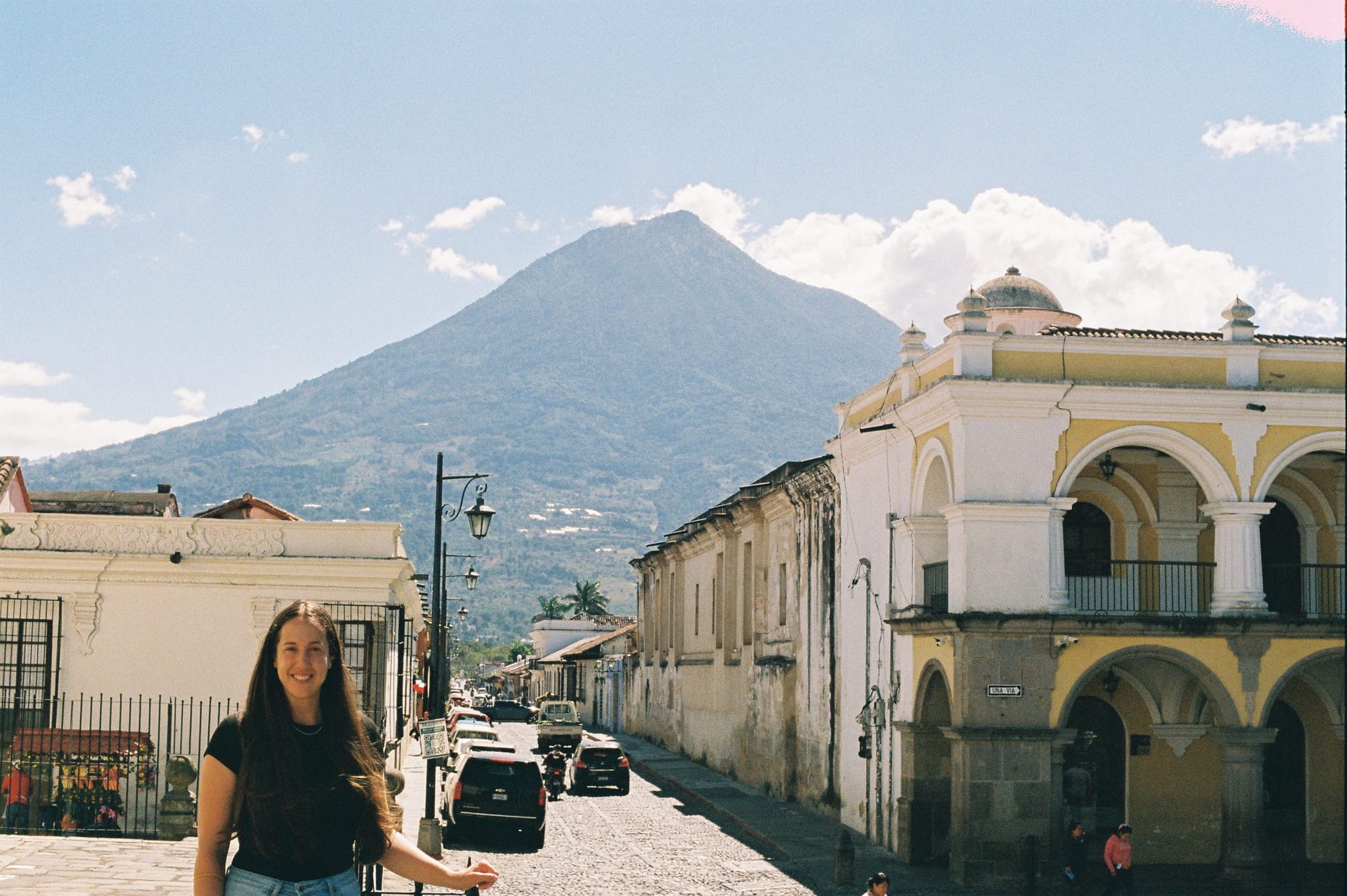
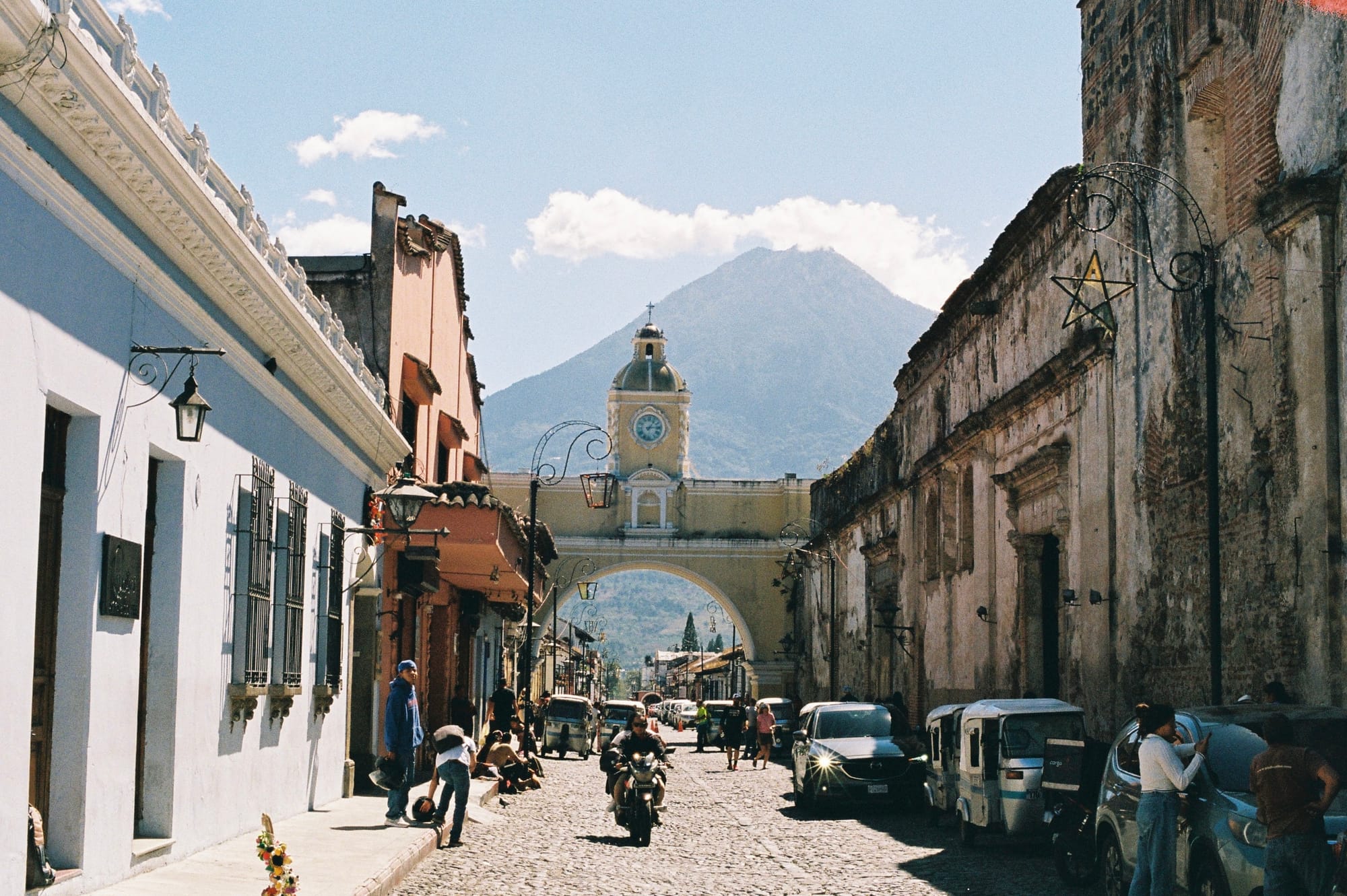
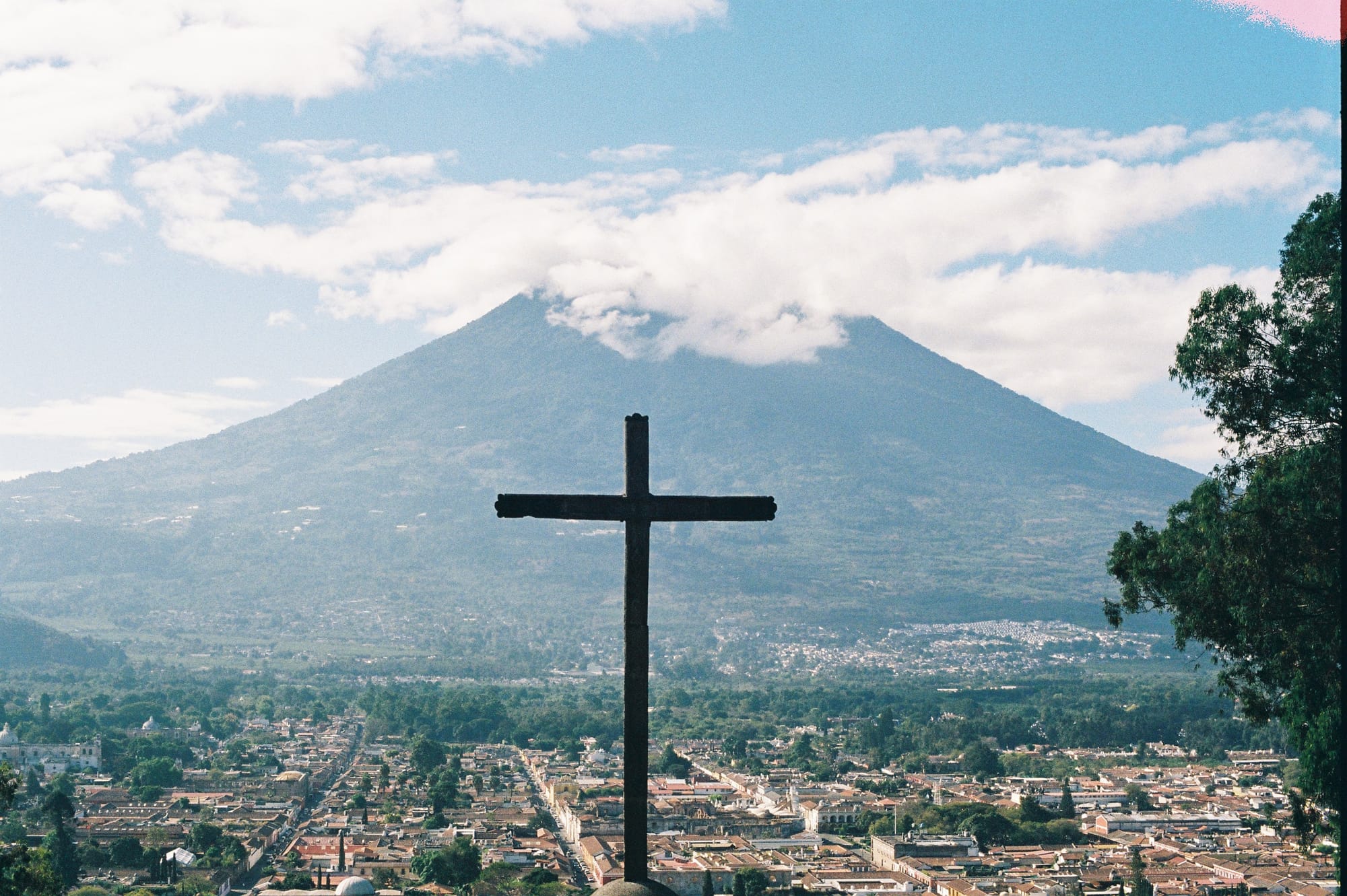
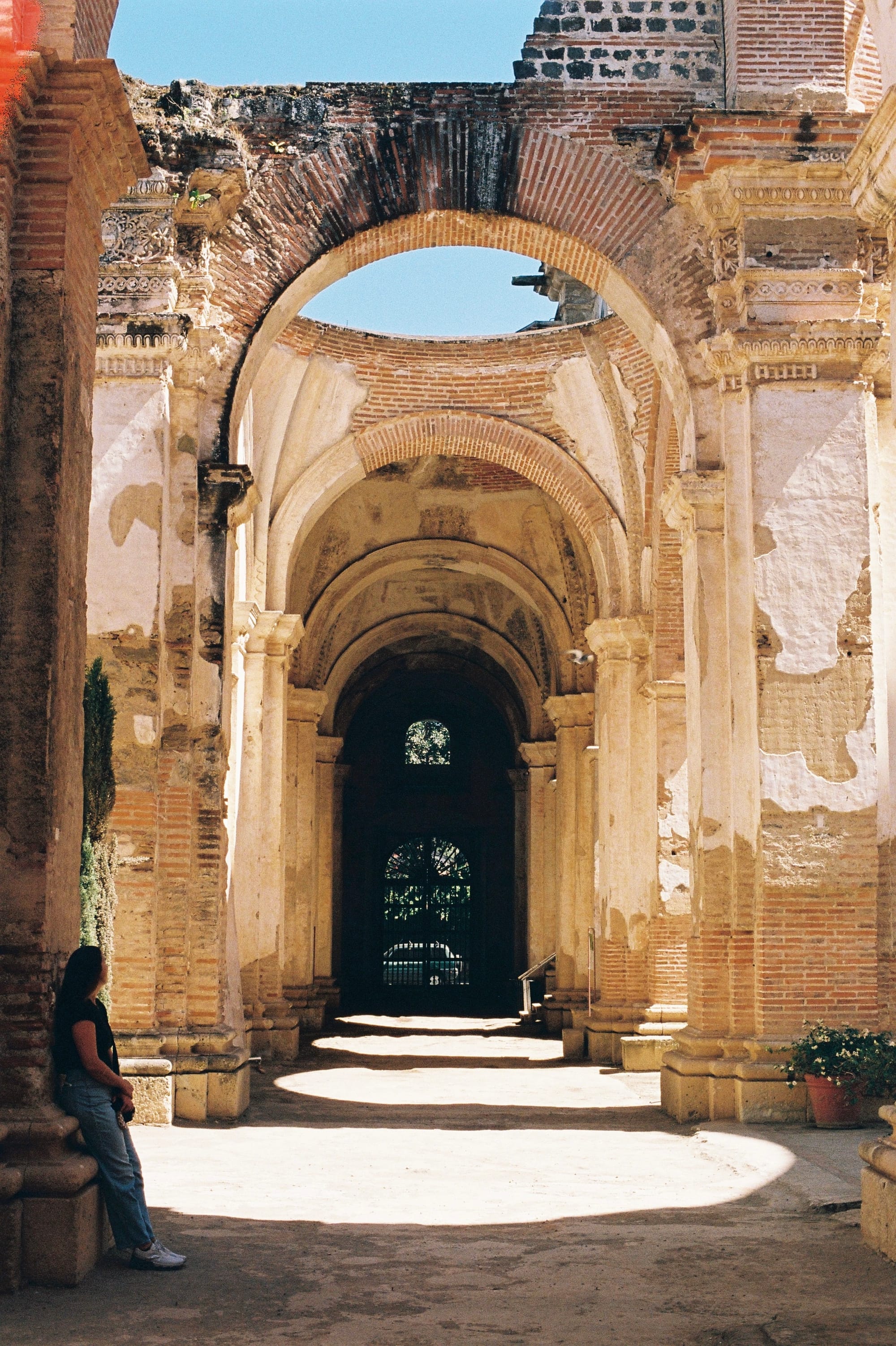
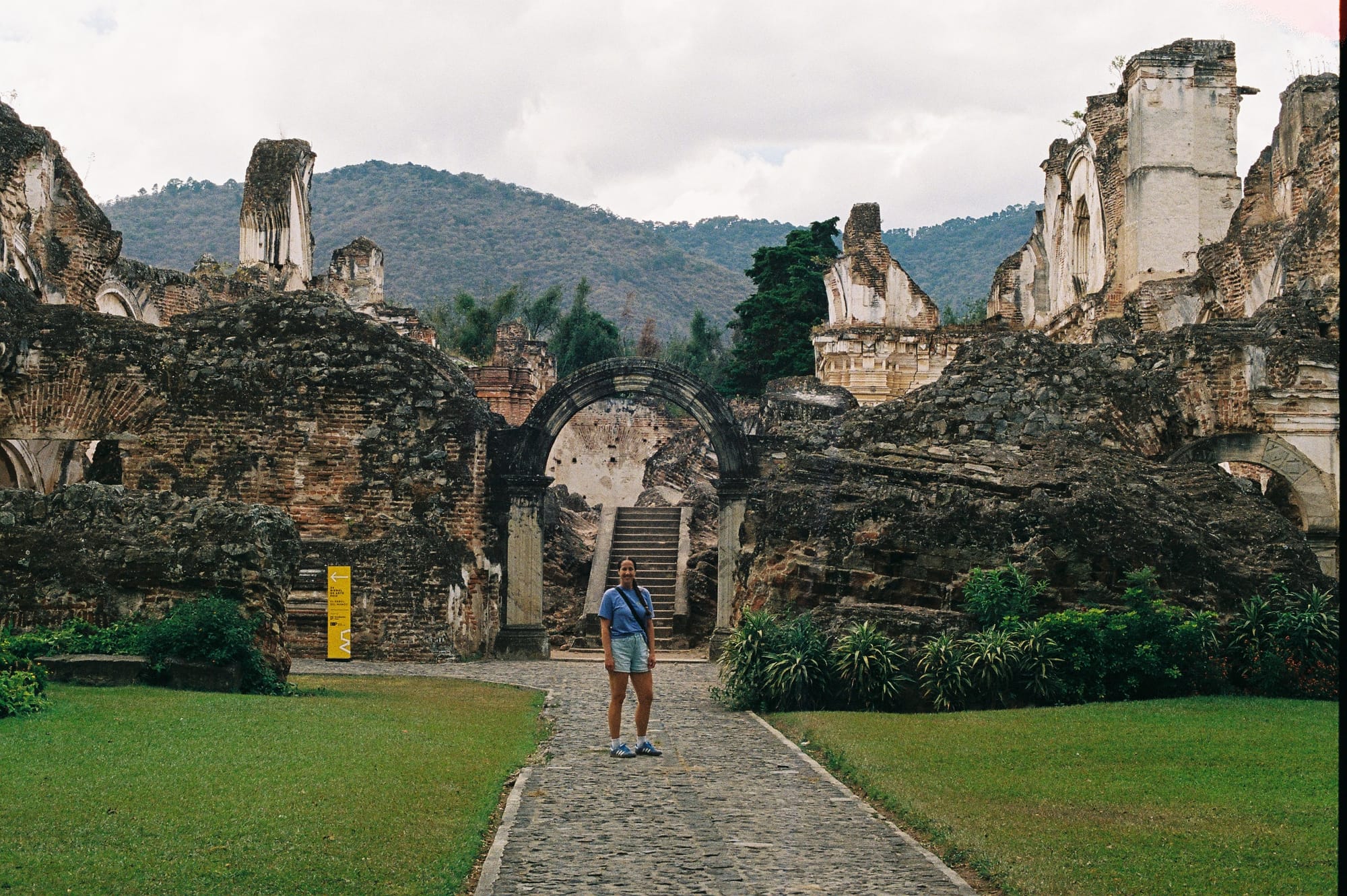
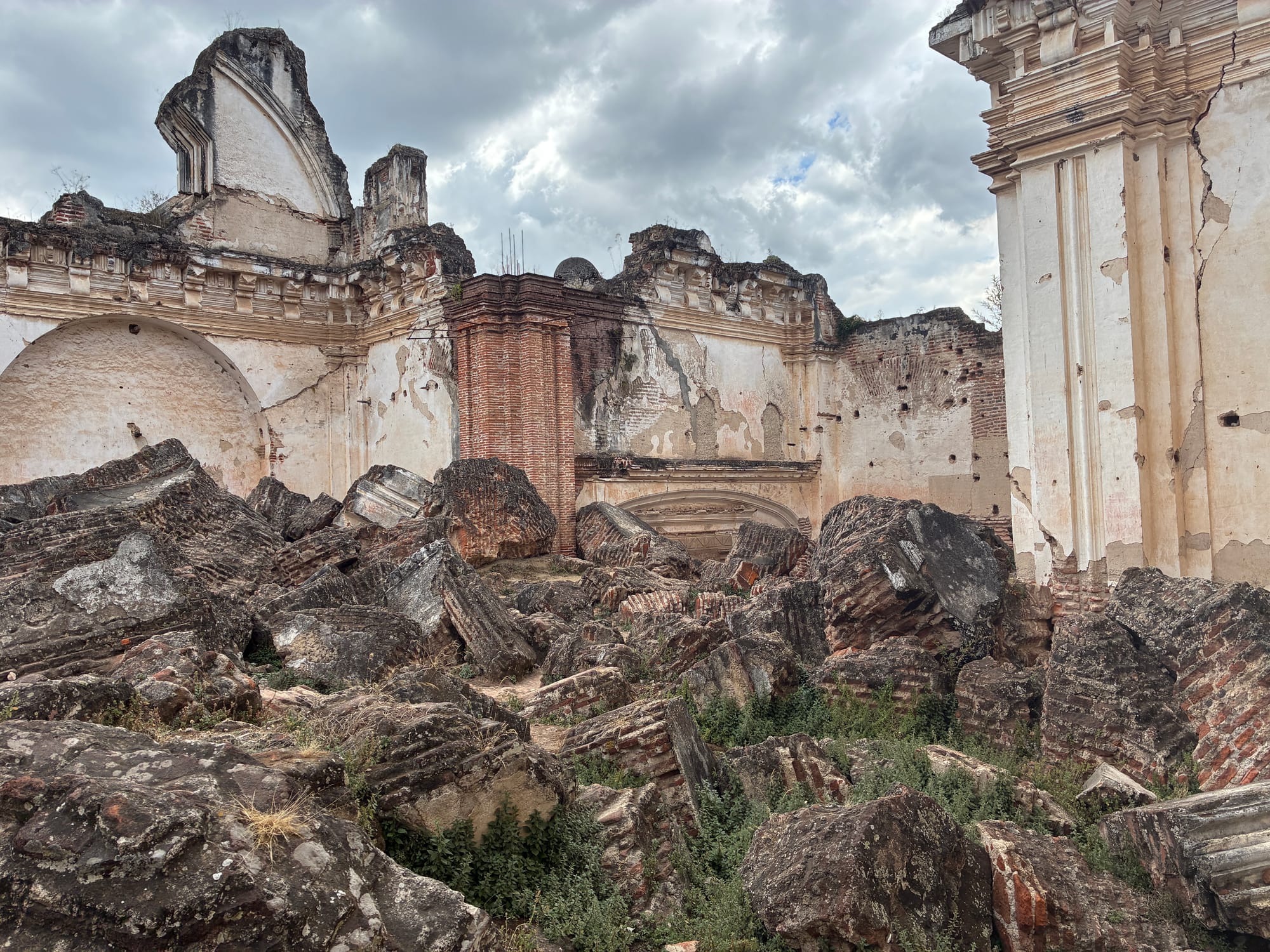
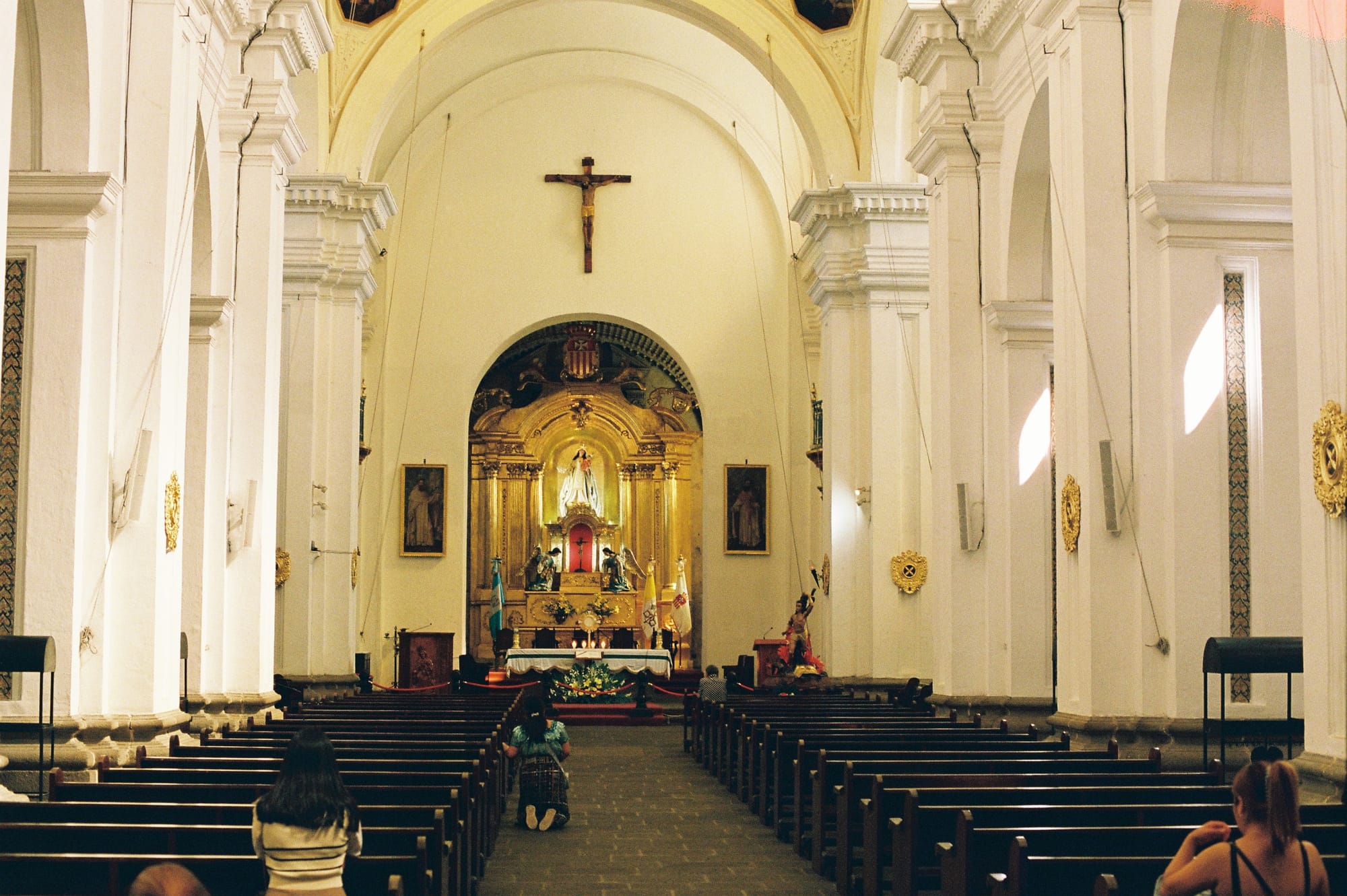
Antigua has had a rough natural history. It was named the capital city of Guatemala after a devastating flood in 1541 destroyed the original capital of Ciudad Viejo just a few miles away. Apparently, there was heavy rainfall that year which caused the crater lake of Volcan Agua to spill over the sides and completely destroyed the previous capital. The current city of Antigua has clearly had its share of natural disasters as well (prompting the final move of the capital to Guatemala City.) Every block of the city seems to have some massive, majestic ruin as a result of a long string of earthquakes in the 18th and 20th centuries but smaller quakes continue to this day. We talked to one local who said that he has lived through hundreds of earthquakes, they are just a normal part of his life. We visited a few of these beautiful ruins including Ruinas de La Antigua Catedral de Santiago and Ruinas de La Recolección. Even as ruins, they were breathtaking and it was fascinating to see the architecture and rigidity of man’s buildings tumbled to the ground with nature’s entropy.
We had plans to summit Volcan Acatenango and climb to the saddle of Volcan Fuego to see the eruptions up close. The night before our hike, we went to a rooftop bar and had a couple beers as we watched the violent spewing lava, the thought of walking toward it seemed quite ridiculous.
In Antigua, the morning of our hike, it was very foggy and we were anxious that our views on the hike would be limited. Our trek started at the base of Volcan Acatenango and it was a steady climb for 6 miles up to base camp at about 12,000 feet. Our concern for fog/clouds turned out to be unfounded as we broke through the cloud line a good 1500 feet from basecamp. The trail up to camp was not horrible- steep but not sketchy. We only caught sight of Volcan Fuego for the last half mile or so, but at this point it was so close that we could hear and feel the eruptions as we rounded into camp.
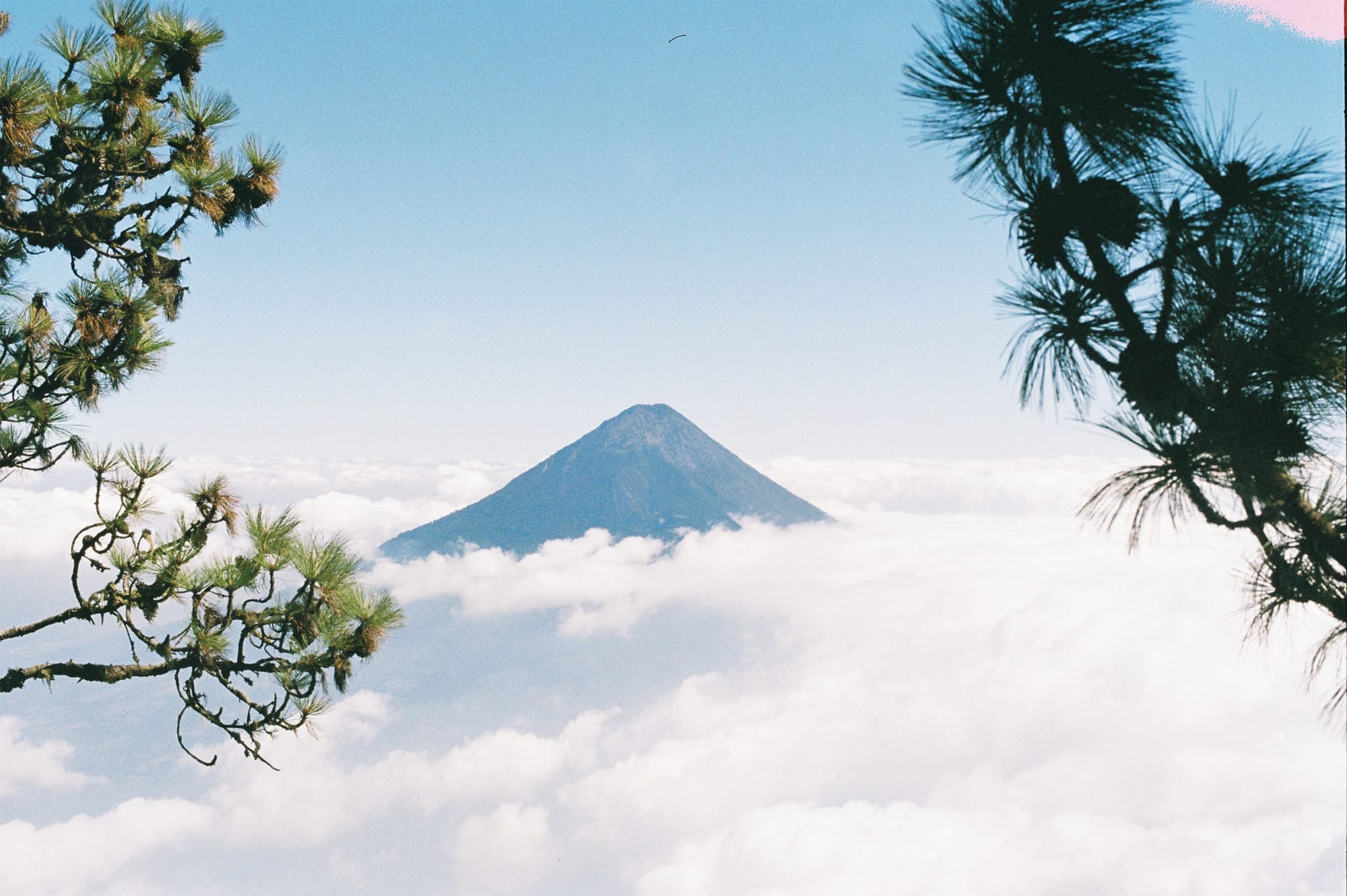
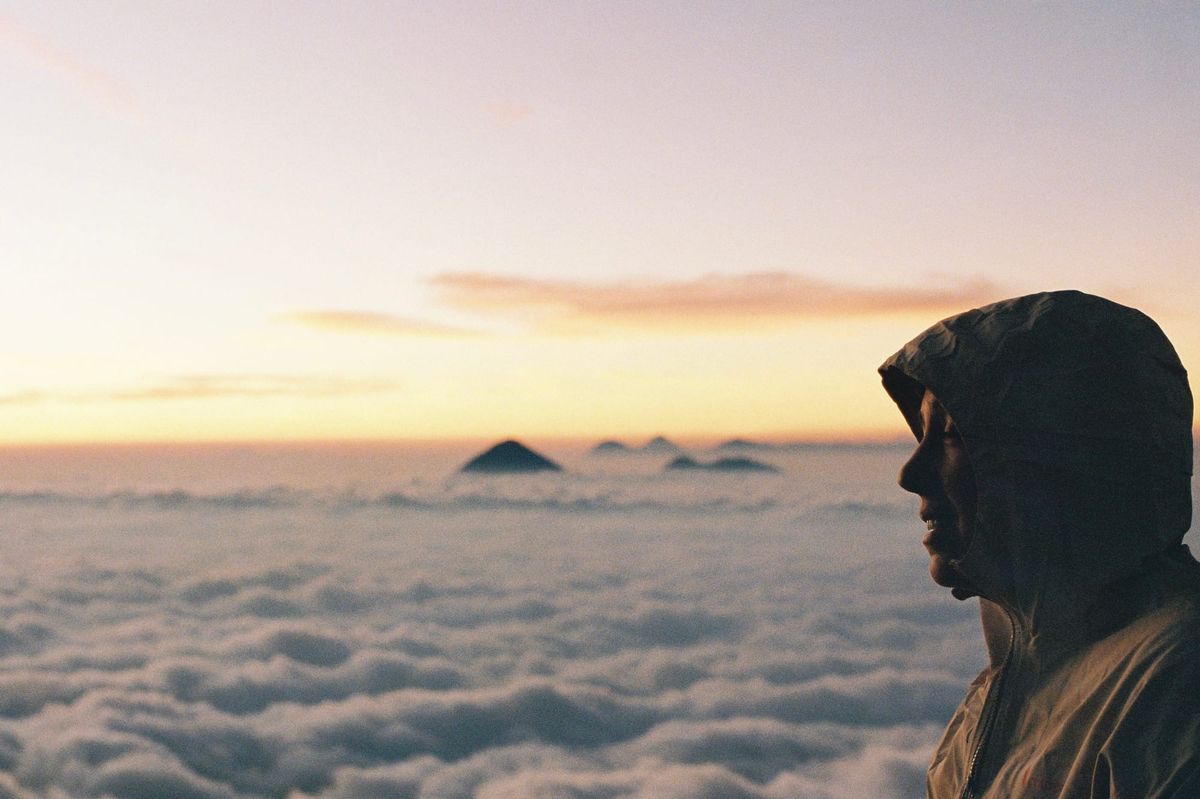
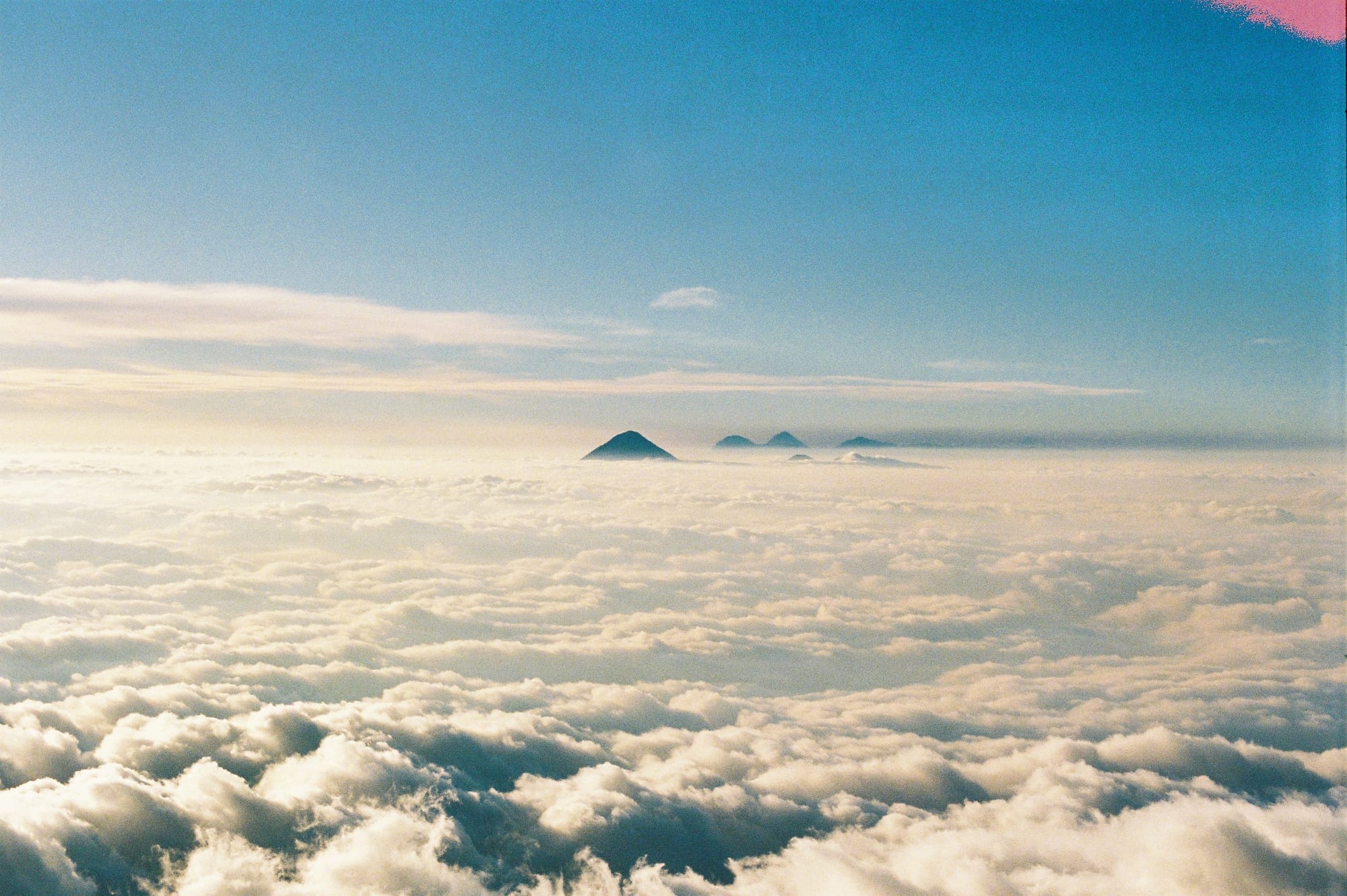
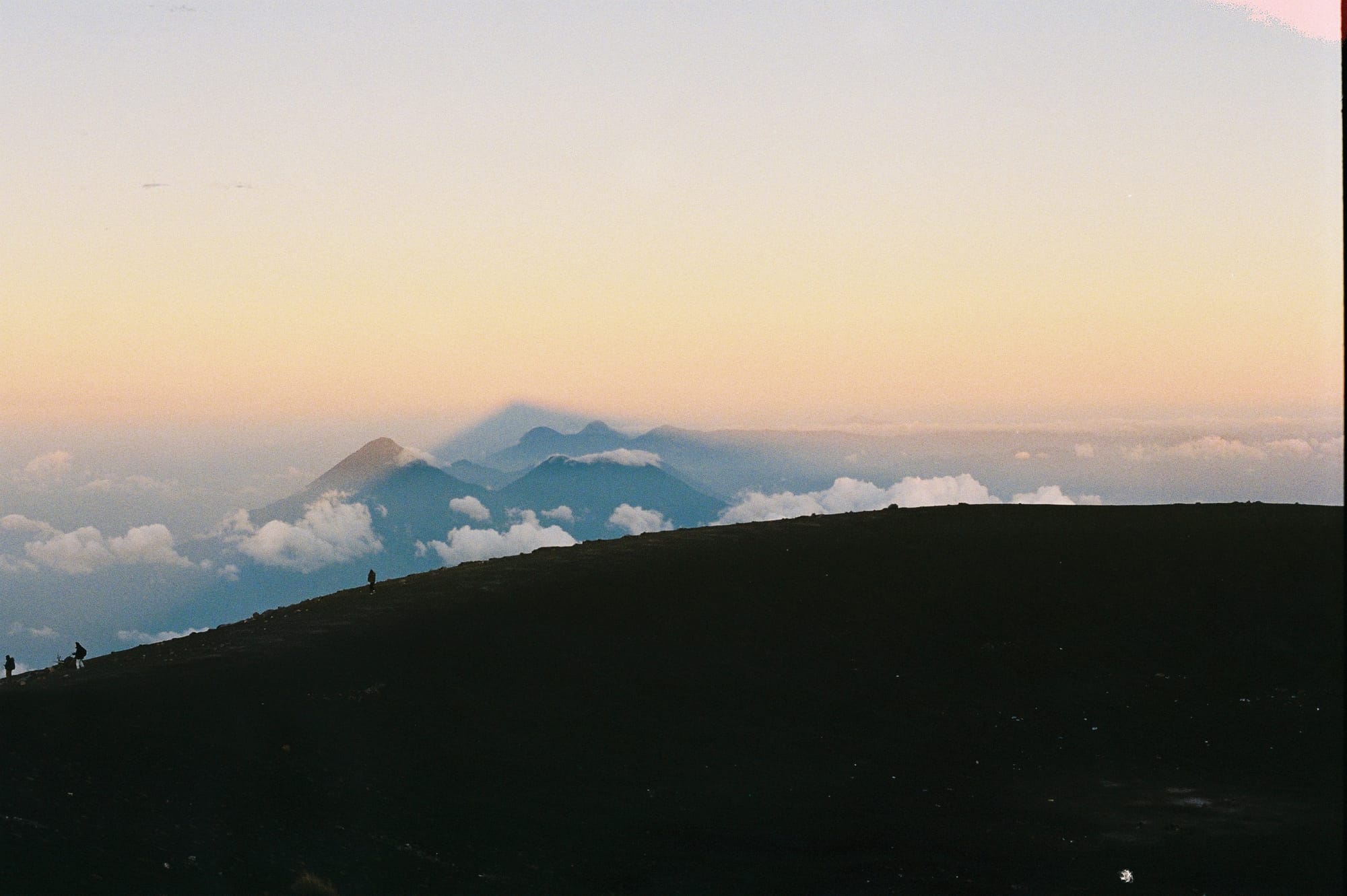
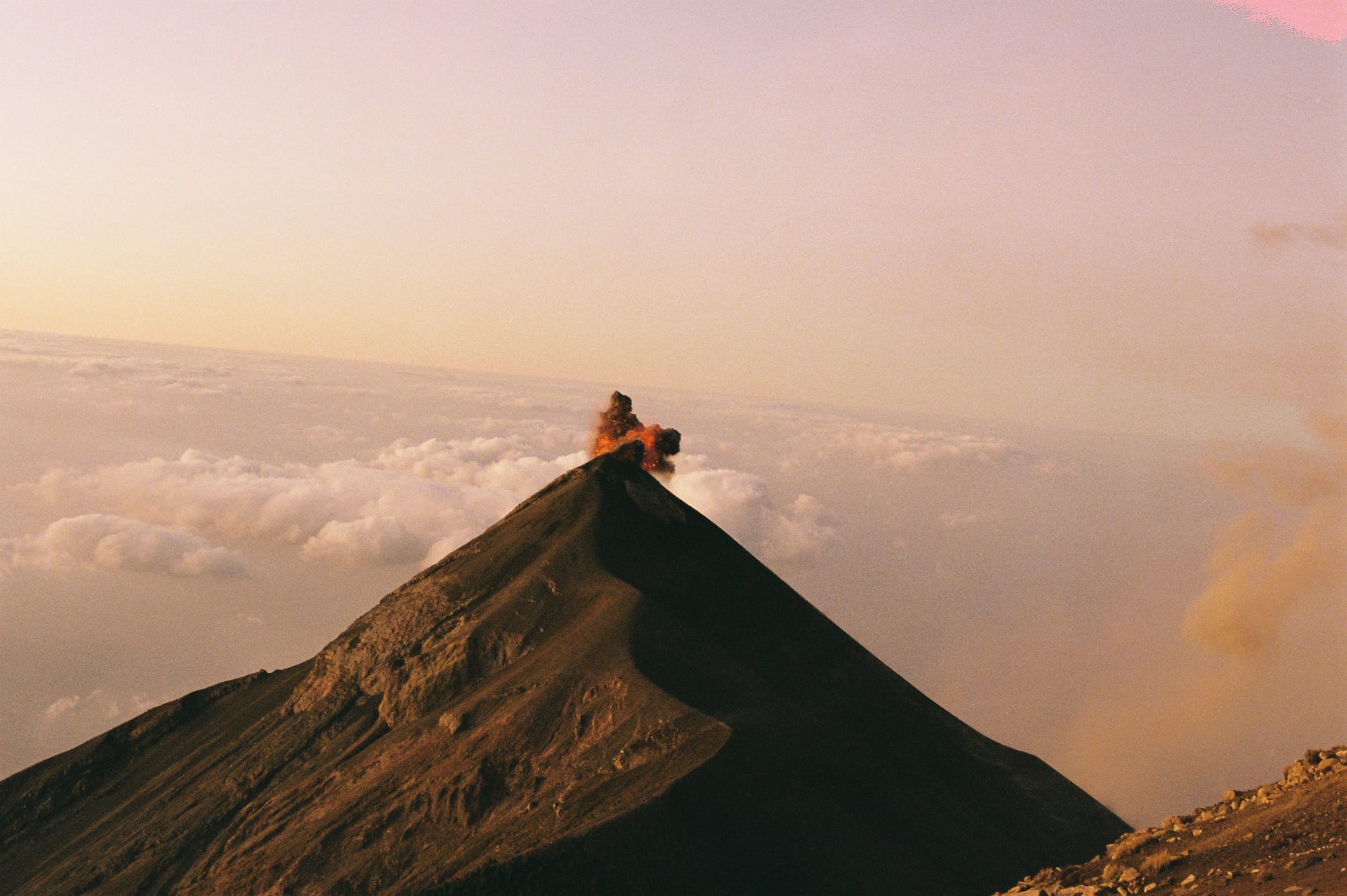
We had a 2 hour break before we began the 1000 foot descent down to the base of Fuego and another 1000 foot ascent to the saddle where there was “The Limit” of Fuego at which point you couldn’t pass due to the risk of being sprayed by lava. We got to The Limit about 30 minutes before sunset. Just as we crested the saddle, one of the biggest explosions of the night suddenly erupted and we paused in shock. Car-sized molten lava boulders careened into the air and tumbled down the side of Fuego. It went against all of our instincts to continue walking on, but the spectacle of it all was worth it. As night descended, the eruptions got more and more impressive and other-worldly. To the west we could see all the way to Lake Atitlan and the seven volcanoes surrounding the lake, but between us and Lake Atitlan was a carpet of clouds. Had we not known better, we would have thought an ocean separated us from the distant volcanoes. In the dark, we strapped on our headlamps and hiked the steep, sandy descent from Fuego and back up to Acatenango base camp.
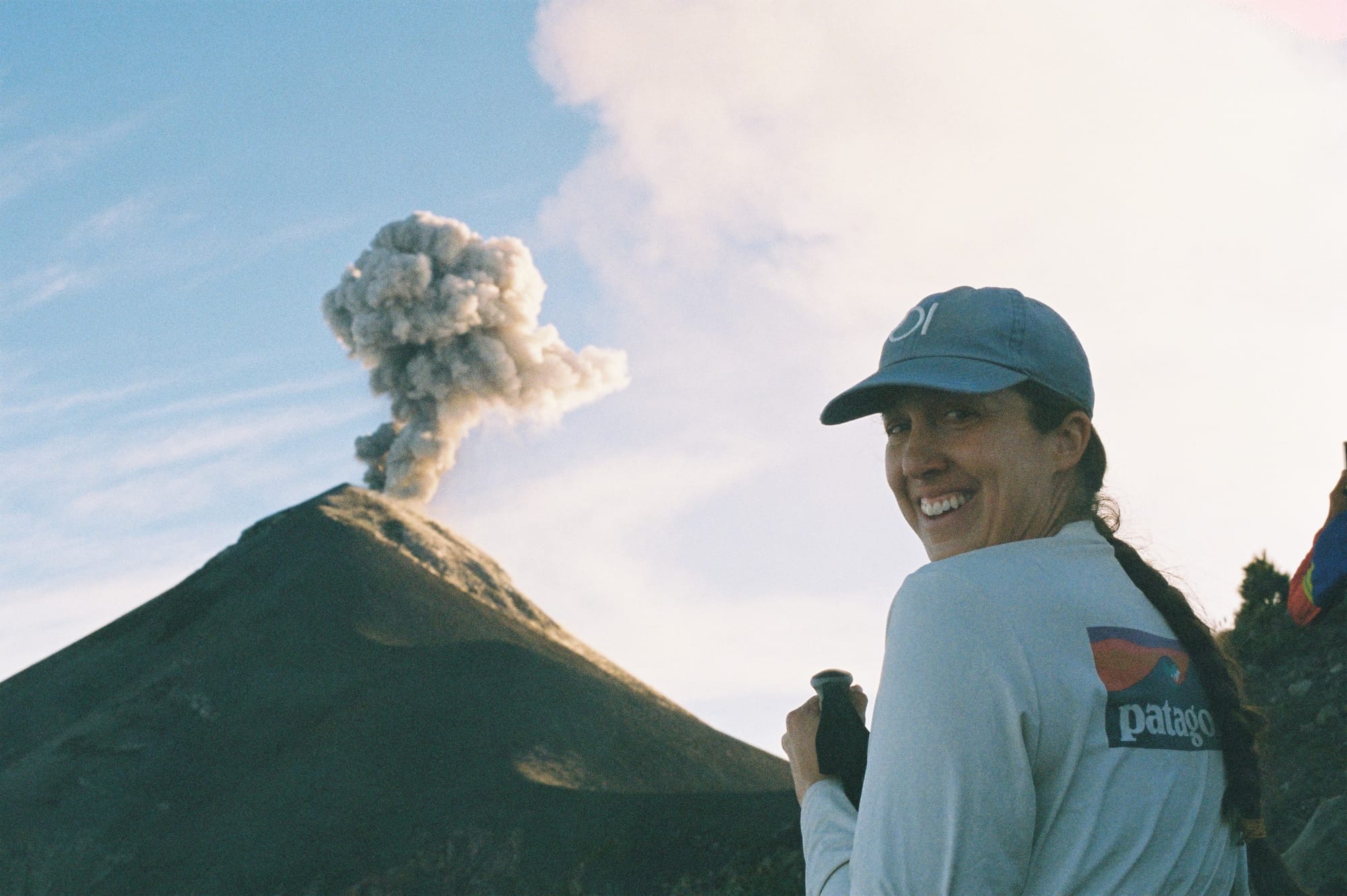
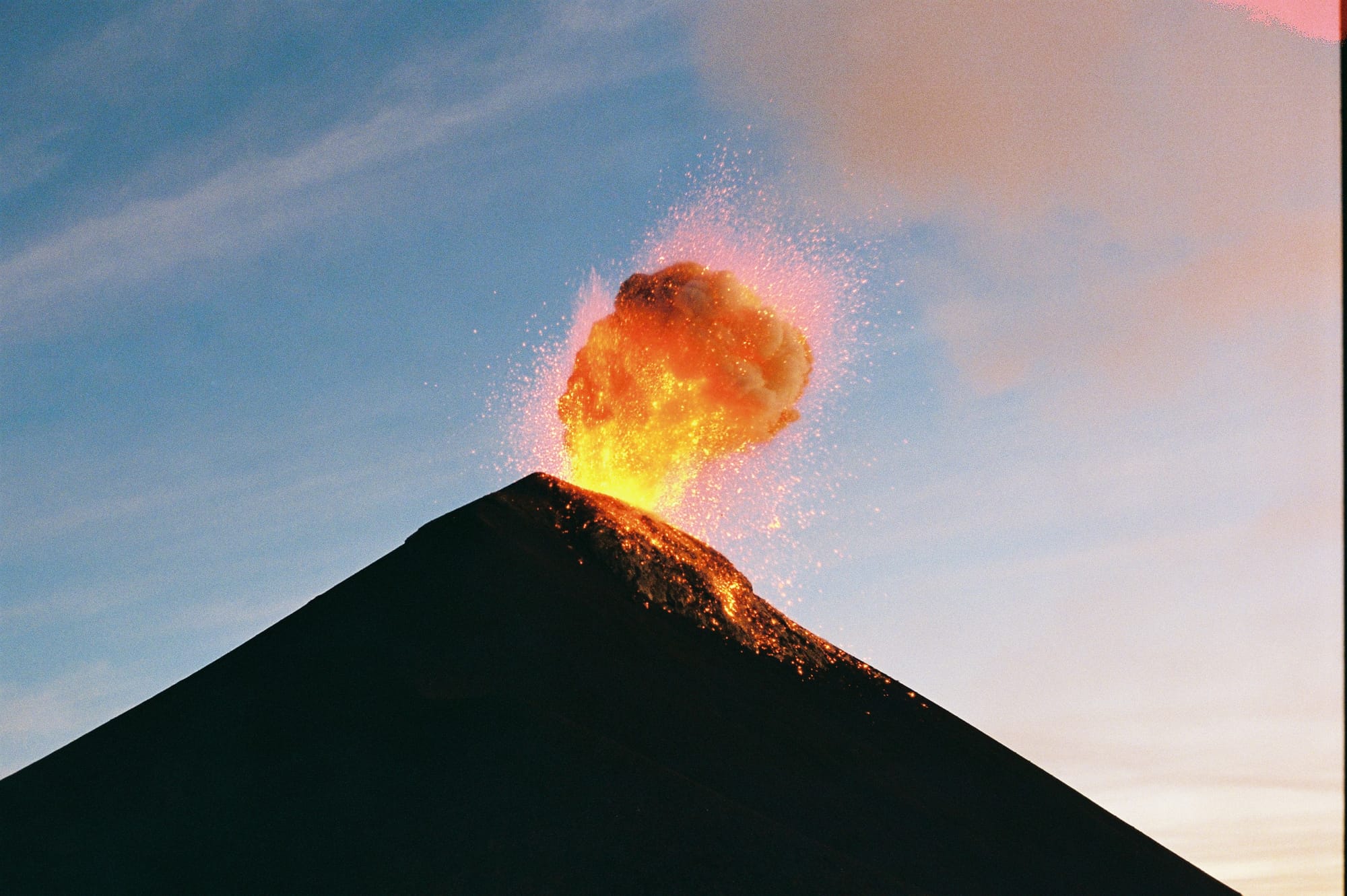
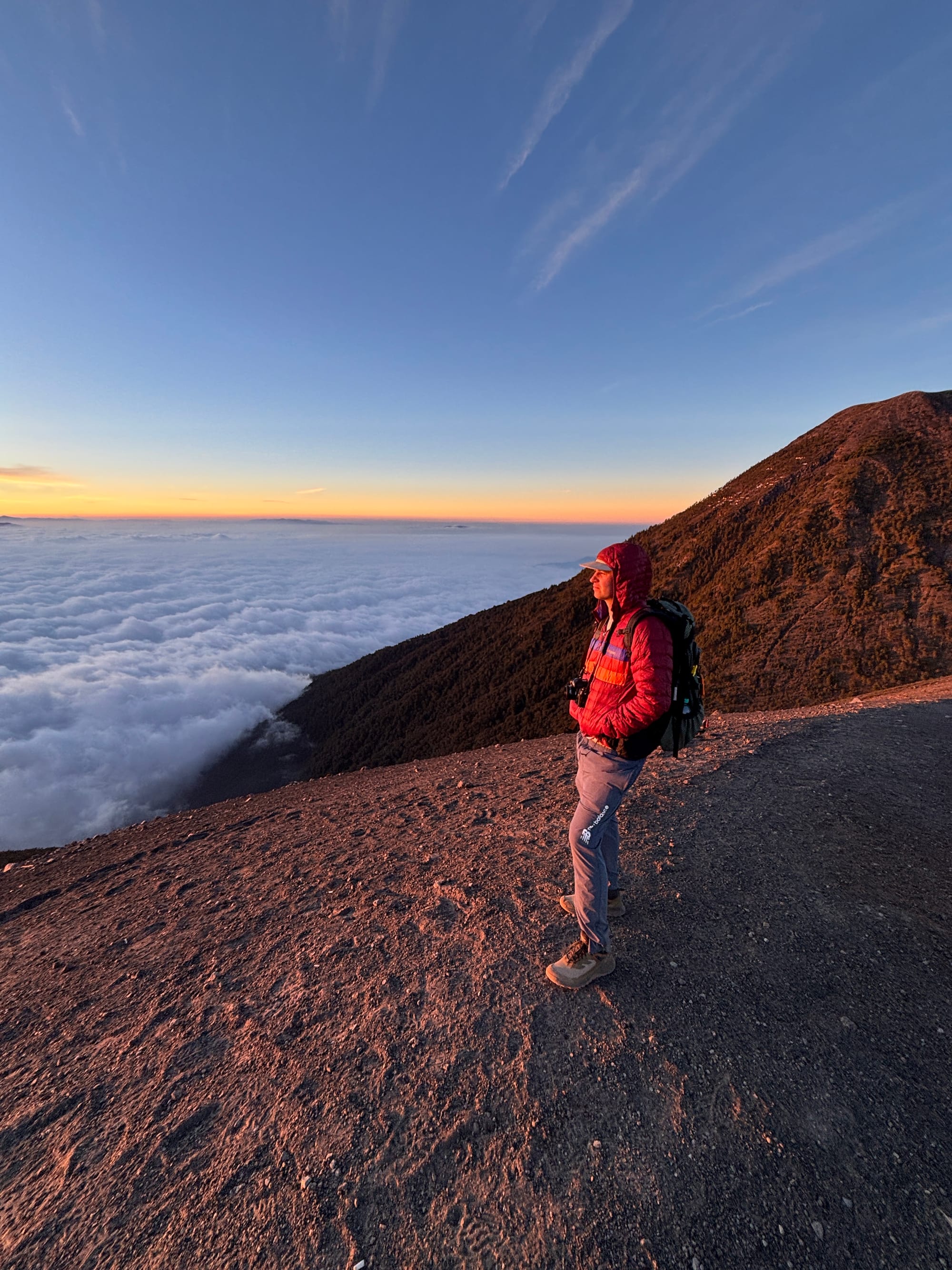
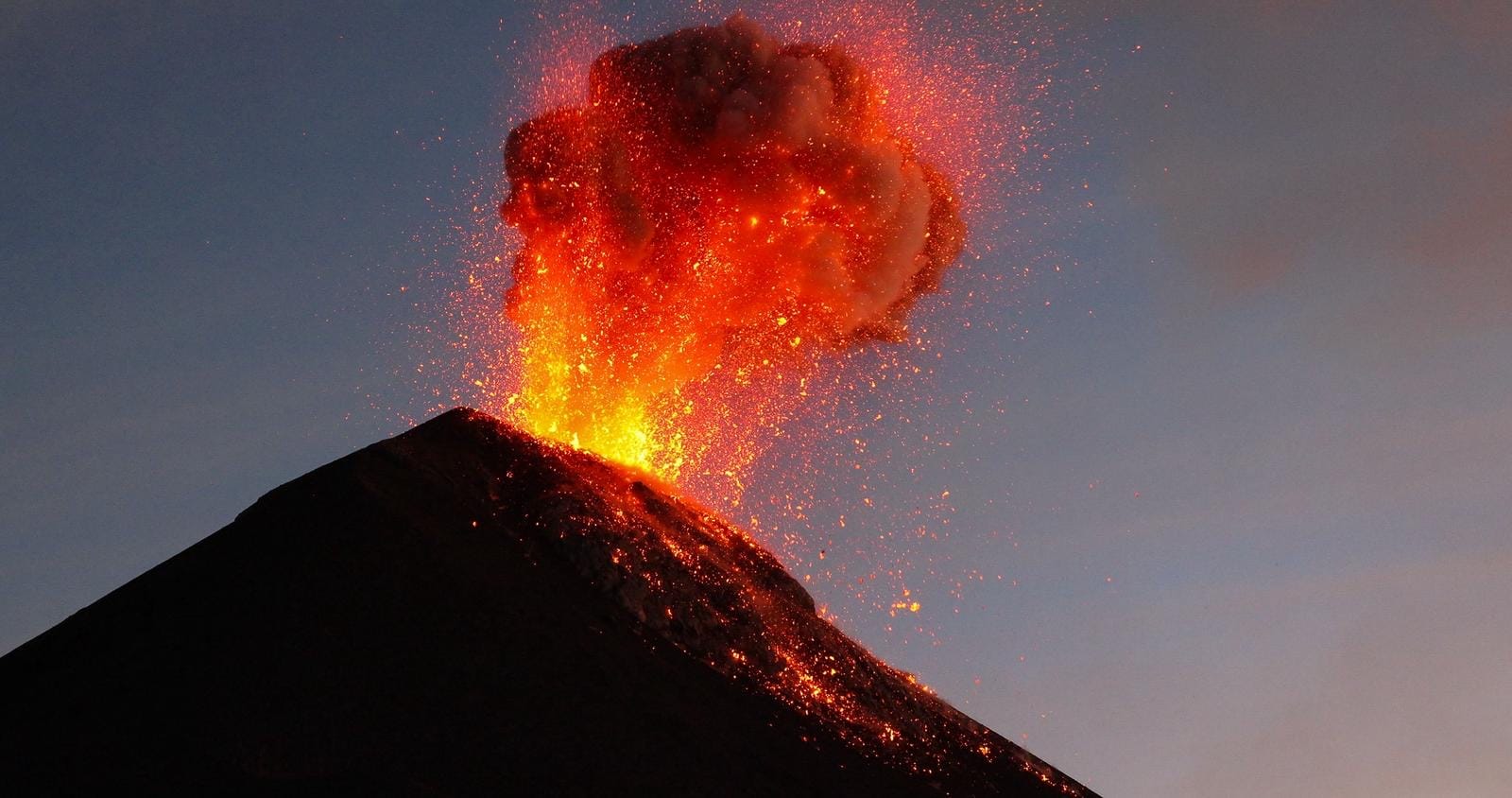
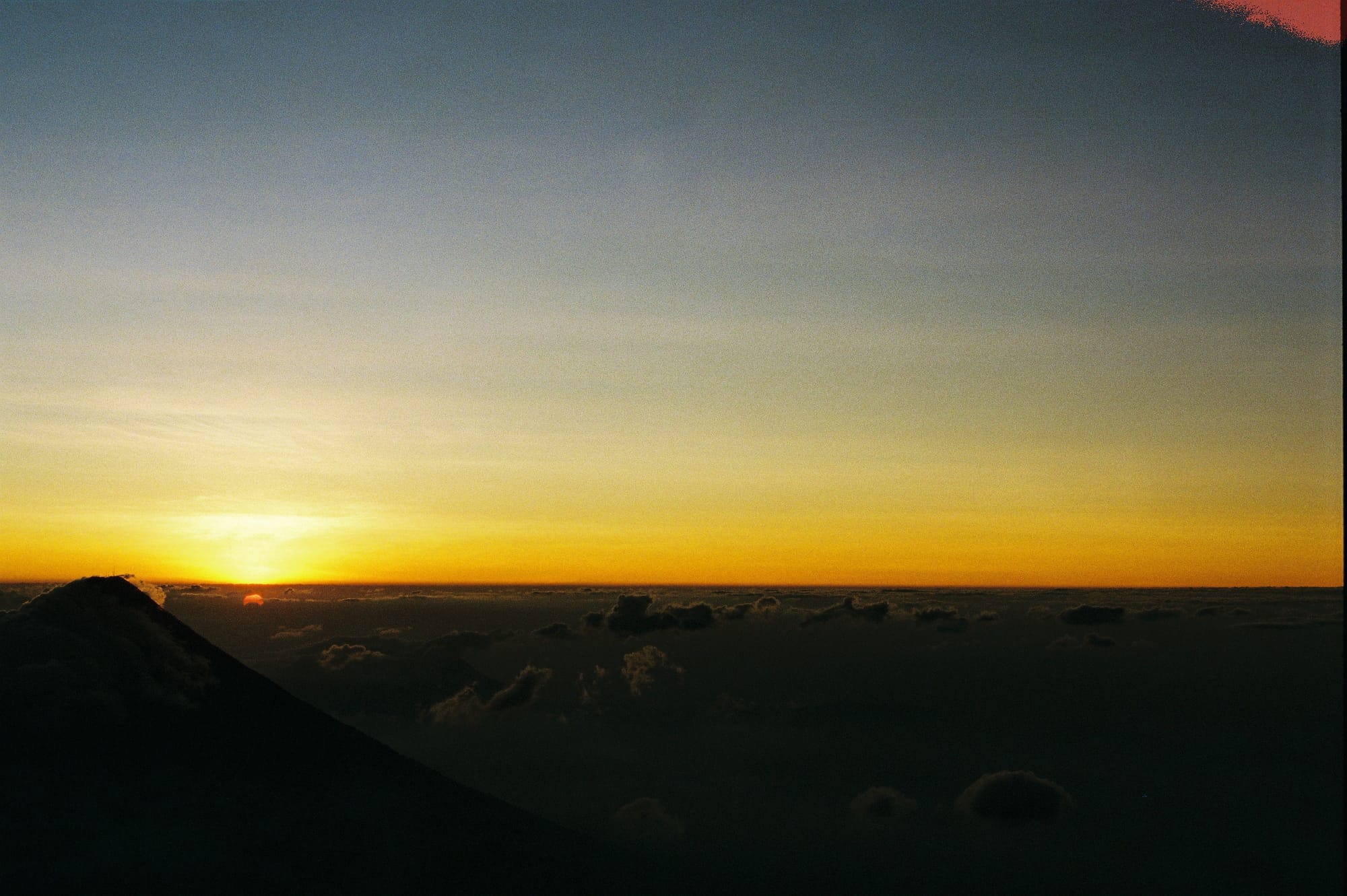
Arriving back in camp at about 8:30, we scarfed down our dinner and tried to sleep despite massive explosions every 10 minutes or so shaking the camp and earth under us. We had an early wake-up call at 3:45 AM for the final 1000 foot push to the summit of Acatenango. We both agree that this was probably the toughest part of the whole trek- stumbling blindly up a dusty, sandy, desolate hill in the dark up to 13,045 feet. The wind was ripping at the top and it was quite cold but we made it in time for sunrise and again we were awe struck as we looked down at Volcan Fuego (still exploding lava and ash) which now stood about 700 feet below us. The descent from the summit was quite fun. It was so sandy that we could basically run and slide all the way back down to camp. It took only about 3 hours to descend all the way down to the trailhead and by the time we were back at the base surrounded by trees and ferns and shade, it all felt surreal knowing that just a few thousand feet above is a very harsh, desolate, and prehistoric landscape.
We unfortunately were not done for the day. We had to pile into a van and suffer through a 4 hour drive to Lake Atitlan. Needless to say, our 1 hour of sleep in the last 48 hours or so mixed with altitude sickness and dehydration did not bode well for the ride. But, after hopping off the bus and loading onto a questionably-watertight boat (lancha) we sped across the lake to our Airbnb in Santa Cruz La Laguna where we officially started our Recovery Tour.
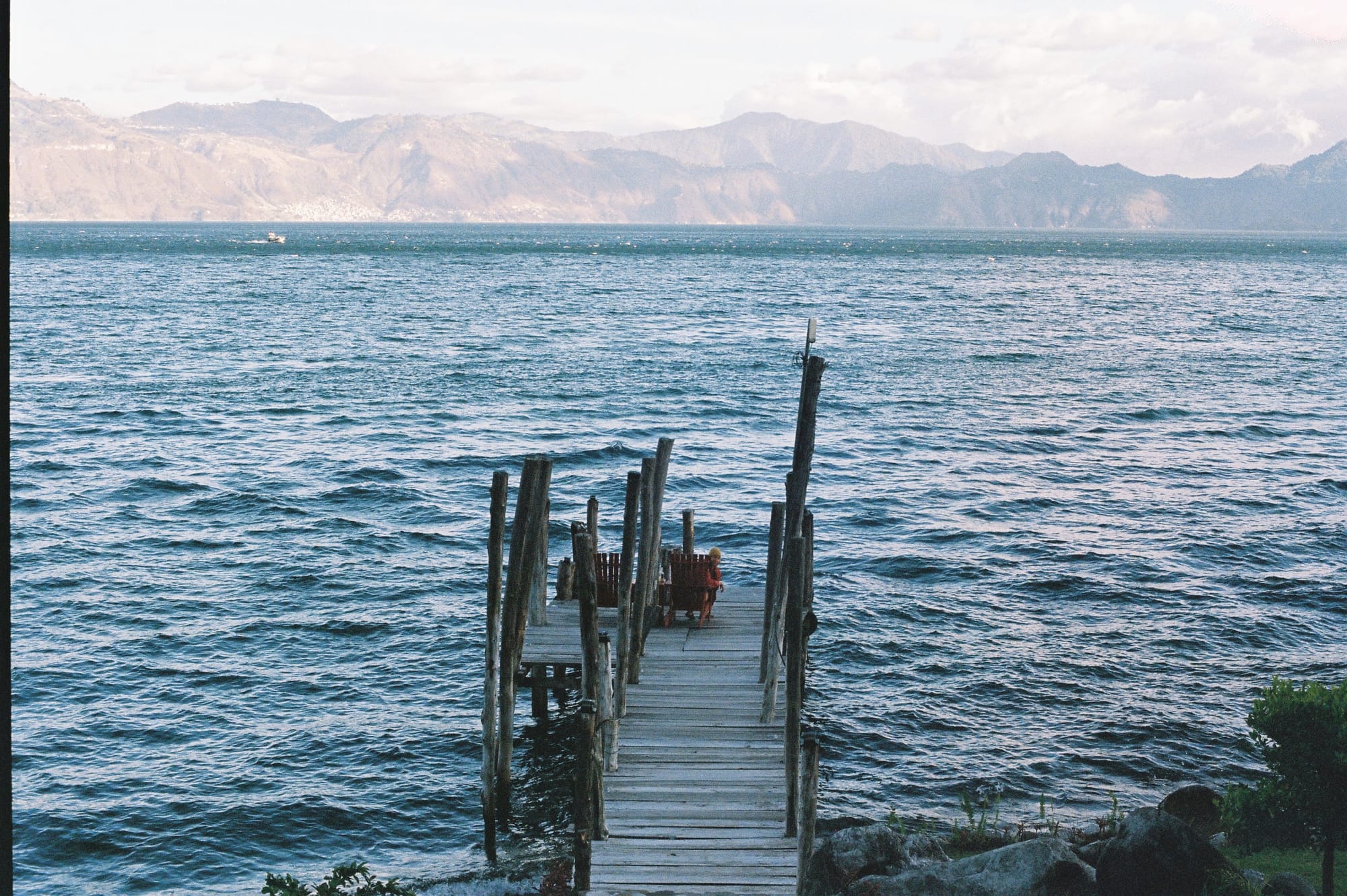
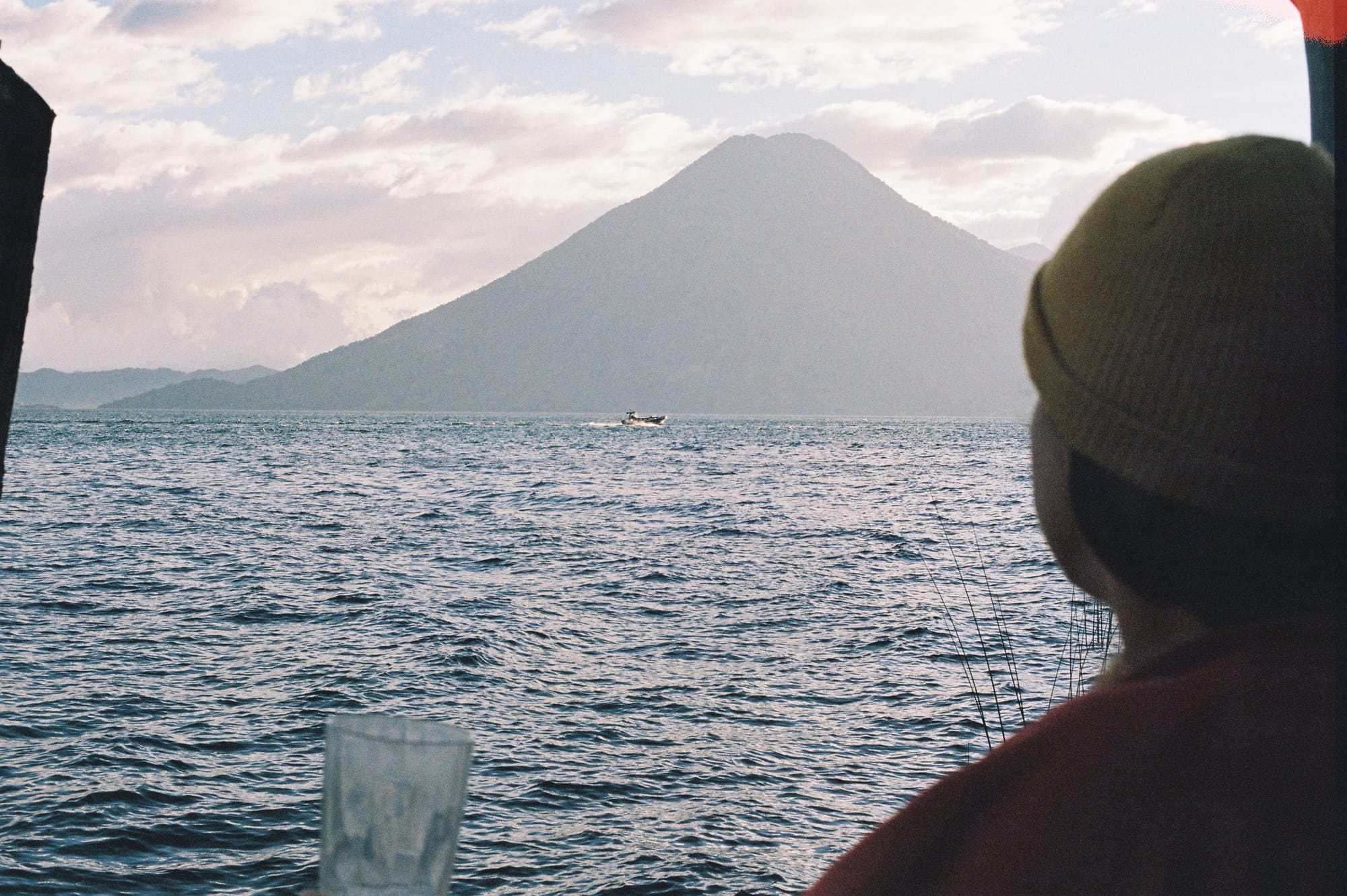
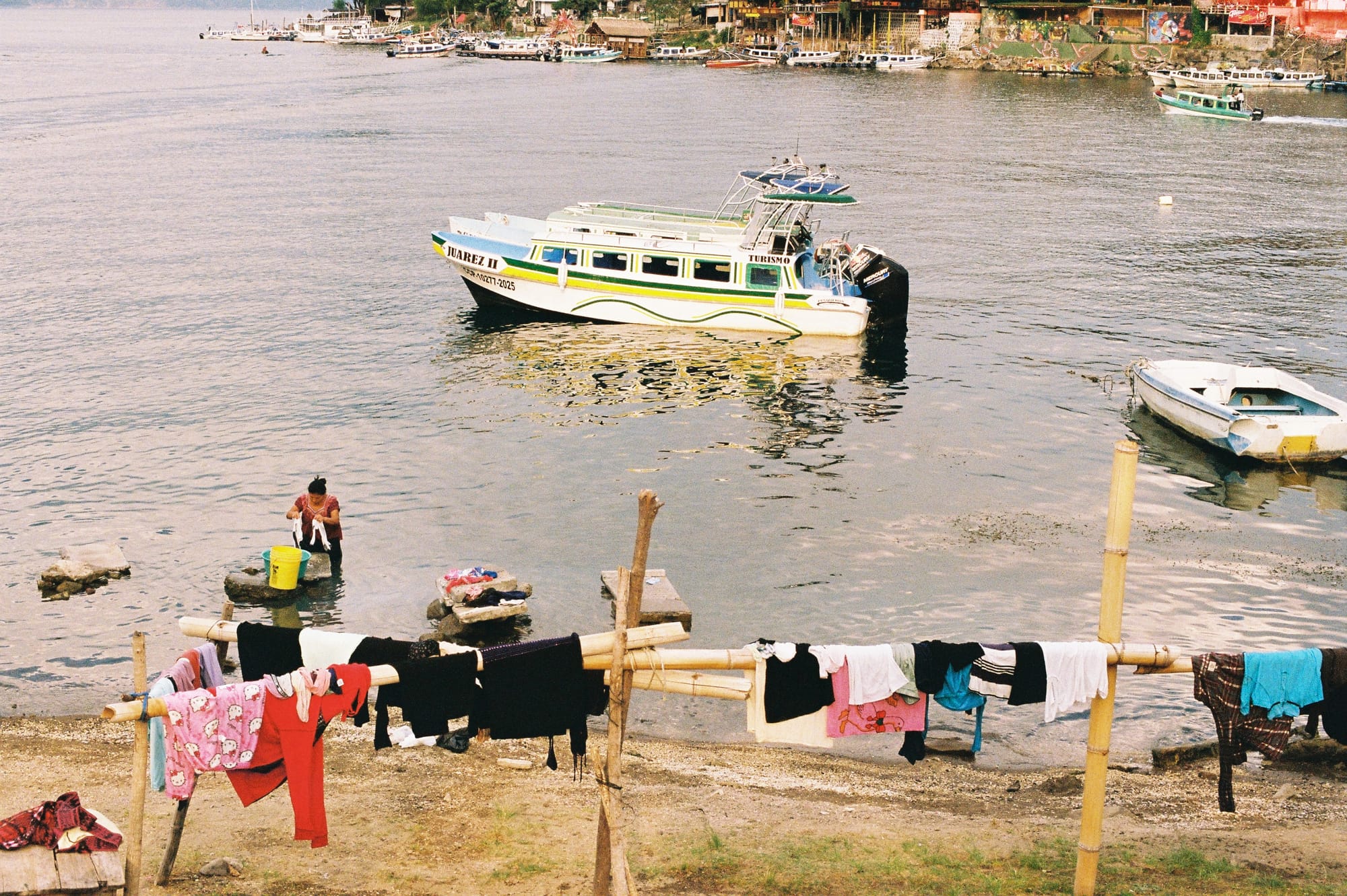
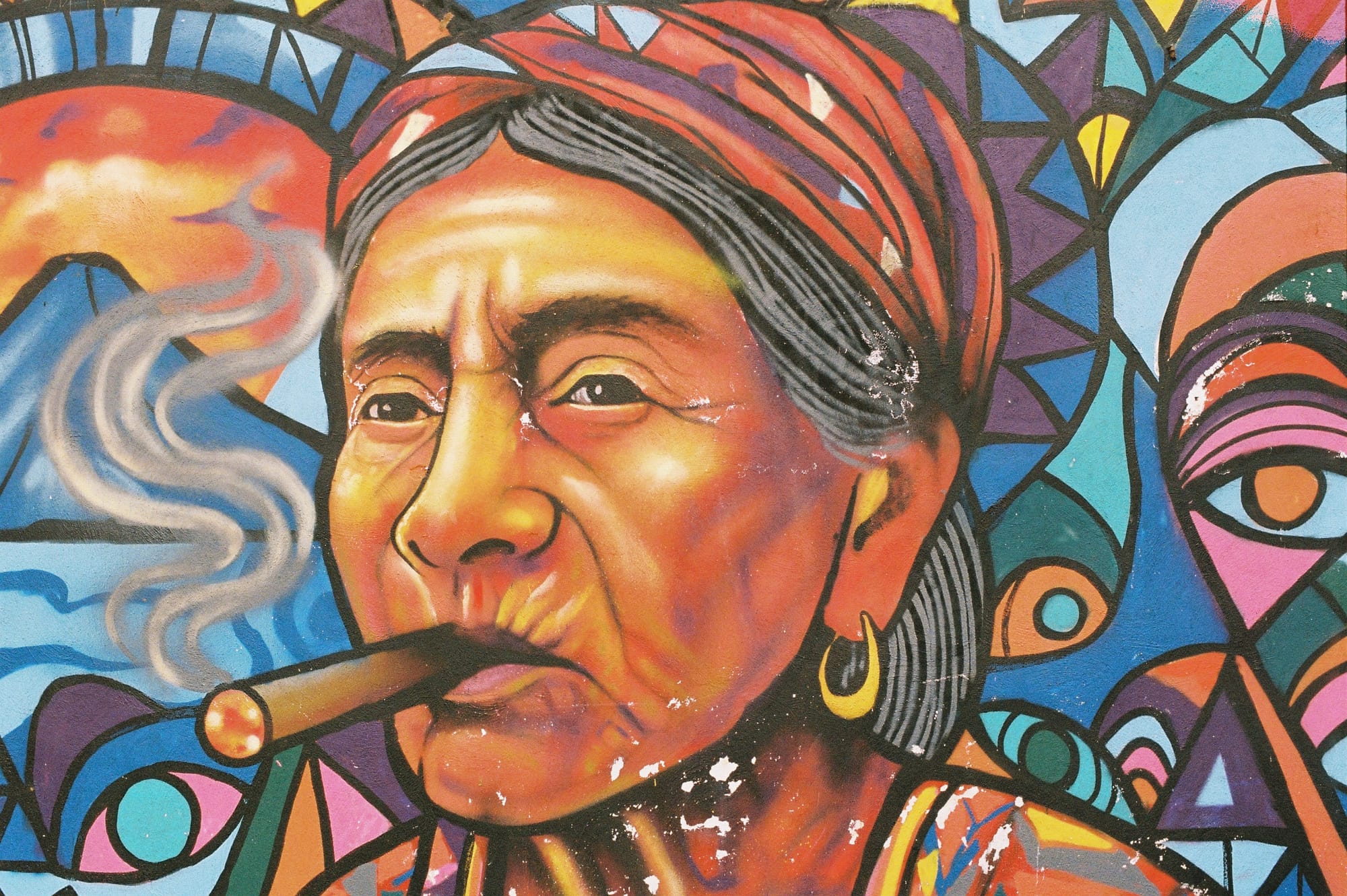
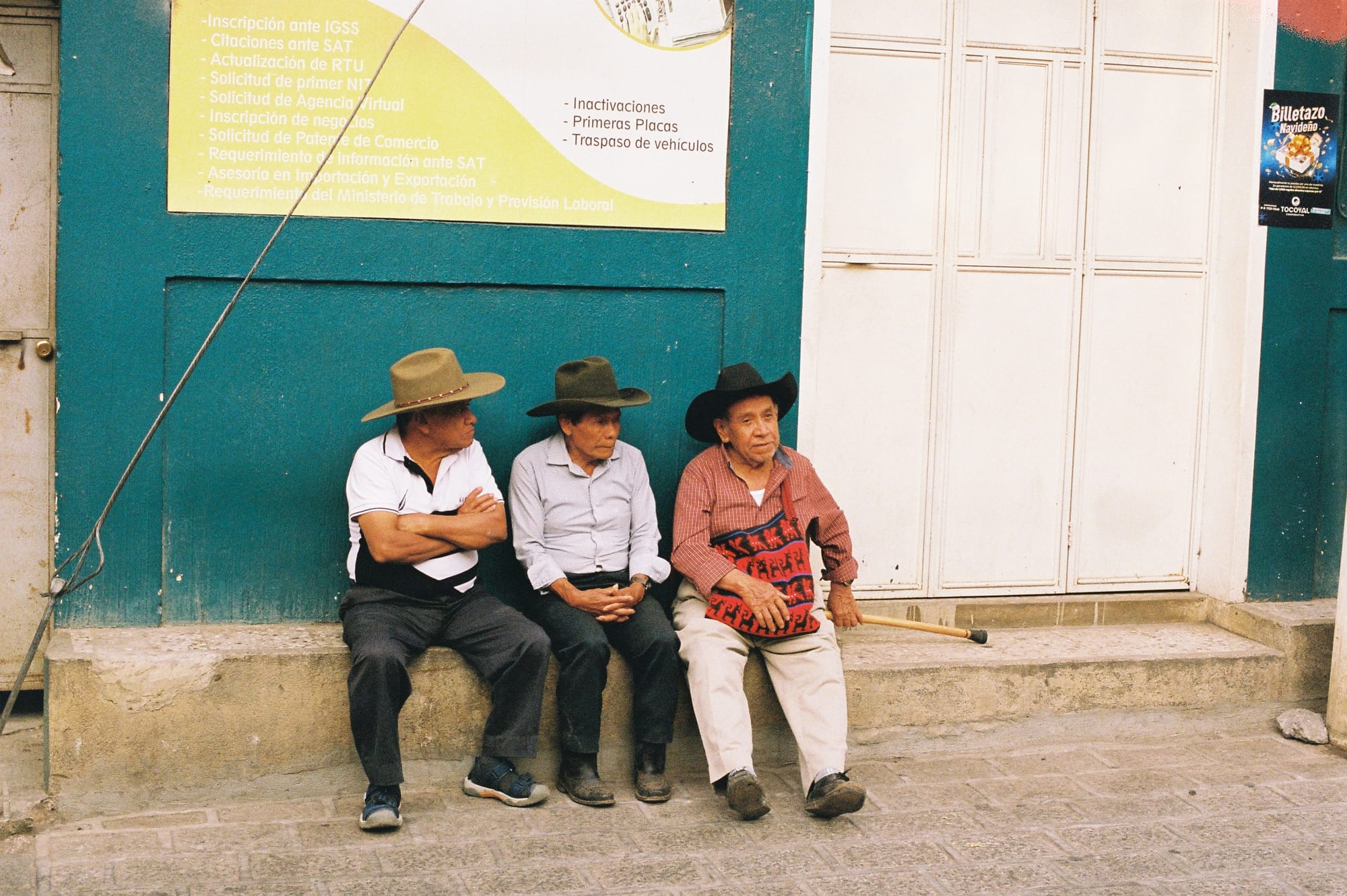
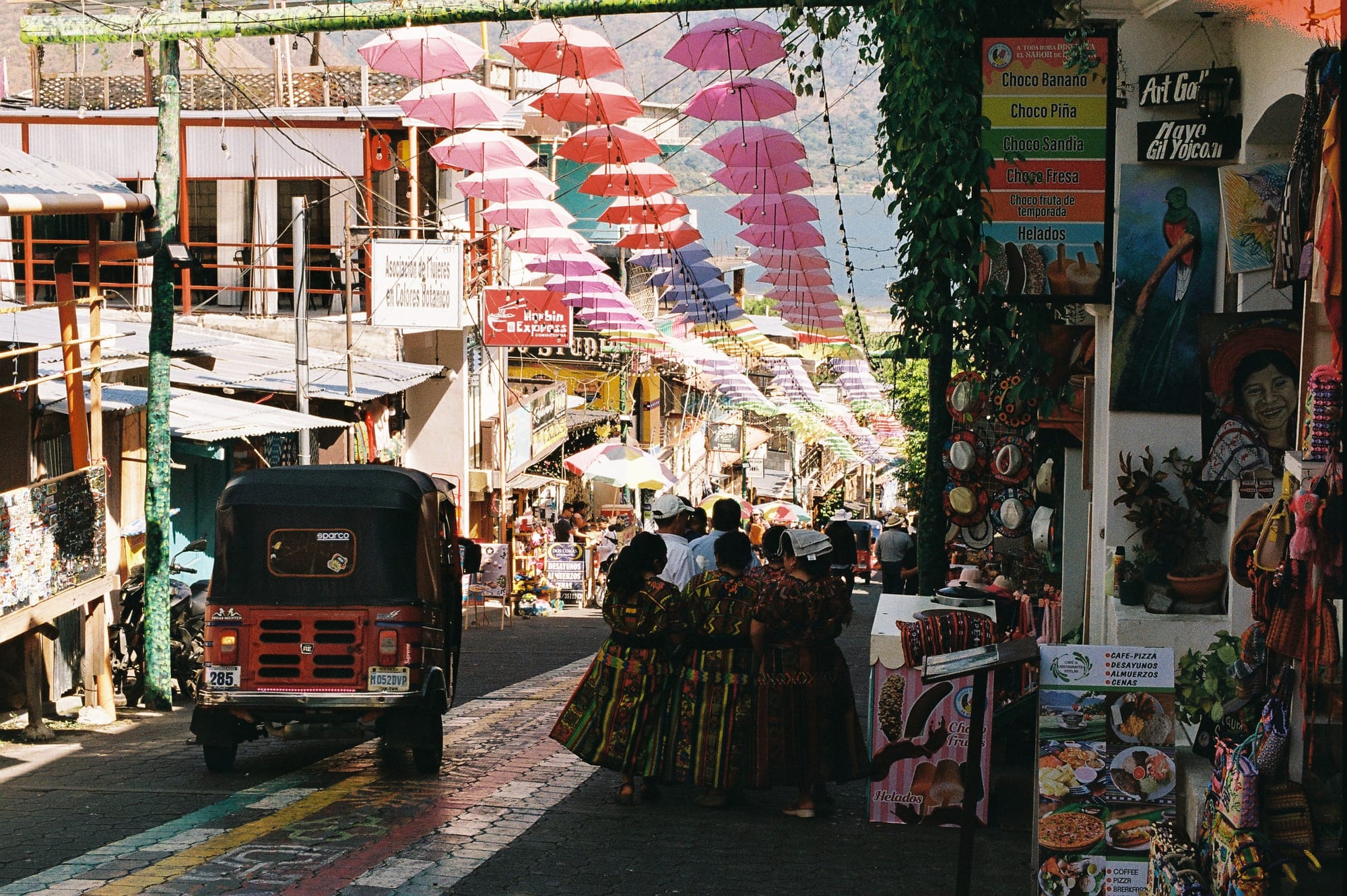
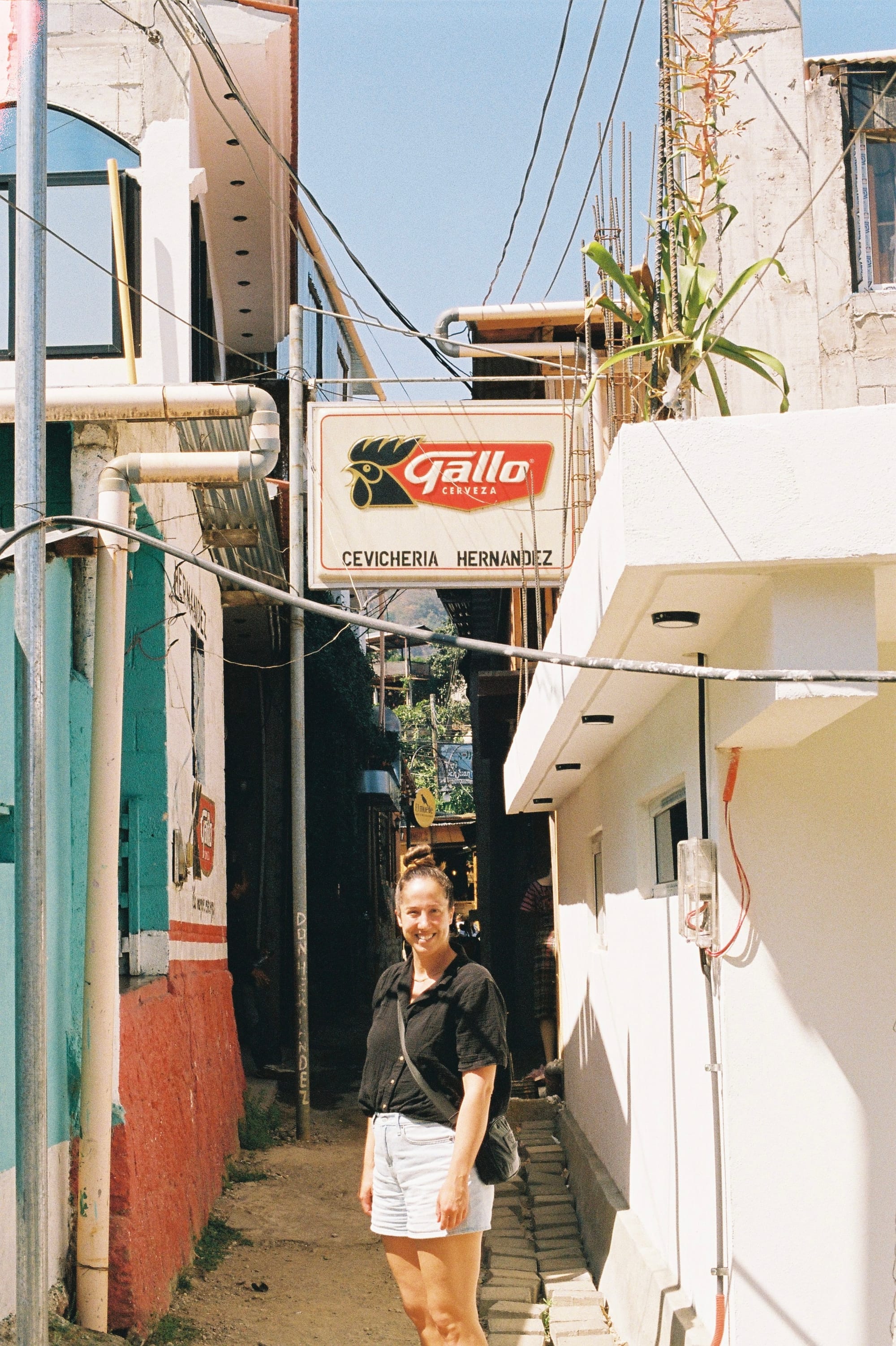
Our time at Lake Atitlan felt very special. We stayed four nights lakeside in Santa Cruz, cooking in a nice kitchen and jumping in the lake. We took some walks around the village and over to the next village called Jaibalito. We spent another 3 days in San Pedro La Laguna, a bigger town with more of a party vibe but we still found quiet neighborhoods and great restaurants to enjoy. Surprisingly, there was really great Mediterranean and Israeli food in San Pedro, which was such a treat. We took a couple of lanchas to the surrounding villages like San Juan which had more of an art emphasis and saw some amazing woven textiles from Casa Flor Ixcaco which is a cooperative of 34 Mayan women who teach and make textiles with all hand-woven and died fabric.
After leaving Atitlan, we had one last night in Antigua. Our budget airline decided to move our flight up 7 hours so we ended up taking a 2:00 AM shuttle to Guatemala City airport.
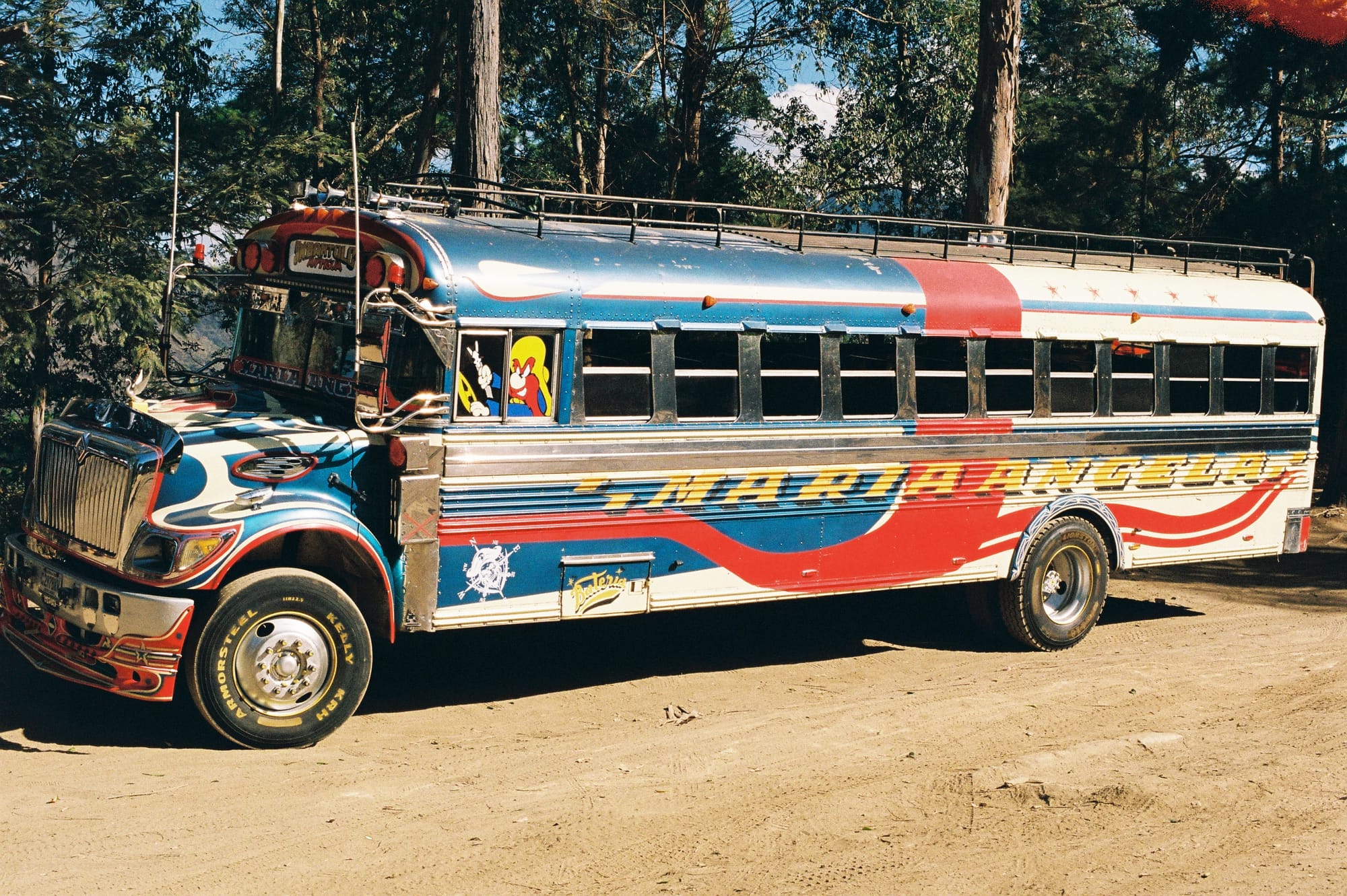
This was our first time in Guatemala and it was a very surprising place. The whiplash of gritty Guatemala City to the magical Antigua and dreamy Atitlan was stark, but everywhere we went had so much to offer. Guatemalans were all very kind to us (even the ones with shotguns) and never showed any impatience with our elementary Spanish. The culinary scene was also so good! We had the second best hummus of our life in San Pedro Atitlan (shouts to Shaya in New Orleans for #1) and, more importantly, trekked up an active volcano and lived to tell the tale.