Australia (but mostly just Tasmania)
When we decided that Australia was going to be the second leg of our trip and we started looking into potential itineraries for a road trip, the sheer size of the continent was overwhelming. So, we decided to spend the majority of our time exploring the island off the Southeast Coast of Australia- Tasmania. We spent about 5 weeks in Tasmania and had a few days in Melbourne and in Sydney on the front and back end of the trip. We felt like we really got to know Tasmania and we had the pleasure of meeting some the friendliest, chattiest, and most unpretentious Aussies there. If there was any population that could outtalk a Kiwi, it could only be the chin-waggers of Tasmania.
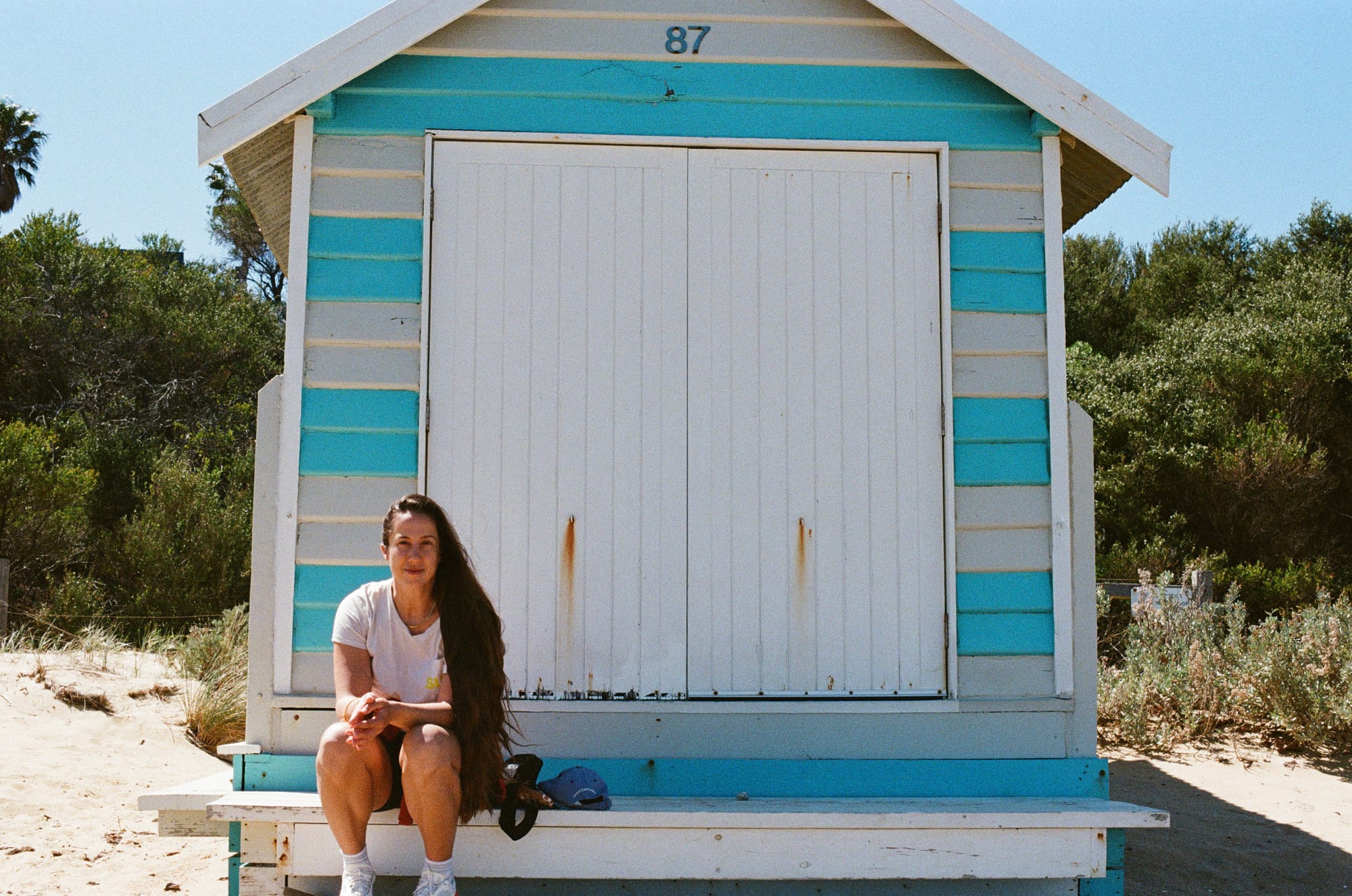
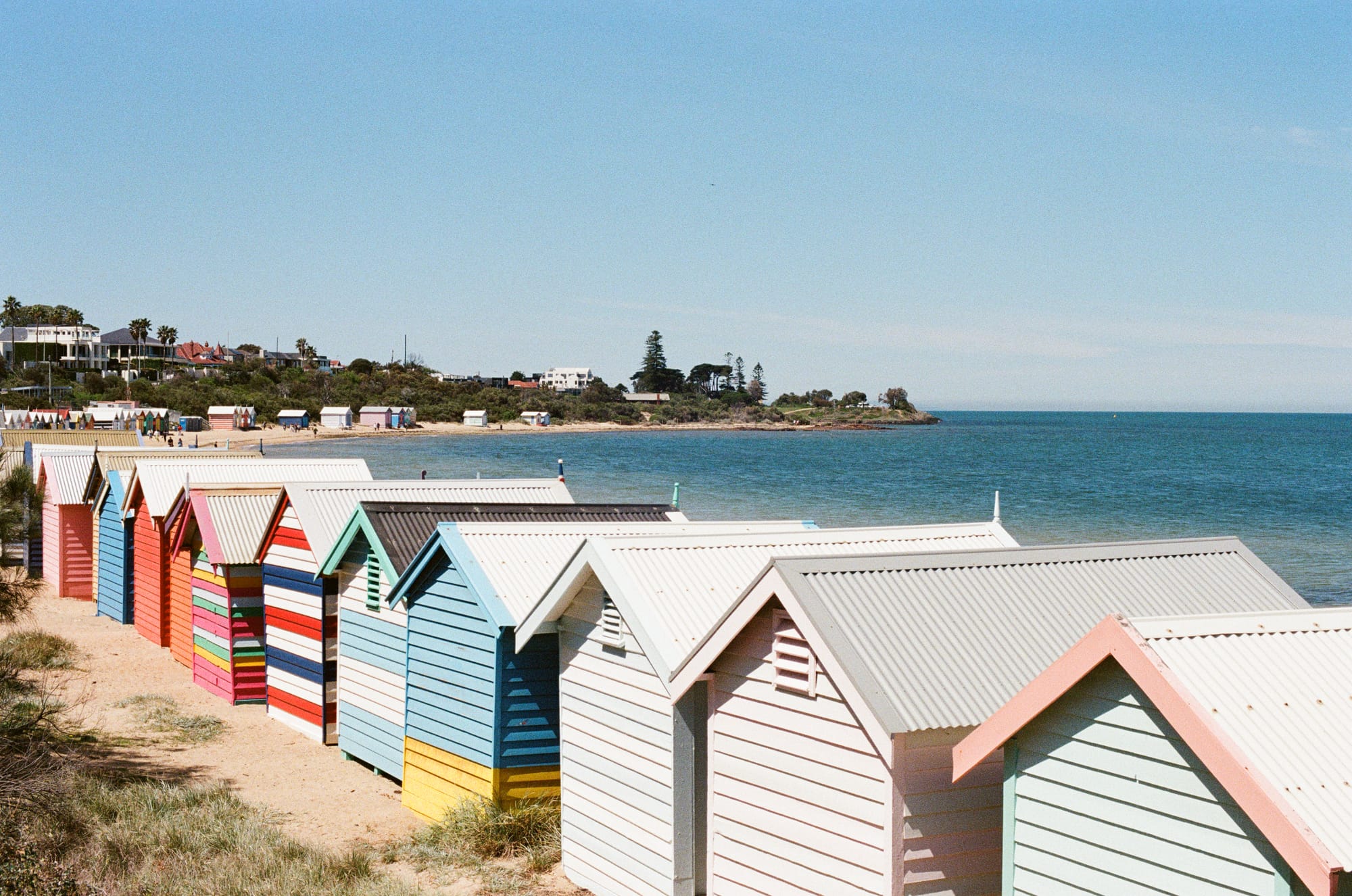
We flew first into Melbourne and spent a few days walking the city. They had great free museums like the National Gallery of Victoria (Em was excited to find a Yayoi Kusama pumpkin there) and spent some time in the Shrine of Remembrance for WWI and WWII soldiers and visited the impressive State Library of Victoria and walked down to the iconic and colorful Brighton Beach Bathing Boxes.
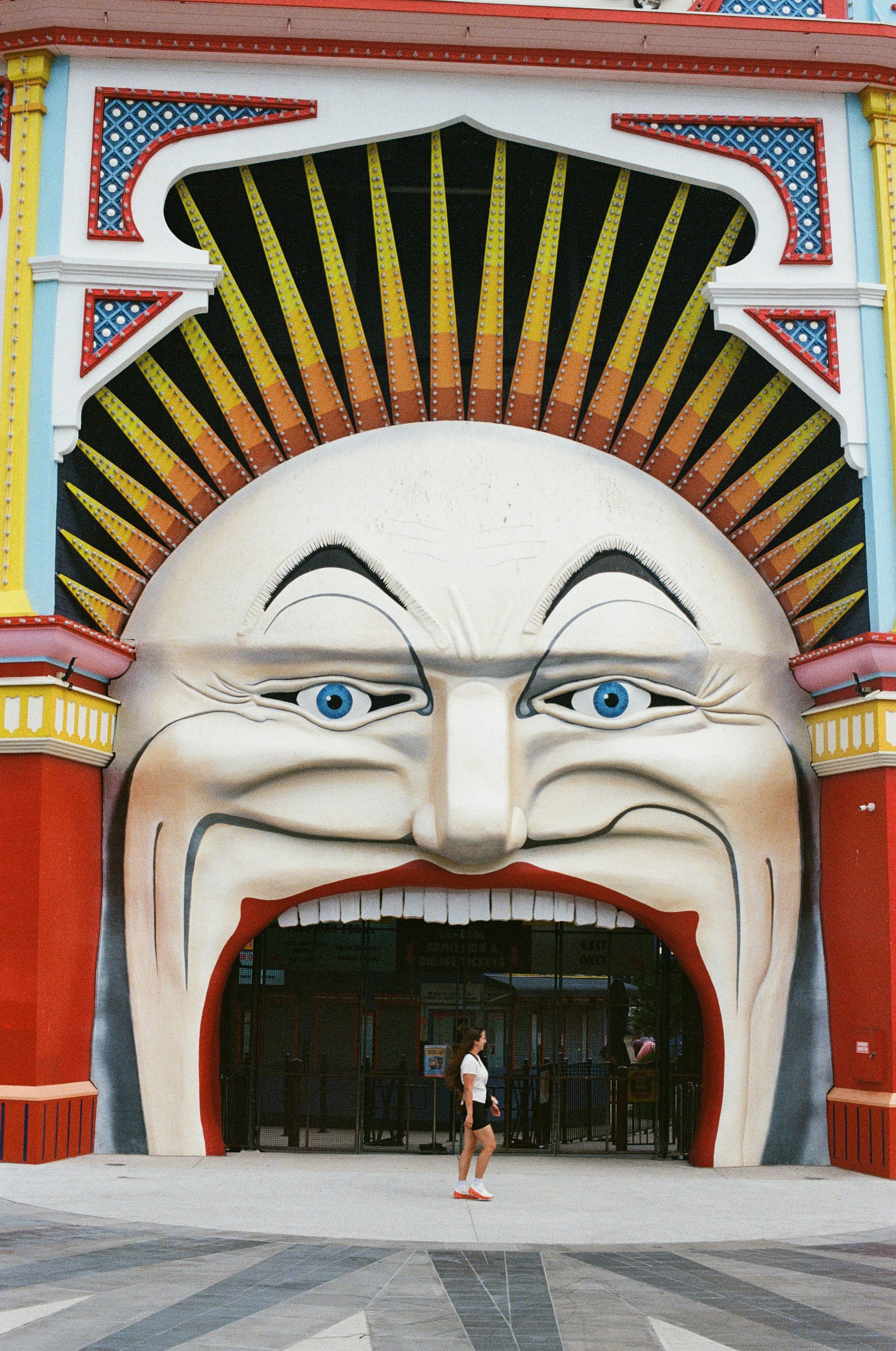
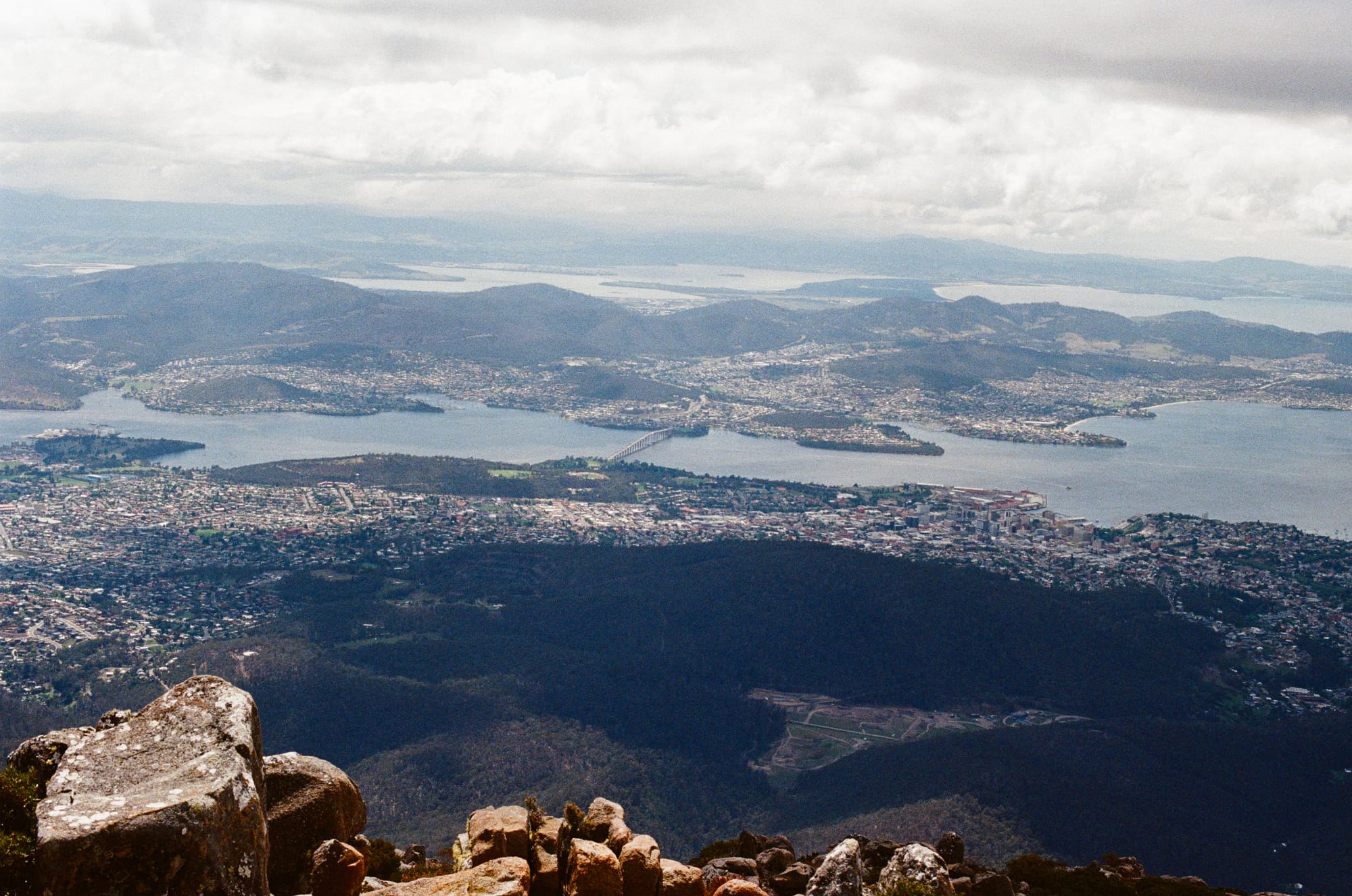
From Melbourne, we flew to Hobart, the capital city of Tasmania and picked up our rental van/home for the next 5 weeks. As far as the van is concerned, we were happy that it had a punchier diesel engine but the living space was smaller than our NZ van so we couldn’t sit up in bed without hitting our heads. But, it was in the budget. We really loved Hobart (it felt more like a town) and went to the bustling Salamanca Market, the Tasmanian Museum and Art Gallery which had taxidermied native animals that made up our Tassie Animal Wishlist (not to mention the hideous insects that made up our Not Top 10 list too) and we had a really fun night at a jazz club with our friend who lives in Hobart. We made the brilliant decision to have the first van test drive to be to the summit of Mt. Wellington that overlooks Hobart. Em braved the one-lane steep-graded road for about an hour but we did get some really nice city views.
From Hobart, we headed Southwest to the Huon Valley where we heard of a platypus viewing platform in the tiny town of Cygnet. The town had a population of about 50 people and from the street decorations and graffiti all of platypus, we were cautiously optimistic about our chances. About a half hour into the riverside walk we spotted our first platypus! It is such an odd creature with its duck bill, beaver tail, white belly, and so adorable. Apparently, when the first taxidermied specimen of a platypus was sent back to Britain from Australia, the British Zoologist thought it was a joke by the taxidermist- that he had sewn a duck bill onto the body of a beaver and put spurs on the legs. Nope! Luckily, this silly monotreme is very real.
Our first platypus sighting at Cygnet
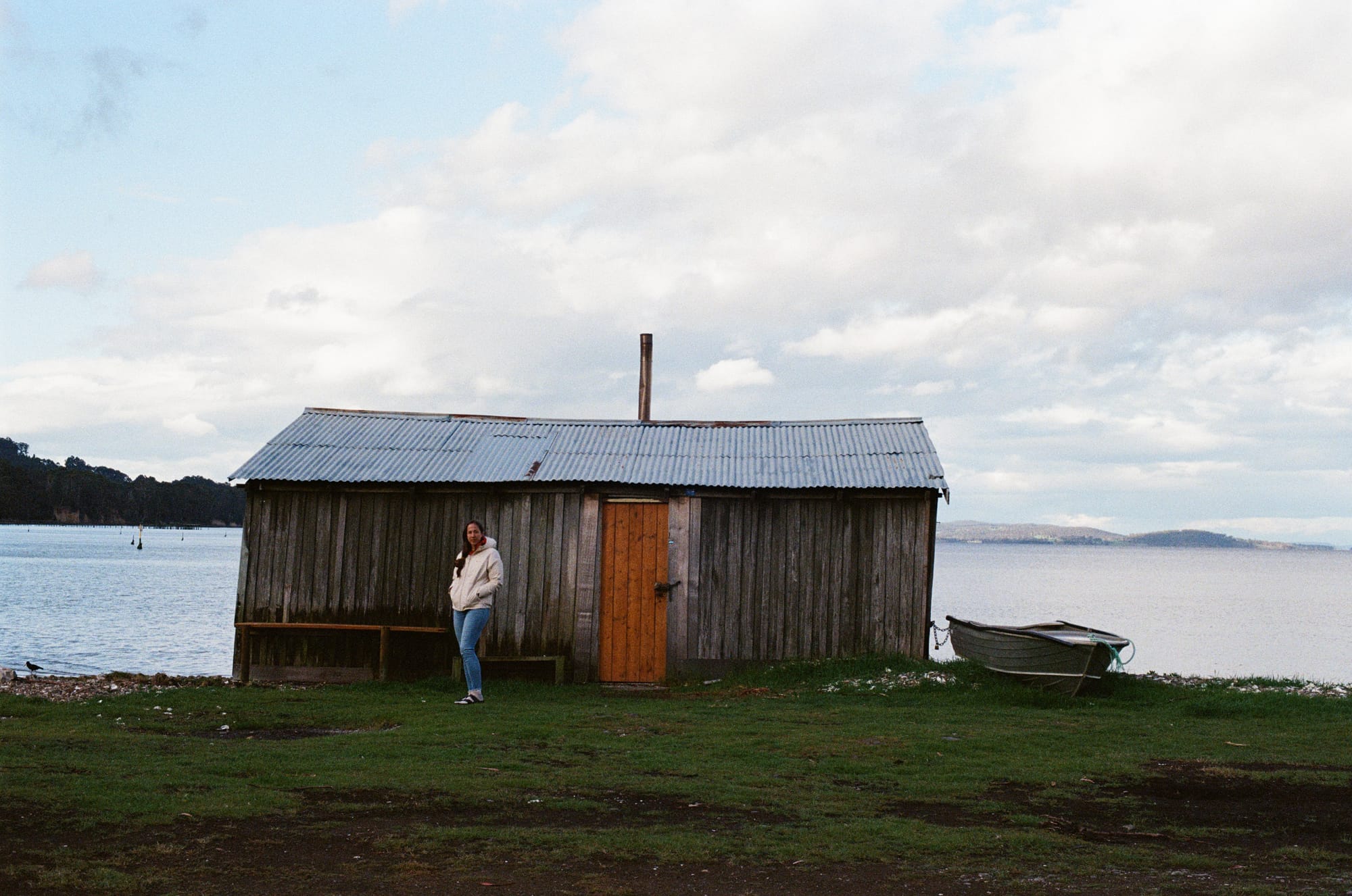
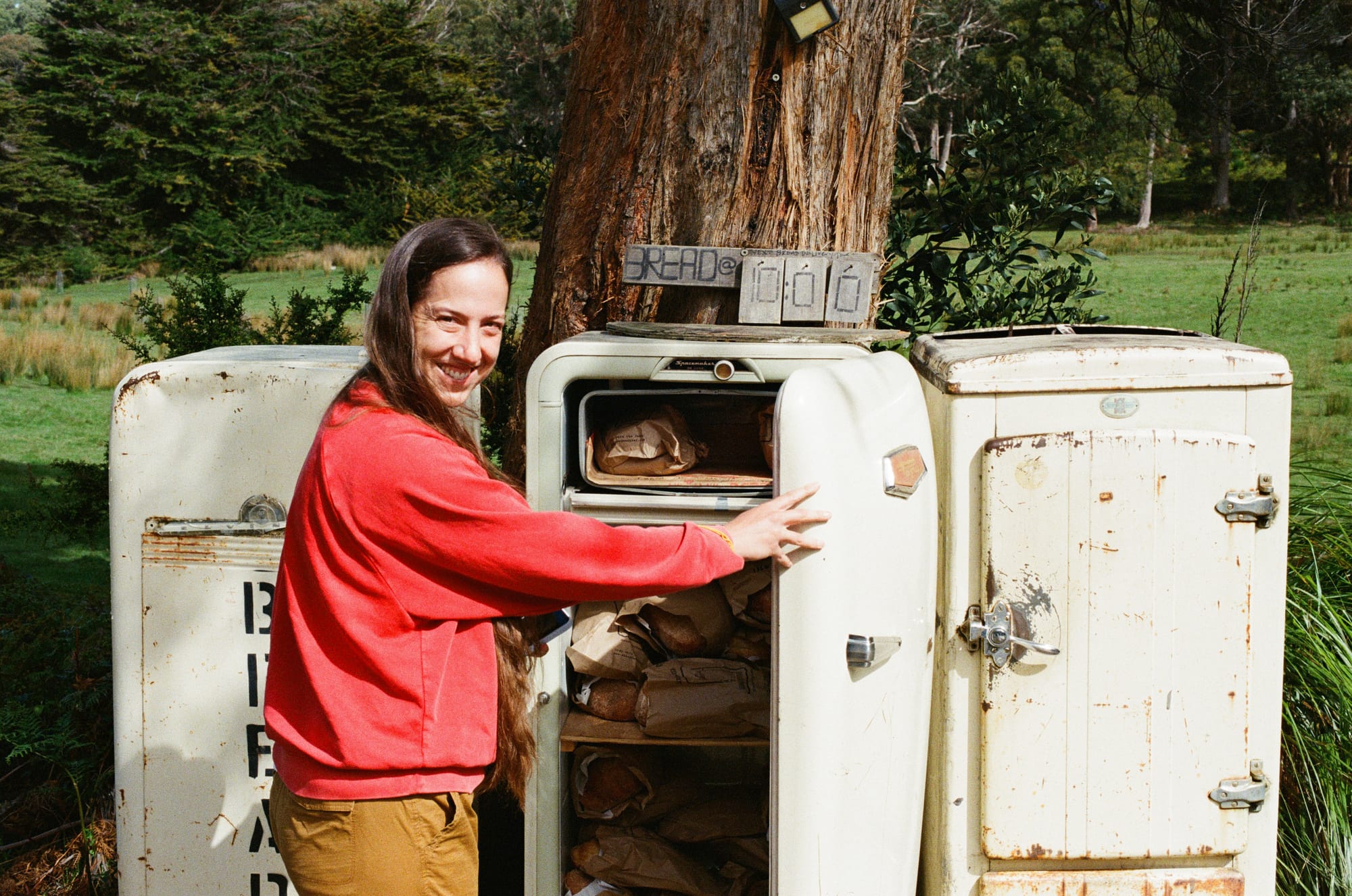
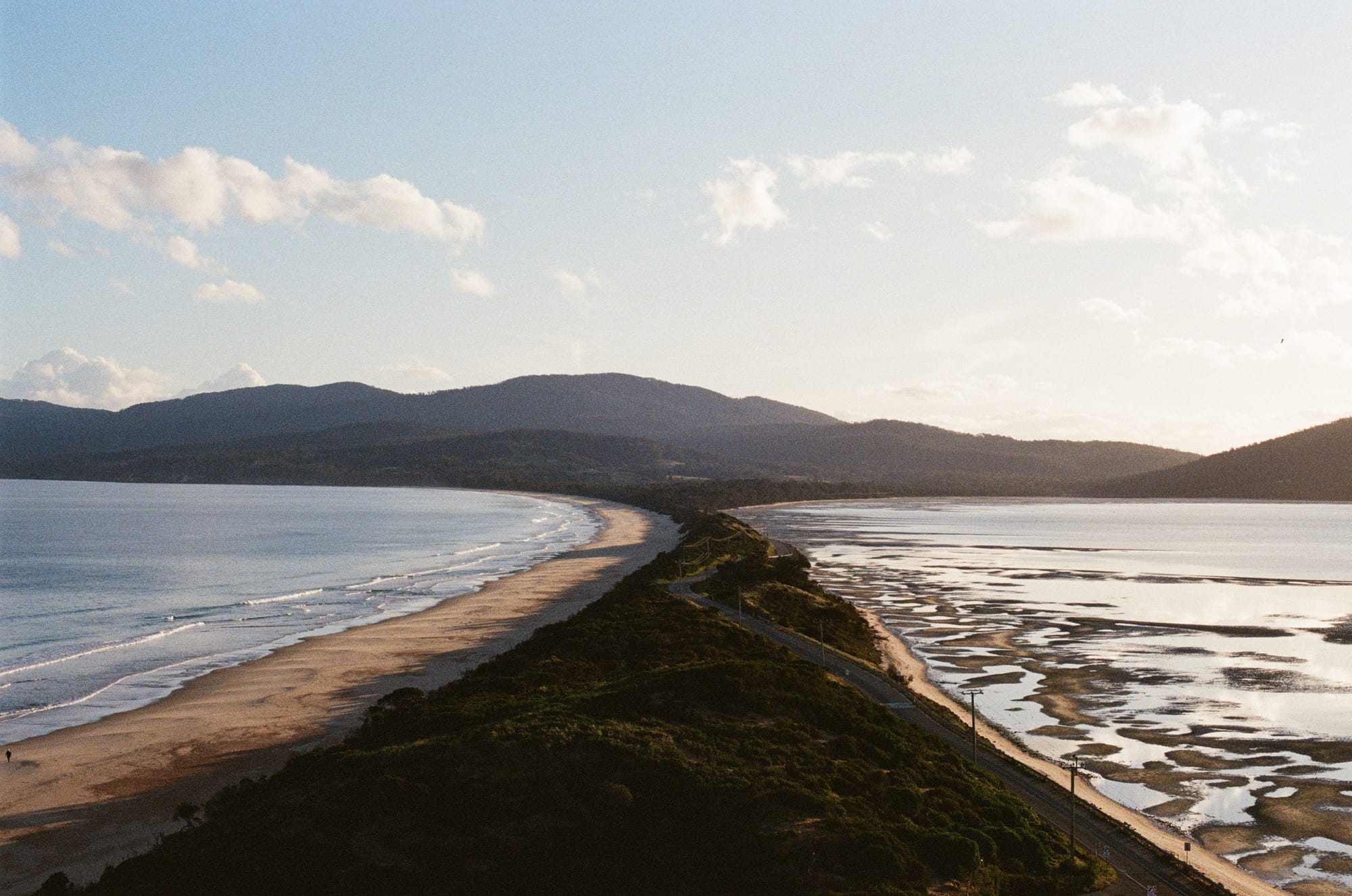
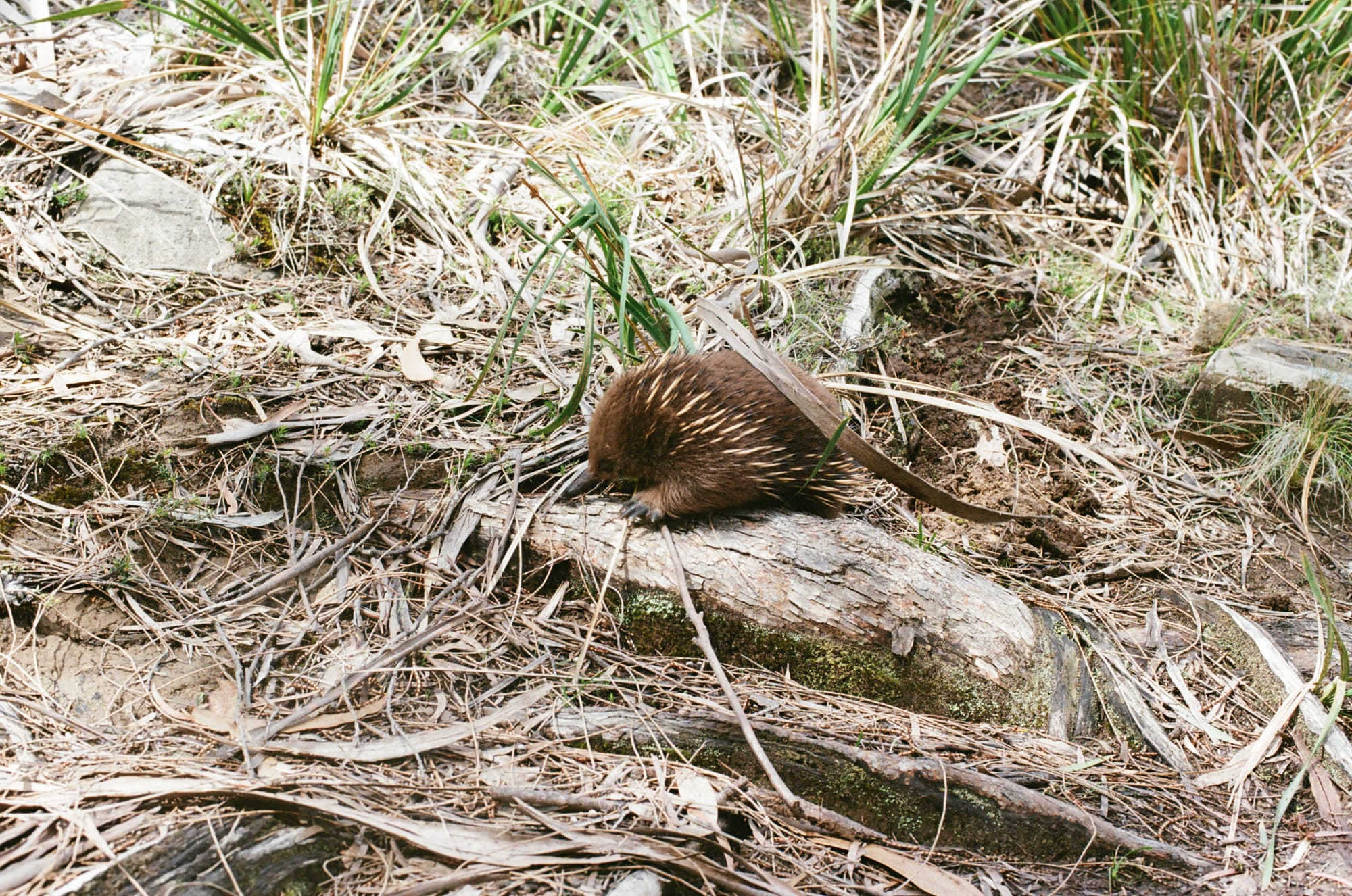
We loaded the van onto a ferry to get to Bruny Island. Bruny Island has a Northern and Southern section connected by long skinny stretch of beach called The Neck. There is no bridge to Bruny and it has a very small local population. The whole island is a nature reserve. Our first stop had to be at the Bruny Baker Bread Fridge to pick up a fresh loaf of sourdough. Em had to elbow some old ladies and tourists out of the way to get one- they sell fast! Apparently The Neck is a good place to see penguins, but after two cold nights of waiting on beach platforms, we think this whole penguin business is a scam. We did two treks on the island, the first was the Cape Elizabeth Track to a secluded beach and a rock arch. The second day was the Fluted Cape Walk which was a neat cliffside hike overlooking dolerite columns. Yes, everyone was super jazzed about the stupid rocks but more importantly this was our first echidna encounter! It turned out to be one of many, but in that moment it felt very rare and special and Rory is now embarrassed at how many pictures he burned on the roll here with the Common Short Billed Echidna. He was just excited. On our last day in Bruny Island we made a pit stop at a coffee shop on the way to the ferry and were aghast to see an albino white wallaby! It was a great consolation prize after getting skunked on the penguin hunt.
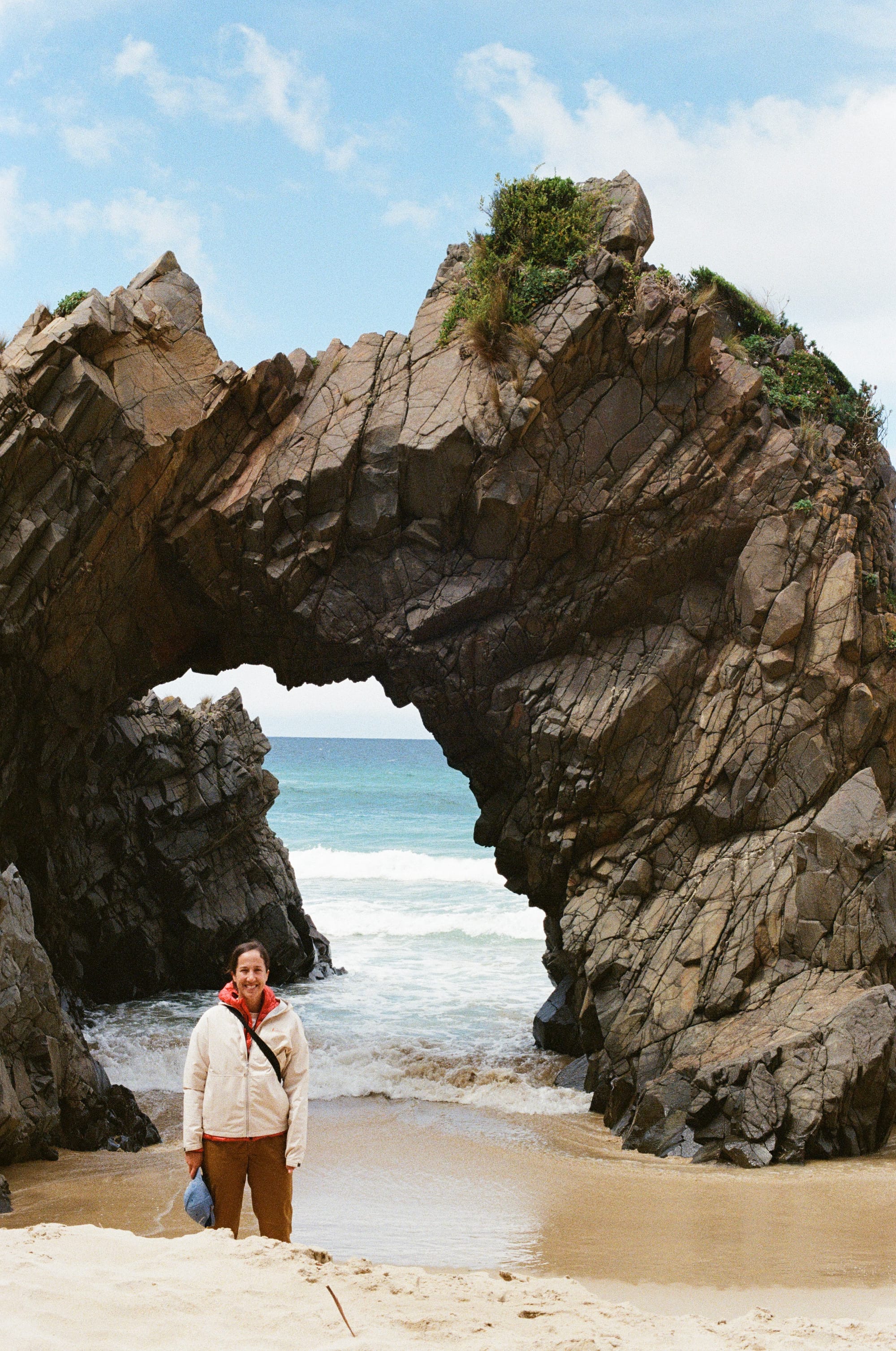
The rock arch at the end of the Cape Elizabeth Track
The rare albino white wallaby on Bruny Island
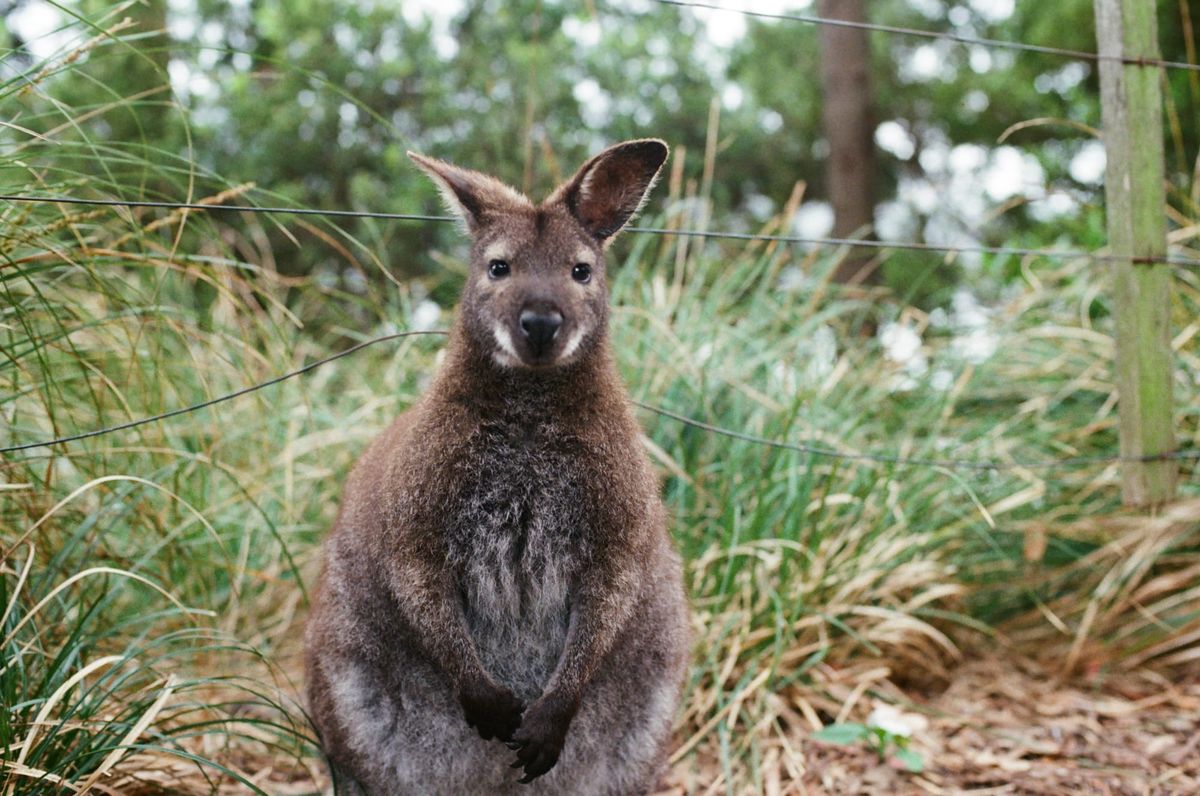
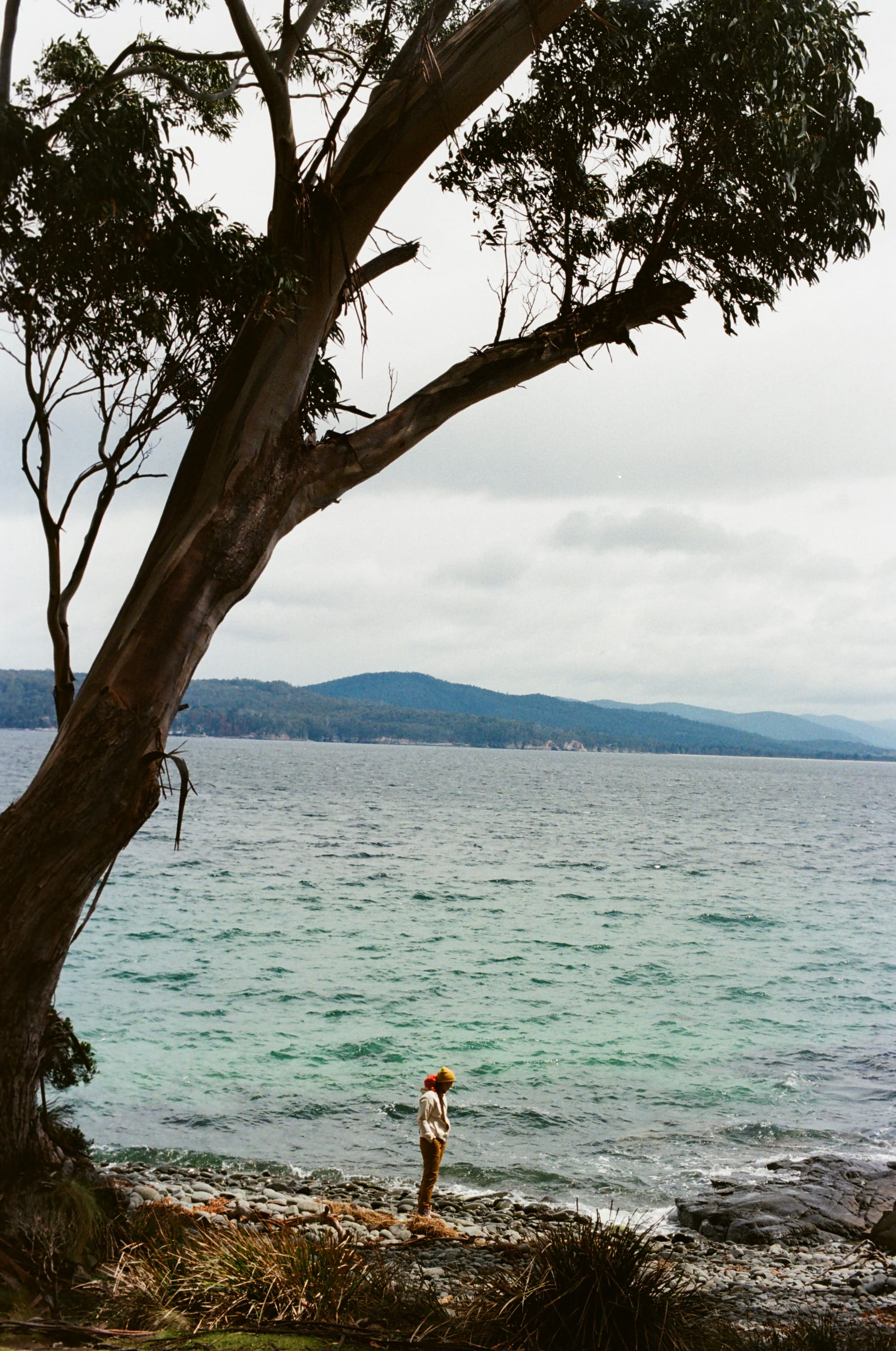
From Bruny Island, we headed up the East Coast and stayed in a few very cute towns along the way. Our first major hikes in Tasmania were the Three Capes. These are a series of capes overlooking the same dolerite rock columns and were very impressive, steep, and we saw some migrating sperm whales from the overlooks. To do all 3 capes you have to pay for series of huts which was unfortunately not in the budget. Instead, we did the "Free" Capes and hiked two of them, Cape Raoul and Cape Huay as day hikes from Fortescue Bay campground. There were a ton of wallabies at this campground, and before realizing they are basically squirrels Rory burned through another roll of film on a particularly persistent male who was interested in our dinner. It was a burrito bowl, so we understood his enthusiasm. (He's the cover photo for this post).
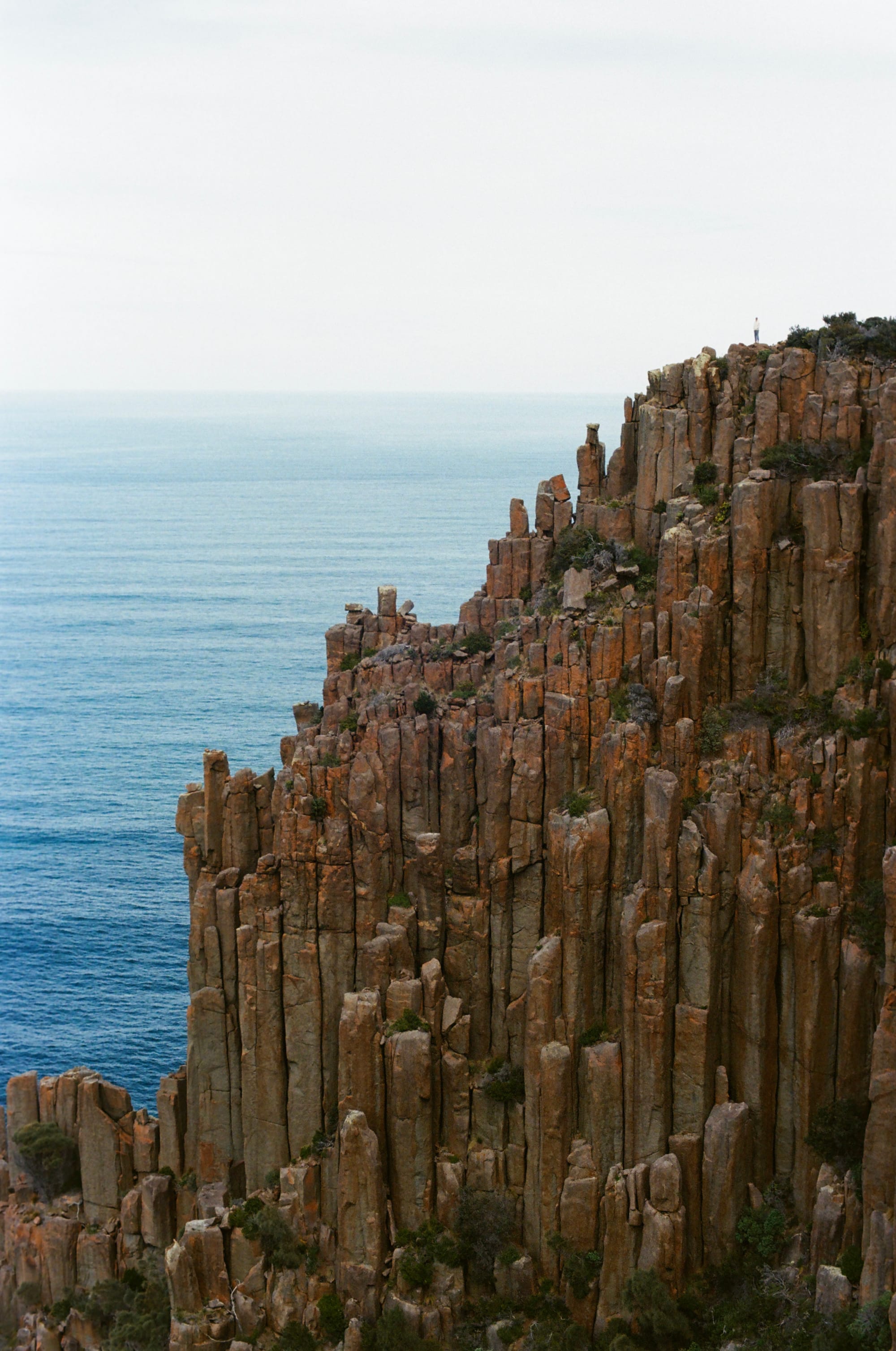
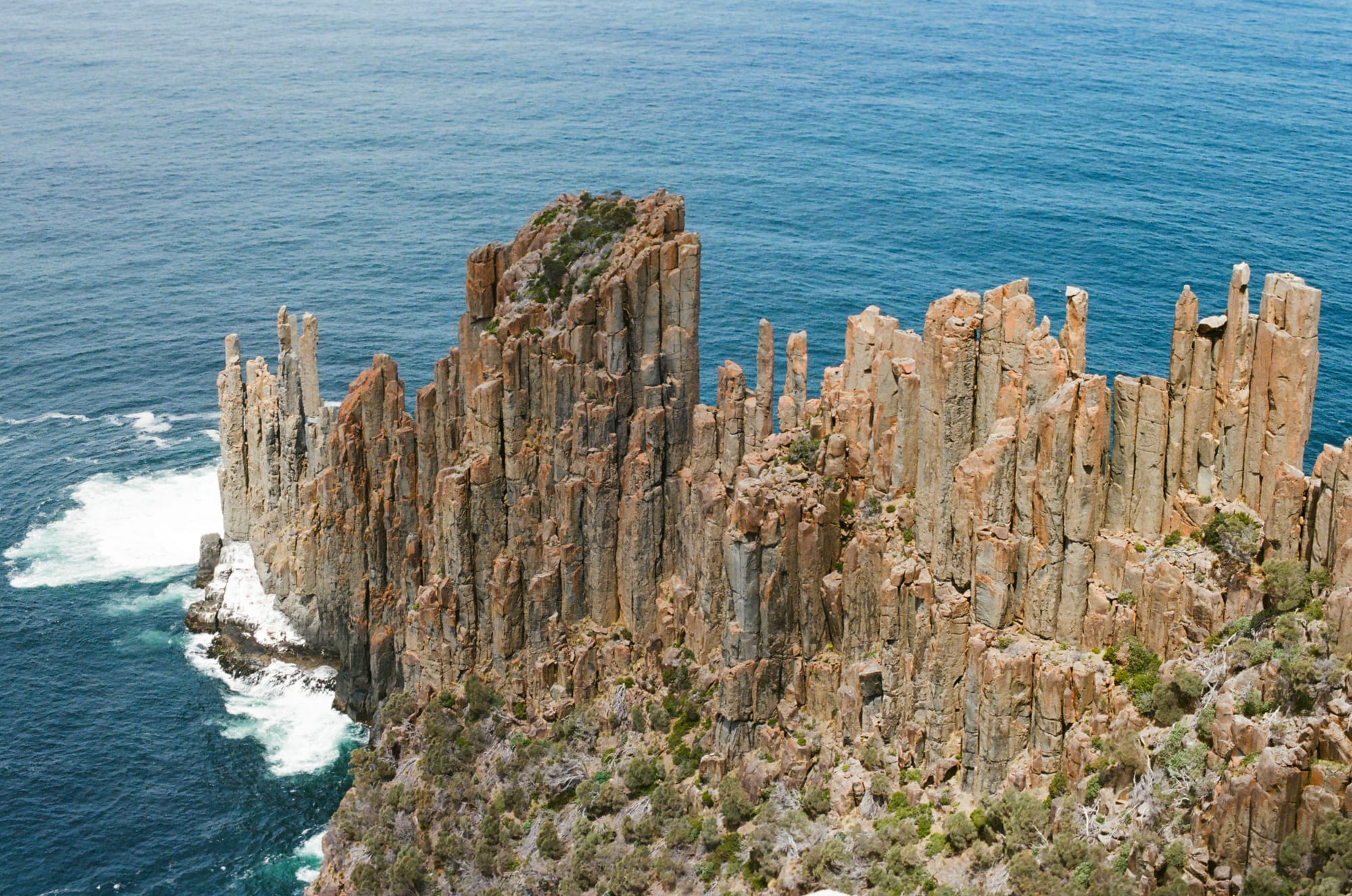
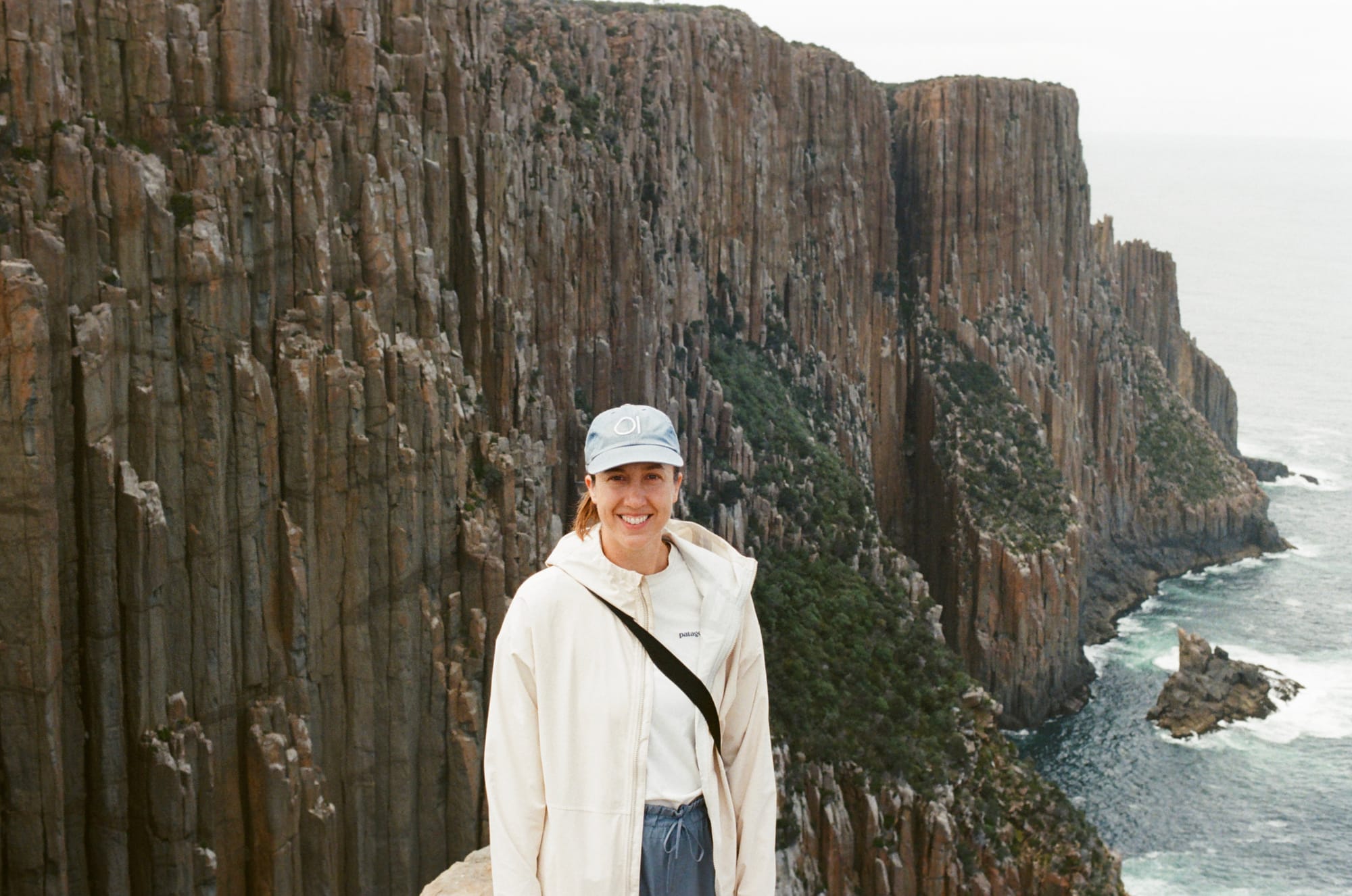
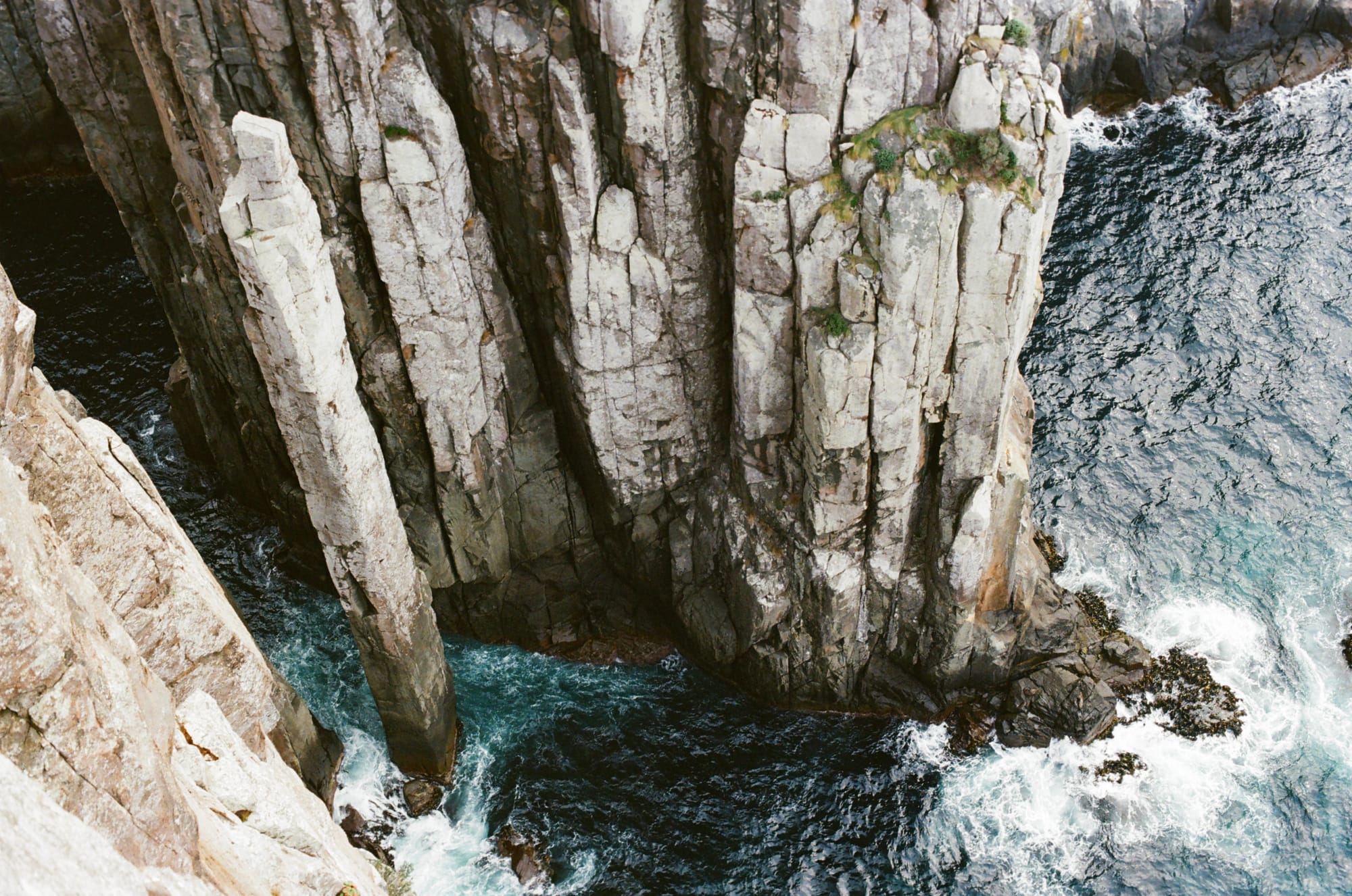
Pillars at Cape Huay
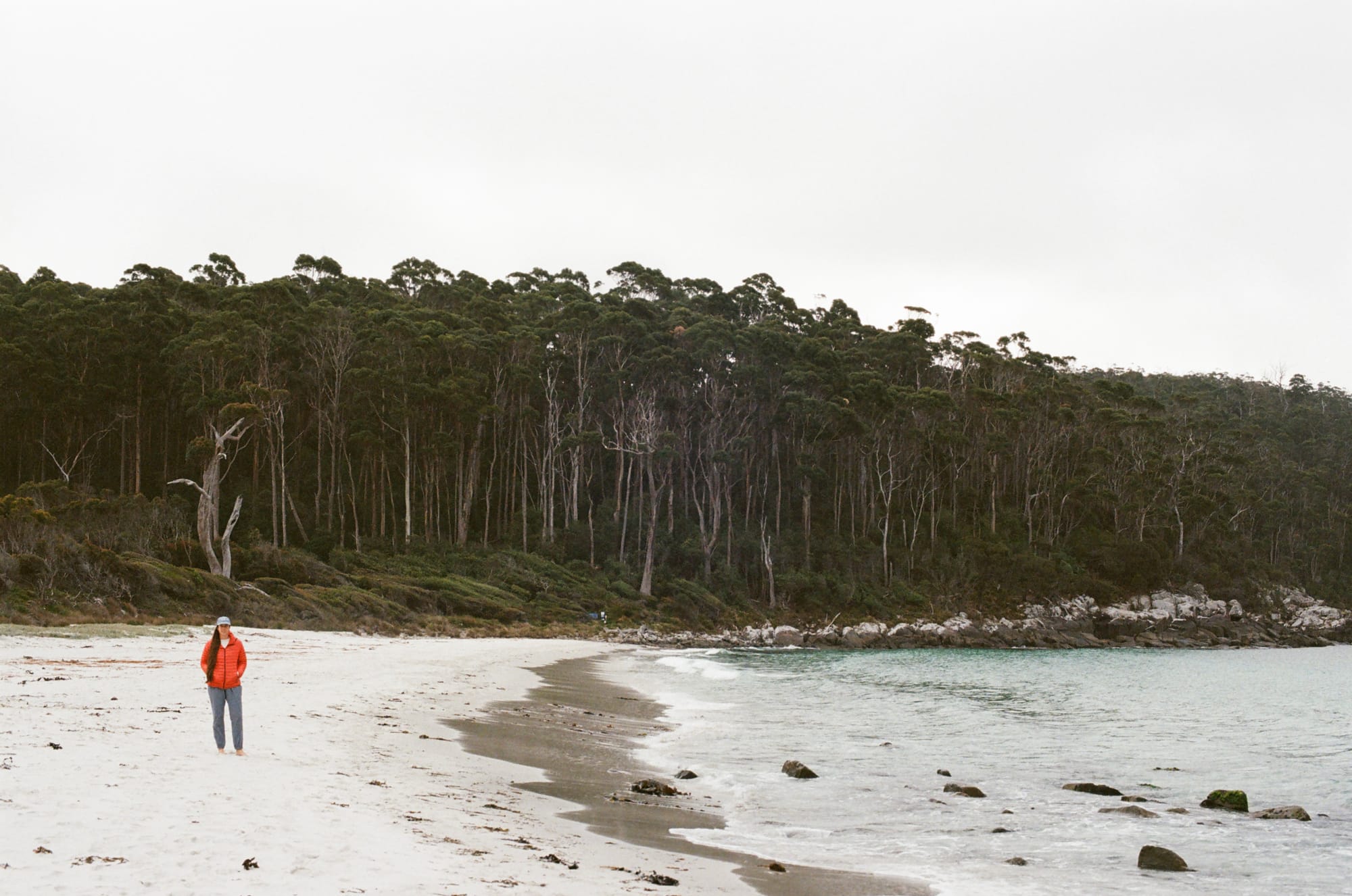
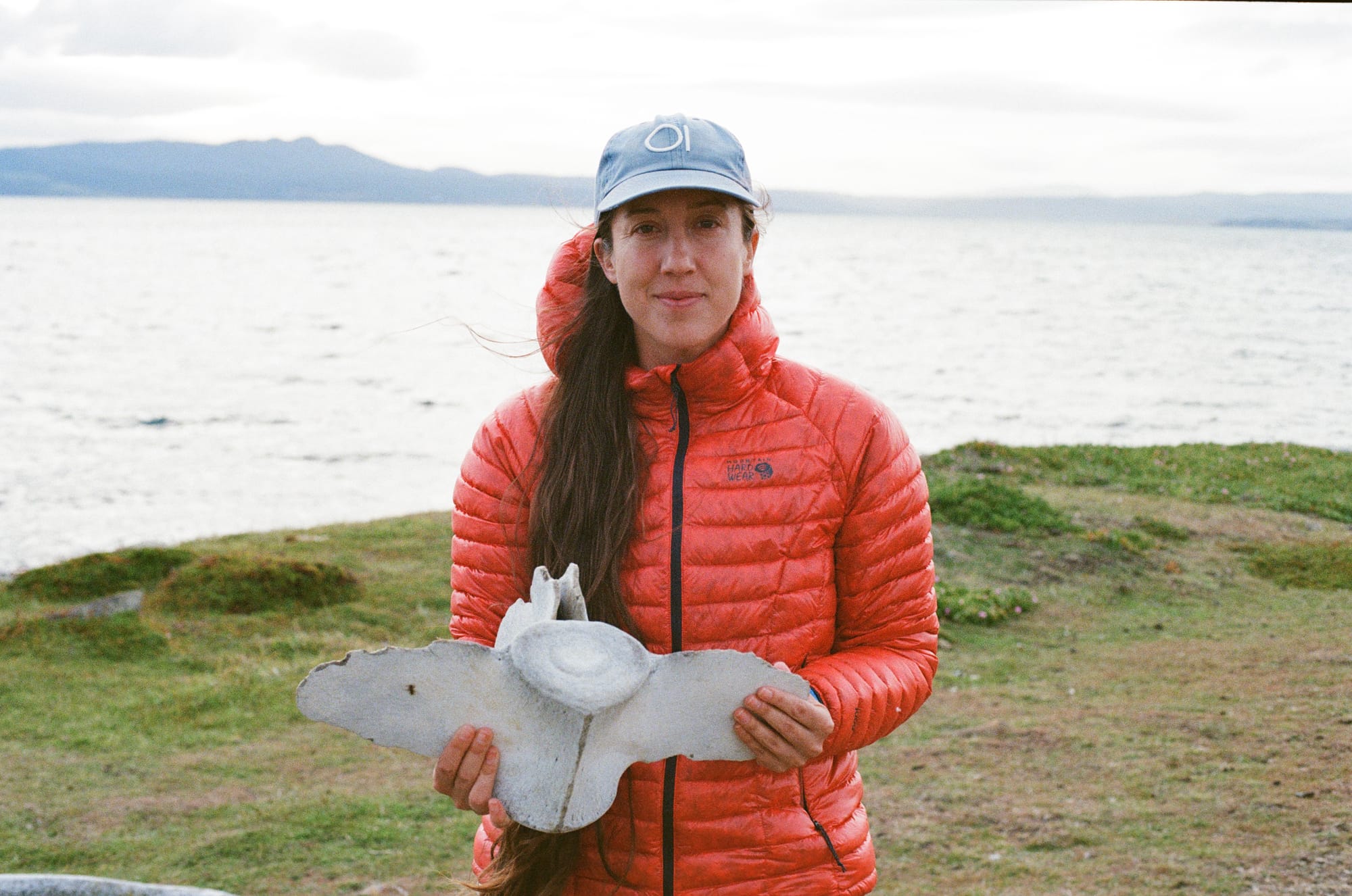
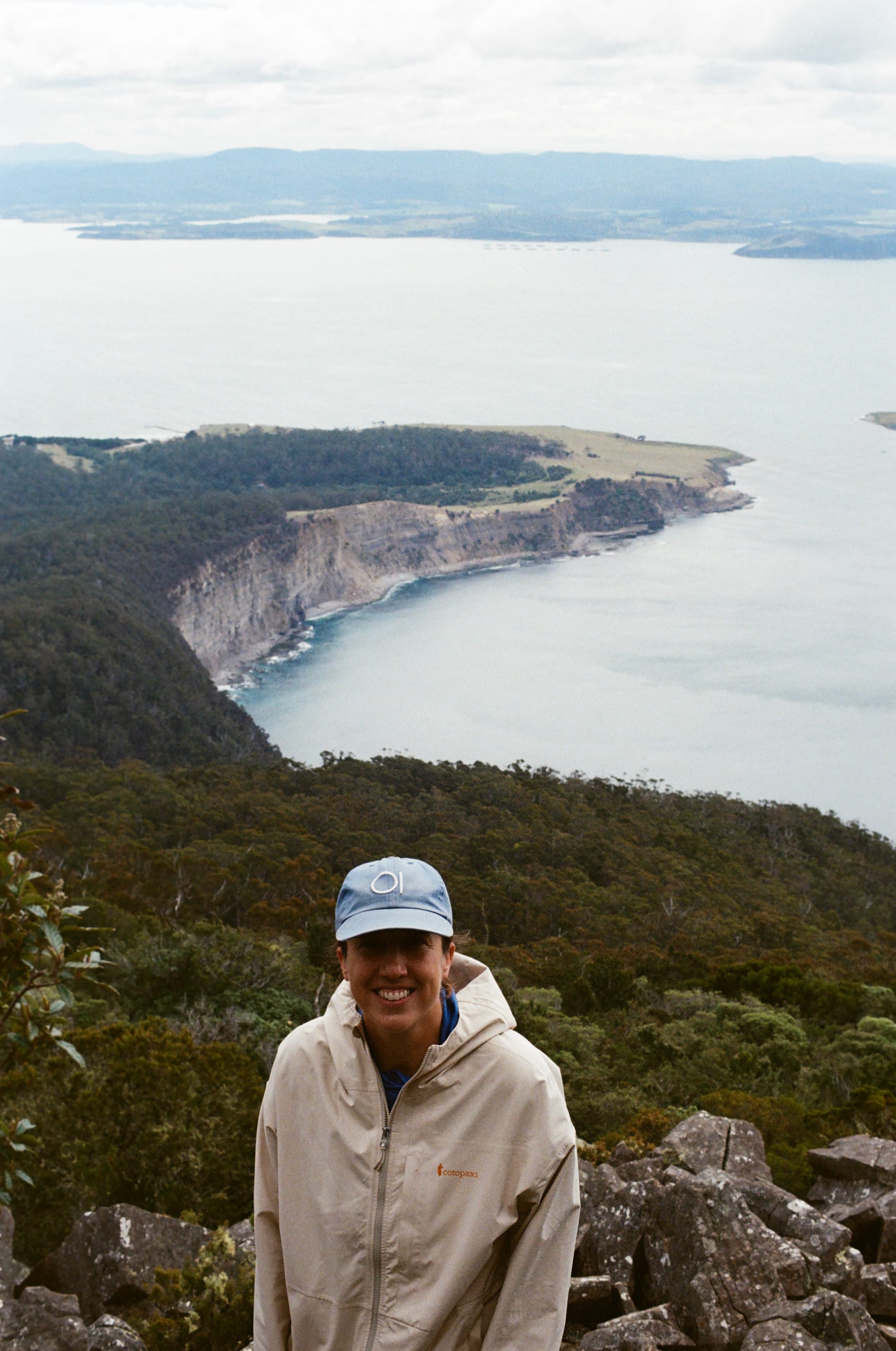
We were pretty excited for our next few days on Maria Island, which is an island off the East Coast that was originally a penitentiary. We had heard about friendly and plentiful wombats here which were on our Tassie Animal Wishlist. We really enjoyed this island off an island off an island, which seemed to be a developing pattern. There are no cars here and we planned to backpack from the ferry landing at Darlington Campground in the North and then down to the South end of the island. Right off the boat, Em was immediately awe struck by some whale vertebrae which were just piled haphazardly by the beach. Our first day was spent summiting the Bishop and Clerk pinnacles which was a fun scramble and had great panoramic views of Maria Island. On the descent in the evening we spotted our first wombat just munching on grass, a great little landscaper. Please forgive this dalliance into wombat minutiae but we did find it to be such a cool animal. If you don’t care about wombat details you may skip to the next paragraph. Wombats are marsupials, they have a backward-facing pouch where their joey will live for up to 9 months (we saw some big babies in pouches just getting drug around by mom, pretty funny) and they open backward so that their burrowing doesn’t spray dirt into the pouch. They poop square-shaped nuggets and like to choose high and flat locations to stack these squares, as a territory marker and also to attract females. They are constantly chewing on grass and they poop at least 150 times per day. They dig extensive networks of tunnels 2 meters deep and have very thick hind-quarters. So thick, in fact, that if there is a bush fire they hide their joeys in the tunnel and plug up the tunnel with their booty and can survive fires like this and save their baby. Other animals even have figured out to climb into these tunnels during fires and the wombat will save them too. We are big wombat fans.
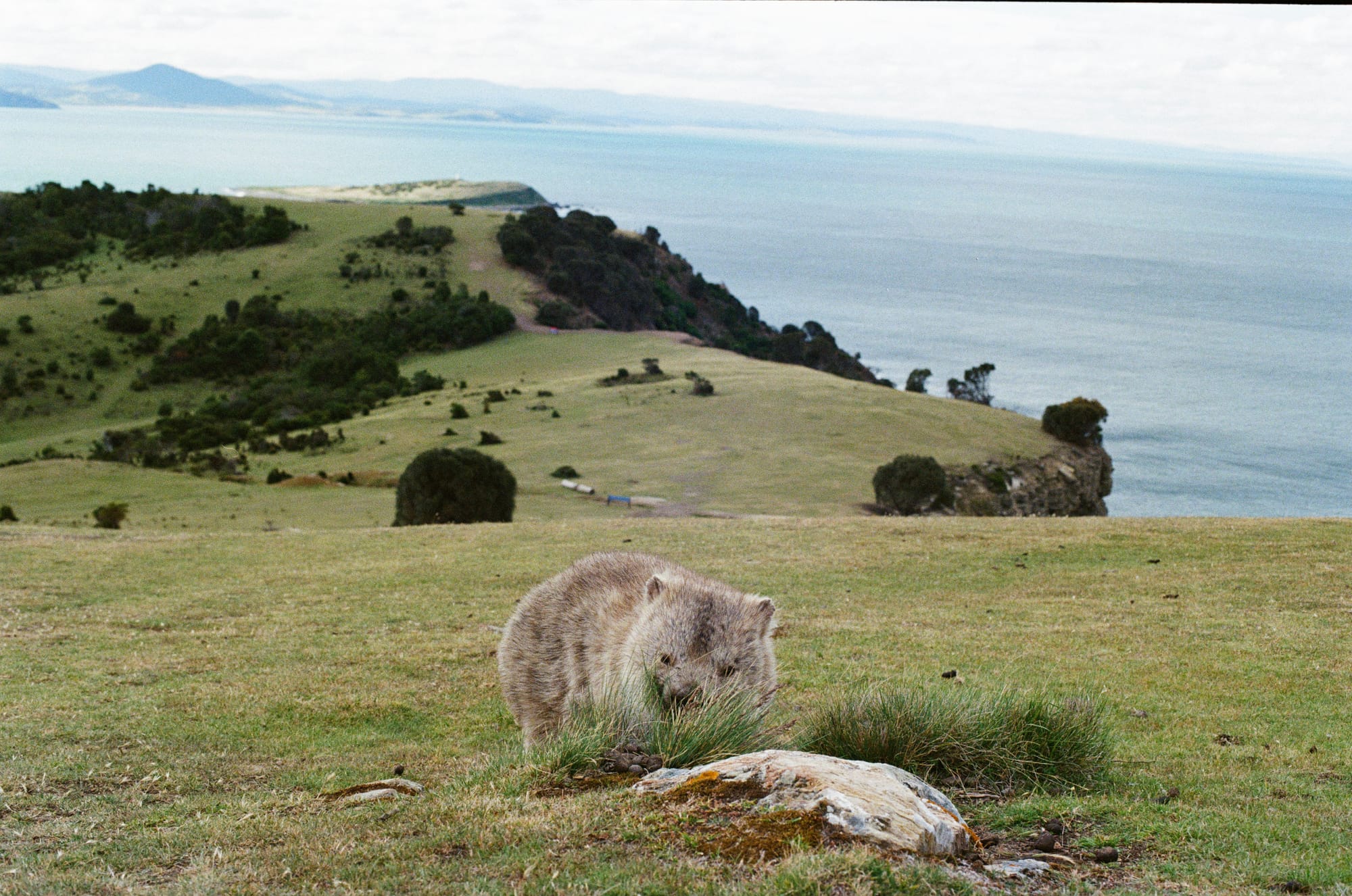
A wombat on Maria Island on the way down from Bishop and Clerk summits
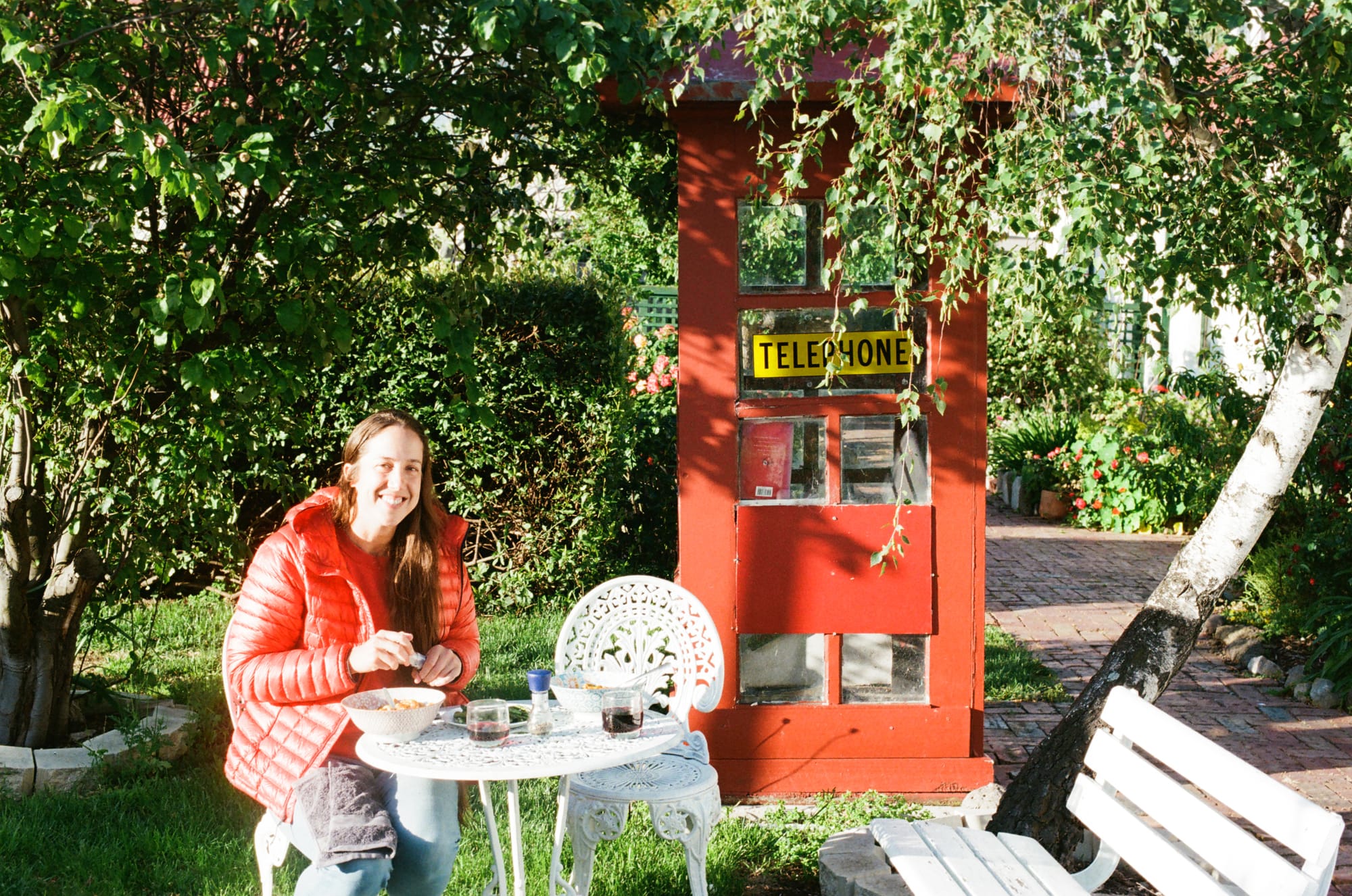
On our second day on Maria Island we backpacked down to Encampment Cove and enjoyed the beautiful bay there and were perturbed by the size of the Tiger snake in our campsite. There are 3 types of snakes in Tasmania- all can kill you but none of them want to. We went for a night walk on our last night there and saw just a terrific amount of wildlife but sadly no Tasmanian Devils. The next day, we headed back to Darlington and took the ferry back. Really, our only motivation for walking across Maria Island was the knowledge of a seafood shack at the ferry terminal waiting for us. We had been dreaming of fried squid rings and they ended up being one of our best meals in Tasmania. We had only one night to rest our legs before our next trek and we stayed in a neat converted church (complete with a working bell!). Rory took the opportunity to make some cardamom breakfast scrolls since there was a working oven (but no rolling pin, hence the use of the wine bottle).
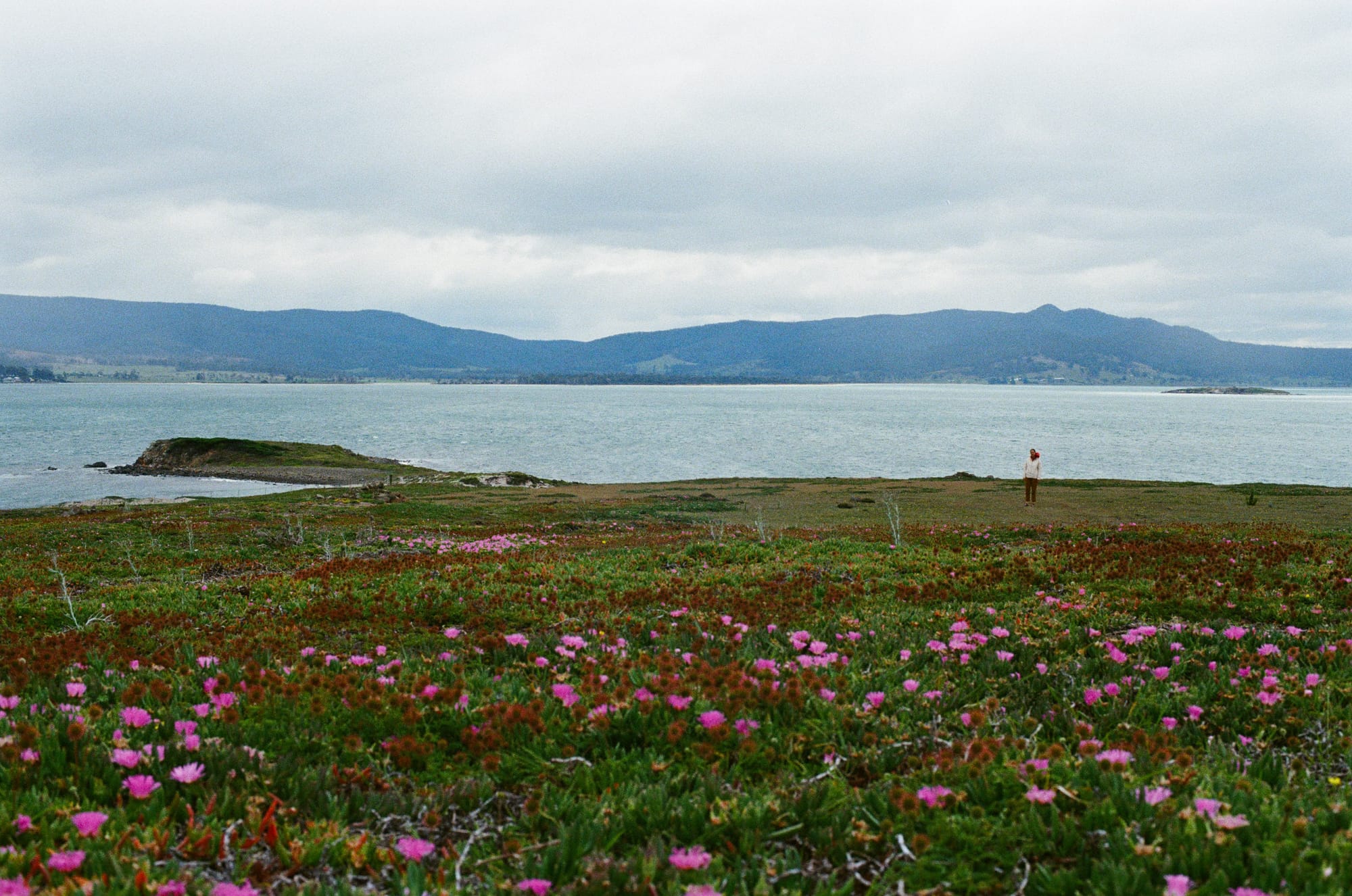
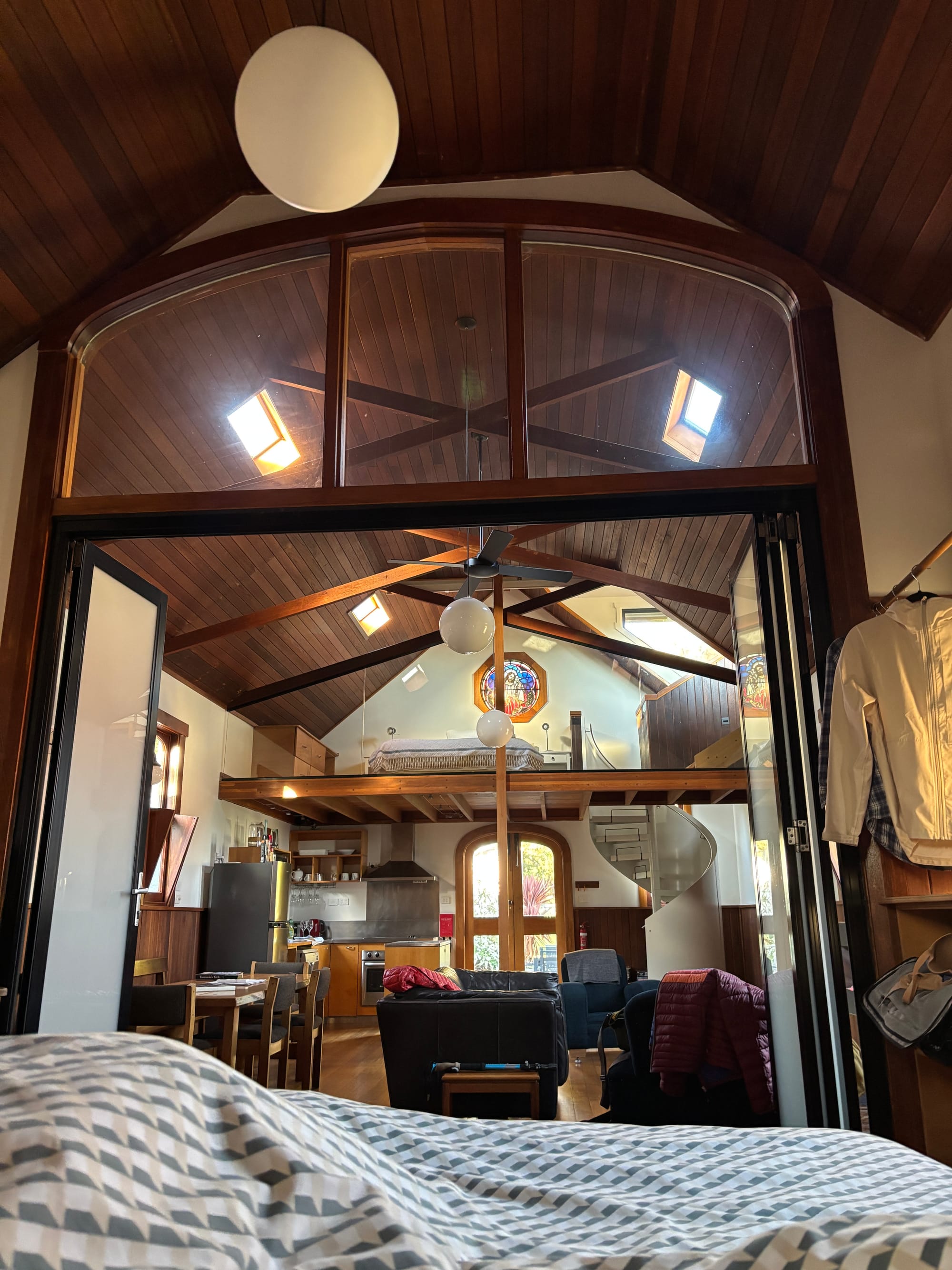
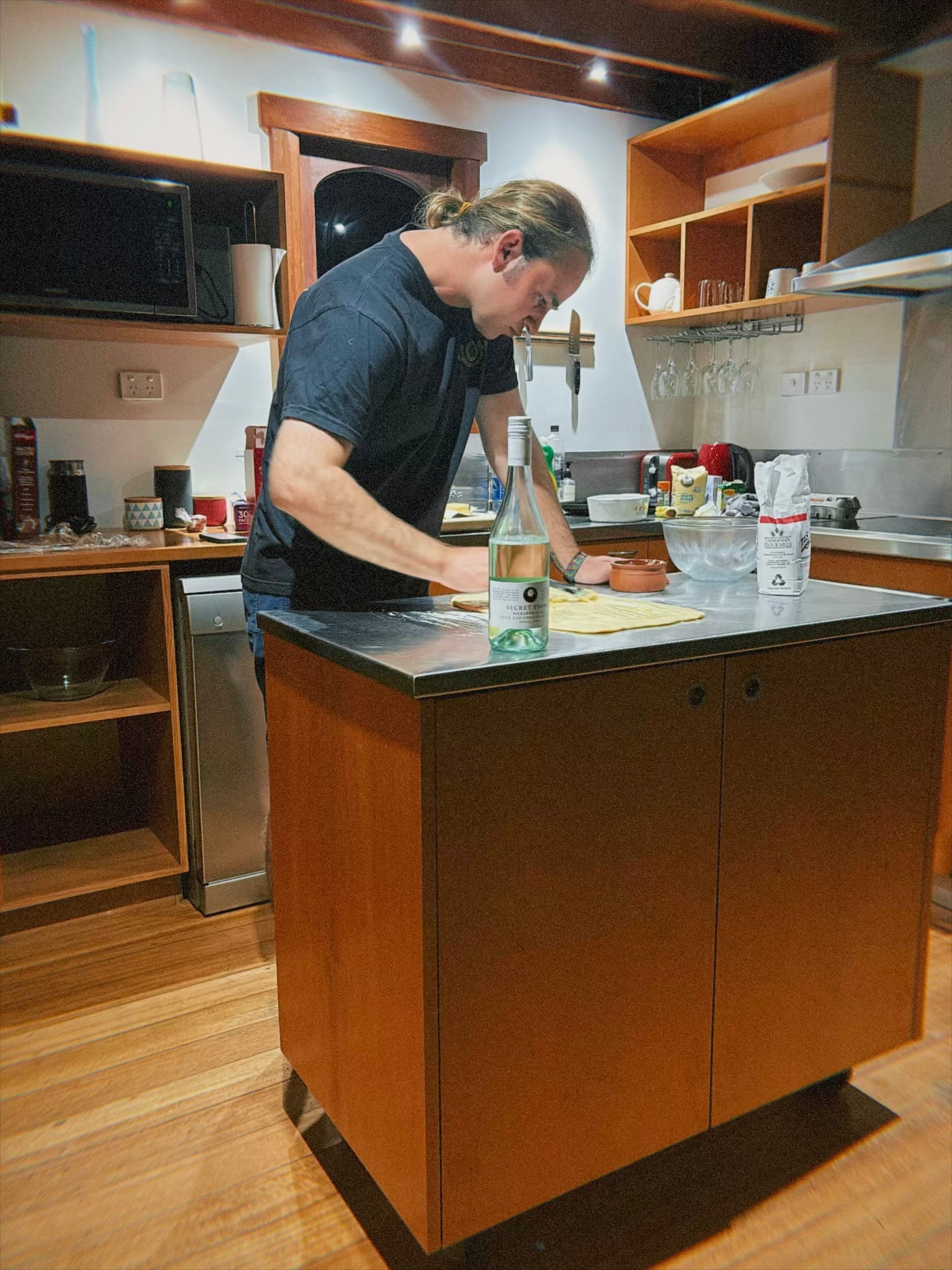
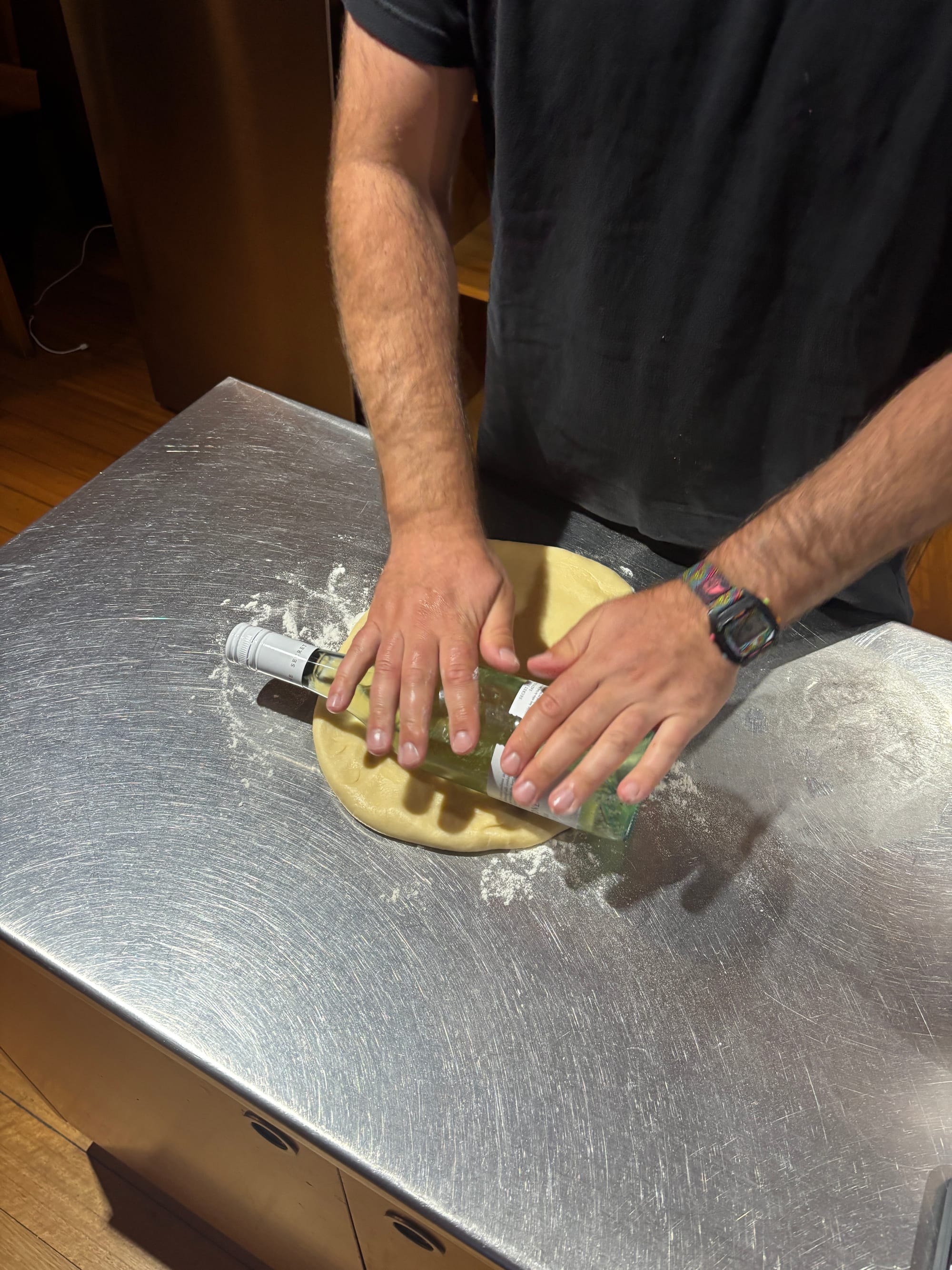
The church Airbnb and making rolls
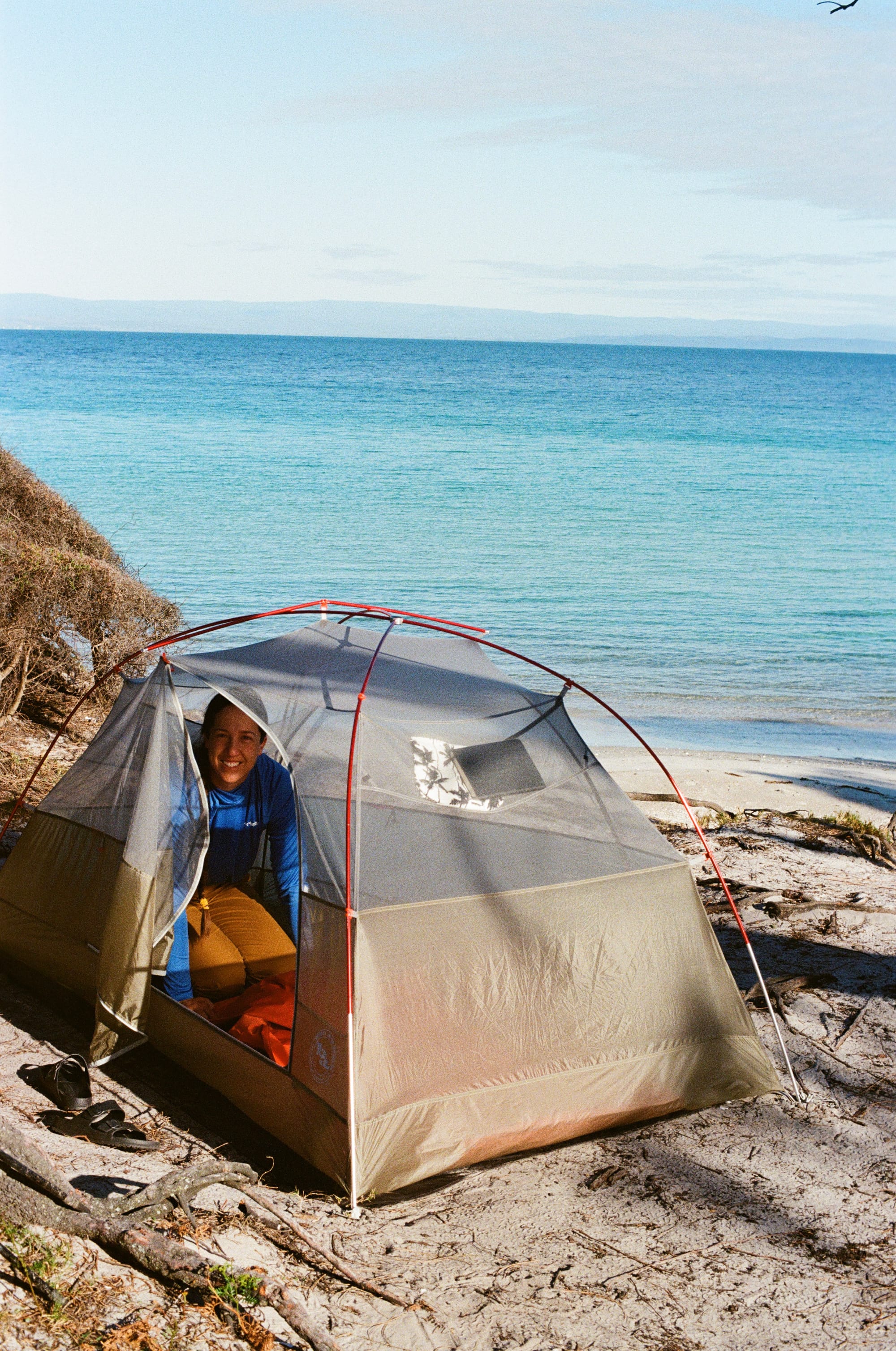
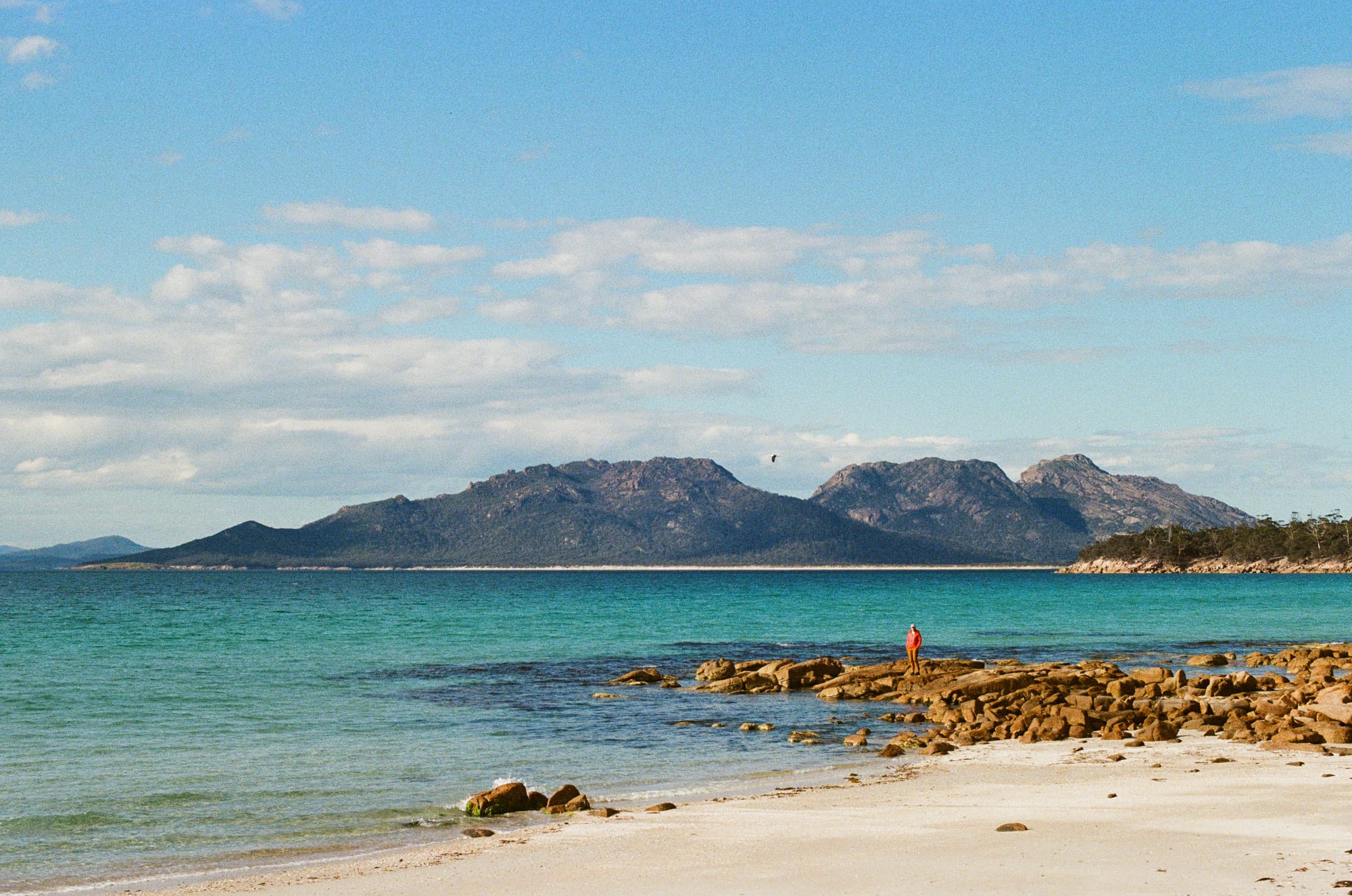
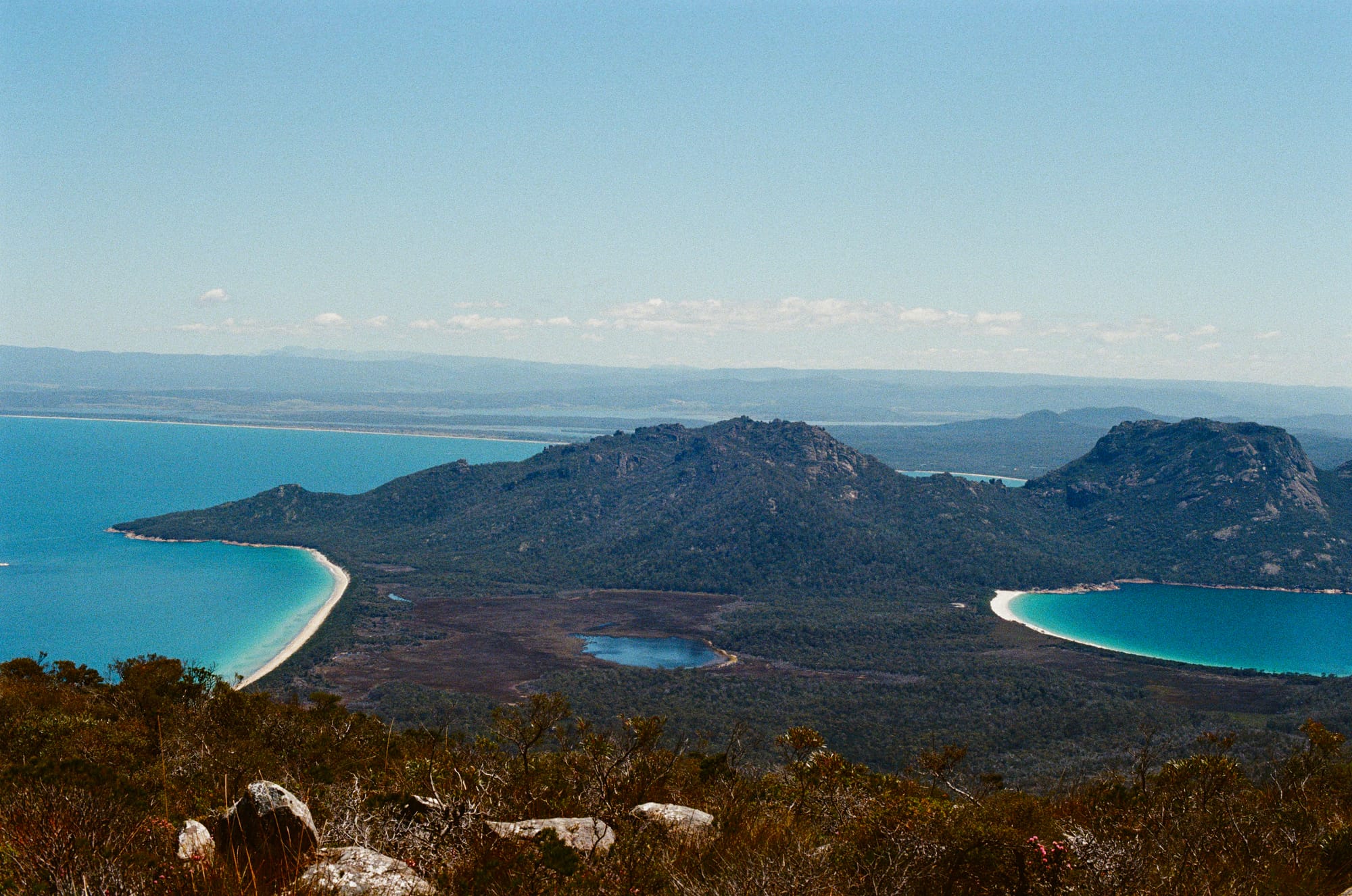
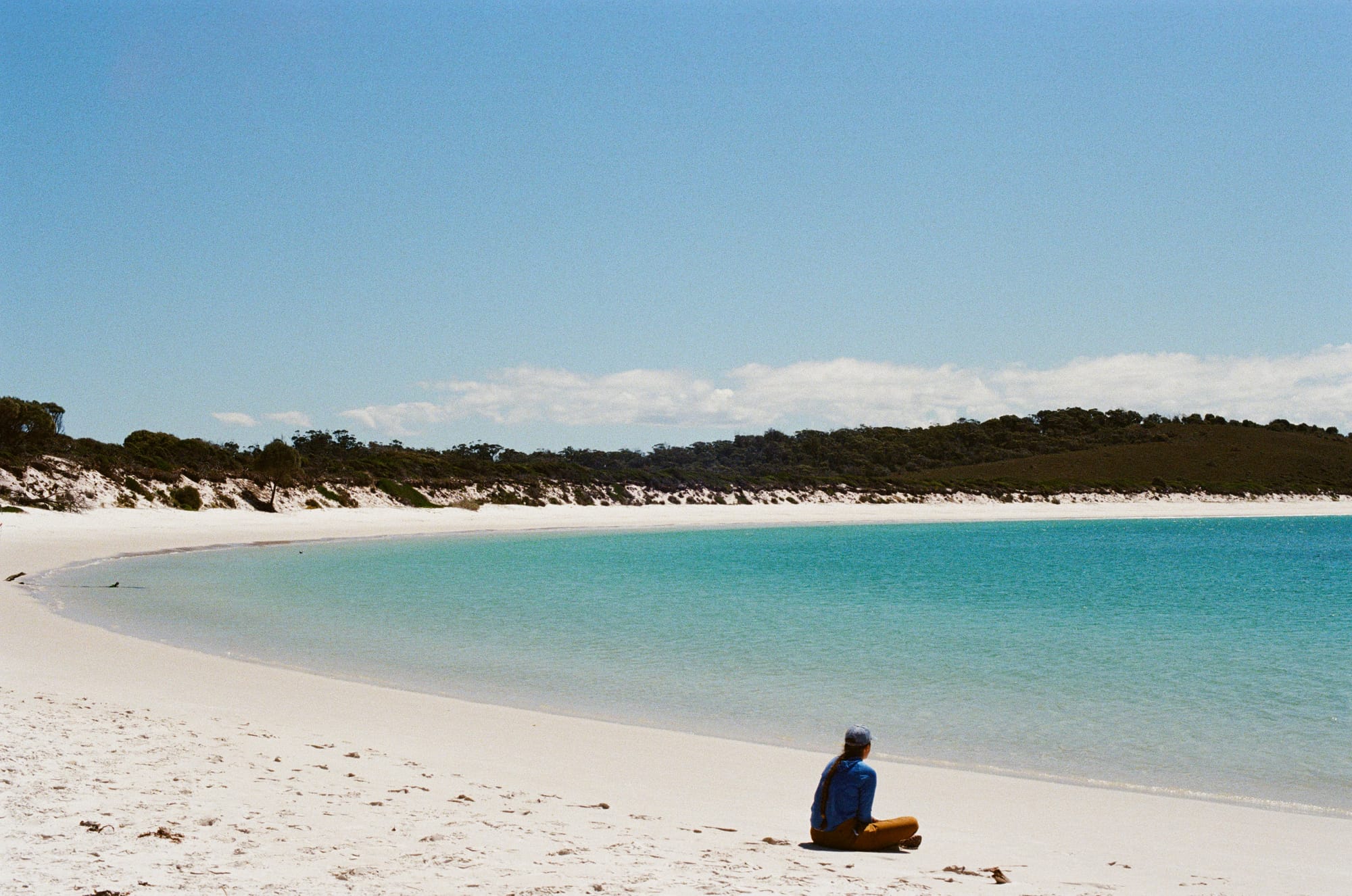
Our next trek was the Freycinet Peninsula Circuit which is a 20 mile circuit that we planned to do in 3 nights, with the main attraction being Wineglass Bay for our last night. It was a really rewarding hike filled with shockingly red lichen boulders bordering white sand beaches. We walked across the long Hazards Beach and camped at Cooks Beach for the night. We found a nice beachside campsite and stowed our packs away for a stroll on the beach. After about 10 minutes, we were back in camp and poor Em found her pack to be unzipped and one of the precious freeze-dried meals had been stolen by a very cheeky bird called a currawong. The real tragedy was that it was her spicy beef nachos. So, with only one dinner left we decided to cram the rest of the hike into one more long day. Wineglass Bay was really shocking with its expansive stretch of white sand. We were gutted to find out that there was no winery or tasting room at Wineglass Bay- the audacity! It was a long 1,000 step climb out of the bay but made easier by the impressive views nearly all the way up.
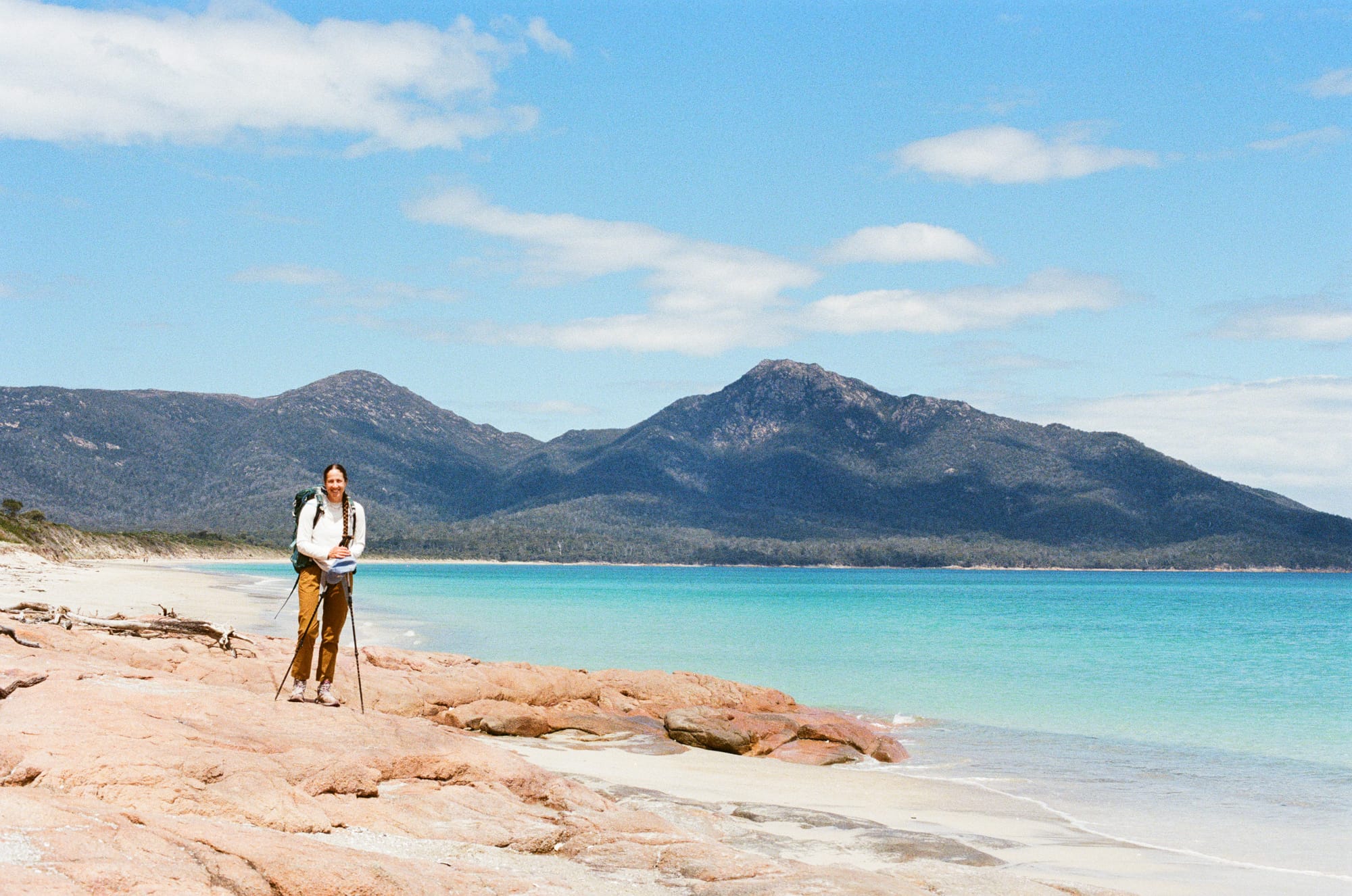
Hazards Beach in Freycinet National Park
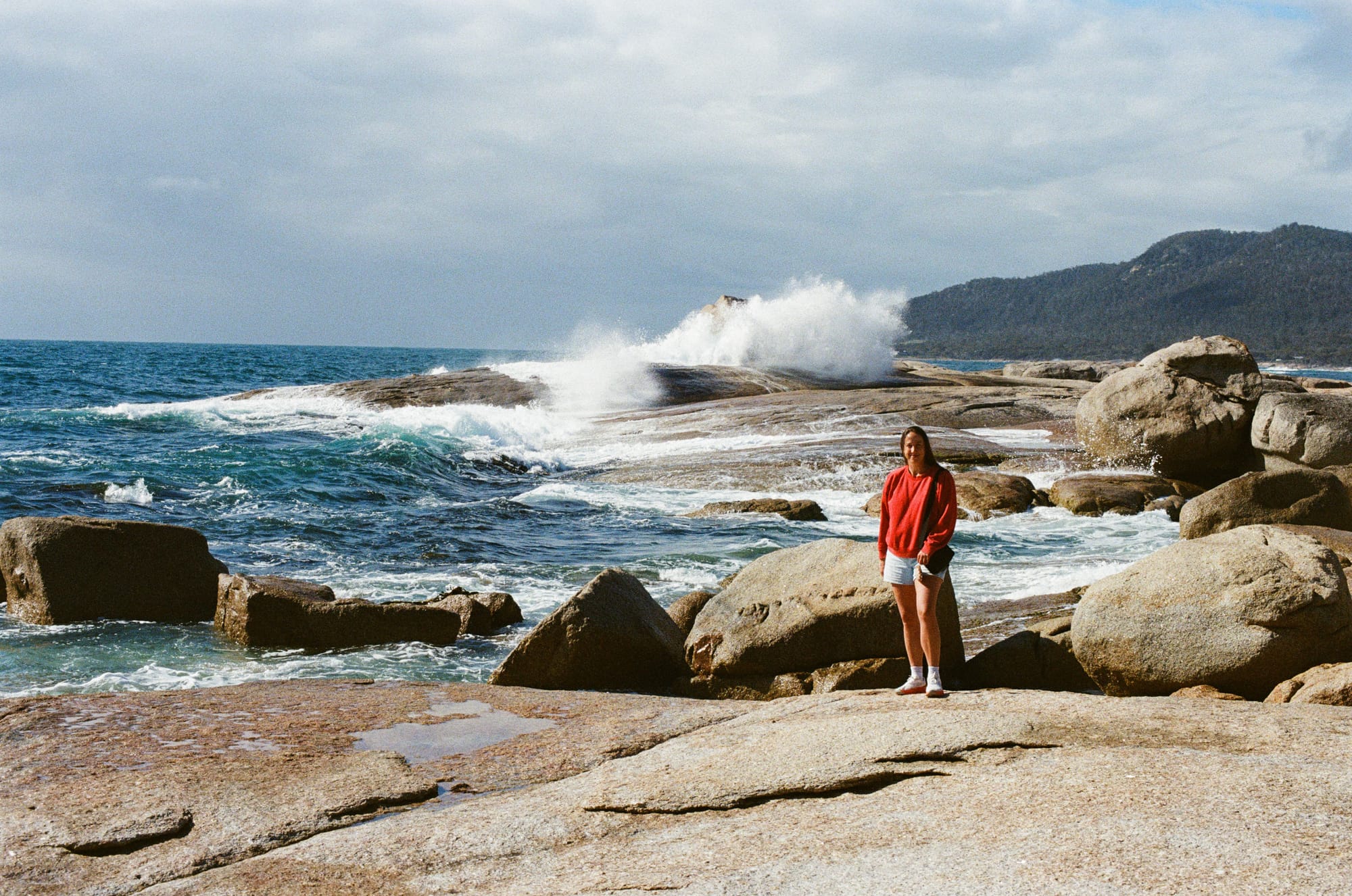
Our next stop on the East Coast was Bicheno. We stayed in an Airbnb within walking distance of the Bicheno Blowhole and apparently a penguin colony. We had a nice long trek along the coast, enjoyed some big surf, but once again got skunked on our penguin hunt at night. The only wildlife we glimpsed were some bird-sized mosquitos. We were beginning to think that the penguins were just a clever ruse to bait us unknowing tourists...
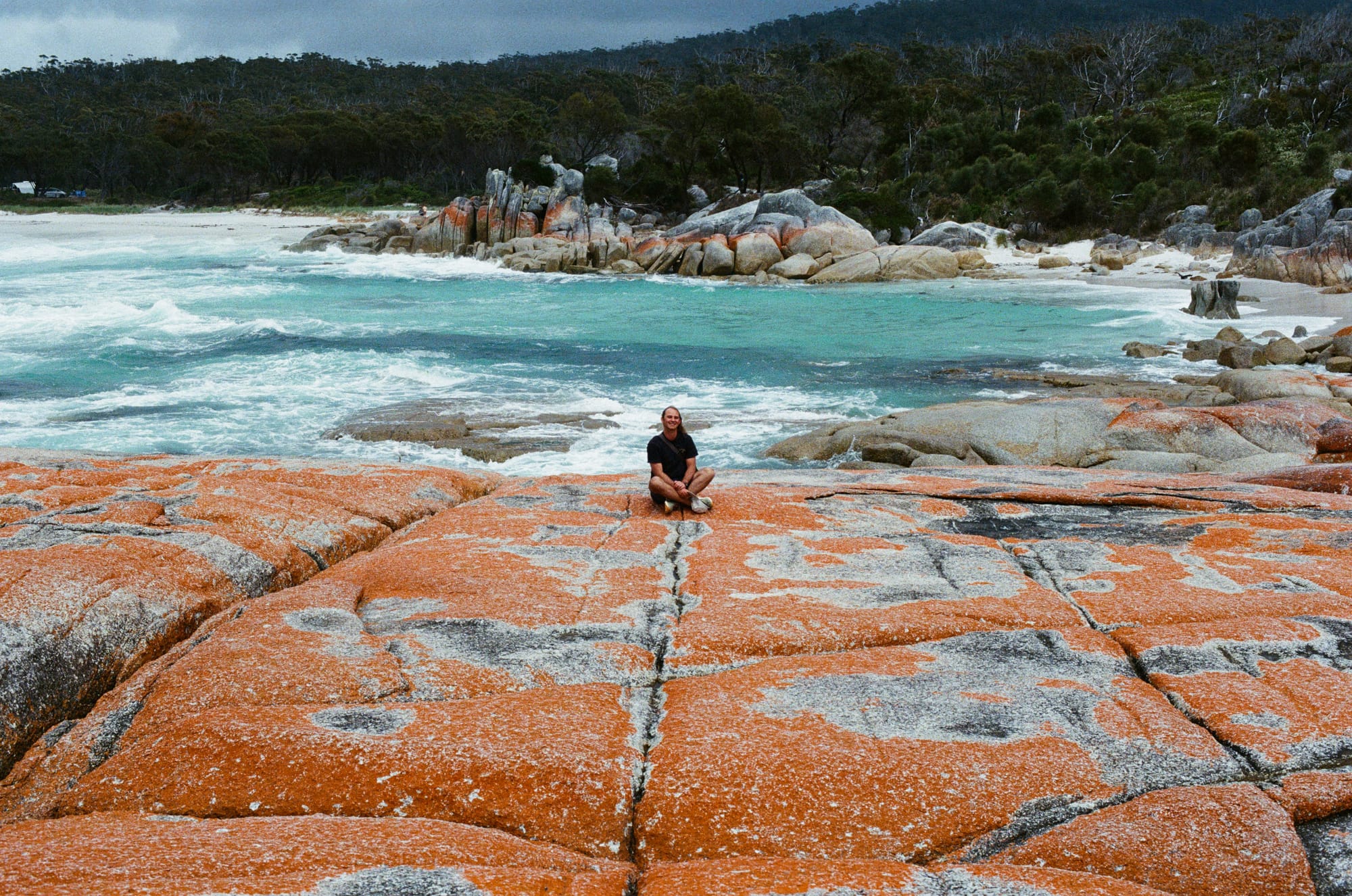
We continued up the East Coast to the Bay of Fires which is a really striking stretch of coastline with fiery red and orange lichen contrasted with the stark blue Tasman Sea. We hiked along Binalong Bay and Swimcart Beach, boulder hopping and dodging big waves to get some views of the coast. We stayed in the small town of St. Helen's, which was very lovely with a local cinema showing only one movie called Sisu 2. Naturally, we had to go so on our first night we watched Sisu 1 in the van (so many unique ways of killing Nazis in Finland) and were as equally pleased to see KGB Commies annihilated in Sisu 2. There was no cinema dog, unfortunately. Our next destination was The Gardens, which was really the center of Bay of Fires and held an astounding amount of unnamed and empty beaches lined with the orange boulders. This was our last stop on the East Coast which we thought was really special.
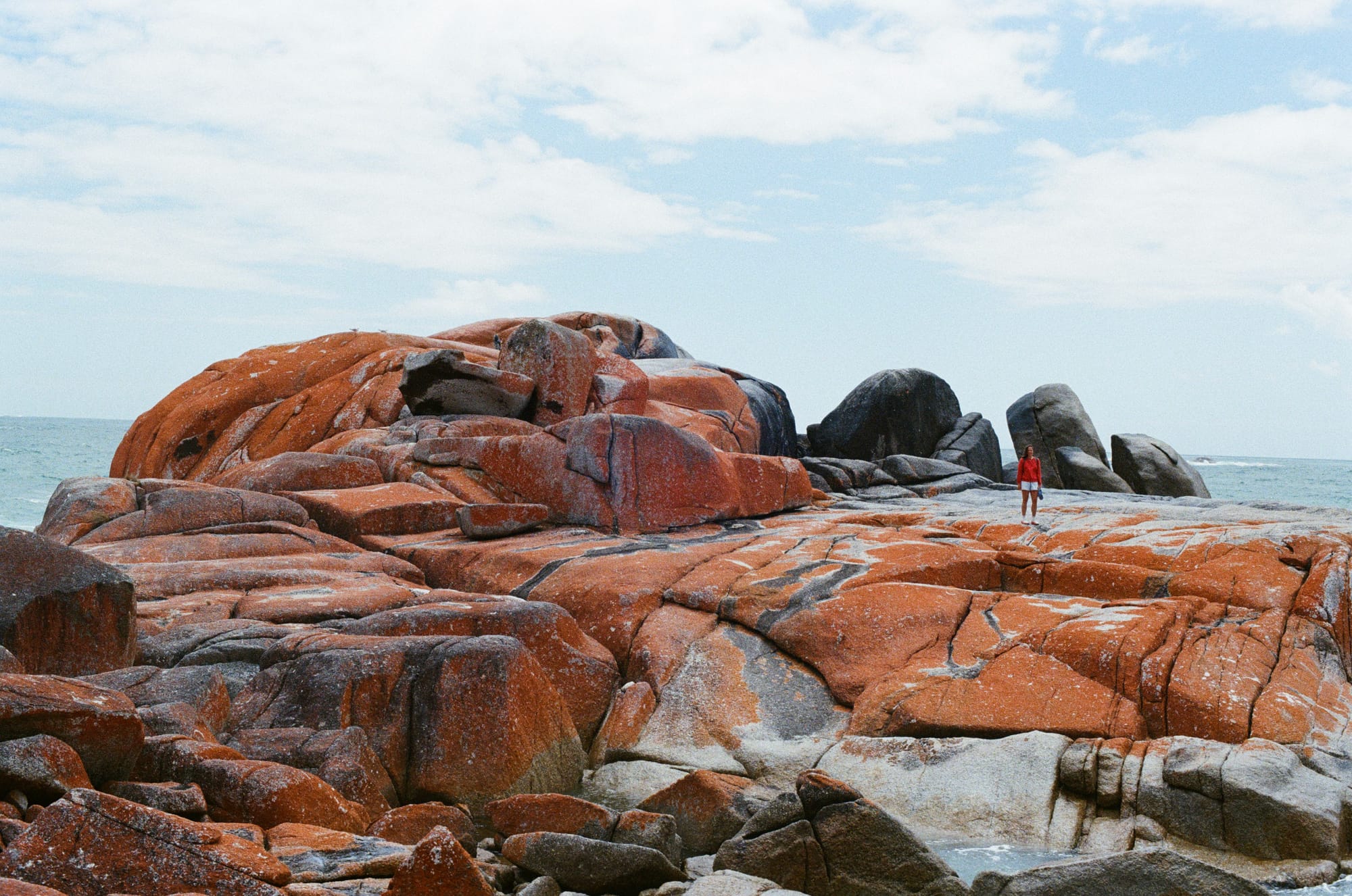
Big waves at The Bay of Fires
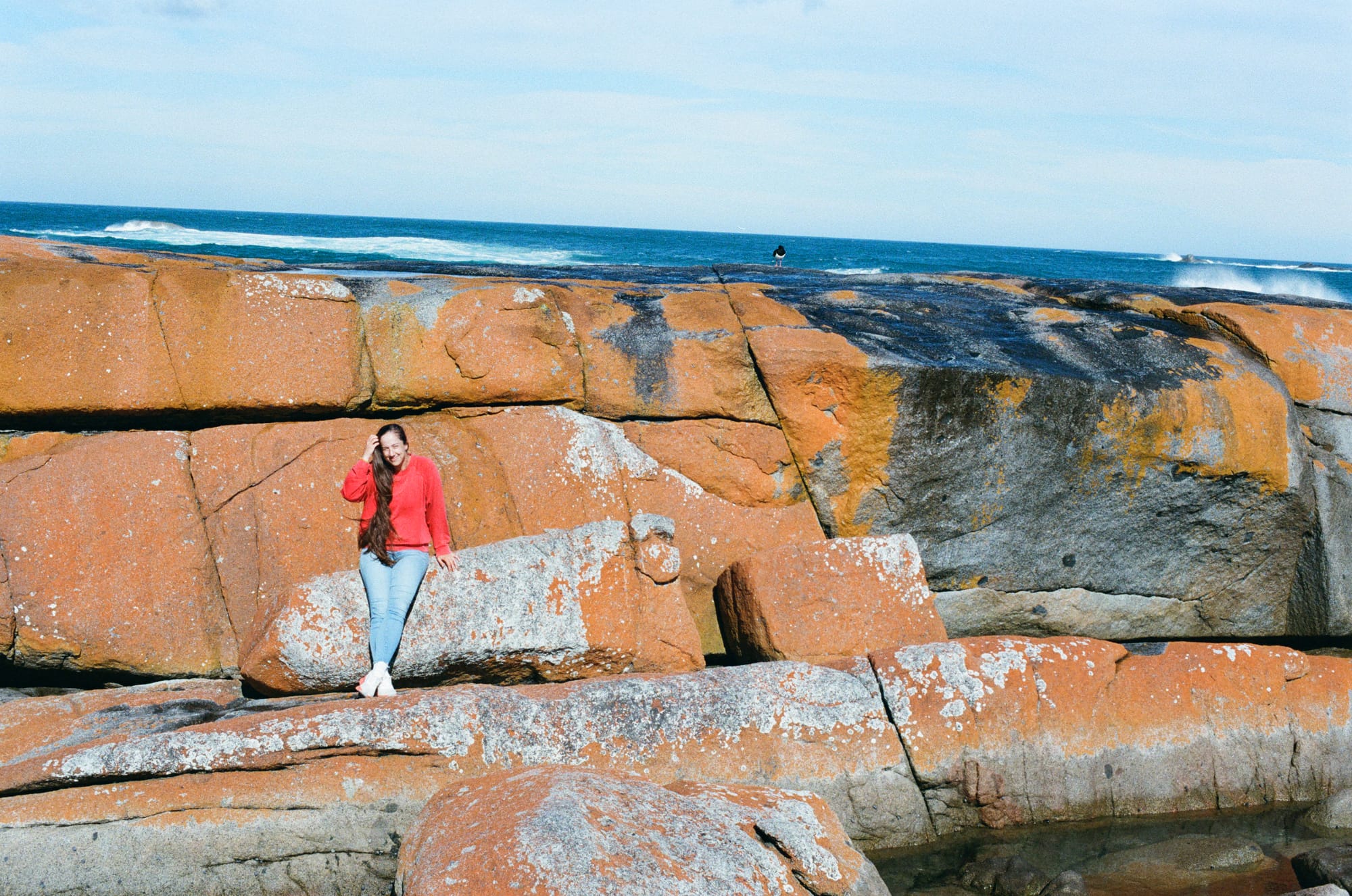
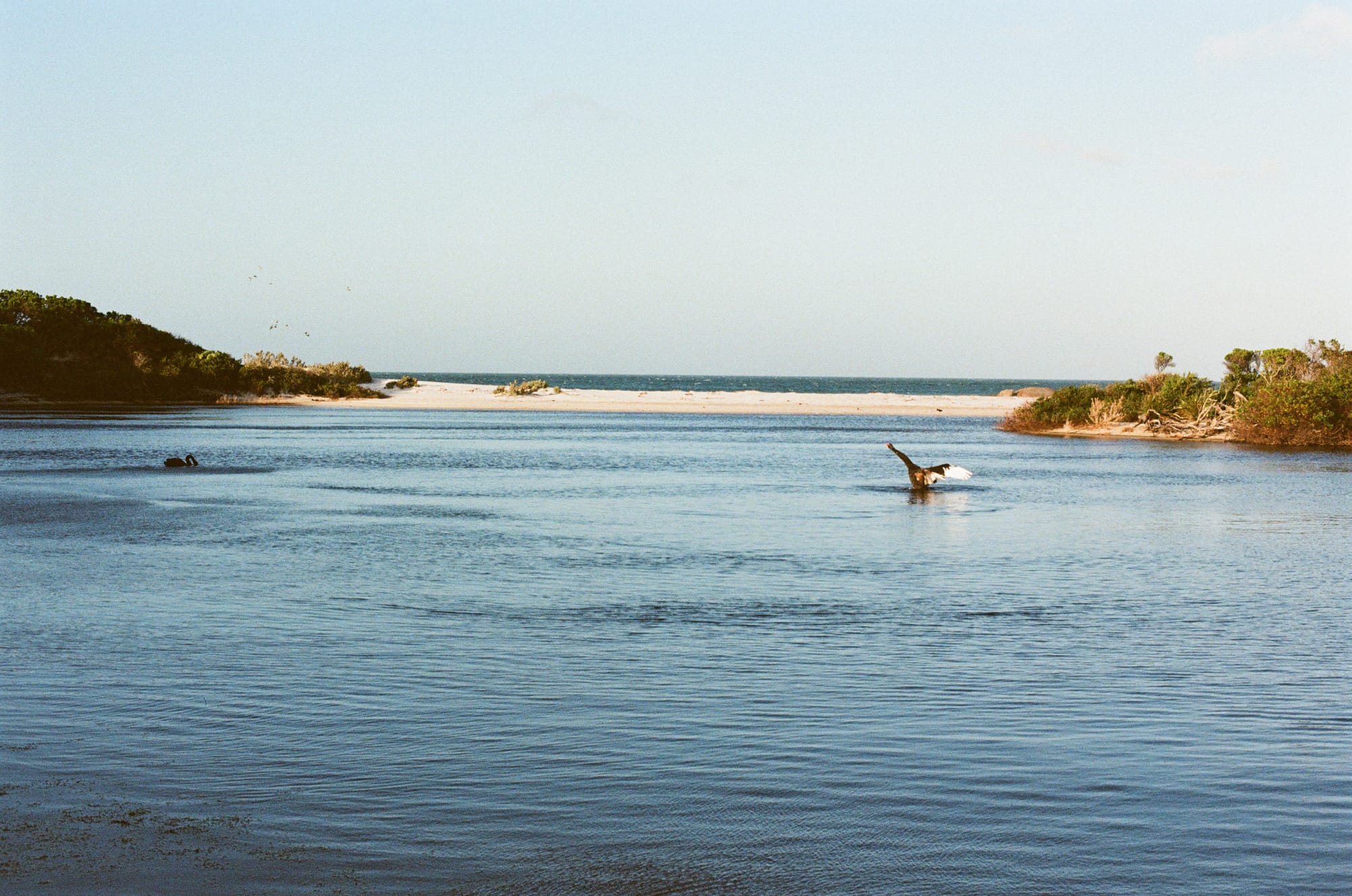
Our first stop on the North Coast was Mt. Williams National Park. This was probably the most isolated and deserted area of Tasmania that we explored. Due to the volume of animals who like to jump across the road after dusk we really tried to avoid driving at night, but since there were only dirt roads for about 20 miles in all directions we crept at a mere 15 km/hr pace without holding up any other cars and were mesmerized by the number of animals that we saw. Again, no devils but we were surprised to find 2 Eastern quoll, which are quite rare.
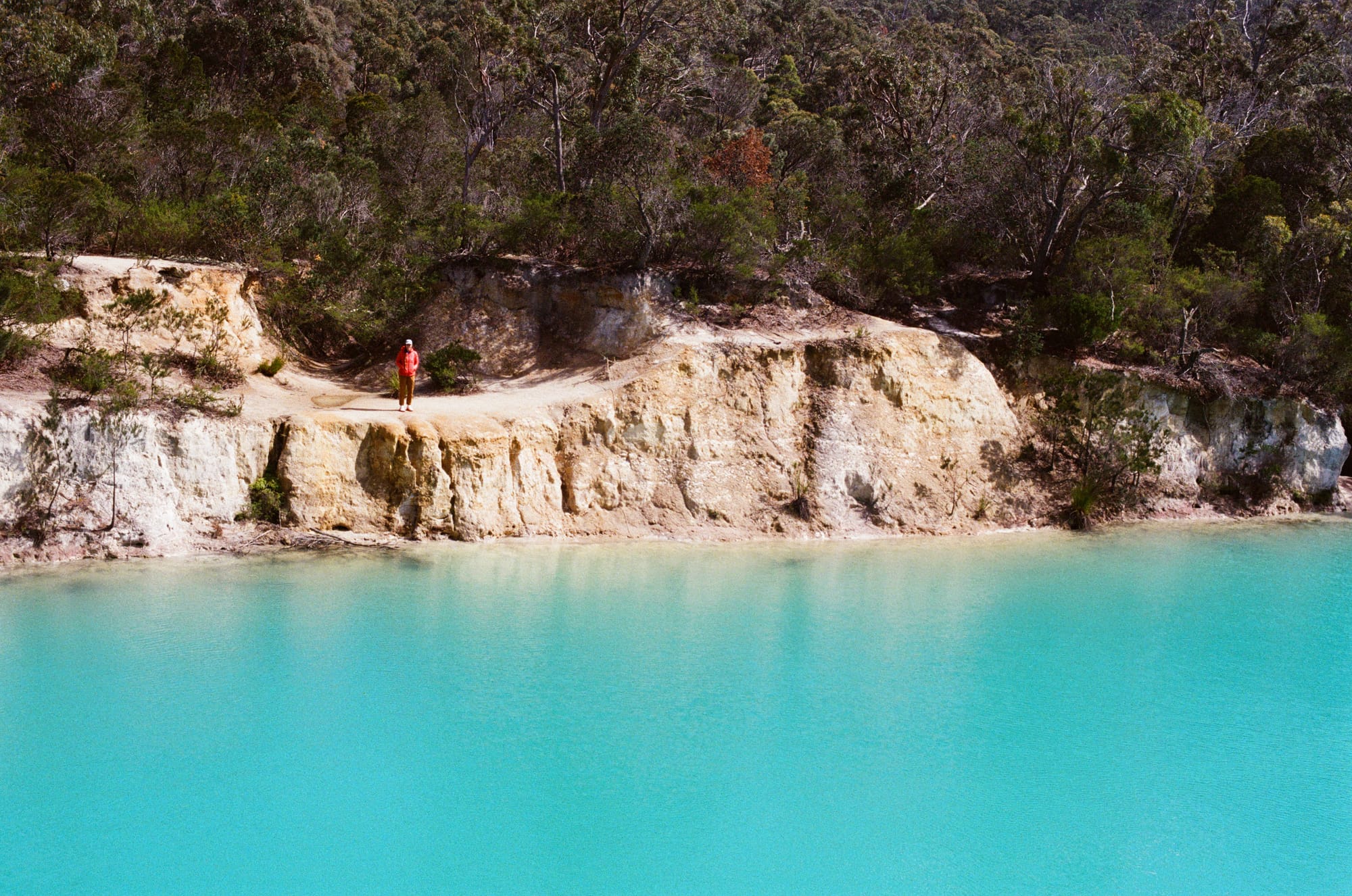
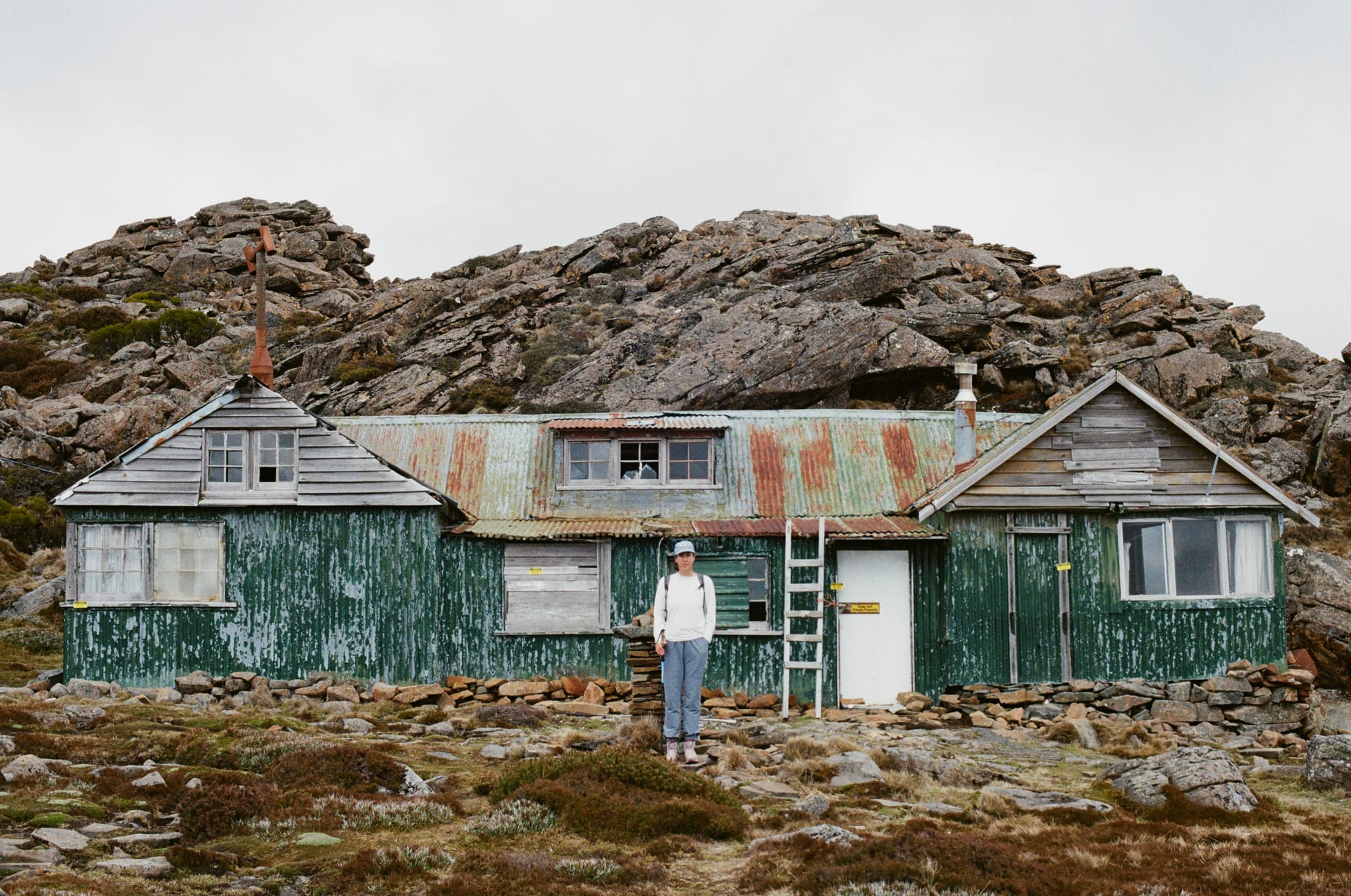
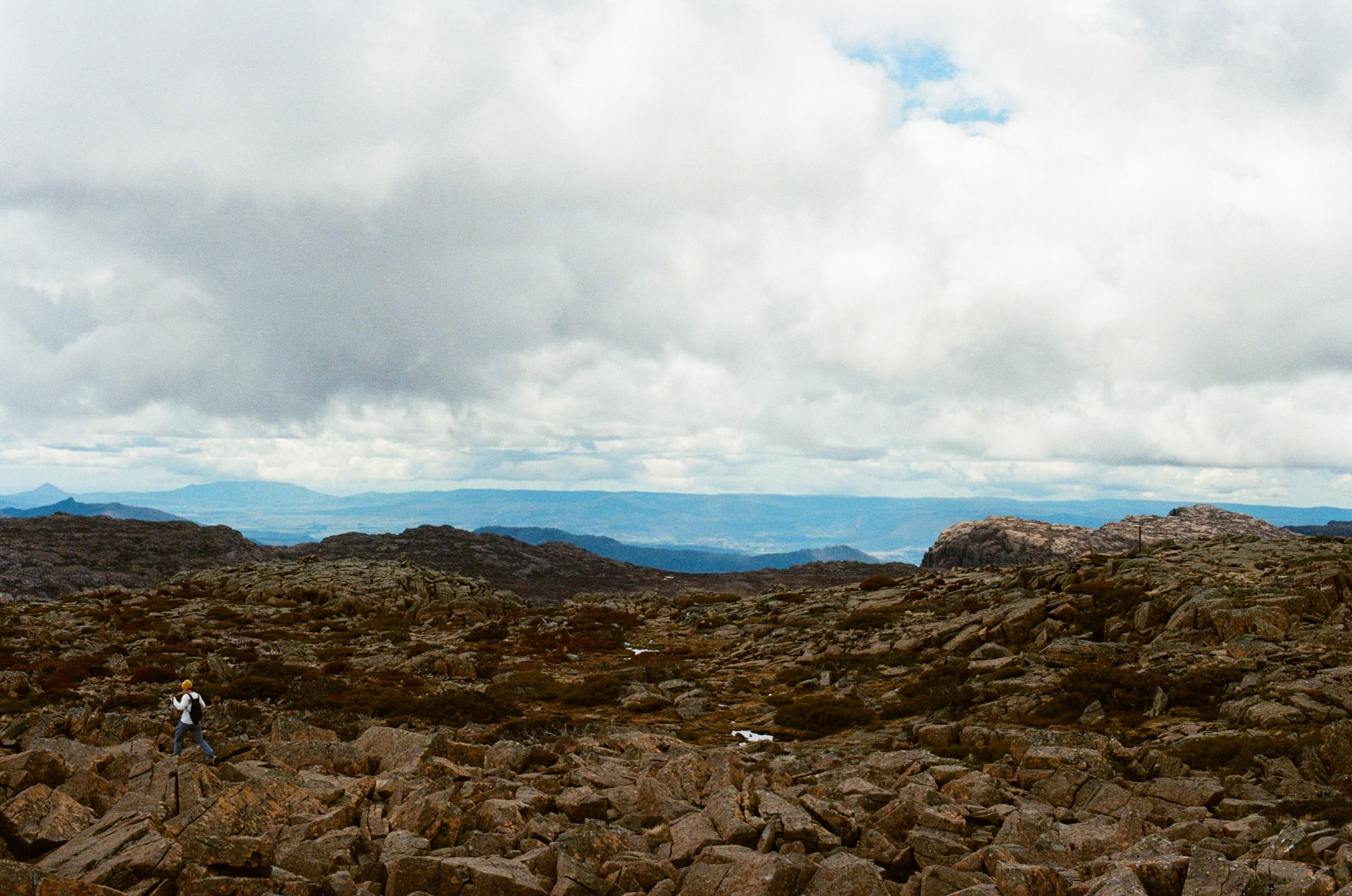
We spent the next 2 days cruising through small towns along the North Coast and visited the Little Blue Lake which had the look of a glacial lake but was just loaded with minerals which made it a very vivid turquoise. Our next destination was Ben Lomond National Park where we planned to summit Ben Lomond Peak. It is only a bit over 5,000 feet but has a pretty impressive face and was very desolate. We got very lucky with weather and had mostly clear skies for the hike. There was a Wes Anderson-esque hut near the summit. We spent the cold night amid old-growth white gum trees in the van. Not a devil in sight.
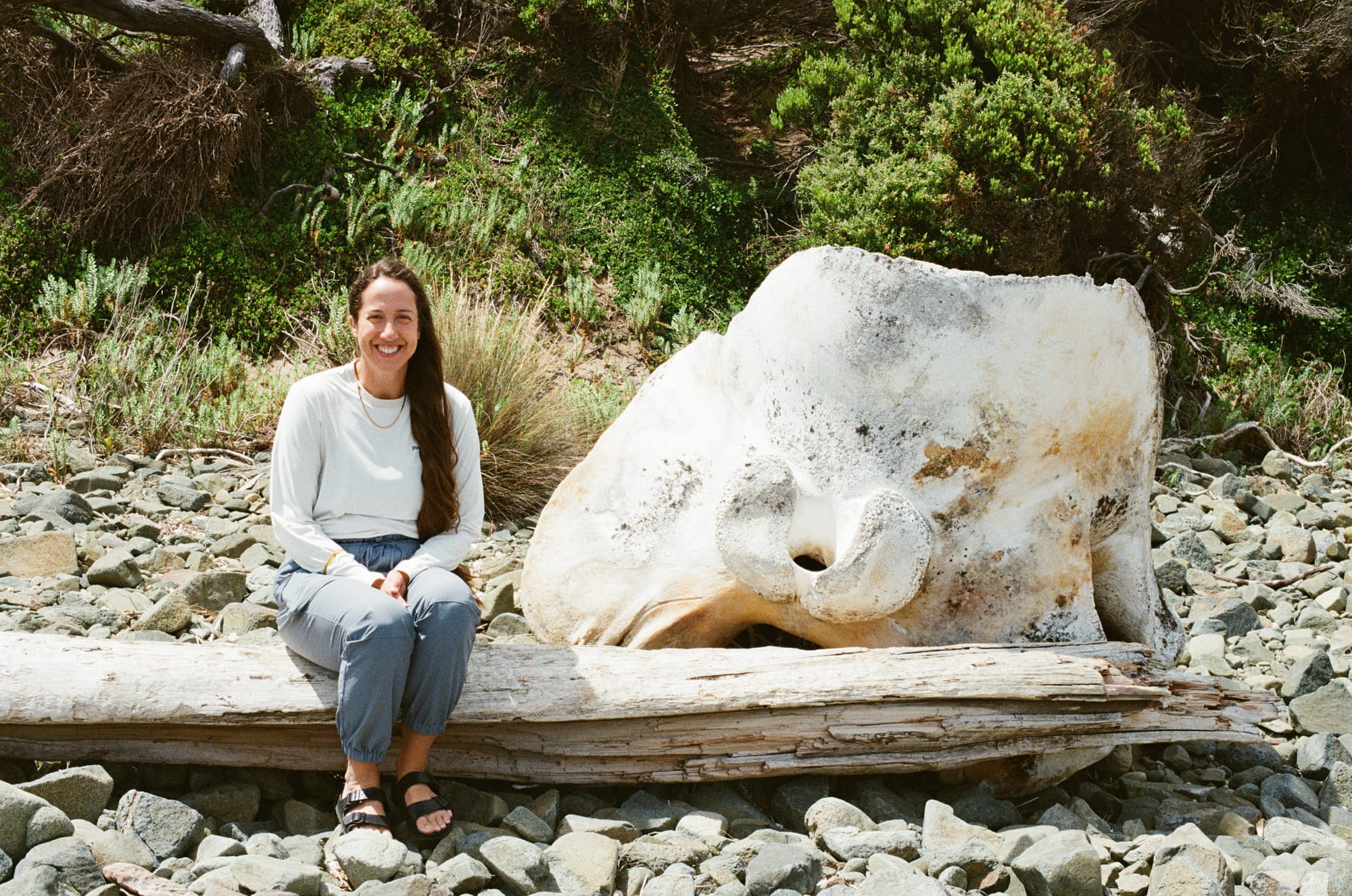
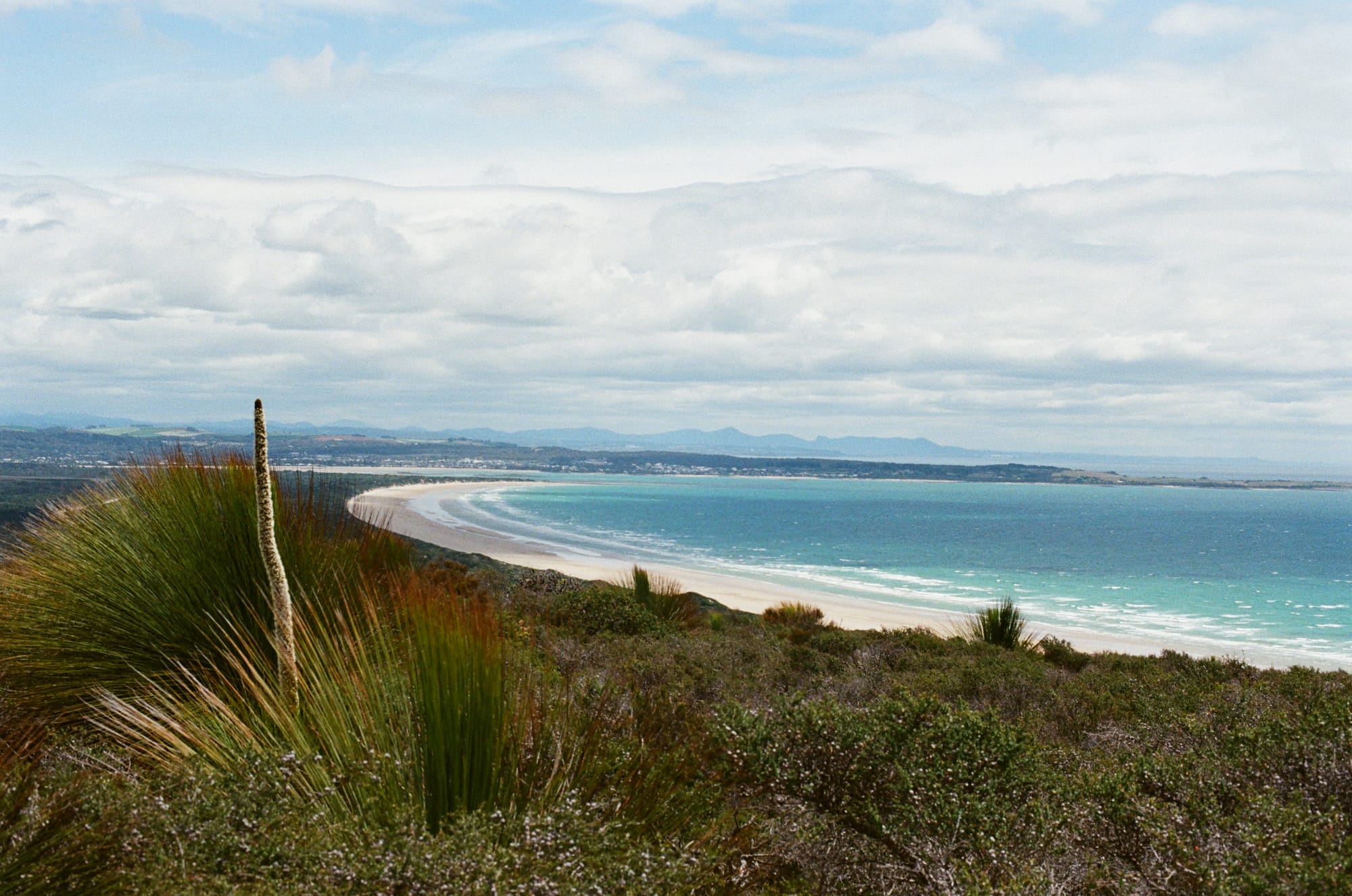
We really enjoyed the North Coast. There are more wallabies and kangaroos than people in a ratio of 100:1. Our next few nights we spent at Narawantapu National Park. There were a few day hikes here and the highlights were finding a whale skull on the beach and the evening walks along the vast lawns just adjacent to our campground where we had our closest encounters with the Eastern Forester Kangaroo here, they tolerated us within about 10 feet or so. The sheer amount of macropodia was ridiculous in this national park.
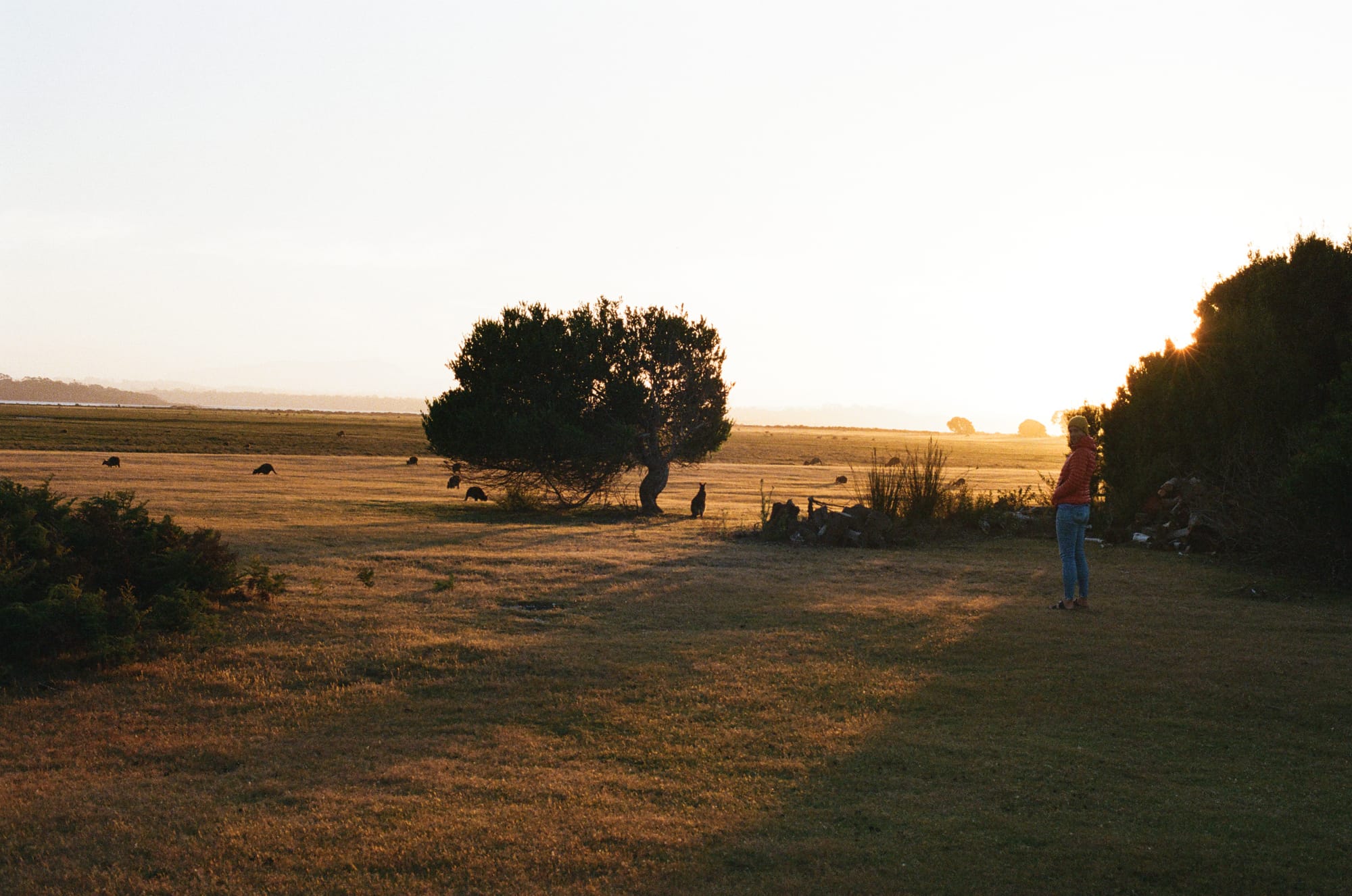
Wallabies and a Forester Kangaroo at Springlawn Campground
Our last few towns on the North Coast were Burnie, Ulverstone, and Stanley. We had a lovely rainy morning at a reserve near Burnie and were so happy to see our second platypus of the trip! We heard talk of penguins in Ulverstone and Stanley but at this point we had lost all hope of seeing these elusive birds. We couldn't help ourselves though and after about an hour of watching with binoculars from the van after sunset we heard the first penguins coming ashore to their nests. We felt happy enough to just have heard them squawking at the next campsite over but then we walked back to our campsite only to find three penguins hiding under our van! Hiding from what? We can't be sure. There were no predators here. We spent the next couple of hours marveling at their silly gait. For such graceful creatures in the water, they sure don't know how to walk. We finally found these penguins and it was worth the wait.
A penguin found itself near the bathrooms at Ulverstone campsite
Stanley was our last destination on the North Shore along the NW edge of Tasmania. We were treated to an official penguin viewing platform complete with red lights along the boardwalk. In an absolute torrential downpour we were so excited to see a whole waddle of penguins making their way to shore.
We scheduled the West coast of Tasmania for the end of our trip to allow some summer weather to settle in. This is the most mountainous region of Tasmania and our first stop was at Cradle Mountain National Park. We planned to summit Cradle Mountain, which is a pretty impressive peak. Our first day there was rained out so we settled for some valley hikes but our second day looked more promising. We had nice weather for our steep incline on the Face Track to the base of Cradle Mountain but just as we reached the intersection for the summit, a white-out snow storm blew in. We had heard plenty of rescue stories here (and unfortunately some deaths just a few weeks prior to our arrival) so as much as it pained us, we deferred the summit and focused on getting off the saddle safely. The weather here changed faster than anything we have ever experienced. Even in the peak of summer, it seemed to snow without warning. We still really enjoyed Cradle Mountain and were humbled by its ferocity.
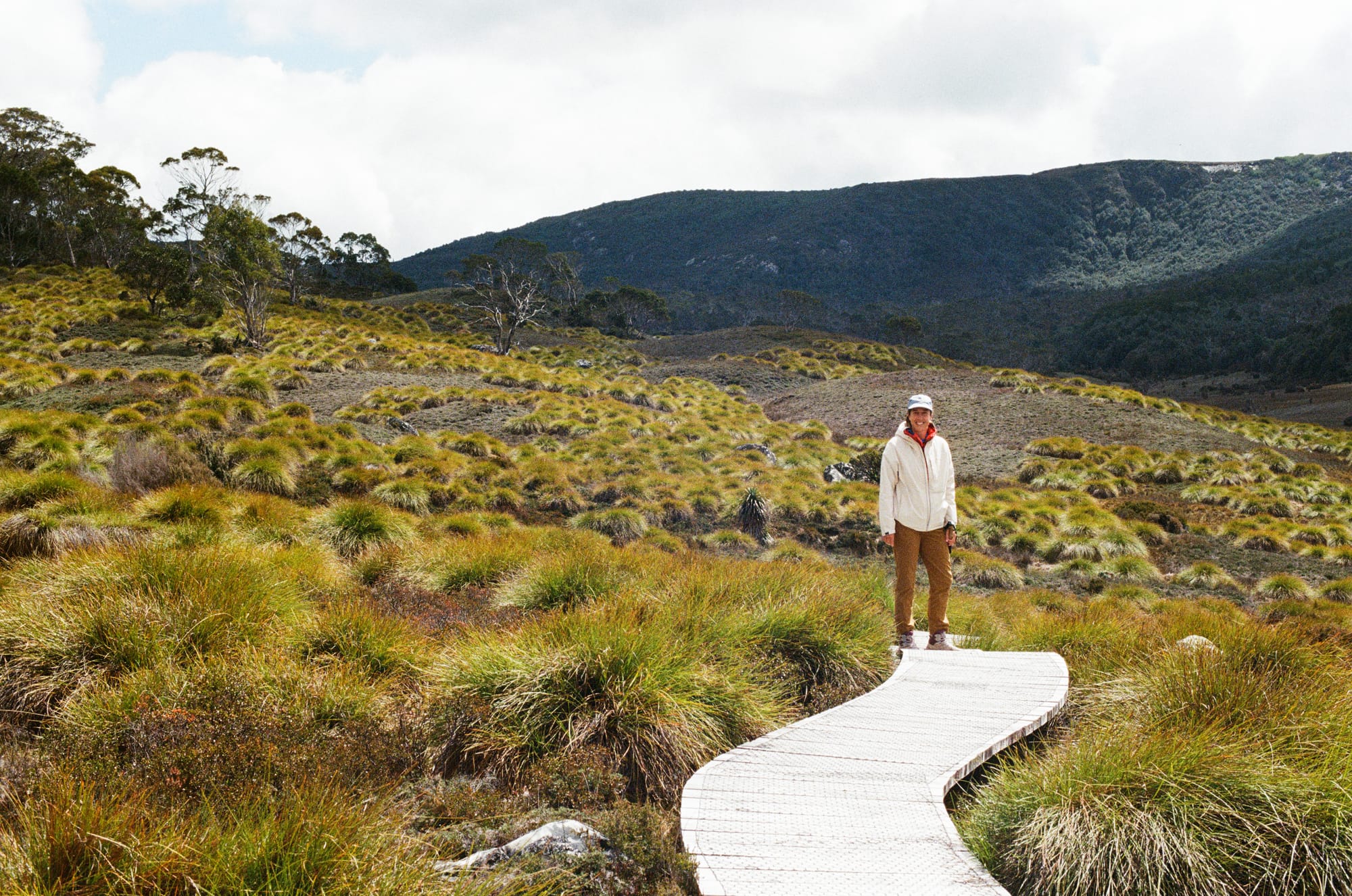
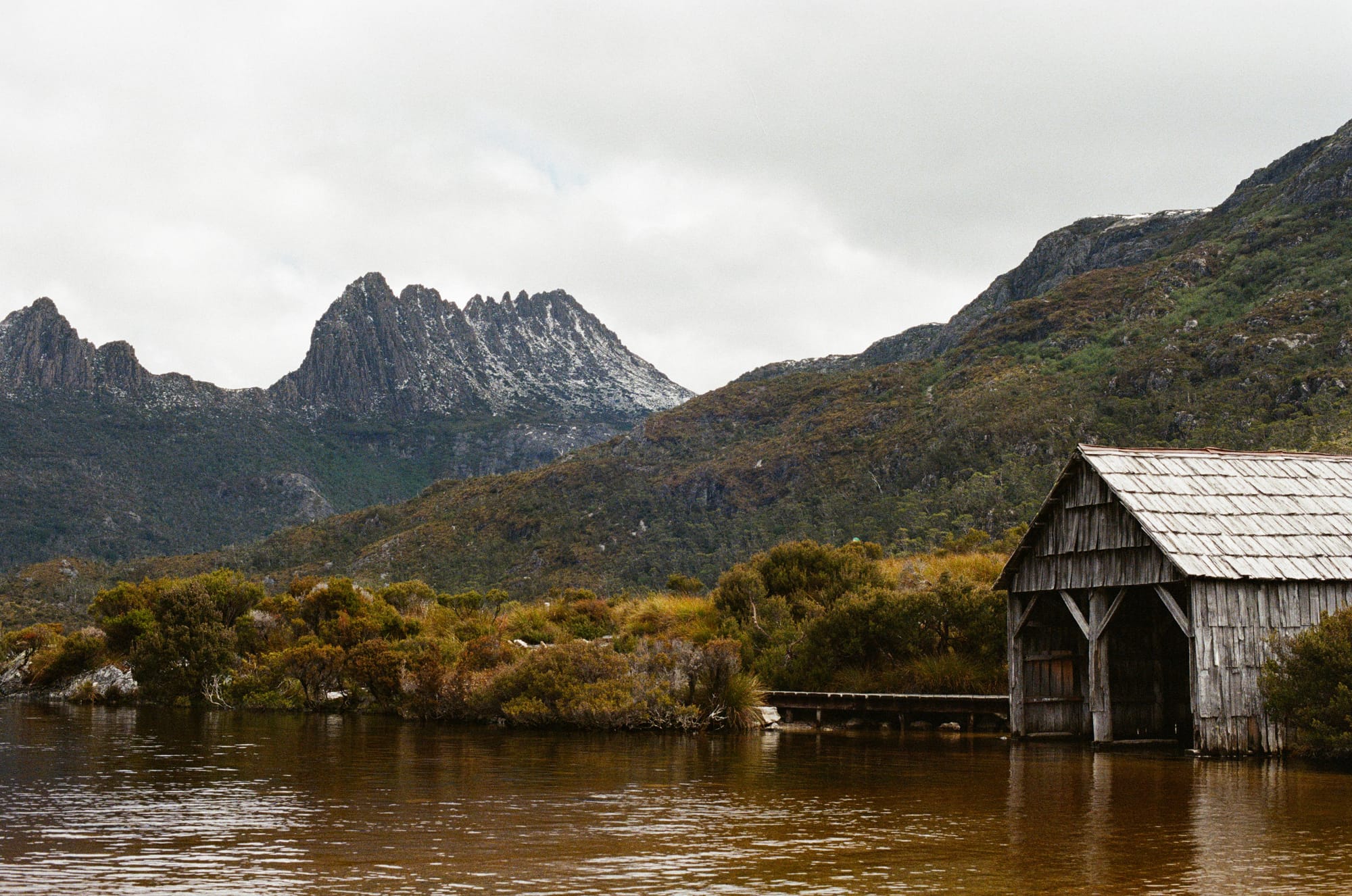
Snowstorm in Cradle Mountain National Park
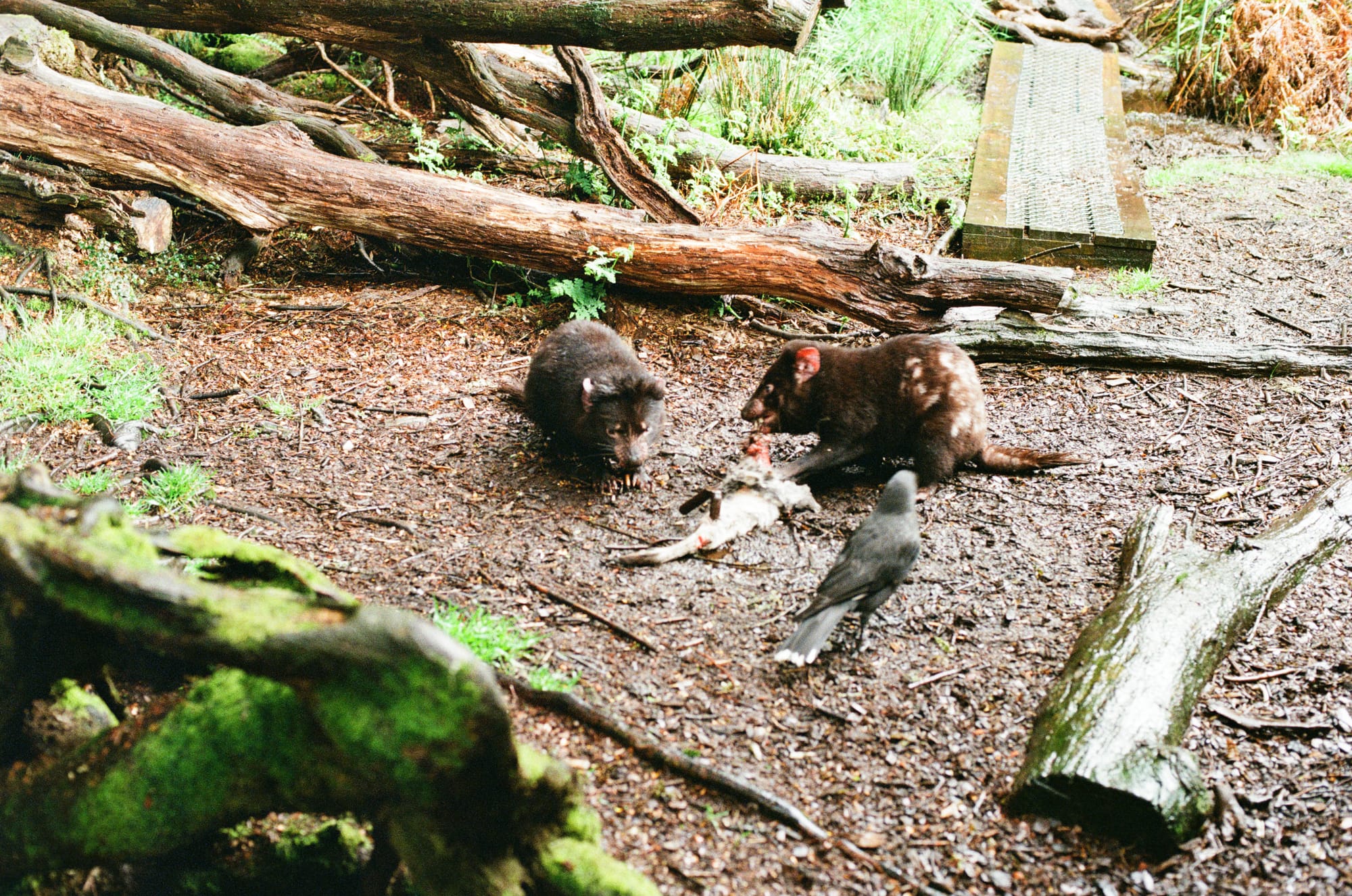
We began to accept the fact that we probably wouldn't find any Tasmanian Devils in the wild. There is an excellent devil conservation near Cradle Mountain so prior to leaving the National Park we went to Devils@Cradle to see them and fell in love with these silly creatures. They were ferocious, loud, hungry, and very cute. A bit more rat-like than expected. We watched them rip apart wallaby carcasses with immense joy.
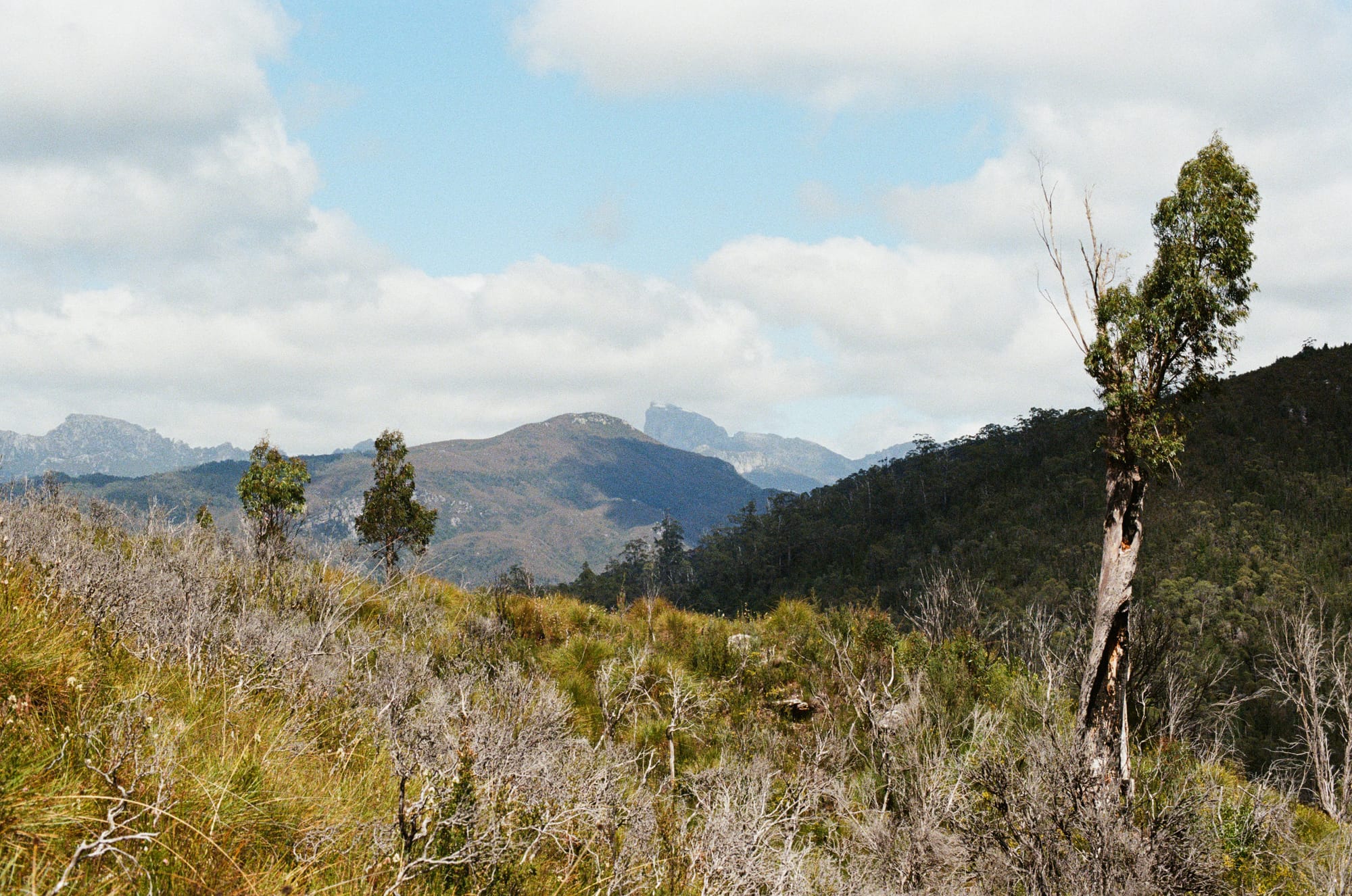
After the snowstorm, we were a bit wary to venture into what is the hardest hike in Tasmania, Frenchman's Cap. But, the weather window looked promising for this multi-day hike so the next day we hit the trail in the Franklin-Gordon Rivers Wild National Park. Our first day was beautiful- it was only about 10 miles up to our stop for the night. The track benefited from a philanthropic nature-loving Aussie who donated a lot of money to improve this first day, which was previously known as the "Sodden Loddens" which was basically a marsh next to the Lodden River with waist-deep mud. These sections now have boardwalks to benefit the marsh and hikers. We were so grateful for that. The next day was quite grueling- it took us 4 hours to walk only 3.3 miles to the next hut. It was a steep jungle walk basically following a riverbed. But, we had some incredible views once we hit the ridge and got our first glimpse of the snow-topped Frenchman's Cap in the distance. We had initially planned to summit the next day, but with a bluebird sky and no wind, we decided to push to the summit. It was quite a scramble up to the top but we were rewarded with 360 degree views and had some solo time. Emily even found some cell service to do her Duolingo- now that's commitment. We survived the summit and made it back to the hut where we celebrated with some bourbon on the Helipad.
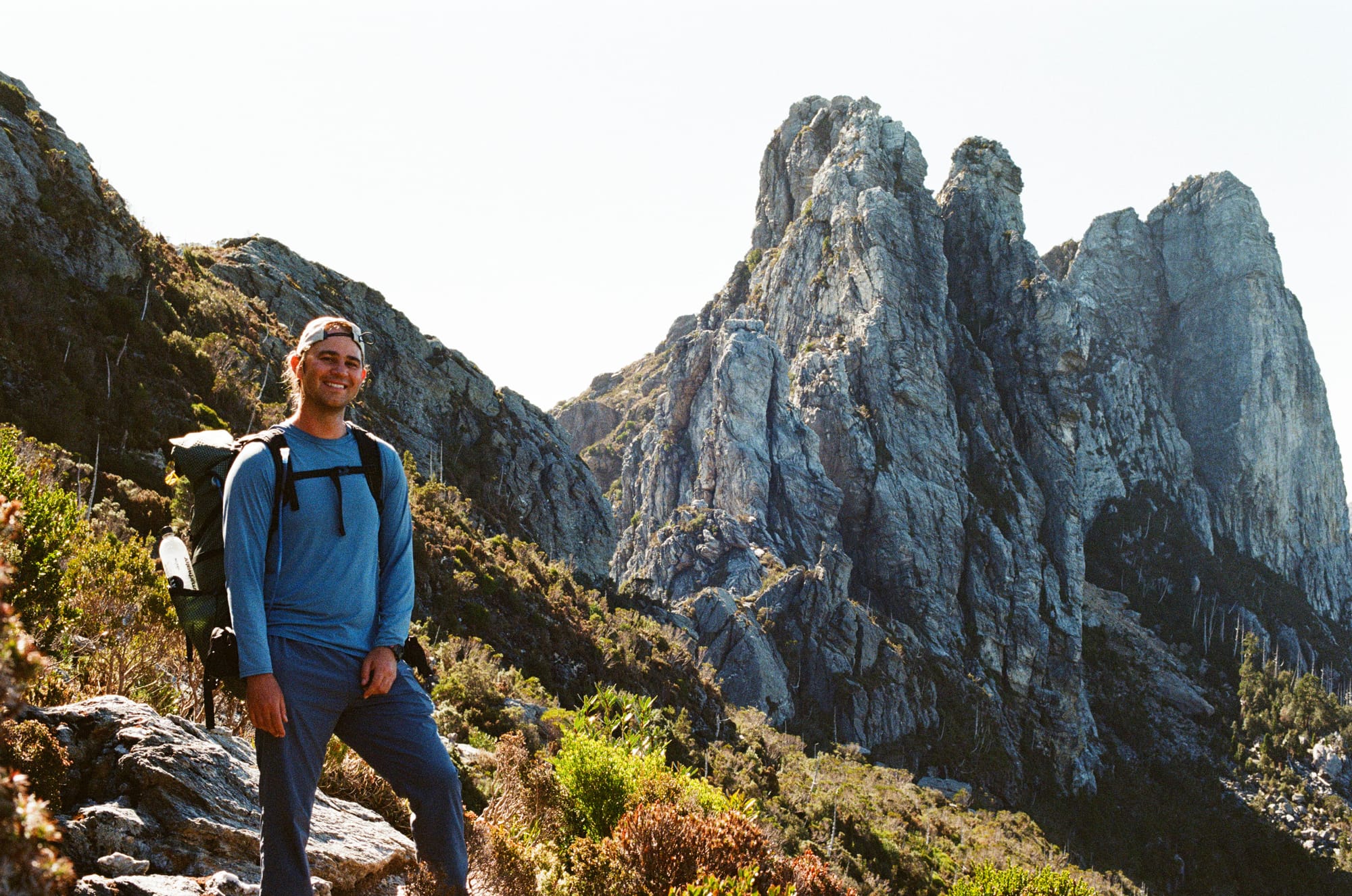
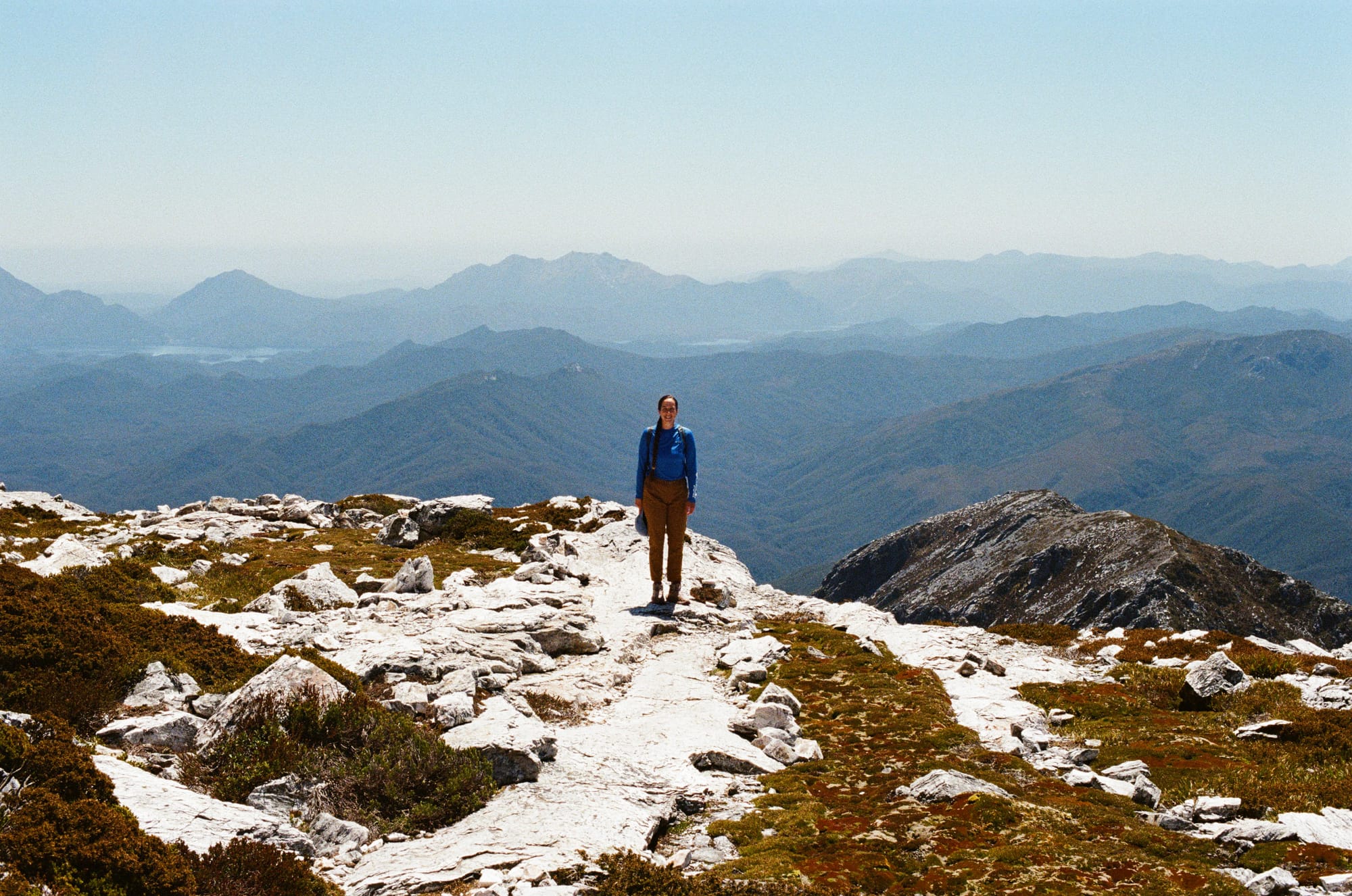
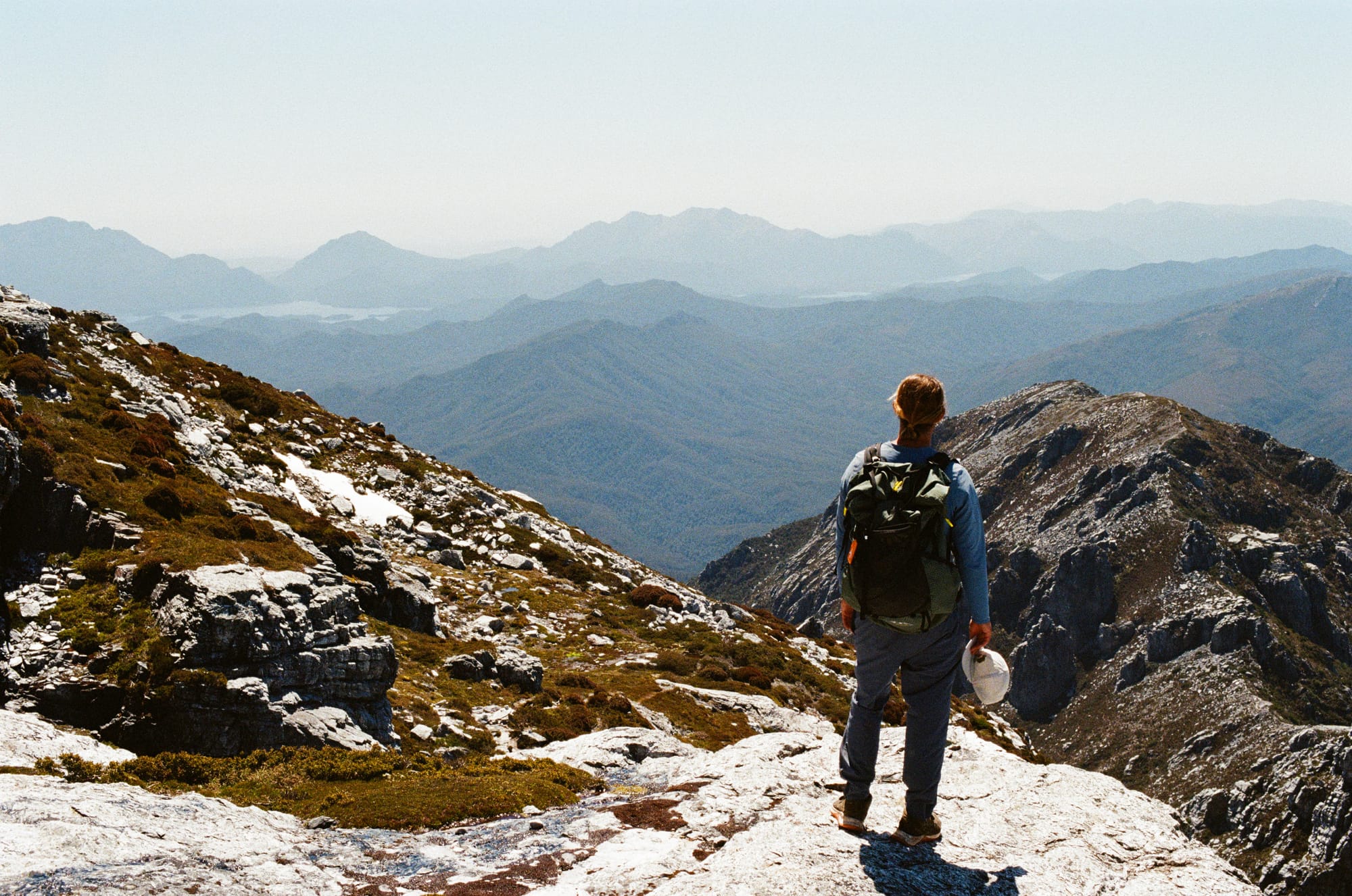
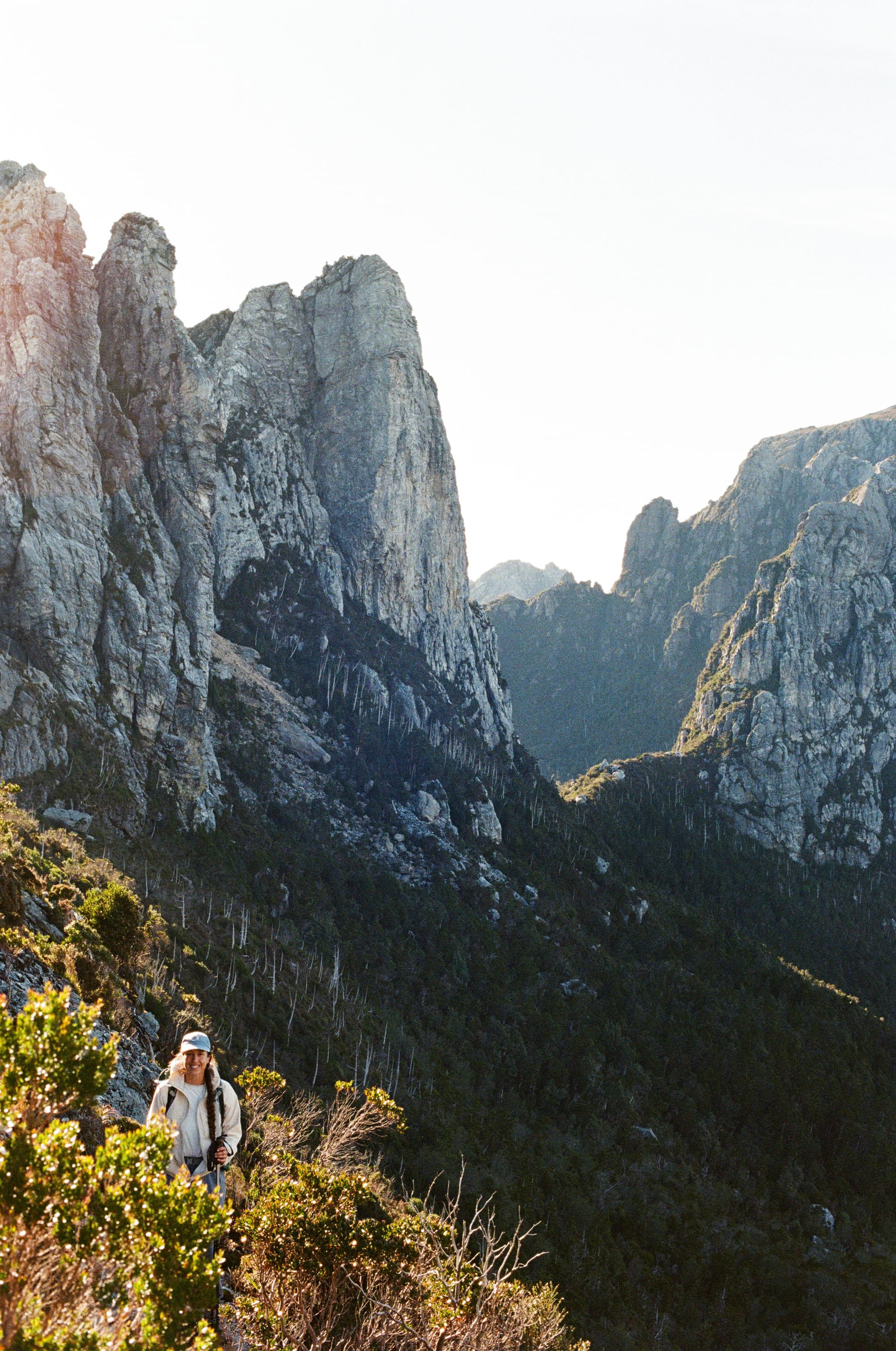
Frenchman's Cap was our last stop on the circumnavigation of Tasmania. We were already feeling nostalgic as we came full circle and drove back to Hobart. We flew from Hobart to Sydney the next day and were a bit whiplashed by the introduction to this huge city. We had quite the tourist experience on our first day in Sydney and walked through the Botanical Gardens and across the Sydney Harbour Bridge to see the Opera House. We unfortunately heard some very sad news about the shooting at Bondi Beach the night before flying to Sydney. We had made plans to see Bondi (Rory is proudly a long time fan of Bondi Rescue) and still felt that it was important to go there. We visited Bondi 2 days after the terrorist attack and although the mood was solemn, there were large groups there in support and mourning of the victims and their families. The Aussies are a very hardy bunch.
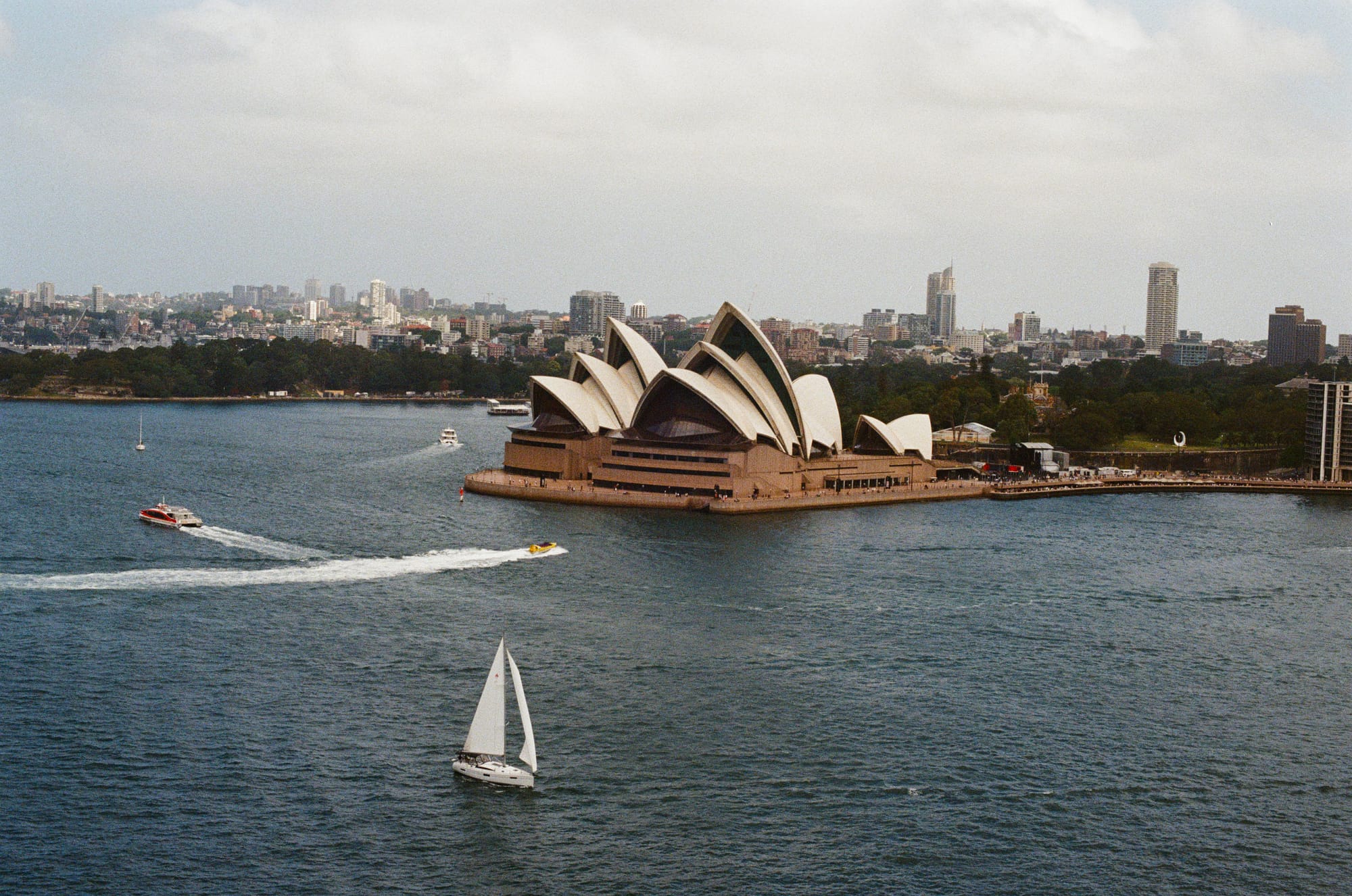
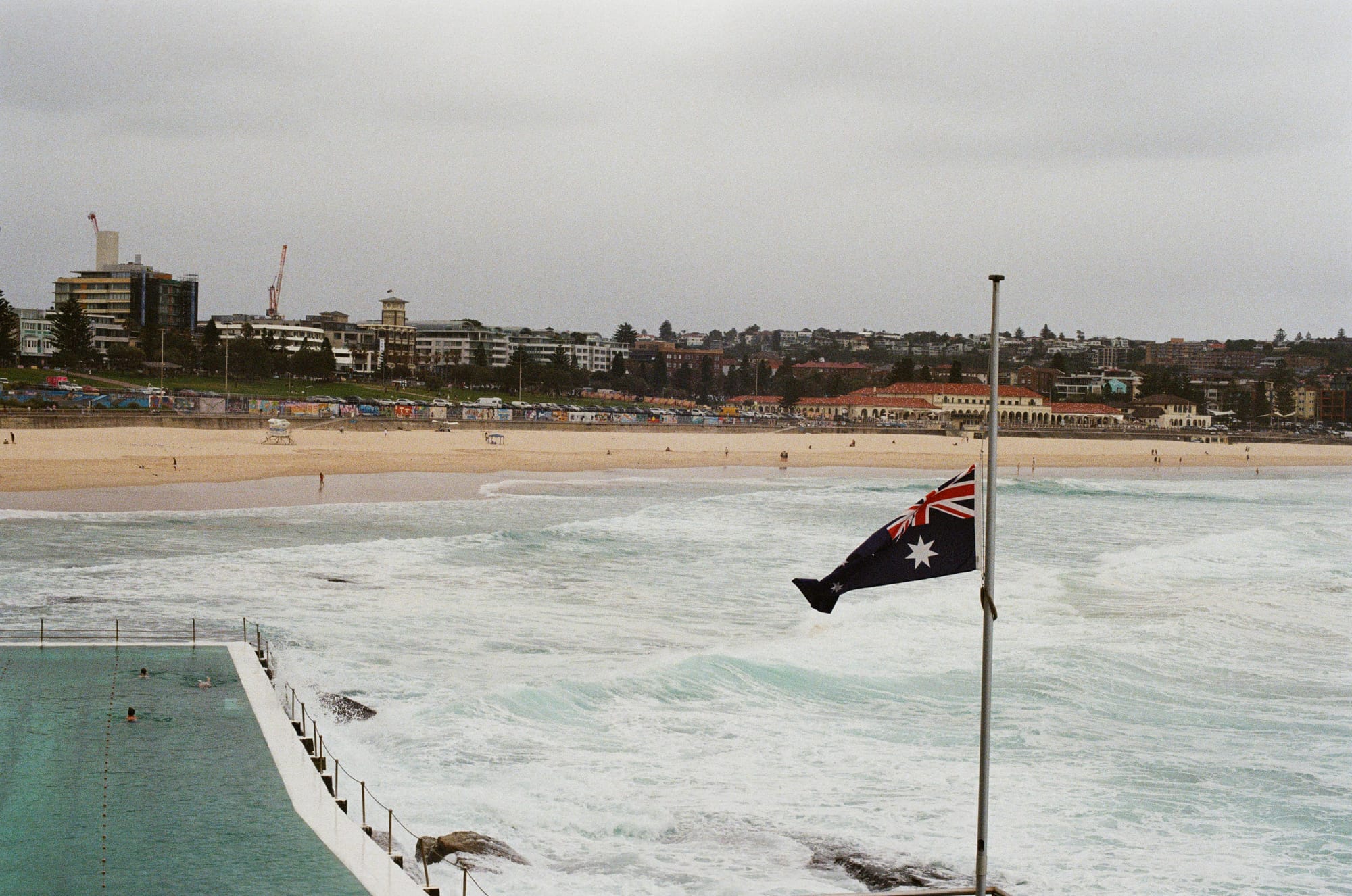
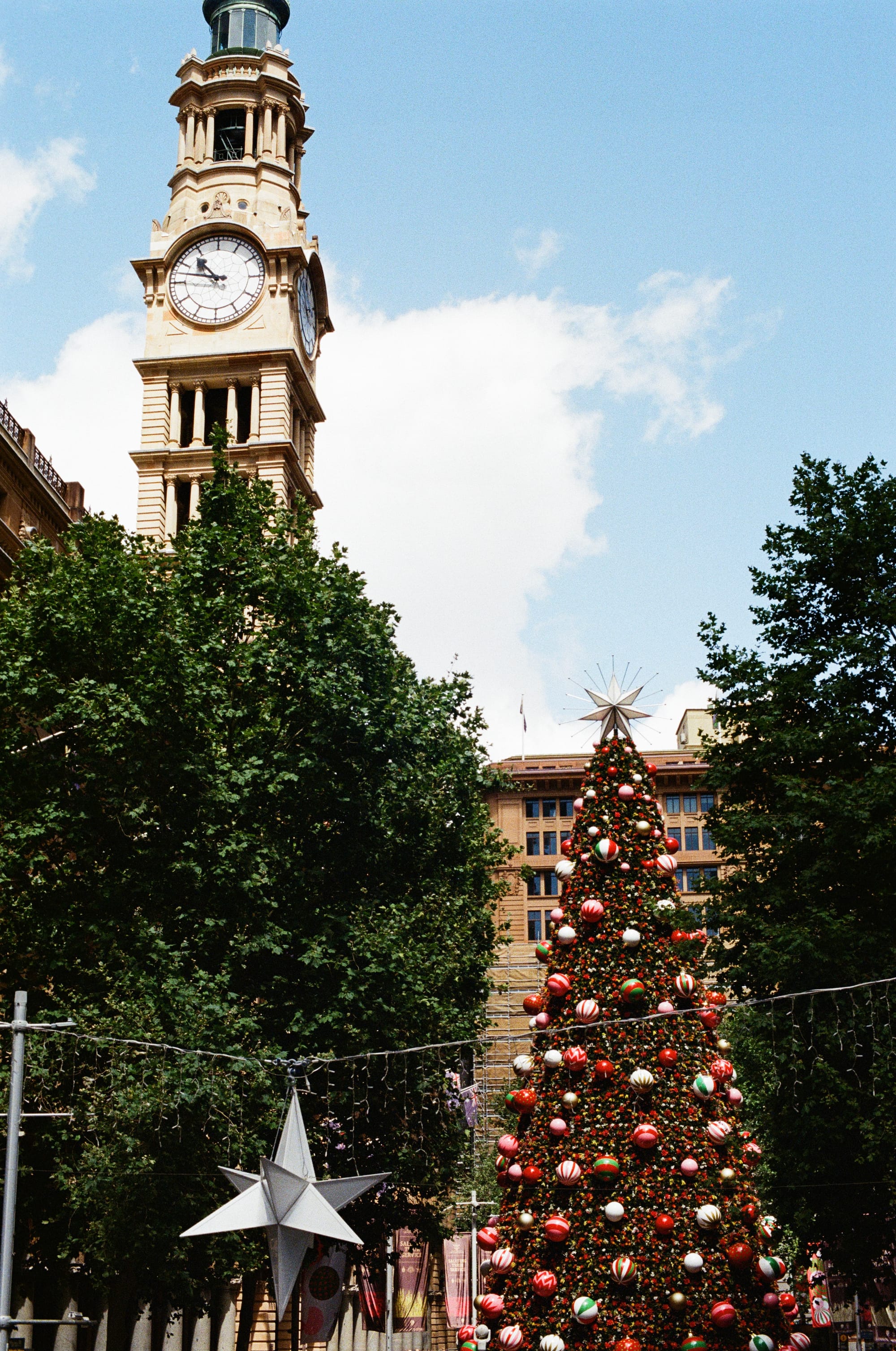
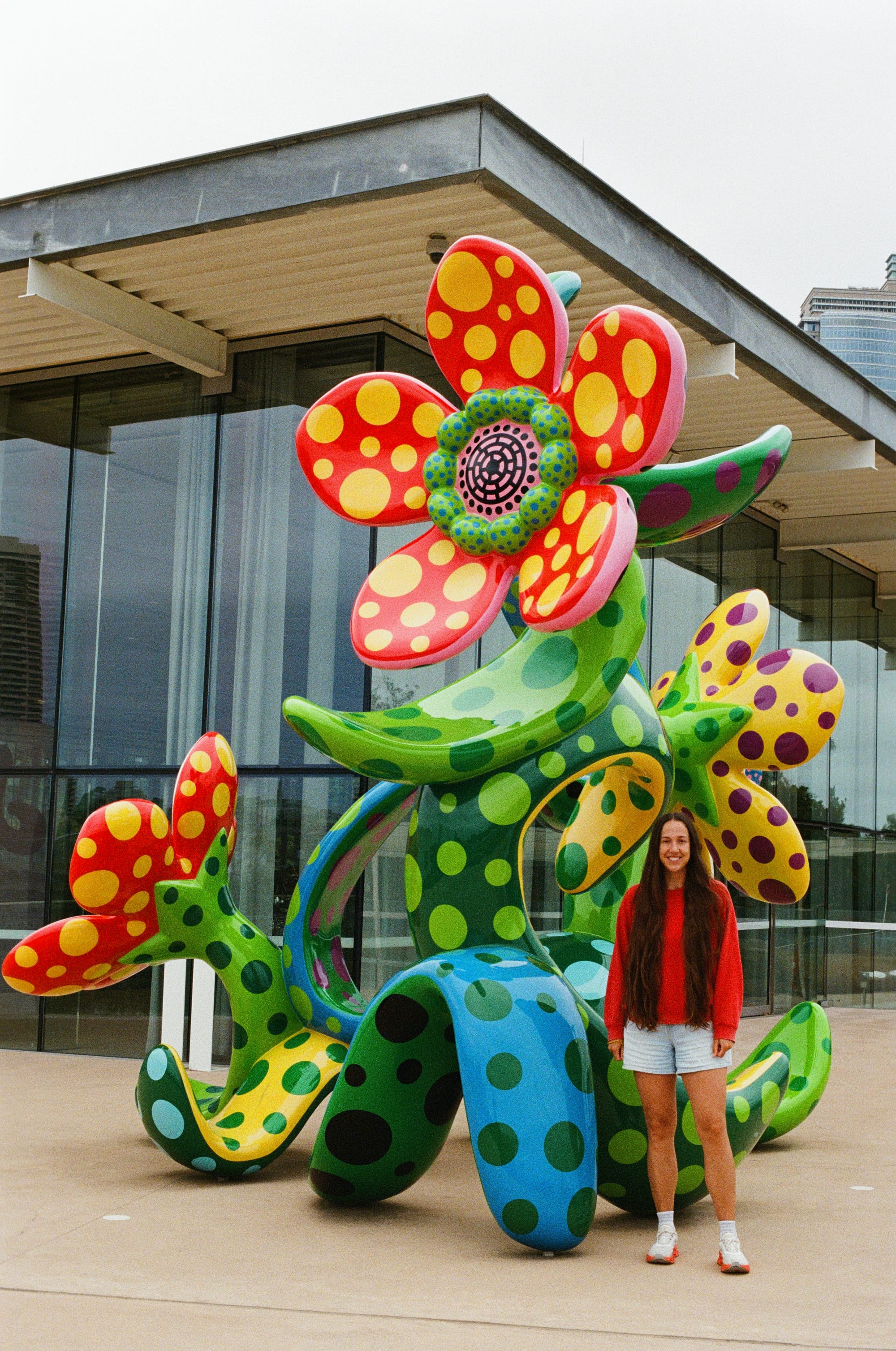
There were so many things to love about Tasmania, the animals, the gum forests, the chatty-ass locals, but what struck us most was that it really lived up to what we consider to be the pinnacle of Australian culture: Outback Steakhouse. That motto really rang true, "No rules, just right."